Have you ever looked at a hospital form or heard a nurse say, “You need to stay NPO after midnight,” and wondered what that actually meant? You’re not alone. Many patients and their families hear this medical term before surgery or a medical procedure and feel confused. It sounds technical, but the meaning is actually simple.
Understanding the NPO meaning in healthcare can help you prepare for surgeries, medical tests, and hospital stays without unnecessary stress. In this guide, you’ll learn what NPO stands for, why doctors use it, when it applies, common examples, and answers to the questions patients ask most often.
What Does NPO Mean in Healthcare?
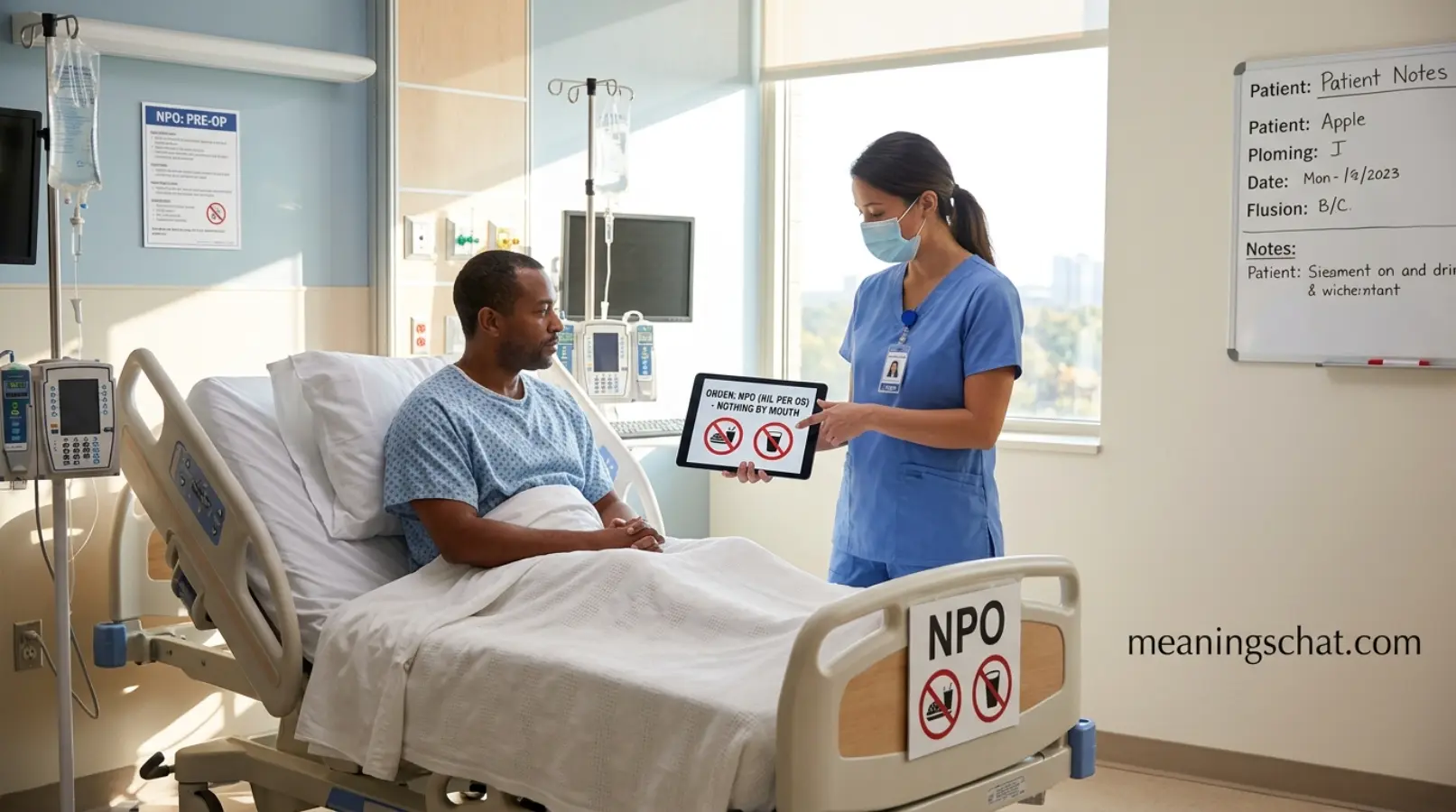
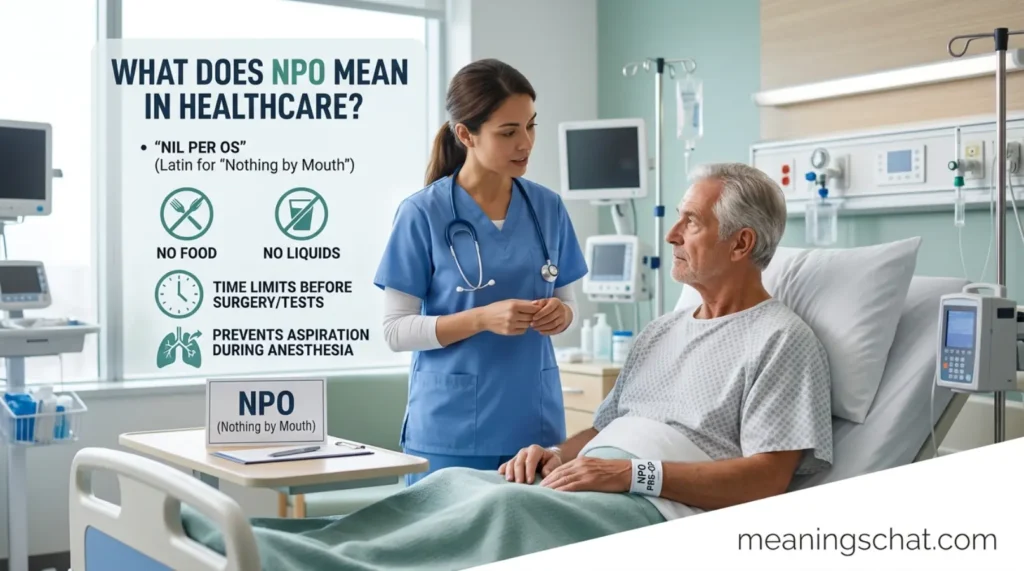
NPO is a medical abbreviation that comes from the Latin phrase “Nil Per Os,” which means “nothing by mouth.”
In healthcare, NPO means that a patient should not eat or drink anything for a certain period of time. This includes:
- Food
- Water
- Coffee
- Tea
- Juice
- Milk
- Candy
- Chewing gum
- Mints
- Ice chips (unless specifically allowed)
Doctors usually order NPO before:
- Surgery
- Medical procedures requiring anesthesia
- Certain imaging tests
- Emergency treatments
The purpose is to keep the stomach empty so food or liquid doesn’t enter the lungs during anesthesia or sedation.
Does NPO Have Other Meanings?
While NPO almost always means Nothing by Mouth in hospitals, the abbreviation can have different meanings in other fields. However, in medicine, Nothing by Mouth is by far the most common and important definition.
Where Is NPO Used?
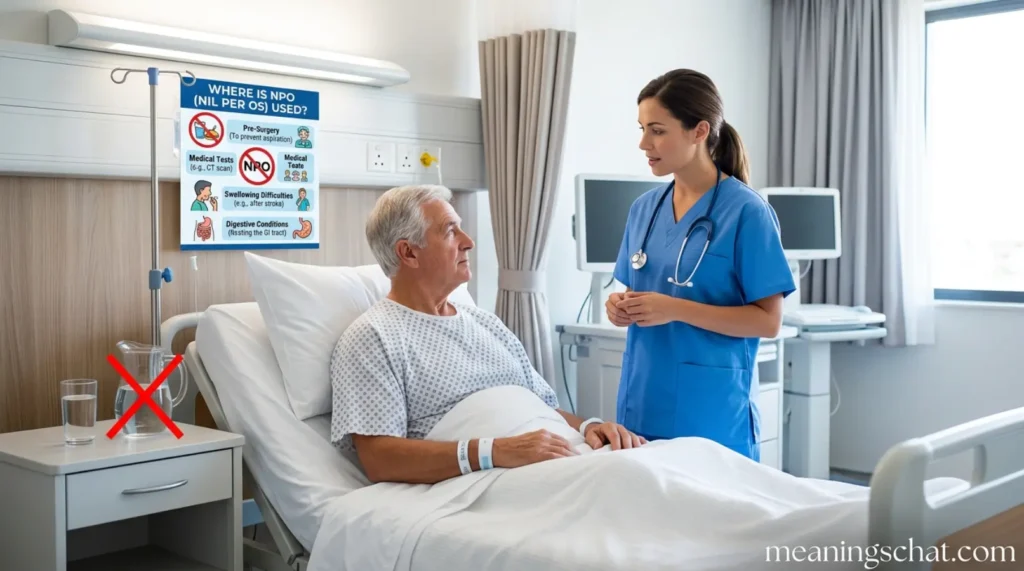
Unlike internet slang, NPO is mainly used in professional healthcare settings rather than social media or text messages.
You’ll commonly see or hear NPO in:
- Hospitals
- Emergency rooms
- Surgical centers
- Dental surgery clinics
- Medical records
- Nursing notes
- Doctor’s instructions
- Patient discharge paperwork
Healthcare professionals including doctors, nurses, anesthesiologists, and surgeons frequently use the abbreviation because it’s short, universally recognized, and easy to document.
Patients may also receive instructions like:
- “Remain NPO after midnight.”
- “Patient is currently NPO.”
- “NPO until further notice.”
- “Continue NPO before surgery.”
Family members often hear this term while discussing a loved one’s treatment plan.
Examples of NPO in Conversation
Here are some realistic examples of how NPO is used in healthcare conversations.
Example 1
Nurse: Your surgery is tomorrow morning.
Patient: Can I eat breakfast?
Nurse: No, you’ll be NPO after midnight.
Example 2
Doctor: Please remain NPO for eight hours before the procedure.
Patient: Does that include water?
Doctor: Yes, unless we tell you otherwise.
Example 3
Family Member: Why can’t she have lunch?
Nurse: She’s currently NPO because she’s waiting for surgery.
Example 4
Patient: Can I chew gum while waiting?
Nurse: No, you’re NPO until your procedure is complete.
Example 5
Doctor: Your CT scan requires anesthesia, so you’ll need to stay NPO beforehand.
Example 6
Patient: When can I eat again?
Nurse: Once the doctor clears you after surgery, your NPO order will be removed.
Example 7
Hospital Staff: Please confirm you’ve remained NPO since midnight before we begin.
When to Follow NPO Instructions
If your healthcare provider tells you to stay NPO, it’s important to follow the instructions exactly.
You should stay NPO when:
- Preparing for surgery
- Receiving general anesthesia
- Having certain endoscopy procedures
- Undergoing sedation
- Following your doctor’s instructions after an injury
- Being treated for specific digestive conditions
Following NPO instructions helps reduce serious complications during medical procedures.
When You Should Not Ignore NPO Orders
Do not eat or drink simply because you’re thirsty or hungry unless a healthcare professional says it’s okay.
Ignoring NPO instructions can:
- Delay surgery
- Cause procedures to be canceled
- Increase the risk of vomiting during anesthesia
- Lead to food entering the lungs (aspiration)
- Increase medical complications
If you accidentally eat or drink while you’re supposed to be NPO, tell your healthcare team immediately. They can decide the safest next step.
What Foods and Drinks Are Not Allowed During NPO?
Most NPO instructions prohibit:
- Solid foods
- Water
- Juice
- Soda
- Coffee
- Tea
- Milk
- Alcohol
- Candy
- Gum
- Mints
Even small amounts may affect certain procedures.
However, some patients are allowed small sips of water to take essential medications. Always follow your doctor’s specific instructions instead of assuming what’s allowed.
Can You Take Medicine While NPO?
Sometimes yes.
Many doctors allow important medications—such as blood pressure or heart medicine—to be taken with a tiny sip of water.
Other medications may need to be stopped temporarily.
Always ask your healthcare provider before taking any medication while you’re NPO.
Why Is NPO So Important Before Surgery?
One of the biggest reasons is patient safety.
During anesthesia, your body’s normal swallowing and coughing reflexes become weaker. If your stomach contains food or liquid, it may come back up and enter your lungs.
This can cause:
- Aspiration pneumonia
- Breathing problems
- Lung injury
- Serious surgical complications
Keeping the stomach empty greatly reduces these risks.
Similar Medical Abbreviations
Healthcare professionals use many abbreviations alongside NPO.
PO
PO means “by mouth.”
Example:
- Take one tablet PO twice daily.
PRN
PRN means “as needed.”
Example:
- Take pain medication PRN.
BID
BID means twice a day.
TID
TID means three times a day.
STAT
STAT means immediately.
These abbreviations appear frequently in hospitals and medical prescriptions.
Common Misunderstandings About NPO
Many people misunderstand what NPO actually means.
Myth: Water is always allowed.
Not necessarily. Many NPO orders include water unless your healthcare provider specifically allows small sips.
Myth: Gum doesn’t count.
False. Chewing gum may increase stomach secretions and is often prohibited.
Myth: One small snack won’t matter.
Even a small amount of food can delay surgery or increase anesthesia risks.
Myth: NPO only applies before surgery.
While surgery is the most common reason, NPO can also be ordered before certain medical tests or treatments.
FAQs
What does NPO mean in healthcare?
NPO stands for Nothing by Mouth (Latin: Nil Per Os). It means you should not eat or drink anything until your healthcare provider says it’s safe.
Why do doctors tell patients to stay NPO?
Doctors use NPO instructions to keep the stomach empty before surgery, anesthesia, or certain medical procedures. This helps prevent dangerous complications.
Does NPO include water?
Usually yes. Unless your healthcare provider specifically says otherwise, water is included in NPO restrictions.
Can I brush my teeth while NPO?
In many cases, yes. You can usually brush your teeth as long as you don’t swallow the water or toothpaste. Always follow your hospital’s instructions.
What happens if I accidentally eat while NPO?
Tell your doctor or nurse immediately. Your procedure may need to be delayed, but honesty helps your healthcare team keep you safe.
Is NPO only used in hospitals?
No. NPO instructions can also be given in outpatient surgery centers, dental clinics, imaging centers, and emergency departments.
Conclusion
Understanding the NPO meaning in healthcare is important for anyone preparing for surgery or certain medical procedures. NPO simply means “Nothing by Mouth,” and it’s used to help keep patients safe during anesthesia and other treatments.
Although it may seem inconvenient to skip food or drinks for a few hours, following NPO instructions can prevent serious complications and ensure your procedure goes smoothly. If you’re ever unsure about what you can eat, drink, or whether you can take your medications, ask your healthcare provider for guidance. Following their instructions carefully is the safest approach for a successful treatment and a quicker recovery.

William Jones is a dedicated writer at Meaningschat who specializes in explaining text slang, abbreviations, and online language trends. He enjoys creating simple, engaging, and reader-friendly content that helps people understand modern digital communication with ease. His writing style is clear, conversational, and informative, making complex internet terms easy for everyone to follow. In his free time, William loves exploring social media trends, reading about digital culture, and discovering how online language continues to evolve.