
You’re scrolling through a social media post or reading a comment online when someone mentions imagery. At first, you might wonder if it’s a new slang word, a texting abbreviation, or something people use in casual conversations. It can feel confusing, especially since the internet is full of words that have different meanings depending on the context.
The good news is that imagery is not actually a slang term or text abbreviation. Instead, it’s a common English word used in writing, literature, art, photography, social media, and everyday conversations. Once you understand what it means, you’ll notice it everywhere, from school assignments to Instagram captions and book reviews.
What Does Imagery Mean in Text?
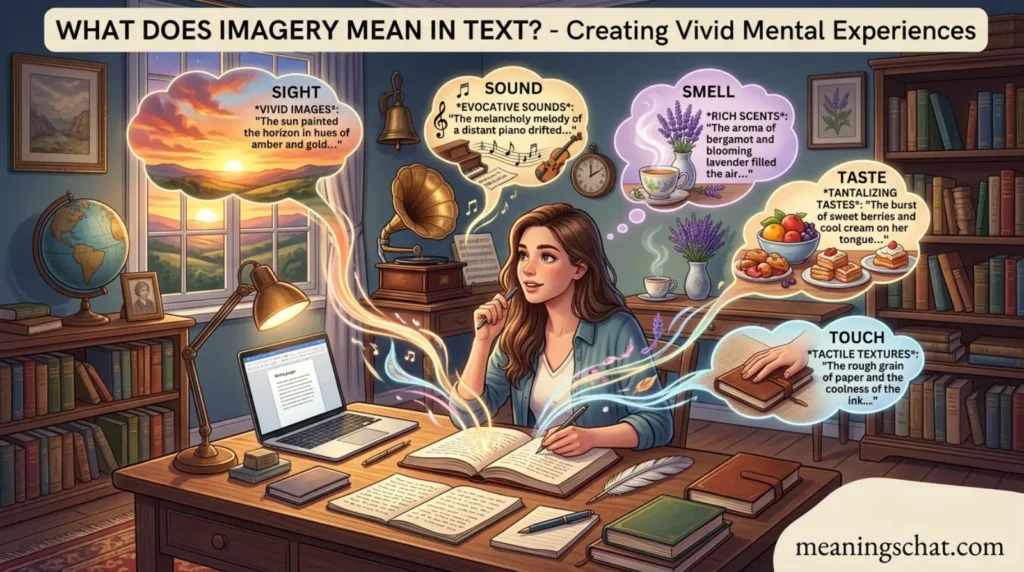
Imagery means using words that help readers or listeners create a clear picture in their minds. Instead of simply stating facts, imagery describes sights, sounds, smells, tastes, and feelings so people can imagine the scene.
For example:
“The golden sunset painted the sky while cool waves touched the sandy shore.”
This sentence uses imagery because it helps you picture the beach.
Unlike abbreviations such as LOL or BRB, imagery is a standard English vocabulary word. People use it when discussing:
- Literature
- Poetry
- Stories
- Movies
- Art
- Photography
- Music
- Social media captions
Sometimes the word can also refer to actual visual pictures or symbolic images used in media, but its most common meaning is descriptive language that creates mental images.
Different Meanings of Imagery
Depending on the context, imagery can have slightly different meanings.
Literary Imagery
This is the most common meaning. Writers use descriptive words that appeal to the five senses.
Example:
“Fresh rain filled the air with the smell of wet flowers.”
Visual Imagery
People may also use imagery when talking about actual photographs, graphics, or visual designs.
Example:
“The marketing campaign uses powerful imagery.”
Symbolic Imagery
Sometimes imagery refers to images that represent deeper ideas or emotions.
Example:
A white dove is often imagery for peace.
Although the meaning changes slightly, it always relates to creating strong visual or emotional impressions.
Where Is Imagery Used?
Imagery appears in many places, both online and offline.
Text Messages
Friends may discuss a novel or movie by mentioning its imagery.
Example:
“The imagery in that book made every scene feel real.”
Creators often describe beautiful photos using the word imagery.
Example:
“Amazing imagery in your travel pictures!”
TikTok
BookTok creators frequently review novels and praise their imagery.
Example:
“The imagery in this fantasy novel is incredible.”
X (Twitter)
Writers and readers often comment on poetic imagery in quotes and books.
People reviewing films, books, or artwork commonly mention imagery.
YouTube
Movie reviewers and literature teachers regularly explain how imagery improves storytelling.
School and College
Students encounter imagery in:
- English classes
- Literature assignments
- Poetry analysis
- Creative writing
- Speech writing
Professional Writing
Writers, marketers, advertisers, and journalists also use imagery to make content more engaging.
Is Imagery Popular Among Teens?
Yes, but not as slang.
Teenagers often hear the word in:
- English homework
- BookTok videos
- Creative writing
- Poetry discussions
- Movie reviews
Adults, teachers, writers, and professionals also use it regularly.
Examples of Imagery in Conversation
Here are some natural conversations where people use the word.
Example 1
Emma: Did you like the novel?
Ryan: Yes! The imagery made every chapter feel like a movie.
Example 2
Lily: Your caption sounds beautiful.
Noah: Thanks! I wanted the imagery to make people imagine the beach.
Example 3
Alex: Why is everyone talking about imagery in this poem?
Sophia: Because the descriptions help readers picture everything.
Example 4
Jake: That music video looks amazing.
Mia: The imagery is one of the best parts.
Example 5
Teacher: Why is this story interesting?
Student: The imagery makes every scene easy to imagine.
Example 6
Friend: I love your photography.
Photographer: Thanks! I try to create emotional imagery.
Example 7
Book Reviewer: This author has incredible imagery.
Viewer: Now I definitely want to read it.
How Writers Create Imagery
Writers usually create imagery by describing the five senses.
Visual Imagery
Describes what people see.
Example:
“Bright yellow flowers covered the hillside.”
Auditory Imagery
Describes sounds.
Example:
“Birds sang softly at sunrise.”
Olfactory Imagery
Describes smells.
Example:
“Fresh bread filled the kitchen with a warm aroma.”
Gustatory Imagery
Describes taste.
Example:
“The lemonade tasted sweet with a hint of lemon.”
Tactile Imagery
Describes touch.
Example:
“The soft blanket kept everyone warm.”
These descriptions help readers feel connected to the story.
Why Is Imagery Important?
Imagery makes communication more interesting because it:
- Helps readers visualize scenes.
- Creates emotional connections.
- Makes stories memorable.
- Improves creative writing.
- Brings poems to life.
- Makes advertisements more engaging.
- Enhances speeches and presentations.
Without imagery, writing often feels plain and less engaging.
When to Use Imagery
Imagery works well in many situations.
You can use it when:
- Writing stories
- Creating poems
- Posting travel captions
- Describing experiences
- Reviewing books
- Reviewing movies
- Writing speeches
- Creating marketing content
- Giving presentations
It helps people picture exactly what you’re describing.
When Not to Use Imagery
There are also situations where too much imagery is unnecessary.
Avoid excessive imagery when:
- Writing legal documents
- Preparing technical reports
- Giving simple instructions
- Sending business emails that require direct information
- Writing emergency messages
In these cases, clear and straightforward language is usually better.
Is Imagery Casual or Professional?
Imagery is appropriate in both casual and professional settings.
Casual
Friends discussing books or movies often use the word naturally.
Example:
“The imagery in that film was beautiful.”
Academic
Teachers and students frequently analyze imagery in literature classes.
Professional
Marketing teams, designers, photographers, and writers regularly discuss imagery during projects.
Unlike internet slang, imagery is considered a formal English vocabulary word.
Common Mistakes About Imagery
Many people misunderstand the word.
Mistake 1
Thinking imagery is a texting abbreviation.
It isn’t. It’s a regular English word.
Mistake 2
Believing imagery only means pictures.
It also refers to descriptive language that creates mental images.
Mistake 3
Assuming only poets use imagery.
Actually, novelists, journalists, marketers, advertisers, teachers, and everyday writers use it too.
Similar Words and Alternatives
Here are some related words.
Description
Using words to explain something clearly.
Visualization
Creating a mental picture of something.
Symbolism
Using objects or images to represent ideas.
Illustration
A drawing or visual representation.
Figurative Language
Creative language that includes metaphors, similes, and imagery.
Each term is related but has its own specific meaning.
Imagery vs Description
People often confuse these two words.
Description simply tells readers about something.
Example:
“The room was large.”
Imagery helps readers experience it.
Example:
“Sunlight poured through tall windows, warming the polished wooden floor.”
Imagery is more vivid because it appeals to the senses.
Why People Search for “Imagery Meaning”
People usually search this phrase because they:
- Saw it in schoolwork.
- Heard it in a book review.
- Read it in a movie review.
- Found it in a social media caption.
- Encountered it while studying English.
- Wanted to improve their writing.
Most discover that imagery is an essential writing technique rather than internet slang.
FAQs
What does imagery mean from a girl?
It means the same thing regardless of who says it. She is usually referring to descriptive language, visual elements, or artistic expression.
Is imagery slang?
No. Imagery is a standard English word, not slang or a texting abbreviation.
Can I use imagery in professional chats?
Yes. The word is appropriate in professional discussions about writing, marketing, photography, design, literature, education, and creative projects.
Does imagery have a flirty meaning?
No. Imagery has no romantic or flirty meaning by itself. Any emotional tone comes from the surrounding conversation.
Is imagery still popular in 2025?
Yes. Imagery remains an important term in literature, education, content creation, photography, marketing, and social media discussions.
Conclusion
Imagery means using descriptive language that helps people create vivid mental pictures or experience a scene through their senses. Although some people search for it as if it were internet slang, imagery is actually a widely used English term found in books, classrooms, social media, photography, movies, and everyday conversations. Once you understand its meaning, you’ll recognize how powerful imagery makes writing more engaging, memorable, and emotional. The next time you see someone mention imagery, you’ll know they’re talking about language or visuals that bring ideas to life.

William Jones is a dedicated writer at Meaningschat who specializes in explaining text slang, abbreviations, and online language trends. He enjoys creating simple, engaging, and reader-friendly content that helps people understand modern digital communication with ease. His writing style is clear, conversational, and informative, making complex internet terms easy for everyone to follow. In his free time, William loves exploring social media trends, reading about digital culture, and discovering how online language continues to evolve.