
Have you ever looked at your blood test results and noticed the words “low lymphocytes”? It can be confusing, especially if you have no idea what lymphocytes are or why they matter. Many people see this term on a complete blood count (CBC) report and immediately worry that something is seriously wrong.
The good news is that low lymphocytes do not always mean a serious health problem. In many cases, the result is temporary and can happen because of a recent illness, stress, certain medications, or other treatable conditions. Understanding what the term means can help you have a more informed conversation with your healthcare provider. This guide explains low lymphocytes meaning, common causes, symptoms, test results, treatments, and when you should seek medical advice.
What Does Low Lymphocytes Mean?
Low lymphocytes, also called lymphocytopenia or lymphopenia, means your blood contains fewer lymphocytes than the normal range.
Lymphocytes are a type of white blood cell that plays an important role in your immune system. They help your body fight viruses, bacteria, fungi, and other harmful organisms.
There are three main types of lymphocytes:
- B cells produce antibodies that attack germs.
- T cells destroy infected cells and coordinate immune responses.
- Natural Killer (NK) cells attack virus-infected and abnormal cells.
When lymphocyte levels become lower than normal, your immune system may not work as effectively, making it harder for your body to fight infections.
Normal Lymphocyte Range
Although normal values vary slightly between laboratories, healthy adults generally have:
- 1,000 to 4,800 lymphocytes per microliter (µL) of blood
- About 20% to 40% of all white blood cells
A result below the laboratory’s reference range may be reported as low lymphocytes.

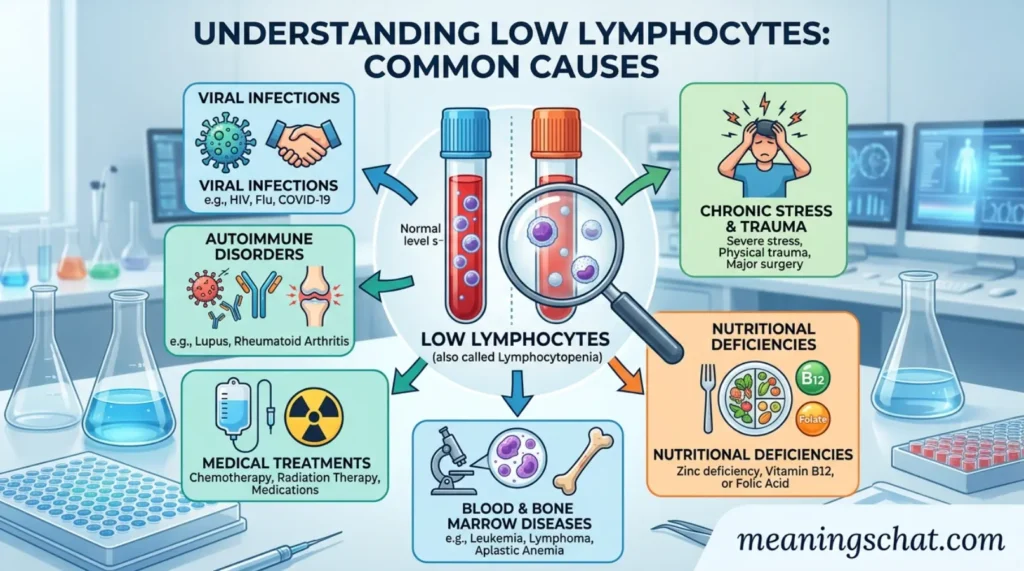
What Causes Low Lymphocytes?
There are many possible reasons why lymphocyte levels become low. Some are temporary, while others require medical evaluation.
1. Viral Infections
Ironically, some viral infections temporarily lower lymphocyte counts.
Examples include:
- Influenza
- COVID-19
- Hepatitis
- HIV
The lymphocyte count often returns to normal after recovery.
2. Severe Bacterial Infections
Serious infections can overwhelm the immune system and reduce lymphocyte production temporarily.
3. Autoimmune Diseases
Conditions such as:
- Lupus
- Rheumatoid arthritis
- Multiple sclerosis
can affect immune cells and decrease lymphocyte numbers.
4. Certain Medications
Some medicines suppress the immune system, including:
- Chemotherapy drugs
- Corticosteroids
- Immunosuppressants after organ transplantation
5. Poor Nutrition
Deficiencies in important nutrients may reduce white blood cell production, including:
- Protein deficiency
- Zinc deficiency
- Vitamin B12 deficiency
- Folate deficiency
6. Bone Marrow Disorders
Since blood cells are produced in the bone marrow, diseases affecting the marrow can lower lymphocyte production.
Examples include:
- Leukemia
- Lymphoma
- Aplastic anemia
7. Chronic Medical Conditions
Several long-term illnesses may contribute to low lymphocyte counts, including:
- Kidney disease
- Liver disease
- Some inherited immune disorders
Symptoms of Low Lymphocytes
Many people with mildly low lymphocytes have no symptoms at all.
Symptoms usually appear because of the underlying condition or repeated infections.
Possible symptoms include:
- Frequent infections
- Fever
- Persistent cough
- Fatigue
- Swollen lymph nodes
- Mouth sores
- Slow healing
- Weight loss (depending on the cause)
If your lymphocyte count is only slightly low, you may never notice any symptoms.
How Are Low Lymphocytes Diagnosed?
Doctors usually discover low lymphocytes through a Complete Blood Count (CBC) test.
Additional tests may include:
- White blood cell differential
- Repeat CBC
- Vitamin deficiency tests
- HIV testing (when appropriate)
- Autoimmune screening
- Bone marrow testing (in rare situations)
Your healthcare provider considers:
- Your symptoms
- Medical history
- Current medications
- Other blood test results
rather than relying on one number alone.
What Does a Low Lymphocyte Count Mean on a CBC Test?
Many people search for low lymphocytes meaning on CBC after reviewing lab reports.
A CBC measures several blood components, including:
- Red blood cells
- White blood cells
- Platelets
- Hemoglobin
- Different white blood cell types
If only lymphocytes are slightly low while everything else is normal, it may not indicate a serious illness.
However, if multiple blood counts are abnormal, your healthcare provider may recommend further testing.
Is Low Lymphocytes Serious?
Not always.
The seriousness depends on:
- How low the count is
- Whether it stays low
- Your overall health
- Other abnormal blood test results
- Presence of symptoms
A temporary decrease after a viral infection is usually much less concerning than persistent severe lymphopenia.
Never try to diagnose yourself based on a single laboratory value.
Common Conditions Associated With Low Lymphocytes
Several medical conditions are linked with reduced lymphocyte counts.
These include:
- Viral infections
- HIV infection
- COVID-19
- Cancer treatment
- Autoimmune diseases
- Malnutrition
- Bone marrow disorders
- Severe stress
- Sepsis
Having low lymphocytes does not automatically mean you have one of these conditions.
Can Stress Cause Low Lymphocytes?
Yes.
Both physical and emotional stress may temporarily lower lymphocyte counts.
Examples include:
- Major surgery
- Serious injuries
- Intense physical exercise
- Severe emotional stress
The immune system usually returns to normal once the stress decreases.
Low Lymphocytes During Infection
During some infections, especially viral illnesses, lymphocyte numbers may temporarily decrease.
Doctors often repeat the CBC several weeks later to see whether the count returns to normal.
This is one reason why a single low result should not immediately cause panic.
How Are Low Lymphocytes Treated?
Treatment depends entirely on the underlying cause.
Possible treatments include:
Treating Infections
If an infection is responsible, treating the illness often restores lymphocyte levels.
Adjusting Medications
A doctor may adjust medications that suppress the immune system if appropriate.
Never stop prescribed medicine without medical advice.
Correcting Nutritional Deficiencies
Treatment may include:
- Better nutrition
- Vitamin B12 supplements
- Folate supplements
- Zinc replacement
Managing Chronic Conditions
Treating autoimmune diseases or other long-term illnesses may improve lymphocyte counts.
Monitoring
Sometimes no treatment is needed.
Doctors simply repeat blood tests over time to monitor recovery.
Foods That Support a Healthy Immune System
Although food cannot directly cure low lymphocytes, a healthy diet supports immune function.
Good choices include:
- Lean protein
- Eggs
- Fish
- Citrus fruits
- Leafy green vegetables
- Yogurt
- Nuts
- Seeds
- Beans
- Whole grains
Staying hydrated and getting enough sleep also helps maintain overall immune health.
When Should You See a Doctor?
Seek medical advice if:
- Your CBC repeatedly shows low lymphocytes.
- You experience frequent infections.
- You have unexplained fever.
- You lose weight without trying.
- You develop swollen lymph nodes.
- You feel unusually tired for several weeks.
Your healthcare provider can determine whether further testing is necessary.
FAQs
What does low lymphocytes mean in a blood test?
It means your blood contains fewer lymphocytes than the normal range. Lymphocytes are white blood cells that help protect your body from infections.
Is low lymphocytes dangerous?
Not necessarily. Mild decreases are often temporary, while persistent or severely low counts may require further medical evaluation.
Can dehydration cause low lymphocytes?
Dehydration usually does not directly cause low lymphocyte counts, although illness associated with dehydration may affect blood test results.
Can low lymphocytes return to normal?
Yes. If the underlying cause is temporary, such as a viral infection or stress, lymphocyte levels often return to normal within weeks.
What is the normal lymphocyte count?
For most adults, the normal range is approximately 1,000–4,800 cells per microliter (µL), although reference ranges vary slightly between laboratories.
Should I worry about one low lymphocyte result?
Not always. Doctors usually consider your symptoms, overall health, and whether the result remains low on repeat testing before deciding if further evaluation is needed.
Conclusion
Understanding low lymphocytes meaning can make reading your blood test results much less stressful. Low lymphocytes simply indicate that your body has fewer infection-fighting white blood cells than expected. The cause can range from temporary viral infections and stress to nutritional deficiencies, medications, or more serious medical conditions.
A single abnormal blood test rarely tells the whole story. Your healthcare provider will evaluate your symptoms, medical history, medications, and other laboratory results before determining whether additional testing or treatment is needed. If your lymphocyte count stays low or you develop frequent infections, follow up with your doctor for proper evaluation and guidance.

William Jones is a dedicated writer at Meaningschat who specializes in explaining text slang, abbreviations, and online language trends. He enjoys creating simple, engaging, and reader-friendly content that helps people understand modern digital communication with ease. His writing style is clear, conversational, and informative, making complex internet terms easy for everyone to follow. In his free time, William loves exploring social media trends, reading about digital culture, and discovering how online language continues to evolve.