Have you ever been chatting on WhatsApp, Instagram, or Snapchat and suddenly seen someone write “FIL” and felt completely confused? At first glance, it might look like a typo or some random abbreviation that doesn’t make sense. Many people pause mid-conversation wondering if they missed an update in internet slang again.
The truth is, “FIL” is actually a commonly used abbreviation in texting and social media conversations, especially in family-related discussions. Once you understand it, you’ll start noticing it in chats, captions, and even comments more often. In this guide, we’ll break down the exact meaning of “FIL,” where it’s used, real-life examples, and how you can use it correctly without sounding awkward or confused.
What Does FIL Mean in Text?
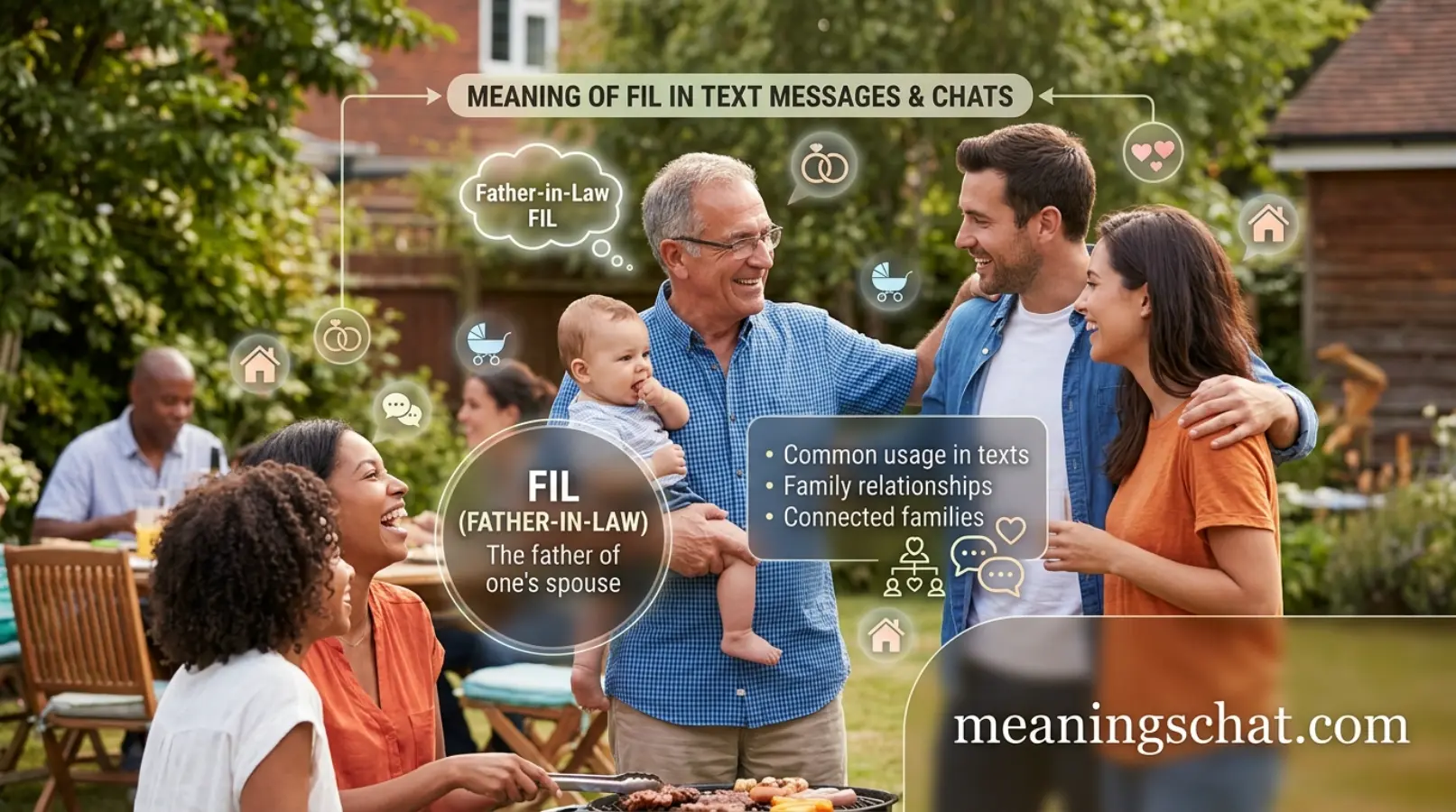
In text messaging and online chats, FIL most commonly stands for “Father-In-Law.”
It is used when someone is referring to their spouse’s father in a quick and informal way. Instead of typing the full phrase “father-in-law,” people shorten it to “FIL” to save time and keep conversations brief.
For example:
- “My FIL is coming over today.”
- “I went shopping with my FIL.”
Is FIL used for anything else?
Yes, although it is rare, “FIL” can sometimes have different meanings depending on context:
- File (in tech conversations, though usually not capitalized this way)
- Fill (rare abbreviation in casual texting)
- In very specific communities, it may be used as an internal shorthand, but this is uncommon.
However, in everyday texting, FIL almost always means Father-In-Law, especially in family or relationship-related conversations.
Where Is FIL Used?
The abbreviation “FIL” is mostly used in informal digital communication, especially where people talk about family life or relationships.
Common platforms where FIL appears:
- WhatsApp chats
- Facebook posts and comments
- Instagram captions or stories
- Snapchat messages
- Reddit discussions about family or marriage life
Who uses FIL the most?
- Married individuals
- People in relationships discussing in-laws
- Family-oriented online communities
- Parenting forums
- Occasionally younger users learning relationship slang
It is not usually found in professional or academic environments. Instead, it belongs to casual, personal communication where people talk about family members quickly and informally.
Examples of FIL in Conversation
Here are some real-life style chat examples to help you understand how “FIL” is used naturally:
1. Casual family update
A: What are you doing this weekend?
B: My FIL is visiting us, so we’re staying home.
2. Friendly conversation
A: How was dinner last night?
B: Great! My FIL cooked his special recipe.
3. Light humorous tone
A: You look tired today.
B: Yeah, spent the whole day helping my FIL with gardening 😅
4. Relationship chat
A: Do your in-laws live nearby?
B: Yes, my MIL and FIL are just 10 minutes away.
5. Social media caption
“Sunday lunch with my FIL and the whole family ❤️”
6. Supportive context
A: Everything okay at home?
B: Yes, just helping my FIL recover after his surgery.
7. Storytelling style
“I always thought meeting my FIL would be awkward, but he’s actually really funny.”
These examples show that “FIL” fits naturally into everyday conversations about family life and relationships.
When to Use and When Not to Use FIL
Understanding the tone and context of “FIL” is important so you don’t misuse it.
When to use FIL:
- Talking about family members in casual chats
- Messaging friends about your in-laws
- Social media posts about family life
- Informal relationship conversations
- When you want to keep messages short and natural
When NOT to use FIL:
- Formal emails or office communication
- Academic writing or reports
- Conversations where the person may not understand slang
- Professional introductions
- Sensitive or serious discussions where clarity is important
Tone of FIL:
- Casual ✔
- Informal ✔
- Neutral ✔
- Not professional ✘
So, while “FIL” is convenient and widely understood in casual settings, it is not suitable for formal communication.
Similar Slang Words or Alternatives
If you’re interested in similar texting abbreviations related to family and communication, here are a few commonly used ones:
1. MIL
Meaning: Mother-In-Law
Used in the same way as FIL but refers to spouse’s mother.
2. BIL
Meaning: Brother-In-Law
Used when referring to your spouse’s brother.
3. SIL
Meaning: Sister-In-Law
Used for your spouse’s sister.
4. LOL
Meaning: Laugh Out Loud
Used to express laughter or humor in messages.
5. IMO / IMHO
Meaning: In My Opinion / In My Humble Opinion
Used when sharing personal thoughts or views.
These slang terms often appear together in family-related discussions or general texting conversations.
FAQs
What does FIL mean from a girl?
When a girl uses “FIL,” it simply means “Father-In-Law.” It depends on context—she could be referring to her husband’s father in casual conversation.
Is FIL slang rude?
No, “FIL” is not rude at all. It is a neutral and commonly accepted abbreviation used in informal texting.
Can I use FIL in professional chats?
It is not recommended. FIL is too informal and should only be used in personal or casual conversations.
Does FIL have any flirty meaning?
No, “FIL” does not have any flirty meaning. It is strictly related to family relationships.
Is FIL still popular in 2025?
Yes, “FIL” is still used in 2025, especially in texting, WhatsApp conversations, and social media posts about family life.
Conclusion
“FIL” is a simple but useful texting abbreviation that stands for Father-In-Law. It is widely used in casual conversations, especially when talking about family members in a quick and easy way. While it may look confusing at first, once you understand its meaning, it becomes easy to recognize in chats and social media posts.
The key to using “FIL” correctly is understanding the context—keep it informal, use it in personal conversations, and avoid it in professional settings. With this knowledge, you can now confidently read and use “FIL” in your everyday digital communication without confusion.

William Jones is a dedicated writer at Meaningschat who specializes in explaining text slang, abbreviations, and online language trends. He enjoys creating simple, engaging, and reader-friendly content that helps people understand modern digital communication with ease. His writing style is clear, conversational, and informative, making complex internet terms easy for everyone to follow. In his free time, William loves exploring social media trends, reading about digital culture, and discovering how online language continues to evolve.