Foreshadowing meaning is something many people search after spotting the word in a TikTok comment, a book review, or even a group chat. At first, it may sound like internet slang, but then you realize people use it in different ways. That can make it confusing, especially if everyone else seems to understand it.
The good news is that foreshadowing is easy to understand once you know the idea behind it. In this guide, you’ll learn what foreshadowing means, where people use it, how it appears in conversations, and when it makes sense to use it yourself.
What Does Foreshadowing Mean in Text?
Foreshadowing is not actually a slang abbreviation. Instead, it is a storytelling term that people now use casually in online conversations and social media.
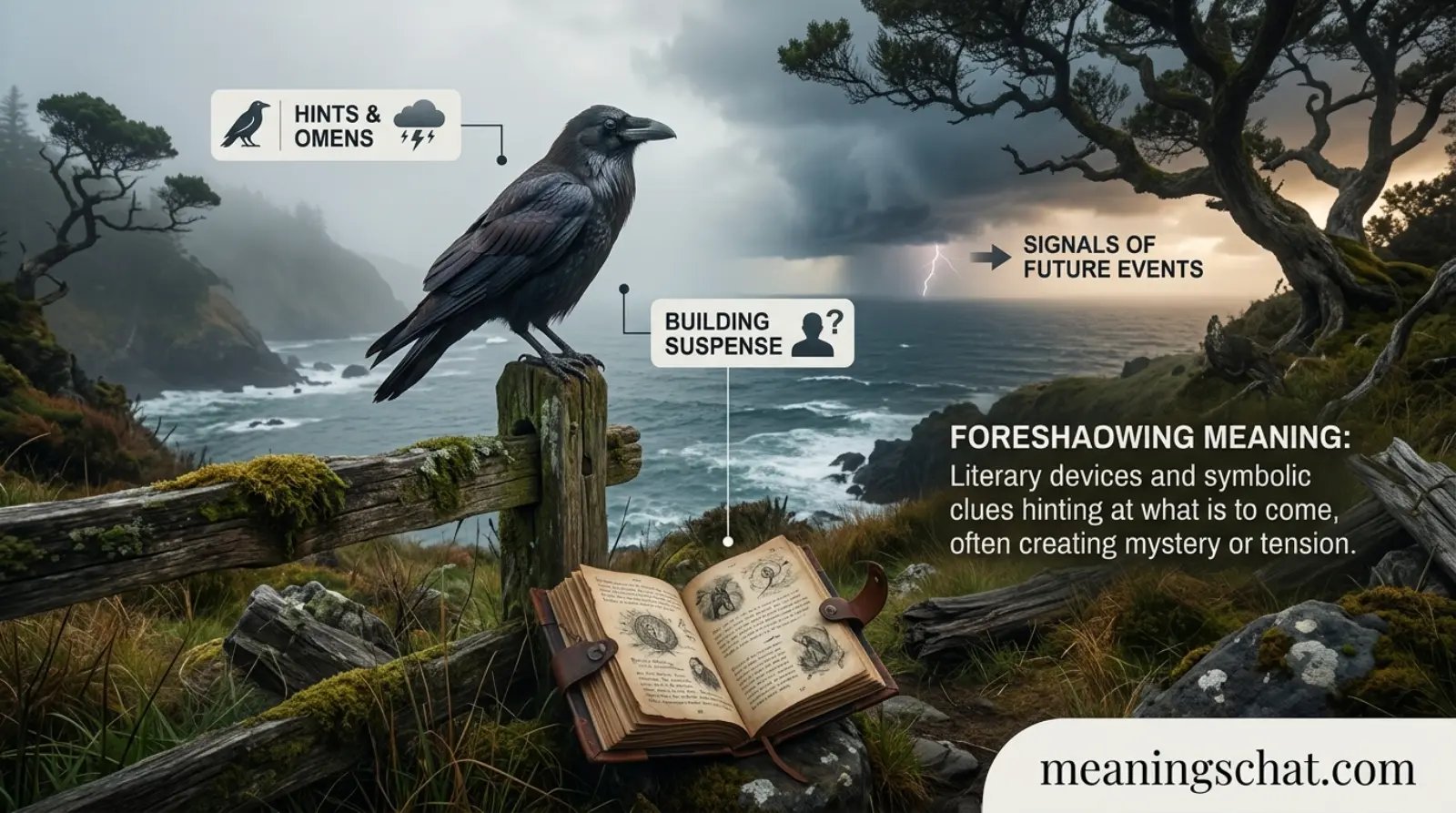
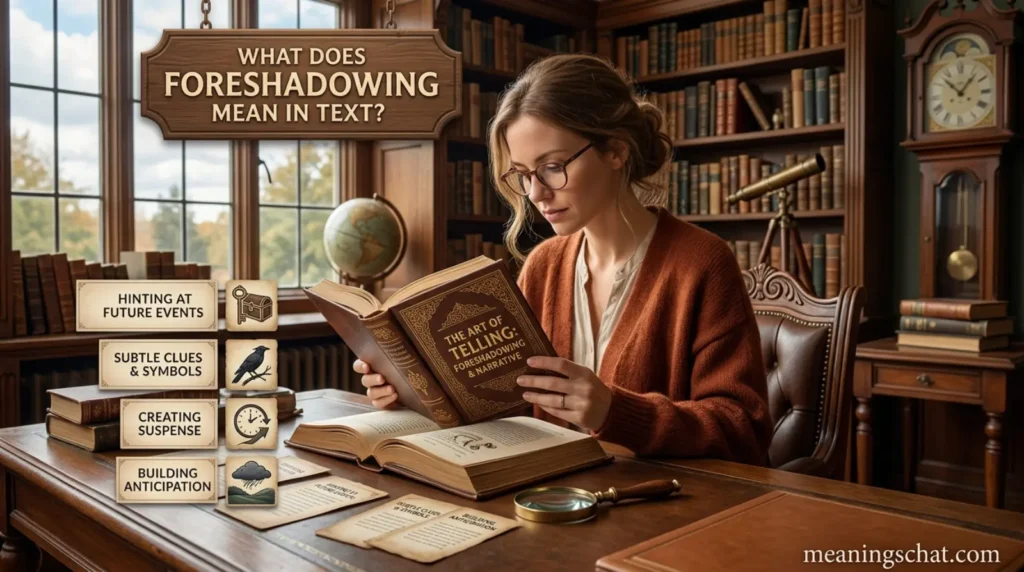
The word foreshadowing means giving a small hint about something that will happen later. It prepares the audience for a future event without revealing everything.
In texting or online chats, people often use it jokingly when someone accidentally predicts what happens next or when a small event turns out to be an important clue.
For example:
Friend: “He forgot his wallet today.”
Later: “He missed the entire trip because he had no ID.”
Reply: “That was some serious foreshadowing.”
In modern internet culture, people also use “foreshadowing” as a funny comment whenever an earlier message unexpectedly becomes true.
Common meanings include:
- A hint about a future event
- An early clue in a movie or book
- A joke that someone unknowingly predicted something
- A reference to future drama or unexpected events
Unlike abbreviations such as LOL or BRB, foreshadowing is a complete English word with literary roots that has become popular in everyday online conversations.
Where Is Foreshadowing Used?
Foreshadowing appears in many places online because people enjoy pointing out hidden clues or funny predictions.
Some of the most common platforms include:
TikTok
Users comment “foreshadowing” when an early part of a video hints at a surprising ending.
Example:
“That first scene was pure foreshadowing.”
People use it in comments on reels, memes, and story posts when something later in the video connects back to the beginning.
X
Users often reply with “foreshadowing” when an old tweet unexpectedly predicts a future event.
Snapchat
Friends may joke that someone’s earlier message was foreshadowing after something funny happens later.
Discord
Gaming communities frequently use the word after players accidentally predict what happens in a match.
Discussion threads about movies, TV shows, anime, and books often mention foreshadowing while analyzing stories.
Books and Movies
This is where the word originally became popular. Readers and viewers use it to describe clues that hint at future plot twists.
Examples of Foreshadowing in Conversation
Here are realistic examples showing how people naturally use the word.
Example 1
Alex: “I have a bad feeling about today.”
Sam: “That sounds like foreshadowing.”
Example 2
Emma: “Remember when she said she might quit?”
Lily: “That was obvious foreshadowing.”
Example 3
Jake: “The movie showed the broken clock at the beginning.”
Chris: “Classic foreshadowing.”
Example 4
Taylor: “He joked about getting lost.”
Morgan: “Then he actually got lost. Ultimate foreshadowing.”
Example 5
Friend 1: “I knew that tiny detail mattered.”
Friend 2: “The writer used amazing foreshadowing.”
Example 6
User A: “I posted that tweet two years ago.”
User B: “That ended up being accidental foreshadowing.”
Example 7
Player 1: “I said we’d lose if we ignored the boss.”
Player 2: “Your message was foreshadowing.”
When to Use and When Not To Use Foreshadowing
Knowing when to use the word makes conversations sound more natural.
Use Foreshadowing When
You are discussing:
- Books
- Movies
- TV shows
- Anime
- Games
- Funny predictions
- Social media videos
- Events that later make sense
It works well in casual conversations because many internet users recognize the term.
Avoid Using Foreshadowing When
Do not use it:
- In formal business emails
- During professional meetings
- In official reports
- With people unfamiliar with storytelling terms
- When discussing unrelated topics
Since not everyone knows the literary meaning, using it in formal communication may confuse readers.
Is Foreshadowing Friendly, Casual, Professional, or Flirty?
Friendly
Yes. Friends often use it jokingly.
Example:
“I guess your warning was foreshadowing.”
Casual
Absolutely.
It fits naturally in texts, memes, gaming chats, and social media comments.
Professional
Usually no.
Although it can appear in presentations about literature, writing, or filmmaking, it is uncommon in everyday workplace conversations.
Flirty
Not directly.
However, someone could jokingly say:
“Our first conversation was foreshadowing.”
This playful use suggests their relationship was hinted at from the beginning.
Does Foreshadowing Have Multiple Meanings?
Yes.
Depending on the conversation, it can mean:
Literary Meaning
A clue that hints at future events in a story.
Internet Meaning
A funny prediction that unexpectedly comes true.
Meme Meaning
People sarcastically call something foreshadowing after knowing the outcome.
Pop Culture Meaning
Fans use it to praise writers who cleverly hint at future plot twists.
Why Has Foreshadowing Become Popular Online?
Several reasons explain its popularity.
People Love Plot Twists
Fans enjoy discovering hidden clues in movies and TV shows.
Social Media Rewards Predictions
Old tweets and videos often become viral after later events make them look predictive.
Meme Culture
Internet users enjoy calling almost anything “foreshadowing” for comedic effect.
Reaction Videos
Creators frequently point out moments that later become important.
Similar Words and Alternatives
If someone uses foreshadowing, you might also see these related words.
Plot Twist
A surprising change in the story.
Spoiler
Information that reveals important future events.
Easter Egg
A hidden detail intentionally placed by creators.
Callback
A reference to an earlier moment.
Hint
A small clue about something coming later.
Although these words are related, they are not exact replacements because each has a slightly different meaning.
Common Mistakes People Make
Many people misunderstand the word when they first encounter it online.
Thinking It Is an Abbreviation
Foreshadowing is a complete English word.
Using It Too Early
You normally recognize foreshadowing after the later event happens.
Confusing It with Spoilers
Foreshadowing hints without revealing everything.
Spoilers directly tell you what happens.
Assuming Every Coincidence Is Foreshadowing
Sometimes events are simply random and not intentional clues.
Why Writers Use Foreshadowing
Writers include foreshadowing to make stories more engaging.
Benefits include:
- Building suspense
- Creating mystery
- Preparing readers for future events
- Making endings feel satisfying
- Rewarding careful viewers who notice details
Many successful movies, novels, and TV shows use foreshadowing throughout their stories.
FAQs
What does foreshadowing mean from a girl?
It means the same thing regardless of who says it. She is usually referring to a clue, prediction, or event that hinted at something happening later.
Is foreshadowing slang?
Not exactly. It is originally a literary term, but people now use it casually in internet conversations and social media.
Is foreshadowing rude?
No. It is a neutral expression and is not considered offensive.
Can I use foreshadowing in professional chats?
Generally, avoid it unless you are discussing writing, literature, films, or storytelling. Simpler language works better in most professional settings.
Does foreshadowing have any flirty meaning?
No. The word itself is not flirty, although people sometimes use it playfully when talking about relationships.
Is foreshadowing still popular in 2025?
Yes. It continues to appear frequently in TikTok comments, Instagram discussions, gaming communities, and conversations about movies, books, and viral internet moments.
Conclusion
Foreshadowing means giving a hint about something that happens later. While it started as a literary term, it has become a popular expression across social media, texting, gaming, and everyday conversations. People often use it to point out clever clues, unexpected predictions, or funny moments that suddenly make sense after the outcome is revealed. Understanding this word makes it easier to follow online discussions and appreciate how people talk about stories and real-life events. The next time you see someone comment “foreshadowing,” you’ll know they’re referring to an earlier clue that hinted at what came next.

William Jones is a dedicated writer at Meaningschat who specializes in explaining text slang, abbreviations, and online language trends. He enjoys creating simple, engaging, and reader-friendly content that helps people understand modern digital communication with ease. His writing style is clear, conversational, and informative, making complex internet terms easy for everyone to follow. In his free time, William loves exploring social media trends, reading about digital culture, and discovering how online language continues to evolve.