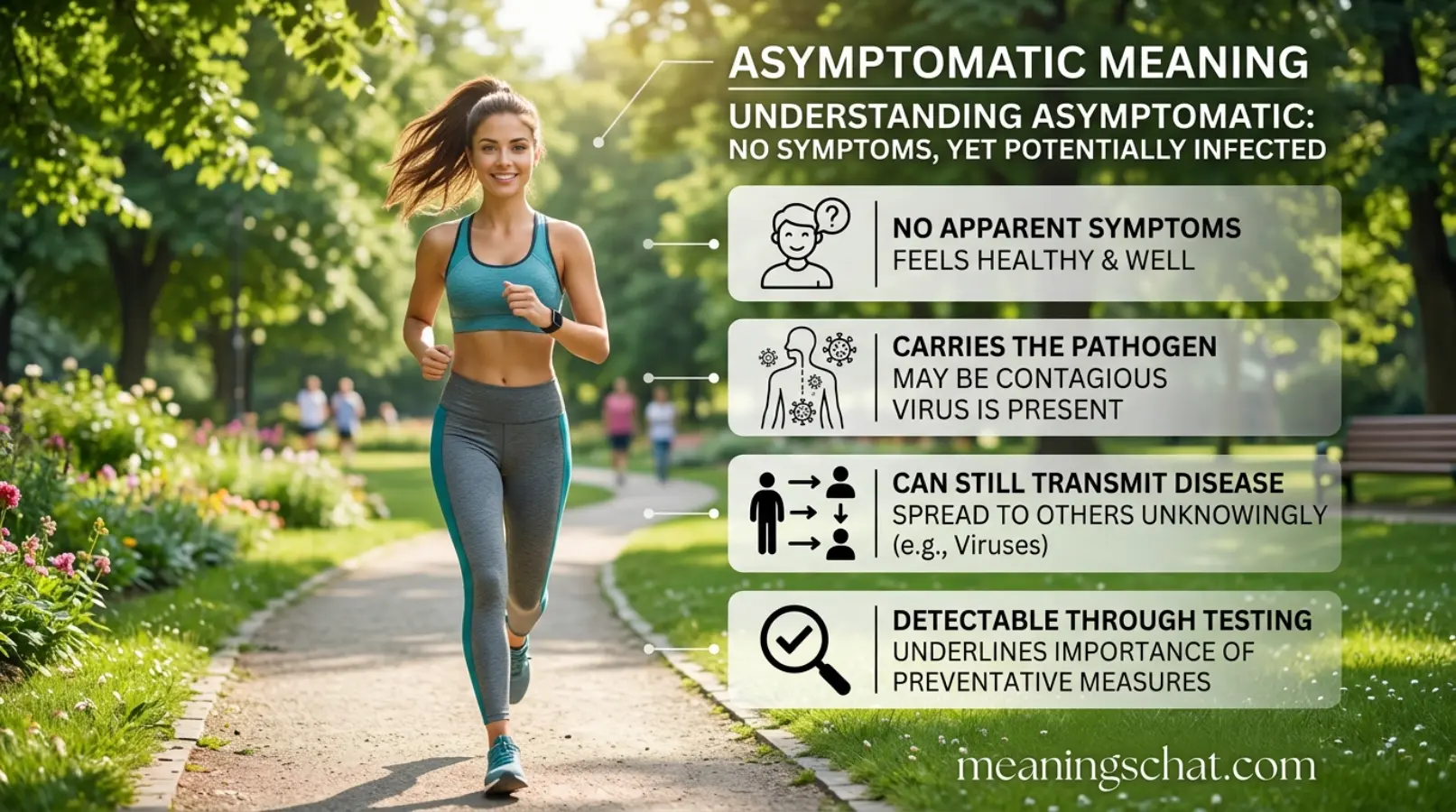
Asymptomatic meaning is something many people search after reading a medical report, seeing a news article, or hearing someone say they tested positive for an illness but had no symptoms. At first, the word can sound confusing because it’s long and unfamiliar.
The good news is that understanding it is actually simple. Once you know what asymptomatic means, you’ll easily recognize it in health conversations, doctor’s appointments, news reports, and even social media posts. This guide explains the meaning in plain English, shows real-life examples, and helps you know when and how to use the term correctly.
What Does Asymptomatic Mean?
The word asymptomatic means having a disease or medical condition without showing any noticeable symptoms.
Simply put, an asymptomatic person is sick or has a medical condition but doesn’t feel ill and doesn’t show obvious signs of the condition.
Let’s break the word down:
- “A-“ means without
- “Symptom” means a sign of illness
- “-atic” describes a condition
So asymptomatic literally means without symptoms.
Simple Definition
Asymptomatic: Having a disease or infection without experiencing noticeable symptoms.
For example:
- A person tests positive for COVID-19 but has no fever or cough.
- Someone has high blood pressure but feels completely healthy.
- A person carries a virus without realizing it.
These are all examples of being asymptomatic.
Is There More Than One Meaning?
Not really.
Unlike internet slang, asymptomatic has one primary medical meaning. However, healthcare professionals may use it in different situations, including:
- Viral infections
- Bacterial infections
- Genetic conditions
- Chronic diseases
- Certain cancers in early stages
The meaning always stays the same: the condition is present, but symptoms are absent.

Where Is Asymptomatic Used?
The word asymptomatic is mainly used in medical and health-related situations rather than casual texting.
Common places where you’ll see it include:
Hospitals and Clinics
Doctors often describe patients as asymptomatic when they have a condition but don’t show symptoms.
Example:
“The patient is asymptomatic despite testing positive.”
Medical Reports
Lab reports and health records frequently include this term.
Example:
“Patient remains asymptomatic.”
News Articles
Health news often discusses asymptomatic cases during disease outbreaks.
Example:
“Many infections were asymptomatic.”
Health Websites
Medical organizations explain diseases by mentioning whether people may become asymptomatic.
Social Media
People sometimes share experiences like:
“I tested positive but I’m asymptomatic.”
Schools and Workplaces
Health policies may mention asymptomatic individuals during screenings or outbreaks.
Who Uses This Word Most?
- Doctors
- Nurses
- Medical students
- Researchers
- Journalists
- Health officials
- General public discussing health topics
Unlike slang terms popular among teenagers, asymptomatic is used by people of all ages.

Examples of Asymptomatic in Conversation
Here are realistic examples showing how people naturally use the word.
Example 1
Sarah: Did you feel sick?
Emma: No, I was completely asymptomatic.
Example 2
Doctor: Your test came back positive.
Patient: Really? I feel fine.
Doctor: Yes, you’re asymptomatic.
Example 3
Alex: Why are they asking everyone to get tested?
Chris: Because some people are asymptomatic and don’t know they’re infected.
Example 4
Mom: Your cousin tested positive.
Dad: Is he okay?
Mom: Yes, he’s asymptomatic.
Example 5
Reporter: Several cases were identified this week.
Health Official: Most patients remain asymptomatic.
Example 6
Friend: You don’t look sick.
You: That’s because I’m asymptomatic.
Example 7
Nurse: Are you experiencing any symptoms?
Patient: No.
Nurse: We’ll record you as asymptomatic.
When to Use and When Not to Use Asymptomatic
Knowing when to use this word helps you communicate more accurately.
Use It When
You should use asymptomatic when talking about:
- Medical conditions
- Positive test results
- Health screenings
- Disease prevention
- Healthcare discussions
- Scientific articles
- Medical reports
Examples:
- “She was asymptomatic.”
- “Most infections were asymptomatic.”
- “The patient remains asymptomatic.”
Avoid Using It When
Don’t use asymptomatic for situations unrelated to health.
Incorrect:
- “He’s asymptomatic about homework.”
- “She’s asymptomatic about being late.”
These sentences don’t make sense because the word only relates to illnesses or medical conditions.
Is It Casual or Professional?
Here’s a quick overview.
| Situation | Appropriate? |
|---|---|
| Doctor appointment | ✅ Yes |
| Medical report | ✅ Yes |
| Health article | ✅ Yes |
| News report | ✅ Yes |
| School health discussion | ✅ Yes |
| Workplace health notice | ✅ Yes |
| Casual joke | ❌ Usually not |
| Internet slang | ❌ No |
The tone is professional, medical, and informative, not playful or flirty.
Similar Medical Terms or Alternatives
Here are some related words you may come across.
Symptomatic
Means showing symptoms of a disease.
Example:
“He is symptomatic because he has a fever and cough.”
Presymptomatic
Means a person currently has no symptoms but will develop them later.
Example:
“She was presymptomatic when she tested positive.”
Carrier
Someone who carries a disease-causing organism and may spread it, sometimes without symptoms.
Example:
“He is an asymptomatic carrier.”
Infection
Means harmful germs have entered the body.
Not everyone with an infection develops symptoms.
Diagnosis
The process of identifying a disease or condition.
Someone can receive a diagnosis even if they are asymptomatic.
Why Is Asymptomatic Important?
Being asymptomatic can make certain diseases harder to detect because people often don’t realize they’re ill.
This is important because:
- They may delay medical care.
- They may unknowingly spread infectious diseases.
- Regular health screenings become more valuable.
- Doctors rely on testing rather than symptoms alone.
Many health conditions can remain asymptomatic for months or even years before being discovered.
Examples include:
- High blood pressure
- Some sexually transmitted infections
- Early-stage diabetes
- Certain cancers
- Some viral infections
That’s why routine checkups are important even if you feel healthy.
Common Misunderstandings
Myth 1: Asymptomatic Means Healthy
Not always.
A person can feel healthy while still having a medical condition.
Myth 2: Asymptomatic People Can’t Spread Disease
This depends on the disease.
For some infections, asymptomatic people can still spread the illness.
Myth 3: No Symptoms Means No Treatment
Not necessarily.
Some asymptomatic conditions still require monitoring or treatment.
Myth 4: Asymptomatic Means the Test Is Wrong
False.
Many medical conditions genuinely produce no noticeable symptoms.
FAQs
What does asymptomatic mean?
It means having a disease or medical condition without showing any symptoms.
What does asymptomatic mean from a doctor?
It means the doctor believes you have a condition or tested positive for it, but you aren’t experiencing noticeable symptoms.
Is asymptomatic a slang word?
No.
It is a medical term used by healthcare professionals and the general public.
Can I use asymptomatic in professional conversations?
Yes.
It is commonly used in healthcare, research, hospitals, workplaces, and formal medical discussions.
Does asymptomatic have any flirty meaning?
No.
The word has no romantic or flirty meaning. It is strictly medical.
Is asymptomatic still commonly used in 2025?
Yes.
The term continues to appear in medical care, public health information, research, and news articles.
Conclusion
Understanding asymptomatic meaning is easier than it first appears. The term simply describes someone who has a disease or medical condition without showing noticeable symptoms. Although they may feel perfectly healthy, medical testing can still detect the condition.
Whenever you hear a doctor, read a medical report, or see a health article mention someone being asymptomatic, you’ll know it means the illness is present even though symptoms are not. Using the term correctly can help you better understand health information and communicate confidently in medical conversations.

William Jones is a dedicated writer at Meaningschat who specializes in explaining text slang, abbreviations, and online language trends. He enjoys creating simple, engaging, and reader-friendly content that helps people understand modern digital communication with ease. His writing style is clear, conversational, and informative, making complex internet terms easy for everyone to follow. In his free time, William loves exploring social media trends, reading about digital culture, and discovering how online language continues to evolve.