Have you ever opened a chat and seen someone type “sry” and paused for a second, wondering what it actually means? You’re not alone. Many people, especially new social media users, often come across short forms like this in texting and feel confused. It looks simple, but it can change the tone of a conversation completely.
“Sry” is one of the most common internet slang abbreviations used in everyday chats. People use it to save time, type faster, and keep conversations casual. You’ll see it in messages between friends, on Snapchat streaks, Instagram DMs, and even gaming chats. In this article, you’ll learn exactly what “sry” means, how to use it correctly, and when it might not be appropriate. We’ll also explore real examples so you can understand it like a pro.
What Does Sry Mean in Text?
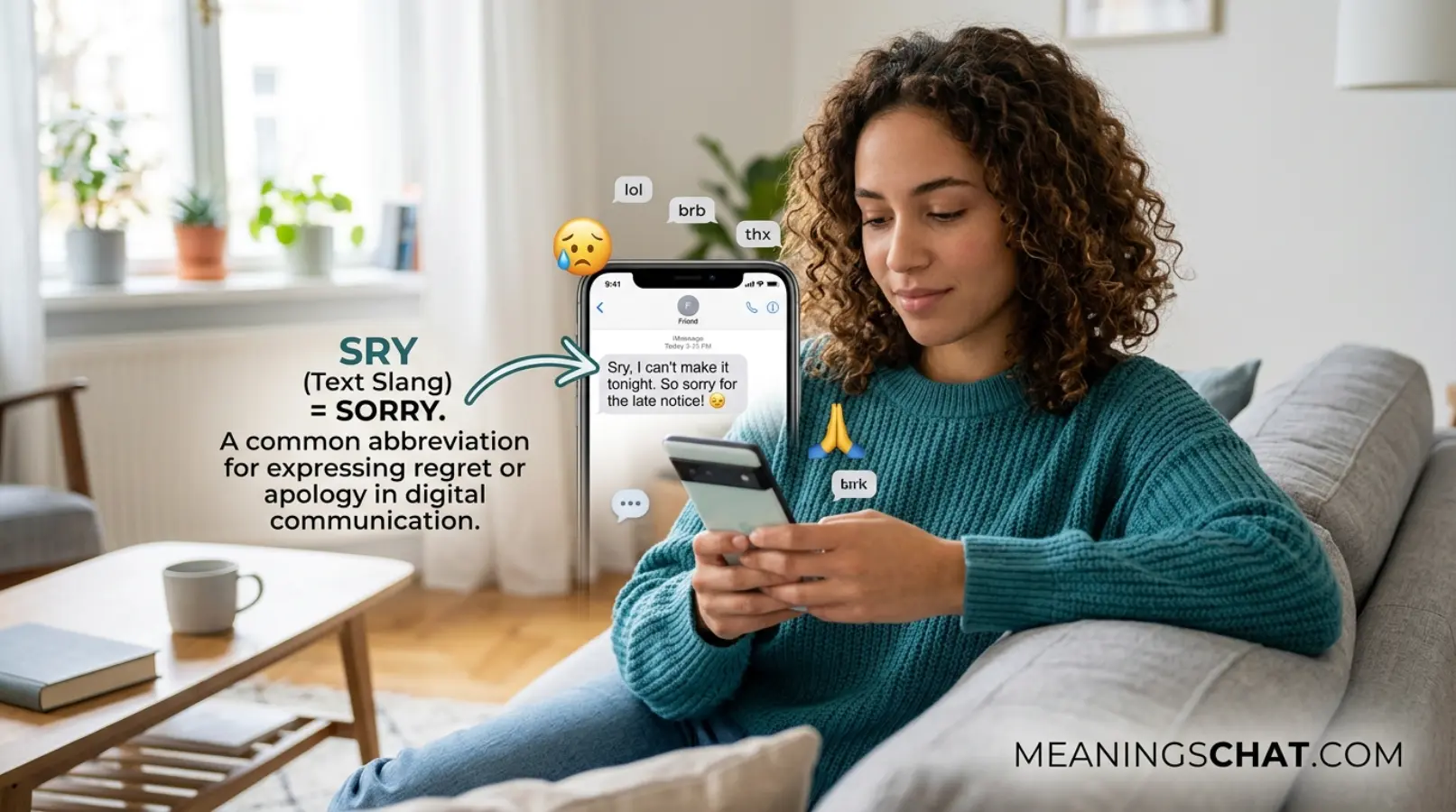
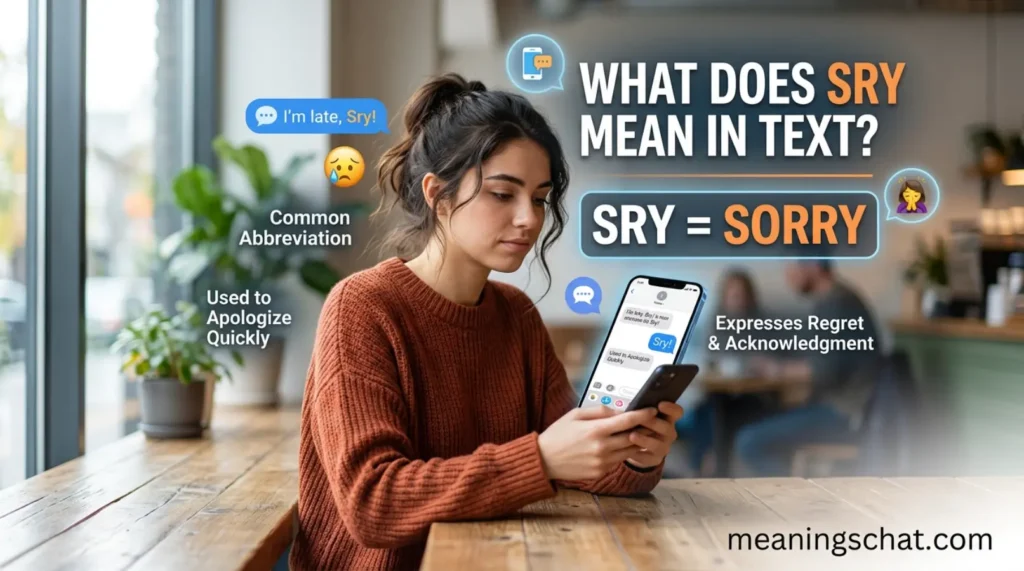
“Sry” is a short form of the word “sorry.” It is used in digital communication to quickly express apology or regret without typing the full word.
In simple terms, when someone writes “sry,” they are saying they feel bad about something or want to apologize for a mistake, delay, or inconvenience. It carries the same meaning as “sorry,” but in a more casual and fast way.
For example:
- “sry I missed your call” means “sorry I missed your call.”
This abbreviation is part of internet slang where vowels are often removed to make words shorter. Just like “pls” for “please” or “msg” for “message,” “sry” is used for convenience.
Does “Sry” Have Different Meanings?
Generally, “sry” only means “sorry.” However, the tone can change depending on context:
- A simple apology: “sry I was late”
- A soft emotional apology: “sry about that 😔”
- A quick casual response: “sry lol my bad”
So while the meaning stays the same, the emotional weight depends on how it is used.
Where Is Sry Used?
“Sry” is widely used across digital platforms where quick messaging is common. It is not limited to one app or audience.
1. Social Media Platforms
You will often see “sry” on:
- Instagram DMs
- Snapchat chats
- TikTok comments
- Facebook Messenger
People use it to respond quickly or casually apologize in conversations.
2. Text Messaging (SMS)
In regular texting, “sry” is used when someone wants to type fast, especially in informal chats with friends or family.
3. Online Gaming
Gamers often use “sry” during gameplay:
- “sry lag”
- “sry I missed that shot”
It helps keep communication fast without breaking focus.
4. Among Teens and Young Adults
The slang is especially popular among teenagers and Gen Z users because it fits modern fast-paced communication styles.
Formal vs Informal Use
“Sry” is almost always informal. You will rarely see it in professional emails or official communication.
Examples of Sry in Conversation
Here are some realistic chat-style examples to help you understand how “sry” is used in daily communication:
- Friend chat:
A: “Why didn’t you reply?”
B: “sry I was sleeping” - Late response:
“sry for the late reply, was busy with work” - Cancel plans:
“sry can’t make it today, something came up” - Gaming chat:
“sry bro, my internet lagged” - Casual mistake:
“sry lol I sent that to the wrong person” - Emotional apology:
“sry I didn’t mean to hurt you 😔” - Light humorous tone:
“sry not sry 😂”
These examples show that “sry” can be serious, casual, or even funny depending on the situation.
When to Use and When Not To Use Sry
Understanding when to use “sry” is important because tone matters a lot in digital communication.
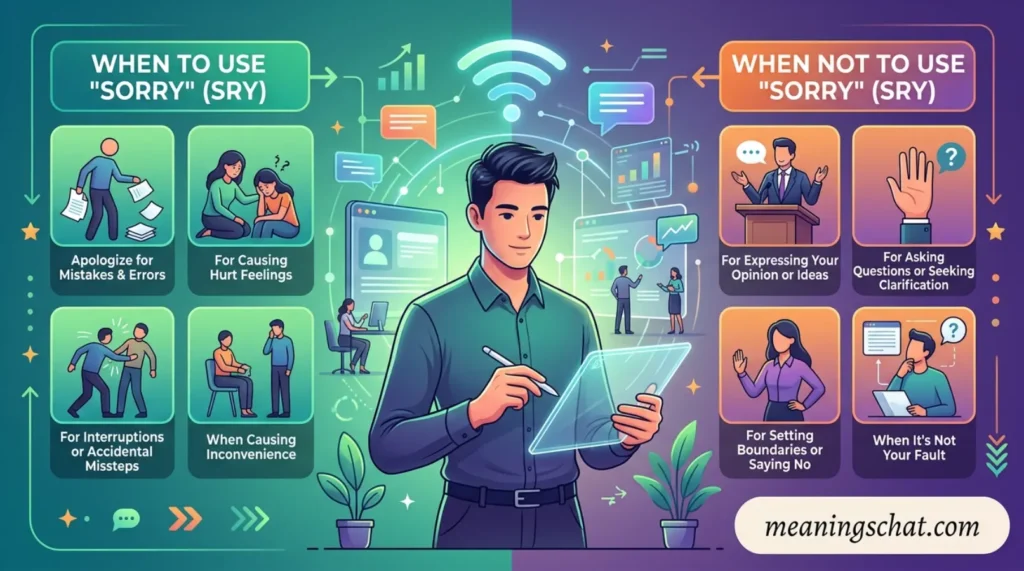
When to Use “Sry”
You can safely use “sry” in:
- Casual chats with friends
- Social media conversations
- Gaming communication
- Quick informal texting
- Light apologies in daily life
It works best when the conversation is relaxed and informal.
When Not to Use “Sry”
There are situations where “sry” should be avoided:
- Professional emails or workplace chats:
It may look unprofessional or careless. Instead, use “sorry” or “I apologize.” - Serious situations:
If you are apologizing for something important, using full words shows sincerity. - Formal communication:
School assignments, official messages, or formal requests should avoid slang.
Tone Matters
Even though “sry” is simple, it can sometimes feel less serious. For example:
- “sry” → casual and quick
- “sorry” → more respectful and formal
So choosing the right version depends on your relationship and situation.
Similar Slang Words or Alternatives
If you are learning “sry meaning in text,” it helps to know related slang terms too. These are often used in similar contexts:
1. Srry
A slightly longer version of “sry,” still meaning “sorry.” It sometimes feels a bit more expressive.
2. Sorry
The full form, used in formal and emotional situations.
3. My bad
A casual way of saying you made a mistake. Example: “my bad, I forgot.”
4. Oops
Used when a small mistake happens. Example: “oops, sent wrong pic.”
5. Apologies
A more formal and respectful version, often used in professional settings.
These alternatives help you adjust your tone depending on who you are talking to.
FAQs
What does Sry mean from a girl?
It means the same as “sorry.” It simply shows an apology or regret, regardless of gender. The tone may feel softer depending on context or emojis used.
Is Sry slang rude?
No, “sry” is not rude. However, in serious or formal situations, it may feel too casual or less respectful.
Can I use Sry in professional chats?
It is not recommended. In work emails or professional messages, it’s better to write “sorry” or “I apologize.”
Does Sry have any flirty meaning?
Not directly. However, in casual or playful chats, it can sometimes appear flirty depending on emojis and context.
Is Sry still popular in 2025?
Yes, “sry” is still widely used in 2025, especially in texting, gaming, and social media conversations among younger users.
Conclusion
“Sry” is a simple and widely used internet slang that means “sorry.” It is commonly used in casual digital communication to express quick apologies. While it is perfect for friendly chats, gaming, and social media, it should be avoided in formal or professional situations where full words are expected.
The key to using “sry” confidently is understanding your audience and the tone of the conversation. If it’s casual, go ahead and use it. If it’s serious, switch to “sorry” for better clarity and respect. With this knowledge, you can now recognize and use “sry” like a fluent digital communicator.

Jimmy Johan is a passionate writer at Meaningschat who specializes in explaining text slang, internet terms, and digital communication trends. He is known for his simple, engaging, and reader-friendly writing style that makes modern language easy to understand. Jimmy enjoys researching online culture, social media trends, and the evolving world of texting abbreviations. Through his content, he aims to help readers stay informed, connected, and confident in today’s digital conversations.