
Have you ever been reading a medical report or talking to someone about their health when you came across the word “chronic” and wondered what it actually meant? Maybe your doctor mentioned a chronic condition, or you saw the term while searching online. At first, it can sound confusing or even scary.
The good news is that understanding chronic meaning in health is much easier than you might think. In this guide, you’ll learn what the term means, where healthcare professionals use it, common examples, and how it differs from short-term illnesses. By the end, you’ll feel much more confident whenever you hear or read this medical word.
What Does Chronic Mean in Health?
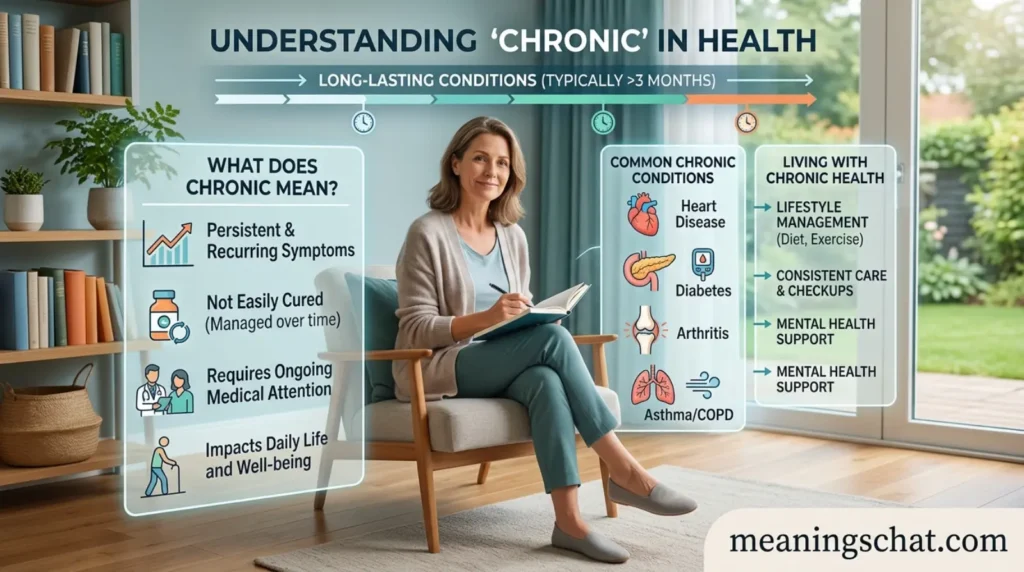
The word chronic refers to a health condition or illness that lasts for a long time, usually three months or more. Unlike illnesses that appear suddenly and disappear quickly, chronic conditions develop slowly or continue over an extended period.
In healthcare, doctors use the term to describe diseases, pain, or symptoms that require ongoing management instead of a quick cure.
Simple Definition
Chronic = Long-lasting or persistent health condition.
A chronic illness may:
- Last for months or years
- Need continuous treatment
- Require lifestyle changes
- Sometimes have no complete cure
- Be controlled with proper medical care
For example:
- Diabetes
- Asthma
- Arthritis
- High blood pressure
- Chronic kidney disease
These conditions often need regular doctor visits, medication, and healthy habits to keep symptoms under control.
Chronic vs Acute
People often confuse chronic with acute, but they mean very different things.
| Chronic | Acute |
|---|---|
| Long-lasting | Short-term |
| Develops slowly or continues for months/years | Starts suddenly |
| Needs ongoing management | Usually resolves quickly |
| Examples: Diabetes, arthritis | Examples: Flu, broken bone, food poisoning |
Think of it this way:
- Acute problems happen quickly.
- Chronic problems stay for a long time.
Where Is Chronic Used?
Unlike internet slang, chronic is a medical term used in many healthcare settings. You will commonly see or hear it in:
Hospitals
Doctors use it when diagnosing long-term illnesses.
Example:
“Your symptoms suggest a chronic respiratory condition.”
Medical Reports
Laboratory reports and health records often include the word.
Example:
“Patient has chronic lower back pain.”
Doctor Consultations
Healthcare providers explain treatment plans using this term.
Example:
“We’ll manage this chronic condition with medication.”
Health Websites
Educational articles frequently discuss chronic diseases.
Examples include:
- Chronic fatigue
- Chronic migraine
- Chronic kidney disease
Health Insurance Documents
Insurance companies sometimes classify illnesses as acute or chronic because treatment plans differ.
Medical Research
Scientists use the word when studying long-term diseases and patient outcomes.
Common Types of Chronic Conditions
Many illnesses can become chronic. Some of the most common include:
Diabetes
Diabetes affects how your body controls blood sugar and usually requires lifelong management.
High Blood Pressure
This condition often has no symptoms but increases the risk of heart disease and stroke.
Asthma
Asthma causes inflammation in the airways and can continue throughout life.
Arthritis
Arthritis affects the joints and often causes ongoing pain and stiffness.
Chronic Kidney Disease
This condition gradually reduces kidney function over time.
Chronic Obstructive Pulmonary Disease (COPD)
COPD makes breathing difficult and usually worsens without proper treatment.
Chronic Pain
Pain lasting more than three months is generally considered chronic pain.
Examples of Chronic in Healthcare Conversations
Here are some realistic conversations showing how the word naturally appears.
Example 1
Patient: My cough has lasted for months.
Doctor: It may be a chronic condition, so we’ll need more tests.
Example 2
Friend: Why do you visit the doctor so often?
Person: I have a chronic illness that needs regular checkups.
Example 3
Doctor: Your blood pressure is still high.
Patient: Does that mean it’s chronic?
Doctor: Yes, but medication can help manage it.
Example 4
Family Member: Is your back feeling better?
Patient: Unfortunately, it’s become chronic pain.
Example 5
Nurse: Do you have any chronic diseases?
Patient: Yes, I have asthma and diabetes.
Example 6
Doctor: Your symptoms have continued for over six months.
Patient: So this is considered chronic?
Doctor: Yes, it fits the medical definition.
Example 7
Friend: Will this ever go away?
Person: My doctor says it’s a chronic condition, but treatment keeps it under control.
When Is the Term Chronic Used?
Healthcare professionals use the word when:
- Symptoms last several months
- A disease requires long-term treatment
- A condition needs continuous monitoring
- Recovery is slow or ongoing
- Lifestyle changes are necessary
The term helps doctors explain that the condition is long-term rather than temporary.
When Should You Not Use Chronic?
Although the word is common in healthcare, it isn’t appropriate in every situation.
Avoid using chronic when:
- Referring to a short cold
- Talking about a temporary injury
- Describing a one-time illness
- Guessing someone’s medical condition
- Self-diagnosing without professional advice
For example:
❌ “I had a chronic headache yesterday.”
A headache lasting one day is usually not chronic.
Instead:
✅ “I’ve had headaches for several months.”
Does Chronic Always Mean Serious?
No.
Many people think chronic automatically means dangerous, but that’s not always true.
Some chronic conditions are mild and easily managed.
Examples include:
- Mild asthma
- Seasonal allergies that become persistent
- Controlled high blood pressure
Others can be more serious if left untreated.
The severity depends on:
- The specific disease
- Overall health
- Treatment
- Lifestyle
- Regular medical care
Many people with chronic illnesses live long, healthy, and active lives.
Common Symptoms of Chronic Conditions
Symptoms vary depending on the illness, but long-term conditions often include:
- Ongoing pain
- Fatigue
- Persistent cough
- Shortness of breath
- Joint stiffness
- Frequent headaches
- High blood sugar
- Swelling
- Difficulty sleeping
Not every chronic illness has noticeable symptoms. For example, high blood pressure is often called the “silent condition” because many people don’t feel sick.
Causes of Chronic Diseases
There isn’t one single cause.
Many chronic illnesses develop because of several factors working together.
Common causes include:
- Genetics
- Aging
- Smoking
- Poor diet
- Physical inactivity
- Obesity
- Long-term infections
- Environmental exposure
- High stress
- Excessive alcohol use
Some chronic diseases cannot be prevented, while others become much less likely with healthy habits.
How Doctors Diagnose Chronic Conditions
Doctors usually consider:
- How long symptoms have lasted
- Medical history
- Physical examination
- Blood tests
- Imaging scans
- Family history
- Lifestyle habits
Sometimes diagnosis takes time because symptoms develop gradually.
How Chronic Conditions Are Treated
Treatment depends on the disease.
Doctors may recommend:
Medication
Many chronic diseases require daily medicine.
Lifestyle Changes
Healthy eating, exercise, and quitting smoking often improve symptoms.
Regular Monitoring
Routine appointments help track progress.
Physical Therapy
Helpful for chronic pain and joint problems.
Mental Health Support
Living with long-term illness can be emotionally challenging, so counseling may help.
Surgery
Some chronic conditions require surgical treatment if other options are ineffective.
Can Chronic Diseases Be Prevented?
Not all chronic illnesses are preventable, but many risks can be reduced.
Healthy habits include:
- Eating nutritious foods
- Staying physically active
- Maintaining a healthy weight
- Avoiding tobacco
- Limiting alcohol
- Managing stress
- Getting enough sleep
- Attending regular health checkups
Small lifestyle improvements can significantly lower the risk of several chronic diseases.
Similar Medical Terms
Here are some related medical words you may encounter.
Acute
A condition that starts suddenly and usually lasts a short time.
Persistent
Symptoms that continue without stopping.
Long-Term Condition
Another way to describe a chronic illness.
Ongoing
Used to describe continuing treatment or symptoms.
Progressive
A disease that gradually worsens over time.
Common Misunderstandings About Chronic
Myth: Chronic means incurable.
Fact: Many chronic conditions can be successfully managed.
Myth: Only older adults develop chronic illnesses.
Fact: Children and young adults can also have chronic diseases.
Myth: Chronic always means severe.
Fact: Some chronic conditions are mild and well controlled.
Myth: Chronic illnesses prevent normal life.
Fact: Millions of people with chronic conditions work, travel, exercise, and enjoy everyday activities.
FAQs
What does chronic mean in health?
It means a disease, symptom, or medical condition that lasts for three months or longer and usually requires ongoing management.
Is chronic always a serious illness?
No. Some chronic conditions are mild, while others require more intensive treatment. The severity depends on the specific disease.
Can chronic diseases be cured?
Some chronic illnesses cannot be completely cured, but many can be effectively controlled with medication, healthy habits, and regular medical care.
What’s the difference between chronic and acute?
Acute illnesses begin suddenly and usually resolve quickly, while chronic conditions develop slowly or last for months or years.
Can young people have chronic diseases?
Yes. People of any age can develop chronic conditions such as asthma, diabetes, epilepsy, or autoimmune diseases.
Is chronic still a common medical term in 2025?
Yes. Healthcare professionals around the world continue to use chronic as the standard medical term for long-lasting health conditions.
Conclusion
Understanding chronic meaning in health helps you better understand medical conversations, doctor’s appointments, and health information. Simply put, chronic describes a condition that lasts for months or years and often requires ongoing care rather than a quick treatment. While some chronic diseases can be challenging, many are manageable with the right combination of medication, healthy lifestyle choices, and regular medical support. The next time you hear the word chronic, you’ll know it refers to the duration of a condition not necessarily how severe it is.

William Jones is a dedicated writer at Meaningschat who specializes in explaining text slang, abbreviations, and online language trends. He enjoys creating simple, engaging, and reader-friendly content that helps people understand modern digital communication with ease. His writing style is clear, conversational, and informative, making complex internet terms easy for everyone to follow. In his free time, William loves exploring social media trends, reading about digital culture, and discovering how online language continues to evolve.