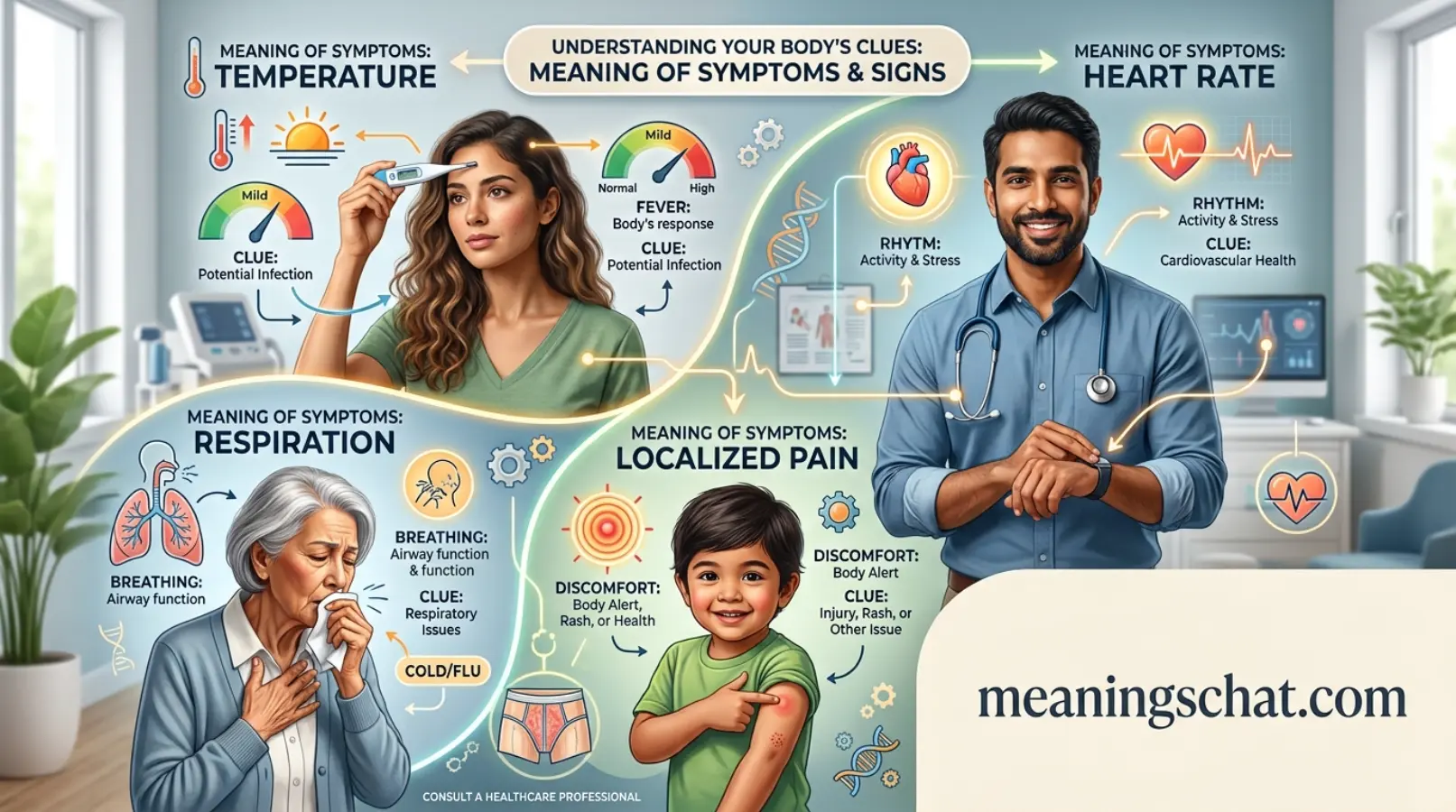
Symptoms meaning is something many people search after seeing the word in a health article, a doctor’s message, or even a text from a friend. Imagine someone sends you a message saying, “What symptoms are you having?” If you’re unsure what “symptoms” means, you’re not alone. It’s one of those common words that everyone hears, but not everyone fully understands.
The good news is that the meaning is simple. Whether you’re reading medical information, chatting online, or talking to a healthcare provider, knowing what symptoms means helps you communicate clearly. In this guide, you’ll learn the definition, where the word is used, real conversation examples, when it’s appropriate to use, and answers to common questions.
What Does Symptoms Meaning in Text?
The word symptoms refers to physical or mental signs that a person experiences when they have an illness, injury, or health condition.
Unlike internet slang or abbreviations, symptoms is a standard English word used in everyday conversations and medical settings.
For example:
- Fever is a symptom of the flu.
- A sore throat can be a symptom of a cold.
- Headaches may be symptoms of stress or dehydration.
A symptom is something you feel or notice yourself, while a sign is something another person, such as a doctor, can observe.
Simple Definition
Symptoms = The feelings or changes in your body that suggest something may be wrong.
Common symptoms include:
- Headache
- Fever
- Cough
- Fatigue
- Dizziness
- Nausea
- Muscle pain
- Shortness of breath
Sometimes people also use “symptoms” in a non-medical way, such as:
- “The company is showing symptoms of financial trouble.”
Here, the word simply means indications or warning signs that a problem exists.

Where Is Symptoms Used?
The word symptoms appears in many situations, both online and offline.
Text Messages
Friends and family often ask about symptoms when someone feels sick.
Example:
“What symptoms do you have today?”
Healthcare Apps
Many telehealth services ask users to describe their symptoms before speaking with a doctor.
Social Media
People frequently post about symptoms when discussing seasonal illnesses, allergies, or personal health experiences.
Example:
“My allergy symptoms are so bad today.”
Medical Websites
Health articles often explain which symptoms are linked to certain illnesses.
Example:
“Common symptoms include fever and cough.”
Schools and Workplaces
Teachers and employers may ask people experiencing symptoms to stay home to prevent spreading illness.
Who Uses the Word?
The word is commonly used by:
- Doctors
- Nurses
- Parents
- Students
- Teachers
- Employers
- Friends and family
- Anyone discussing health
Unlike internet slang, symptoms is understood by people of all ages.
Examples of Symptoms in Conversation
Here are some natural examples of how the word appears in everyday conversations.
Example 1
Alex: How are you feeling today?
Mia: My symptoms are much better now.
Example 2
Ryan: What symptoms do you have?
Emma: Mostly a sore throat and a cough.
Example 3
Friend: Did your fever go away?
You: Yes, most of my symptoms have disappeared.
Example 4
Coworker: Are you coming to work?
You: Not today. My symptoms are getting worse.
Example 5
Parent: Tell me your symptoms.
Child: My stomach hurts and I feel dizzy.
Example 6
Friend: Should you see a doctor?
You: I think so because my symptoms have lasted several days.
Example 7
Sibling: Are your allergy symptoms acting up again?
You: Yes, the pollen is really bothering me.
These conversations show that the word fits naturally into both casual and professional discussions.
When to Use and When Not to Use Symptoms
Understanding the right context helps you use the word confidently.
When to Use It
Use symptoms when talking about:
- Illness
- Injury
- Medical appointments
- Health updates
- Allergies
- Mental health concerns
- General well-being
Examples:
“I’ve had these symptoms since yesterday.”
“My symptoms are improving.”
“The doctor asked about my symptoms.”
When Not to Use It
Avoid using symptoms when you simply mean emotions or everyday feelings that are unrelated to health.
Incorrect:
“I’m having symptoms because I’m excited.”
Better:
“I’m feeling excited.”
Also avoid replacing the word with internet slang in formal medical situations.
Is It Formal or Casual?
The word is appropriate in nearly every setting.
You can use it in:
- Text messages
- Emails
- Doctor appointments
- School
- Workplace conversations
- Medical reports
Because it’s standard English, it never sounds inappropriate when discussing health.
Similar Words or Alternatives
Here are several words related to symptoms and how they differ.
Signs
Visible evidence of a health condition that others can observe.
Example:
A rash is often considered a sign.
Condition
A person’s overall medical problem or illness.
Example:
She has a chronic health condition.
Illness
A disease or sickness affecting the body or mind.
Example:
The illness caused several symptoms.
Diagnosis
The identification of a disease after evaluating symptoms and medical tests.
Example:
The doctor confirmed the diagnosis.
Side Effects
Unexpected reactions caused by medicine or treatment.
Example:
Sleepiness is a common side effect of some medications.
FAQs
What does symptoms mean from a girl?
It means exactly the same as when anyone else uses the word. She’s referring to health problems or physical feelings related to an illness or condition.
Is symptoms slang?
No. Symptoms is not slang. It is a standard English word used in everyday language and healthcare.
Can I use symptoms in professional chats?
Yes. The word is perfectly appropriate in professional emails, workplace conversations, schools, hospitals, and medical discussions.
Does symptoms have any flirty meaning?
No. The word has no romantic or flirty meaning. It simply refers to signs or feelings associated with a health condition.
Is symptoms still commonly used in 2025?
Yes. The word remains one of the most commonly used health-related terms in conversations, medical websites, news reports, and social media.
What’s the difference between symptoms and signs?
Symptoms are experiences that a person notices, such as pain or nausea. Signs are observations that others, especially healthcare professionals, can see or measure, such as a rash or high blood pressure.
Conclusion
The symptoms meaning is simple: it refers to the physical or mental feelings that indicate an illness, injury, or health condition. Unlike internet slang, it’s a standard English word that appears in text messages, doctor visits, workplaces, schools, and everyday conversations. Whether someone asks about your symptoms or you’re reading a medical article, understanding the word makes communication easier. Use it whenever you’re talking about health, and you’ll be using it correctly in both casual and professional situations.

William Jones is a dedicated writer at Meaningschat who specializes in explaining text slang, abbreviations, and online language trends. He enjoys creating simple, engaging, and reader-friendly content that helps people understand modern digital communication with ease. His writing style is clear, conversational, and informative, making complex internet terms easy for everyone to follow. In his free time, William loves exploring social media trends, reading about digital culture, and discovering how online language continues to evolve.