Have you ever seen the name Michael in a message, social media profile, or online conversation and wondered what it actually means? Maybe a friend mentioned the name, or you came across it while reading comments online. Many people are curious about the meaning behind popular names, especially when they have a rich history and cultural significance.
If you’ve searched for Michael meaning explained, you’re in the right place. In this guide, you’ll learn what the name Michael means, where it comes from, how people use it today, and why it remains one of the most popular names around the world. We’ll also look at examples, variations, and common questions people ask about the name.
What Does Michael Mean in Text?
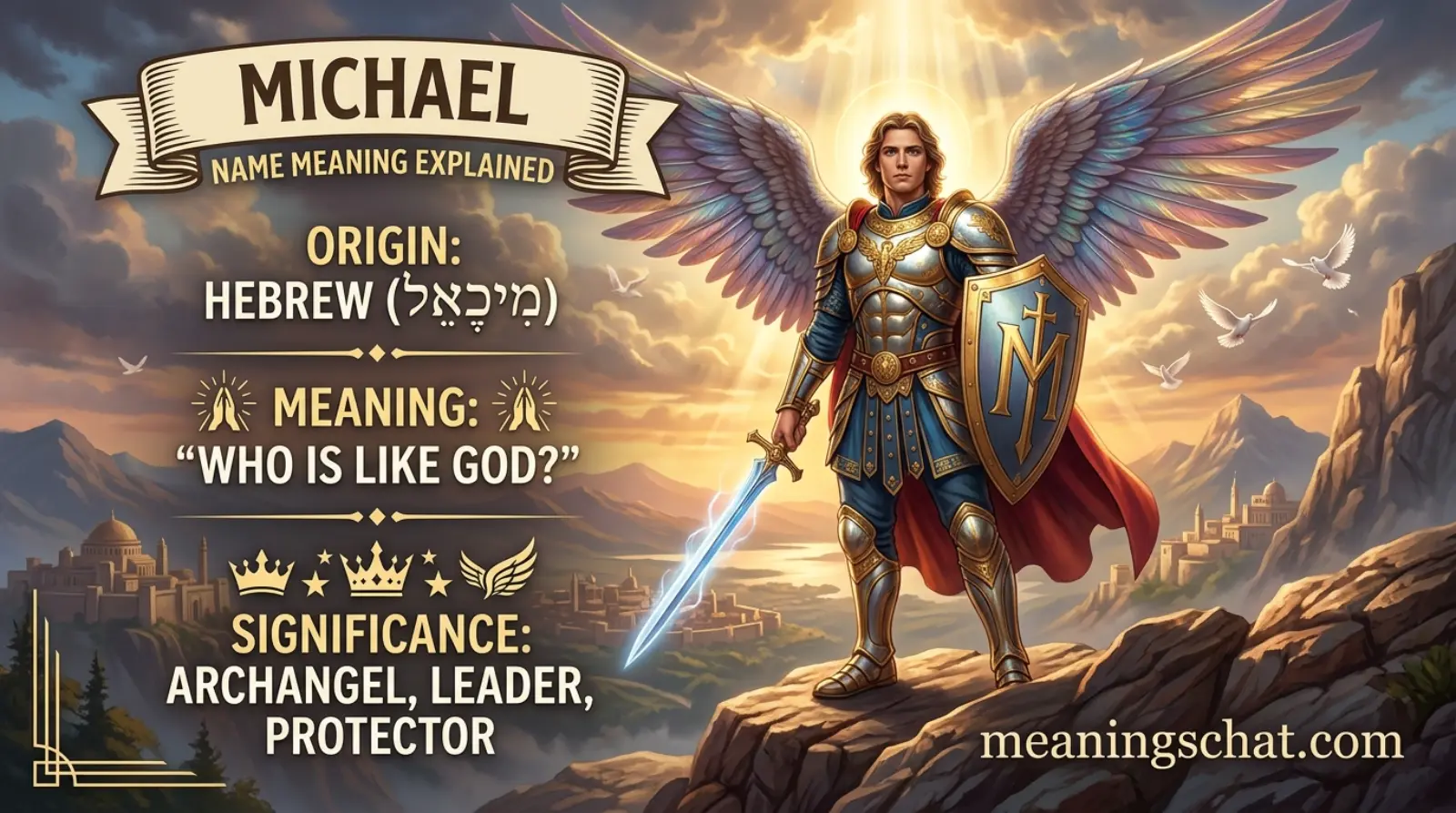
The name Michael is a traditional male given name with deep historical and religious roots. It comes from the Hebrew name Mikha’el (מִיכָאֵל).
The meaning of Michael is:
“Who is like God?”
This phrase is considered a rhetorical question, implying that no one is equal to God. Because of this powerful meaning, Michael has been a respected and widely used name for centuries.
Unlike internet abbreviations or text slang, Michael is not an acronym. It is a personal name that appears in everyday conversations, texts, social media posts, and professional settings.
Variations of Michael
The name Michael has many forms across different languages and cultures:
- Miguel (Spanish)
- Michel (French)
- Mikhail (Russian)
- Michele (Italian)
- Mikael (Scandinavian)
- Mihail (Eastern European)
Despite these variations, they all share the same original meaning.
Where Is Michael Used?
Michael is one of the most recognized names in the world. It appears across many platforms and situations.
Text Messages
People commonly use Michael when chatting with friends, family members, or coworkers.
Example:
“Michael said he’ll be here at 7.”
Social Media
You can find countless users named Michael on:
- TikTok
- Snapchat
- X (Twitter)
School and Workplace
Michael is a professional and widely accepted name, making it common in:
- Emails
- School records
- Business communications
- Professional networking platforms
Religious Contexts
The name is especially important in Christianity, Judaism, and Islam because of the archangel Michael, a significant spiritual figure.
General Popularity
Michael has remained popular for decades among:
- Children
- Teenagers
- Adults
- Professionals
- Public figures
Unlike trendy slang terms that come and go, Michael has maintained its popularity across generations.
Examples of Michael in Conversation
Here are some realistic examples showing how the name Michael appears in everyday chats.
Friendly Conversation
Alex: Are you coming to the game tonight?
Sam: Yeah, Michael is picking me up first.
School Chat
Emma: Did Michael finish the group project?
Ryan: Yes, he submitted it this morning.
Family Message
Mom: Have you talked to Michael today?
Daughter: Yes, he called after work.
Funny Conversation
Jake: Who ate the last slice of pizza?
Ben: Michael. It was definitely Michael.
Social Media Comment
User 1: Who recommended this movie?
User 2: Michael did, and he was right!
Planning an Event
Sarah: Is Michael coming to the party?
Lisa: He said he’ll arrive around 8 PM.
Workplace Chat
Manager: Can Michael join the meeting?
Employee: Sure, I’ll invite him now.
These examples show how naturally the name is used in everyday communication.
When to Use and When Not To Use Michael
Because Michael is a personal name rather than slang, its usage depends mainly on whether you’re referring to someone with that name.
When to Use Michael
Use Michael when:
- Referring to a person named Michael
- Introducing someone
- Mentioning a friend, family member, or coworker
- Writing formal or informal messages
- Creating professional documents
Examples:
- “Michael will handle the presentation.”
- “I met Michael at school.”
- “Michael shared the photos.”
When Not To Use Michael
Avoid using Michael when:
- You are referring to someone with a different name.
- You are trying to use it as internet slang or an abbreviation.
For example:
Incorrect: “Michael means BRB.”
Correct: “Michael is a person’s name.”
Formal vs Casual Use
One reason Michael remains popular is that it works well in both settings.
Casual:
“Michael is joining us later.”
Professional:
“Michael will lead today’s discussion.”
The name fits naturally in almost any social or professional environment.
History and Origin of the Name Michael
The name Michael has existed for thousands of years.
Hebrew Origins
Michael originated from the Hebrew language and appears in ancient religious texts.
The Hebrew components are often interpreted as:
- Mi = Who
- Kha = Like
- El = God
Combined, they create the phrase:
“Who is like God?”
Religious Significance
Michael is known as an archangel in several major religions.
In religious traditions, Michael is often associated with:
- Protection
- Leadership
- Strength
- Courage
- Faith
Because of these associations, many parents choose the name for its positive symbolism.
Global Popularity
Over time, Michael spread throughout Europe, North America, Asia, Africa, and other regions.
The name became especially popular during the 20th century and continues to be widely used today.
Personality Traits Often Associated With Michael
Although names do not determine personality, many people associate Michael with certain positive characteristics.
Common traits include:
- Leadership
- Reliability
- Confidence
- Intelligence
- Loyalty
- Determination
- Kindness
These perceptions come partly from the historical and religious significance of the name.
Of course, every individual is unique, regardless of their name.
Famous People Named Michael
Many well-known figures have contributed to the popularity of the name Michael.
Examples include:
- Michael Jordan
- Michael Jackson
- Michael Phelps
- Michael Douglas
- Michael Keaton
Because of these famous personalities, the name is often associated with success, talent, and achievement.
Similar Names or Alternatives
If you like the name Michael, you may also appreciate these related names.
Miguel
The Spanish version of Michael.
Mikael
A Scandinavian variation of Michael.
Mikhail
A Russian form of the name.
Michel
A French adaptation of Michael.
Gabriel
Another name with strong religious significance.
Daniel
A timeless biblical name with widespread popularity.
These names share similar historical or cultural roots.
FAQs
What does Michael mean from a girl?
The meaning does not change based on who says it. Michael simply means “Who is like God?” and is generally used as a male given name.
Is Michael slang?
No. Michael is not internet slang or a texting abbreviation. It is a traditional personal name.
Can I use Michael in professional chats?
Yes. Michael is completely appropriate for professional emails, workplace discussions, and business communication.
Does Michael have a flirty meaning?
No. Michael does not have a specific romantic or flirty meaning. It is simply a personal name.
Is Michael still popular in 2025?
Yes. Michael remains a widely recognized and commonly used name around the world, even though naming trends continue to evolve.
What language does Michael come from?
Michael comes from Hebrew and originated from the name Mikha’el.
Is Michael a biblical name?
Yes. Michael is a biblical name and is associated with the archangel Michael in religious traditions.
Conclusion
Now that you have Michael meaning explained, you know that Michael is a timeless name with Hebrew origins meaning “Who is like God?”. It is not a texting abbreviation or internet slang but rather one of the most respected and widely used names in history.
Whether you see Michael in a text message, social media post, workplace conversation, or religious context, the name carries a strong tradition and positive reputation. Understanding its meaning can help you appreciate why it has remained popular for generations and continues to be used confidently around the world.

William Jones is a dedicated writer at Meaningschat who specializes in explaining text slang, abbreviations, and online language trends. He enjoys creating simple, engaging, and reader-friendly content that helps people understand modern digital communication with ease. His writing style is clear, conversational, and informative, making complex internet terms easy for everyone to follow. In his free time, William loves exploring social media trends, reading about digital culture, and discovering how online language continues to evolve.