MCHC blood test meaning is something many people search for after looking at their blood test results and noticing unfamiliar medical abbreviations. It can feel confusing when you see terms like MCHC, MCV, or RBC on your report without knowing what they actually mean. The good news is that understanding MCHC is much easier than it sounds.
This guide explains the MCHC blood test in simple English. You’ll learn what MCHC means, why doctors measure it, what high or low results may indicate, normal ranges, and when you should talk to your healthcare provider. By the end, you’ll feel much more confident reading this part of your complete blood count (CBC) report.
What Does MCHC Blood Test Mean?
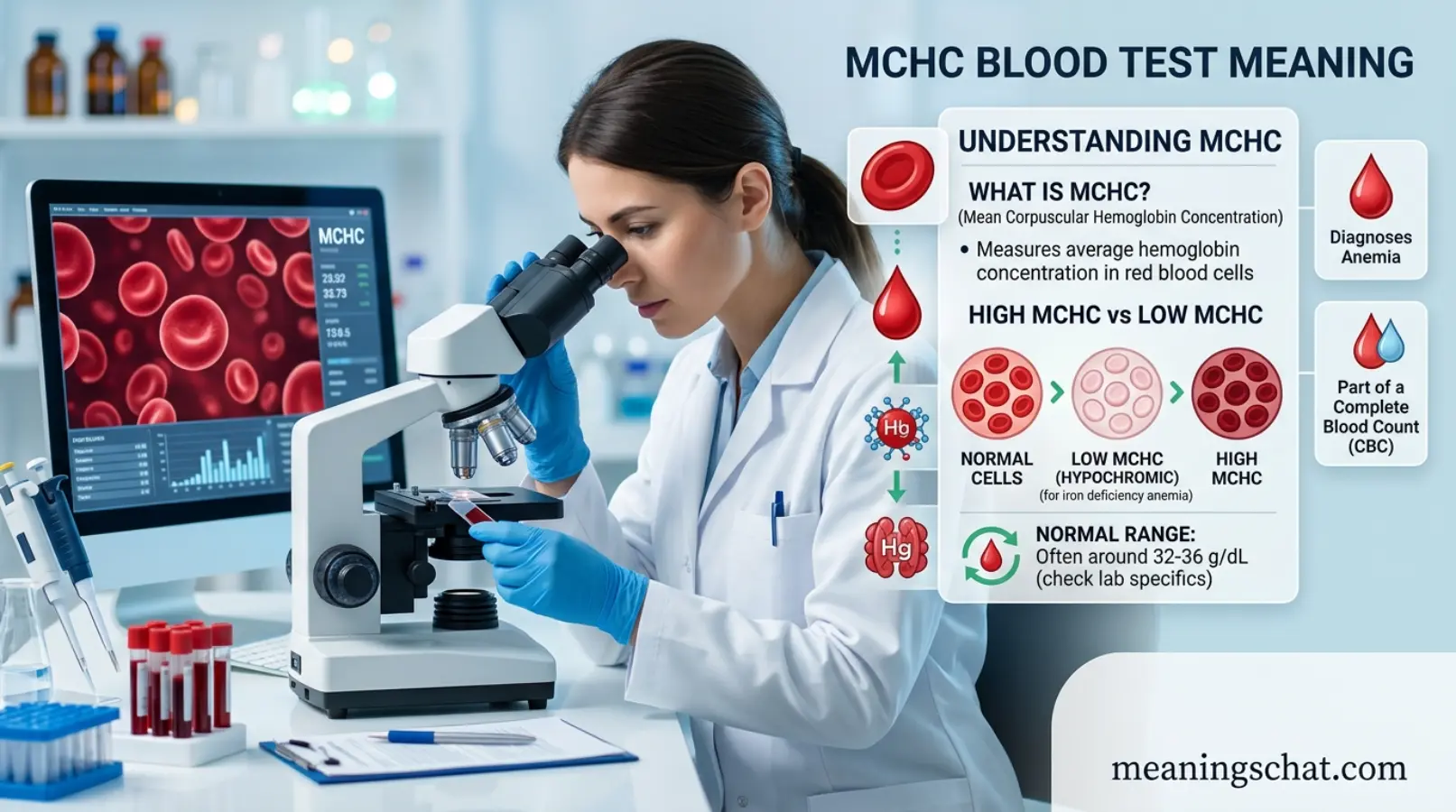
MCHC stands for Mean Corpuscular Hemoglobin Concentration.
It measures the average concentration of hemoglobin inside your red blood cells. Hemoglobin is the protein that carries oxygen from your lungs to every part of your body.
Unlike some other blood test values that count the number of blood cells, MCHC looks at how concentrated the hemoglobin is inside each red blood cell.
Doctors usually measure MCHC as part of a Complete Blood Count (CBC), one of the most common blood tests.
In simple words:
- MCHC tells you how much hemoglobin is packed into your red blood cells.
- It helps doctors identify different types of anemia and other blood disorders.
- It is interpreted together with other CBC values like hemoglobin, hematocrit, MCV, MCH, and RBC count.
Why Is the MCHC Blood Test Important?
Red blood cells deliver oxygen throughout your body. If they don’t contain enough hemoglobin, your tissues may not receive enough oxygen.
That can lead to symptoms such as:
- Fatigue
- Weakness
- Pale skin
- Dizziness
- Shortness of breath
- Headaches
- Poor concentration
The MCHC test helps doctors understand whether your red blood cells are carrying a normal amount of hemoglobin.
Instead of diagnosing a disease by itself, the test provides an important clue that helps identify the underlying cause of abnormal blood counts.
What Is the Normal MCHC Range?
The normal MCHC range is usually:
32 to 36 grams per deciliter (g/dL)
However, the exact range can vary slightly depending on the laboratory and testing equipment.
General reference values include:
| MCHC Result | Meaning |
|---|---|
| Below 32 g/dL | Low MCHC |
| 32–36 g/dL | Normal |
| Above 36 g/dL | High MCHC |
Your doctor always interprets these values alongside your age, symptoms, medical history, and other CBC results.
What Does Low MCHC Mean?
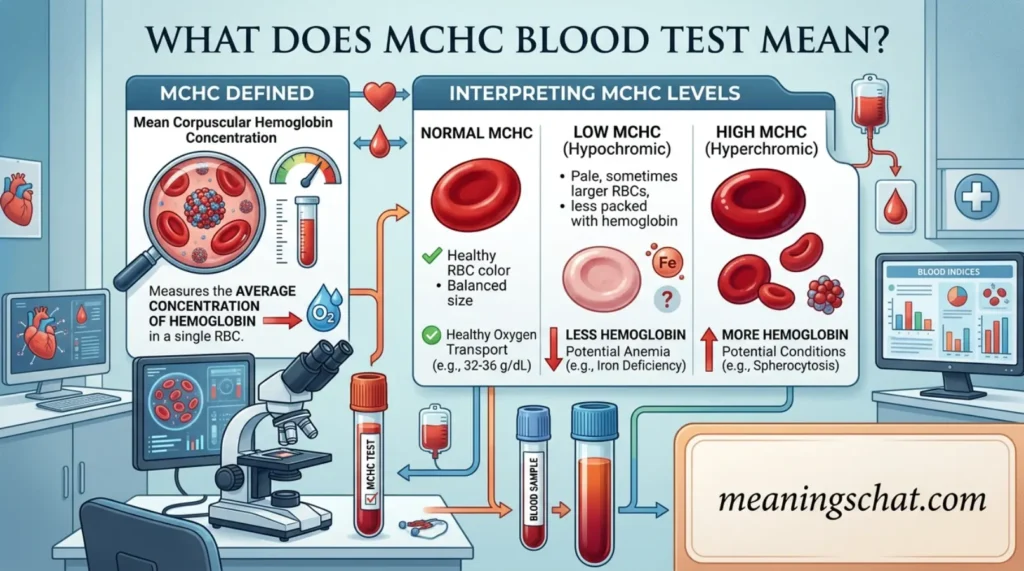
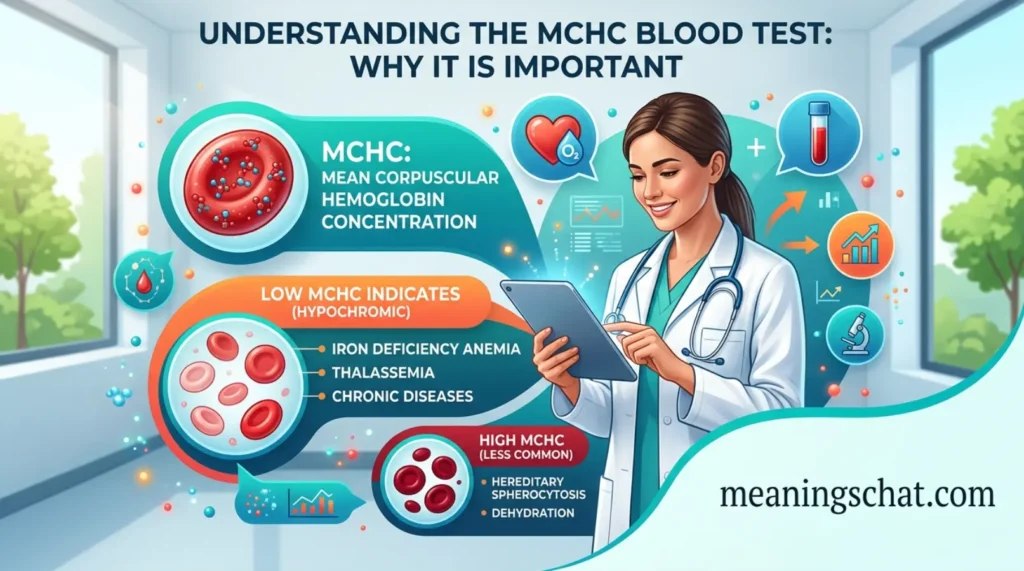
A low MCHC means your red blood cells contain less hemoglobin than normal.
This condition is called hypochromia, meaning the cells appear paler under a microscope.
Common Causes of Low MCHC
Several conditions can lower MCHC, including:
Iron Deficiency Anemia
This is the most common cause.
Without enough iron, your body cannot produce adequate hemoglobin.
Common symptoms include:
- Extreme tiredness
- Weakness
- Pale skin
- Cold hands and feet
- Brittle nails
Blood Loss
Long-term blood loss from heavy menstrual periods, stomach ulcers, or internal bleeding can reduce iron stores and lower MCHC.
Thalassemia
This inherited blood disorder affects hemoglobin production and often causes low MCHC.
Chronic Diseases
Long-lasting illnesses may interfere with red blood cell production and lower hemoglobin concentration.
Nutritional Deficiencies
Poor nutrition or problems absorbing nutrients can also contribute to low MCHC.
Symptoms Associated With Low MCHC
Some people have no symptoms.
Others may experience:
- Fatigue
- Weakness
- Dizziness
- Headaches
- Pale skin
- Rapid heartbeat
- Difficulty exercising
- Cold hands and feet
These symptoms often relate to anemia rather than the MCHC value itself.
What Does High MCHC Mean?
High MCHC is less common than low MCHC.
It means your red blood cells have a higher concentration of hemoglobin than usual.
Doctors often investigate further because several medical conditions can cause this finding.
Common Causes of High MCHC
Hereditary Spherocytosis
This inherited disorder changes the shape of red blood cells, making them round instead of disc-shaped.
These cells often have increased hemoglobin concentration.
Autoimmune Hemolytic Anemia
In this condition, the immune system destroys red blood cells prematurely.
Severe Burns
Major burns may damage red blood cells and affect MCHC levels.
Laboratory Errors
Sometimes an unusually high MCHC result happens because of sample problems rather than an actual medical condition.
Doctors may repeat the test if necessary.
Symptoms Linked to High MCHC
Depending on the cause, symptoms may include:
- Fatigue
- Jaundice
- Dark urine
- Enlarged spleen
- Rapid heartbeat
- Shortness of breath
Again, these symptoms result from the underlying condition rather than the MCHC value alone.
How Is the MCHC Blood Test Performed?
The MCHC test is part of a Complete Blood Count.
The process is simple:
- A healthcare professional draws a small blood sample from a vein in your arm.
- The sample goes to a laboratory.
- Automated analyzers calculate your MCHC using other blood measurements.
- Your healthcare provider reviews the results.
The test usually takes only a few minutes.
Do You Need to Fast Before an MCHC Test?
Generally, no.
Because MCHC is part of a CBC, fasting is usually unnecessary.
However, if your doctor orders additional blood tests—such as cholesterol or blood sugar—you may need to fast beforehand.
Always follow your healthcare provider’s instructions.
How Is MCHC Different From MCH?
People often confuse MCH and MCHC.
Here’s the difference:
| Test | What It Measures |
|---|---|
| MCH | Average amount of hemoglobin in each red blood cell |
| MCHC | Average concentration of hemoglobin inside each red blood cell |
Think of it this way:
- MCH measures the amount.
- MCHC measures the concentration.
Both values help doctors classify different types of anemia.
How Is MCHC Different From MCV?
Another common CBC measurement is MCV.
| Test | Meaning |
|---|---|
| MCV | Average size of red blood cells |
| MCHC | Concentration of hemoglobin inside red blood cells |
Doctors often look at MCV and MCHC together.
For example:
- Low MCV + Low MCHC often suggests iron deficiency anemia.
- Normal MCV + Normal MCHC may indicate healthy blood cells.
- High MCV with other abnormal values can point toward different causes of anemia.
What Conditions Can Affect MCHC?
Many conditions may influence MCHC results, including:
- Iron deficiency anemia
- Vitamin B12 deficiency
- Folate deficiency
- Thalassemia
- Hereditary spherocytosis
- Autoimmune hemolytic anemia
- Chronic kidney disease
- Liver disease
- Severe burns
- Blood loss
Because many conditions can change MCHC, doctors never rely on this number alone.
Can Diet Affect MCHC?
Yes, indirectly.
A healthy diet supports normal red blood cell production.
Important nutrients include:
Iron
Found in:
- Lean meat
- Spinach
- Beans
- Lentils
- Fortified cereals
Vitamin B12
Sources include:
- Fish
- Eggs
- Dairy products
- Meat
Folate
Good sources include:
- Leafy green vegetables
- Citrus fruits
- Beans
- Avocados
Eating a balanced diet helps maintain healthy blood cells, although diet alone may not correct every cause of abnormal MCHC.
Should You Worry About an Abnormal MCHC?
Not necessarily.
A slightly high or low MCHC does not automatically mean you have a serious illness.
Doctors consider:
- Your symptoms
- Medical history
- Other CBC values
- Physical examination
- Additional blood tests if needed
Many abnormal results turn out to have treatable causes.
When Should You See a Doctor?
You should consult your healthcare provider if:
- Your MCHC is outside the normal range.
- You feel unusually tired.
- You experience persistent dizziness.
- You notice unexplained weakness.
- You have pale skin.
- You develop shortness of breath.
- Your doctor recommends further evaluation.
Never diagnose yourself based on one laboratory number.
FAQs
What does MCHC mean on a blood test?
MCHC stands for Mean Corpuscular Hemoglobin Concentration. It measures the average concentration of hemoglobin inside your red blood cells.
Is a low MCHC serious?
Not always. A low MCHC often suggests iron deficiency anemia or another treatable condition. Your doctor will evaluate the cause using other blood test results.
What causes high MCHC?
High MCHC may result from hereditary spherocytosis, autoimmune hemolytic anemia, severe burns, or, in some cases, laboratory error.
Can dehydration affect MCHC?
Severe dehydration may influence certain blood test values, but MCHC is usually interpreted along with the rest of your CBC to determine its significance.
Is MCHC the same as hemoglobin?
No. Hemoglobin measures the total amount of hemoglobin in your blood, while MCHC measures how concentrated that hemoglobin is inside each red blood cell.
Can MCHC diagnose anemia?
Not by itself. Doctors use MCHC along with hemoglobin, hematocrit, MCV, MCH, RBC count, symptoms, and medical history to diagnose anemia.
Can MCHC return to normal?
Yes. If the underlying cause such as iron deficiency or another medical condition is treated successfully, MCHC often returns to the normal range.
Conclusion
Understanding the MCHC blood test meaning makes reading your CBC report much less confusing. MCHC measures the concentration of hemoglobin inside your red blood cells and helps doctors evaluate anemia and other blood-related conditions. While low or high results may indicate an underlying health issue, they are only one piece of the puzzle. Your healthcare provider will always consider your symptoms, medical history, and other laboratory findings before making a diagnosis. If your MCHC result falls outside the normal range, discuss it with your doctor rather than trying to interpret it on your own. Early evaluation and proper treatment can help maintain healthy blood cells and overall well-being.

William Jones is a dedicated writer at Meaningschat who specializes in explaining text slang, abbreviations, and online language trends. He enjoys creating simple, engaging, and reader-friendly content that helps people understand modern digital communication with ease. His writing style is clear, conversational, and informative, making complex internet terms easy for everyone to follow. In his free time, William loves exploring social media trends, reading about digital culture, and discovering how online language continues to evolve.