You finally receive your blood test report, glance through the results, and suddenly notice a term you’ve never paid attention to before RDW. It’s listed alongside numbers like hemoglobin, RBC, and MCV, leaving you wondering, “What does RDW mean in a blood test, and should I be worried?”
Don’t worry—you’re not alone. Many people see RDW on a Complete Blood Count (CBC) report without knowing what it measures. The good news is that RDW is simply another clue doctors use to understand your overall health, especially the condition of your red blood cells. In this guide, you’ll learn the RDW meaning in blood test, why it’s measured, what high or low values may indicate, and when you should discuss your results with your healthcare provider.
What Does RDW Mean in Blood Test?
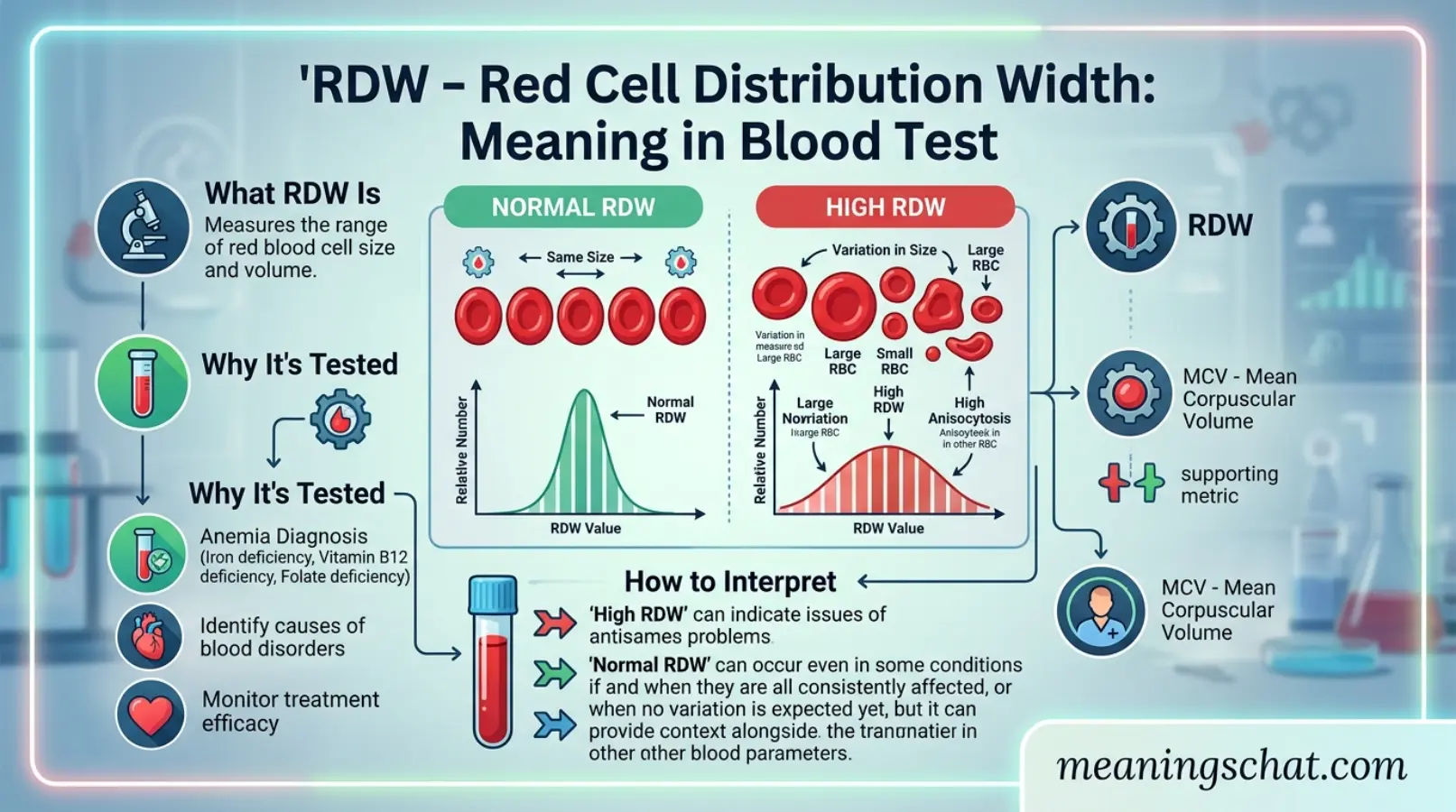
RDW stands for Red Cell Distribution Width.
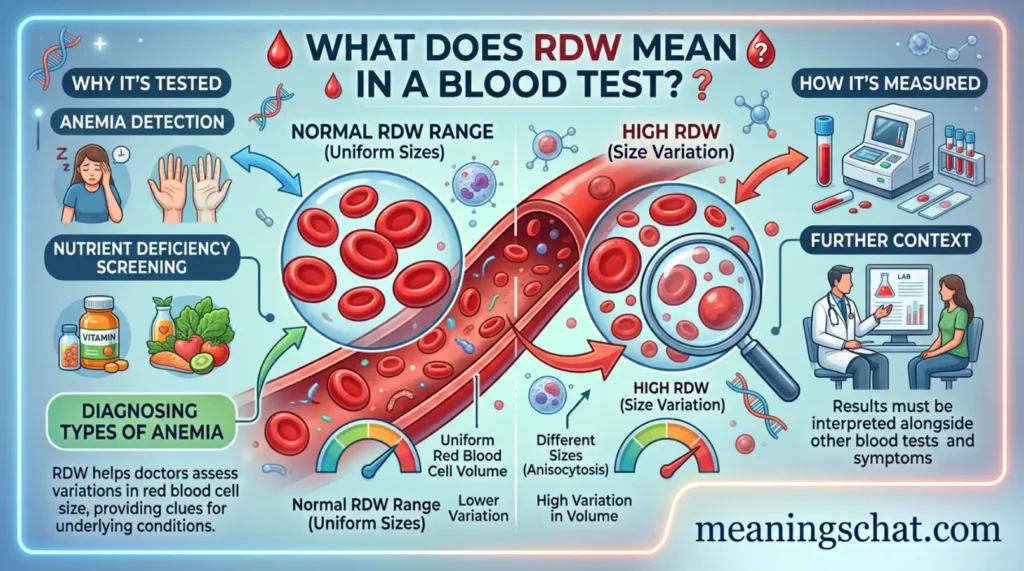
It is a measurement included in a Complete Blood Count (CBC) that shows how much your red blood cells vary in size.
Normally, red blood cells are fairly similar in size. When there’s a large difference between the smallest and largest red blood cells, the RDW value increases.
In simple words
Think of a basket filled with apples.
- If every apple is about the same size, the basket has low variation.
- If some apples are tiny while others are much larger, the basket has high variation.
RDW works the same way with red blood cells.
What Does RDW Measure?
RDW helps doctors determine:
- Whether red blood cells are evenly sized
- If anemia may be present
- Whether vitamin deficiencies exist
- If certain chronic diseases are affecting blood production
- How your body responds to treatment for anemia
By itself, RDW usually doesn’t provide a diagnosis. Instead, healthcare providers interpret it together with other CBC values like:
- RBC (Red Blood Cell Count)
- Hemoglobin
- Hematocrit
- MCV (Mean Corpuscular Volume)
- MCH
- MCHC
Together, these numbers provide a clearer picture of your blood health.
Where Is RDW Used?
Although RDW isn’t something people use in texting or social media, it is commonly used in medical settings.
Healthcare professionals check RDW during:
- Routine health checkups
- Annual physical exams
- Hospital admissions
- Emergency room evaluations
- Investigation of fatigue or weakness
- Evaluation of anemia
- Monitoring vitamin deficiencies
- Chronic disease management
You’ll most often find RDW on a CBC report ordered by:
- Primary care doctors
- Hematologists
- Internal medicine specialists
- Pediatricians
- Emergency physicians

Examples of RDW in Medical Conversations
Here are some realistic examples of how RDW appears in conversations.
Example 1
Patient: My blood report says my RDW is high. What does that mean?
Doctor: It means your red blood cells vary more in size than normal. We’ll review the rest of your CBC before deciding if it’s significant.
Example 2
Patient: Is RDW part of a CBC?
Nurse: Yes. RDW is one of the standard measurements included in every Complete Blood Count.
Example 3
Doctor: Your hemoglobin is low, and your RDW is elevated.
Patient: Does that suggest anemia?
Example 4
Patient: My iron levels were low last year.
Doctor: We’ll repeat your CBC and compare your RDW to see how you’re responding to treatment.
Example 5
Patient: My RDW is normal, but my MCV is low.
Doctor: We’ll interpret both values together before making any conclusions.
Example 6
Patient: Should I worry about one abnormal RDW result?
Doctor: Not necessarily. RDW is only one part of your overall blood work.
Normal RDW Range
Most laboratories consider a normal RDW to be approximately:
11.5% to 14.5%
However, the exact reference range may differ slightly between laboratories because different equipment and testing methods are used.
Always compare your result with the reference range printed on your own laboratory report.

What Does a High RDW Mean?
A high RDW means there’s a greater difference in the size of your red blood cells.
This doesn’t automatically mean something serious is wrong, but it may suggest your doctor should investigate further.
Possible causes include:
Iron Deficiency Anemia
One of the most common causes of elevated RDW.
Vitamin B12 Deficiency
Without enough vitamin B12, red blood cells develop abnormally.
Folate Deficiency
Low folate can also increase variation in red blood cell size.
Mixed Types of Anemia
Some people have more than one nutritional deficiency at the same time.
Chronic Liver Disease
Certain liver conditions can affect blood cell production.
Recent Blood Loss
After bleeding, newly produced red blood cells may differ in size.
Recovery After Treatment
RDW may temporarily rise while your bone marrow produces healthy replacement cells.
What Does a Low RDW Mean?
A low RDW is generally not considered medically significant.
It simply means your red blood cells are very similar in size.
Most doctors pay much more attention to an elevated RDW than a low one.
Why Doctors Look at RDW Together With MCV
RDW becomes much more useful when combined with MCV (Mean Corpuscular Volume).
Here are some common patterns:
| RDW | MCV | Possible Interpretation |
|---|---|---|
| High | Low | Iron deficiency anemia |
| High | Normal | Early nutritional deficiency or mixed anemia |
| High | High | Vitamin B12 or folate deficiency |
| Normal | Low | Thalassemia trait or chronic disease |
| Normal | Normal | Usually healthy red blood cell distribution |
This combination helps narrow down possible causes before additional testing.
When to Use and When Not to Interpret RDW Alone
RDW is useful when:
- Investigating anemia
- Looking for nutritional deficiencies
- Monitoring treatment progress
- Evaluating chronic illness
- Reviewing CBC results
RDW should not be used alone because:
- It doesn’t diagnose disease by itself.
- Other CBC values provide essential context.
- Medical history matters.
- Symptoms matter.
- Additional blood tests are often required.
Never interpret RDW without considering the rest of your laboratory results.
Factors That Can Affect RDW
Several conditions may temporarily influence RDW.
These include:
- Blood transfusions
- Pregnancy
- Iron supplements
- Chemotherapy
- Bone marrow disorders
- Chronic inflammation
- Kidney disease
- Certain medications
Your healthcare provider considers these factors before interpreting the result.
Similar Blood Test Terms
People often confuse RDW with other CBC abbreviations.
RBC
Measures the number of red blood cells.
MCV
Measures the average size of red blood cells.
Hemoglobin (Hb)
Measures the oxygen-carrying protein inside red blood cells.
Hematocrit (HCT)
Shows the percentage of blood made up of red blood cells.
MCH
Measures the average amount of hemoglobin in each red blood cell.
Each value provides different information, and together they help diagnose blood disorders.
FAQs
What does RDW mean in a blood test?
RDW stands for Red Cell Distribution Width. It measures how much your red blood cells vary in size.
Is a high RDW dangerous?
Not necessarily. A high RDW simply suggests more variation in red blood cell size. Your doctor will interpret it alongside other blood test results.
Can RDW diagnose anemia?
No. RDW alone cannot diagnose anemia. It helps doctors identify possible causes when combined with hemoglobin, MCV, and other CBC values.
What is the normal RDW range?
Most laboratories use a normal range of approximately 11.5% to 14.5%, although slight variations are common.
Can dehydration affect RDW?
Dehydration usually has little direct effect on RDW. However, it may influence other blood measurements, so your doctor considers your overall clinical condition.
Should I worry if my RDW is low?
Usually not. A low RDW is rarely considered clinically important and often doesn’t require treatment.
Can vitamin deficiency increase RDW?
Yes. Iron, vitamin B12, and folate deficiencies commonly cause elevated RDW because they affect red blood cell production.
Is RDW included in every CBC?
Yes. RDW is a standard component of the Complete Blood Count ordered by most healthcare providers.
Conclusion
Understanding the RDW meaning in blood test makes it much easier to read your CBC report with confidence. RDW measures how much your red blood cells differ in size, helping doctors detect possible anemia, nutritional deficiencies, or other blood-related conditions. Remember, one RDW result alone doesn’t provide a diagnosis. It works best when interpreted alongside hemoglobin, MCV, and the rest of your blood test results. If your RDW falls outside the normal range, don’t panic simply discuss the findings with your healthcare provider, who can explain what they mean based on your overall health and medical history.

William Jones is a dedicated writer at Meaningschat who specializes in explaining text slang, abbreviations, and online language trends. He enjoys creating simple, engaging, and reader-friendly content that helps people understand modern digital communication with ease. His writing style is clear, conversational, and informative, making complex internet terms easy for everyone to follow. In his free time, William loves exploring social media trends, reading about digital culture, and discovering how online language continues to evolve.