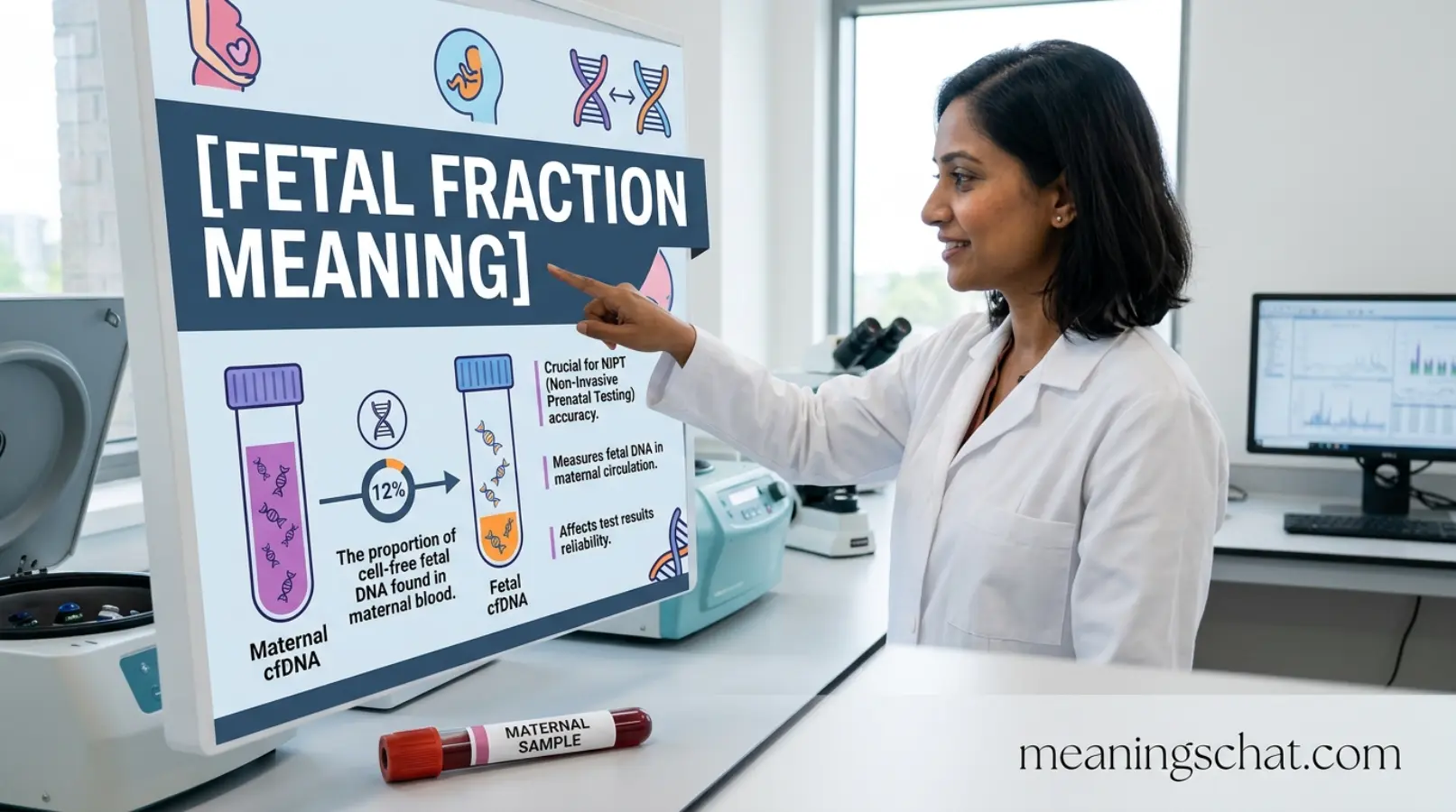
Fetal fraction meaning is something many people search after seeing the term in a prenatal test report and wondering what it actually means. Imagine opening your test results, spotting “fetal fraction,” and feeling confused because you’ve never heard the phrase before. You’re definitely not alone.
The good news is that fetal fraction isn’t internet slang or a texting abbreviation at all. Instead, it’s an important medical term used during pregnancy, especially with non-invasive prenatal testing (NIPT). In this guide, you’ll learn what fetal fraction means, where it’s used, how it appears in conversations, and when you should and shouldn’t use the term.
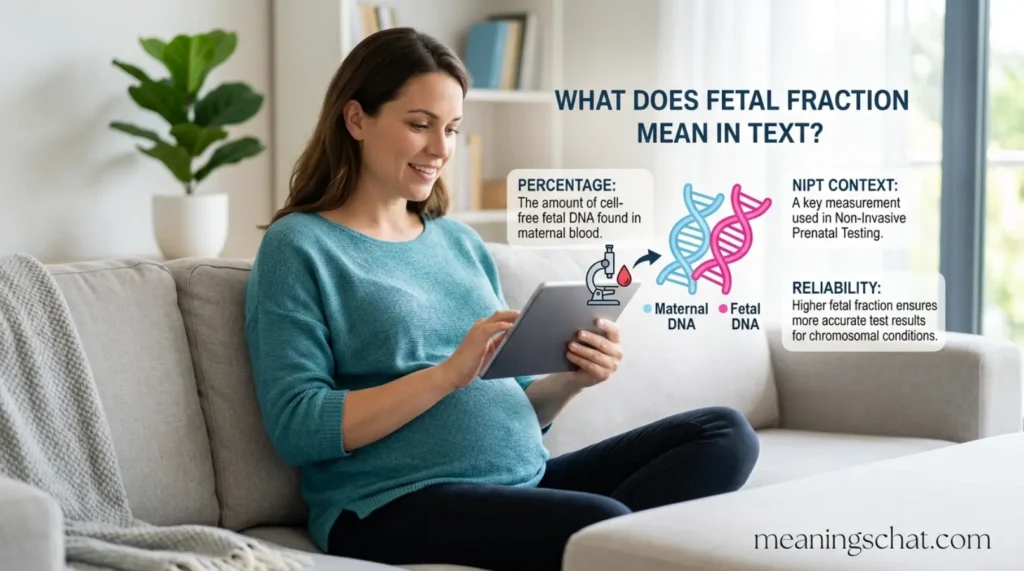
What Does Fetal Fraction Mean in Text?
The fetal fraction is the percentage of DNA from the developing baby (more accurately, the placenta) that is present in a pregnant person’s blood sample during a Non-Invasive Prenatal Test (NIPT).
Simply put:
- It tells doctors how much fetal DNA is available for analysis.
- A higher fetal fraction generally means the laboratory has more information to work with.
- If the fetal fraction is too low, the test may not produce reliable results, and another blood sample may be needed.
Unlike internet abbreviations such as “LOL” or “BRB,” fetal fraction is a medical term, not chat slang.
Simple Definition
Fetal fraction = The percentage of fetal DNA found in the mother’s blood during prenatal screening.
Does It Have Multiple Meanings?
No.
In healthcare, fetal fraction has one primary meaning related to prenatal genetic screening. While people may shorten it to FF in medical discussions, it still refers to the same concept.
Where Is Fetal Fraction Used?
Since fetal fraction is a medical term, it isn’t commonly used in everyday texting or social media unless someone is discussing pregnancy.
You’ll most often find it in the following situations.
Pregnancy Test Reports
The most common place is an NIPT laboratory report, where the fetal fraction is listed as a percentage.
Example:
“Fetal Fraction: 11.2%”
Conversations with Healthcare Providers
Doctors, nurses, and genetic counselors often explain fetal fraction when discussing prenatal screening results.
Example:
“Your fetal fraction was high enough for an accurate screening.”
Pregnancy Forums
Expecting parents frequently ask questions like:
- “Is my fetal fraction normal?”
- “Does low fetal fraction mean something is wrong?”
Parenting Groups
Facebook groups, Reddit communities, and pregnancy apps often include discussions about fetal fraction after members receive NIPT results.
Educational Health Websites
Medical websites explain fetal fraction to help parents understand prenatal screening and what the percentage means.
Examples of Fetal Fraction in Conversation
Although it isn’t slang, here are realistic examples of how people naturally use the phrase.
Example 1
Emily: “Did your NIPT results come back?”
Sarah: “Yes! My fetal fraction was 10%, and everything looked normal.”
Example 2
Alex: “Why did they ask you to repeat the blood test?”
Jamie: “My fetal fraction was too low for accurate results.”
Example 3
Mom: “What does fetal fraction even mean?”
Daughter: “It’s the amount of the baby’s DNA found in the blood sample.”
Example 4
Friend: “Should I worry about fetal fraction?”
Friend 2: “Your doctor can explain what your specific result means.”
Example 5
Partner: “The report mentions fetal fraction.”
Pregnant Mom: “Apparently it’s an important part of the screening.”
Example 6
Online Forum
User A: “My fetal fraction was 5%.”
User B: “Mine was 12%. My doctor said both results were acceptable for testing.”
When to Use and When Not to Use Fetal Fraction
Knowing when the term fits naturally can help avoid confusion.
Use It When
- Talking about pregnancy.
- Discussing NIPT screening.
- Asking your healthcare provider questions.
- Reading medical reports.
- Participating in pregnancy support groups.
Avoid Using It When
- Casual text conversations unrelated to pregnancy.
- Workplace chats unless discussing healthcare.
- Social media posts where your audience won’t understand the medical context.
- Replacing it with internet slang—it isn’t an abbreviation like “LOL.”
Tone
The phrase is:
- Professional
- Medical
- Informative
- Neutral
It is not:
- Flirty
- Funny
- Casual slang
- Offensive
Similar Medical Terms or Alternatives
These aren’t exact replacements, but they’re commonly mentioned alongside fetal fraction.
NIPT
Meaning: Non-Invasive Prenatal Testing used to screen for certain chromosome conditions.
Cell-Free DNA (cfDNA)
Meaning: DNA fragments found in the mother’s bloodstream that include DNA from the placenta.
Prenatal Screening
Meaning: Tests performed during pregnancy to estimate the chance of certain genetic conditions.
Genetic Counseling
Meaning: Professional guidance to help families understand genetic testing and results.
Placental DNA
Meaning: DNA from the placenta used in NIPT, often referred to when explaining fetal fraction.
Why Is Fetal Fraction Important?
Fetal fraction plays a major role in determining whether an NIPT result is reliable.
Generally:
- Very low fetal fraction can increase the chance of receiving an inconclusive result.
- Higher fetal fraction usually provides the laboratory with enough DNA to complete the screening.
- The required minimum percentage varies depending on the laboratory and the specific test used.
Several factors can influence fetal fraction, including:
- How far along the pregnancy is.
- Maternal body weight.
- Individual biological differences.
- Certain pregnancy conditions.
It’s important to remember that a low fetal fraction does not automatically mean there is a problem with the baby. In many cases, healthcare providers simply recommend repeating the test later in pregnancy.
Common Misunderstandings About Fetal Fraction
Many people misunderstand this medical term after seeing it online.
Myth 1: Higher Is Always Better
Not necessarily. The goal is simply to have enough fetal DNA for accurate testing. Once the laboratory’s minimum requirement is met, the screening can usually proceed.
Myth 2: Low Fetal Fraction Means Something Is Wrong
Not always.
Many healthy pregnancies have lower fetal fraction values, especially earlier in pregnancy.
Myth 3: Fetal Fraction Shows Baby’s Health
No.
It only indicates how much fetal DNA is available for the screening test. It does not measure the baby’s overall health or development.
Myth 4: Everyone Has the Same Percentage
Every pregnancy is different. Fetal fraction naturally varies from person to person.
FAQs
What does fetal fraction mean from a girl?
If someone mentions fetal fraction, they’re usually talking about pregnancy or prenatal testing. The meaning doesn’t change based on who says it.
Is fetal fraction slang?
No. Fetal fraction is a medical term, not internet slang or a texting abbreviation.
Can I use fetal fraction in professional chats?
Yes, if you’re discussing healthcare, medicine, or pregnancy. Otherwise, it may confuse people unfamiliar with the term.
Does fetal fraction have any flirty meaning?
No. It has no romantic or flirty meaning.
Is fetal fraction still commonly used in 2025?
Yes. It remains a standard medical term used in prenatal screening and NIPT reports.
Conclusion
Fetal fraction refers to the percentage of fetal DNA found in a pregnant person’s blood sample during non-invasive prenatal testing. It’s an important medical measurement that helps laboratories determine whether there is enough fetal DNA to produce reliable screening results. Unlike popular internet abbreviations, fetal fraction isn’t slang, casual texting language, or social media jargon.
If you ever see the term on a pregnancy test report or hear it during a medical appointment, you’ll know it’s simply describing an important part of prenatal screening. When in doubt about your own fetal fraction result, always discuss it with your healthcare provider, who can explain what it means for your individual pregnancy.

William Jones is a dedicated writer at Meaningschat who specializes in explaining text slang, abbreviations, and online language trends. He enjoys creating simple, engaging, and reader-friendly content that helps people understand modern digital communication with ease. His writing style is clear, conversational, and informative, making complex internet terms easy for everyone to follow. In his free time, William loves exploring social media trends, reading about digital culture, and discovering how online language continues to evolve.