You might have seen someone reply in a chat like “bro you’re OD” or “that’s OD funny” and paused for a second, trying to figure out what it actually means. At first glance, “OD” looks like just two random capital letters, but in texting and social media slang, it carries a very different vibe. It can change the meaning of a whole sentence depending on how it’s used.
Most people come across “OD” on Snapchat, Instagram, TikTok comments, or casual WhatsApp chats without any clear explanation. That confusion is exactly why understanding it matters. Once you know what it means, you’ll start spotting it everywhere online and even using it naturally in your own conversations.
What Does OD Mean in Text?
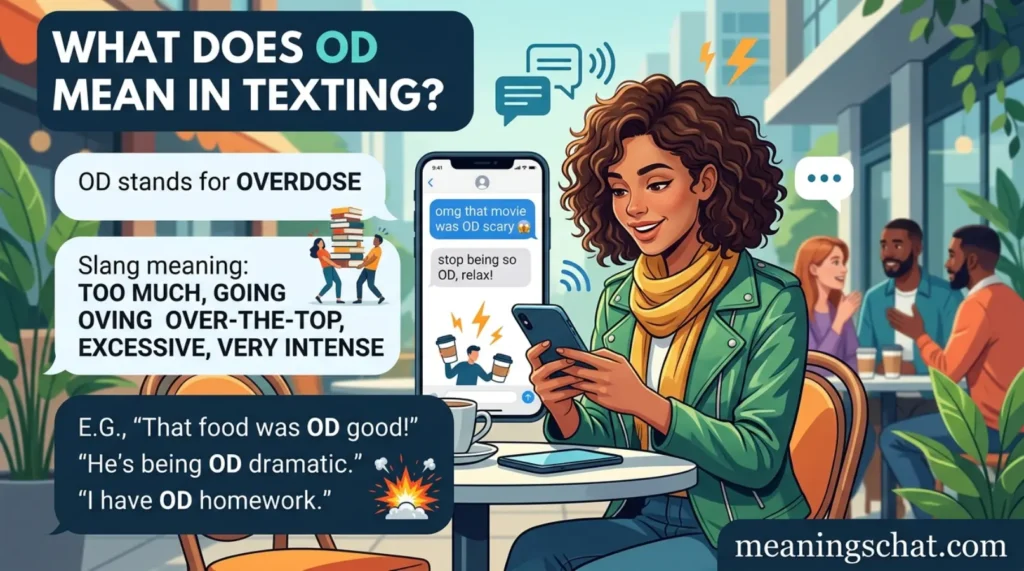
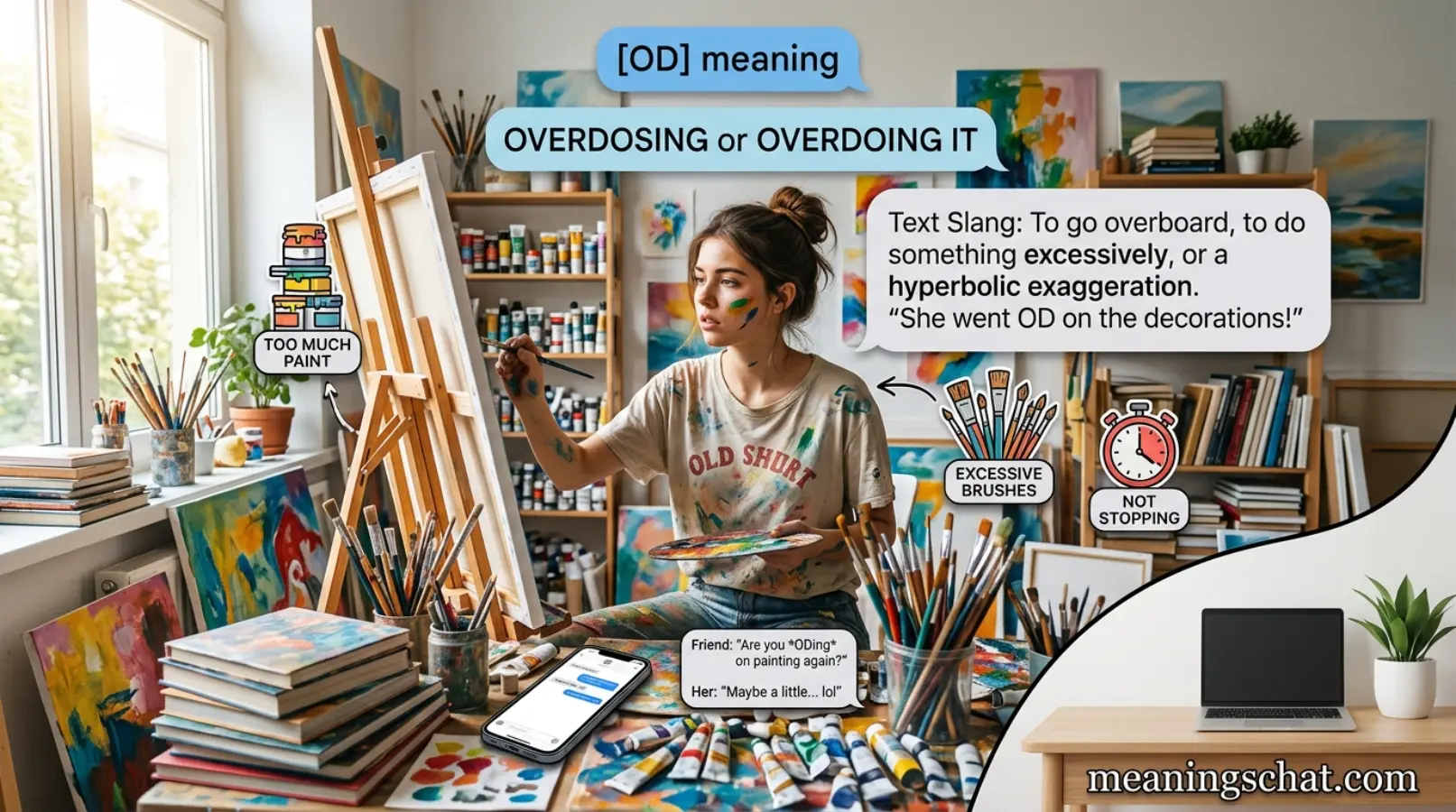
In text slang, “OD” has multiple meanings, and the correct interpretation depends on the context of the conversation. The two most common meanings are:
1. OD = Overdoing / Overdo (Most Common in Chats)
This is the most popular meaning used in casual texting and social media.
When someone says “OD,” they usually mean:
- You are exaggerating something
- You are doing too much
- Something is extreme or over the top
For example:
- “You OD with that joke” → You are going too far or exaggerating
- “She’s OD funny” → She is extremely funny
- “Don’t OD on the sauce” → Don’t use too much
In this sense, OD is often used in a playful or funny way, not as an insult.
2. OD = Overdose (Medical or Serious Context)
Another meaning of OD is “overdose.”
This usage is more serious and usually appears in:
- Health discussions
- News reports
- Conversations about drugs or medication
For example:
- “He OD’d on medication” → He took too much medicine
- “Drug OD cases are increasing” → Overdose cases are increasing
This meaning is not casual and should be used carefully because it can be sensitive.
3. Other Less Common Meanings
In rare cases, OD can also mean:
- “On Demand” (in streaming or services context)
- “Old Dominion” (in specific regional references)
- Slang variations depending on local internet culture
However, in everyday texting, “overdoing” is the most widely used meaning.
Where Is OD Used?
The slang OD is widely used across digital platforms where fast, casual communication happens. It is especially common in informal conversations.
1. Social Media Platforms
OD is frequently seen on:
- Instagram captions and comments
- TikTok comments and replies
- Snapchat chats and streak messages
People use it to react quickly to something funny, exaggerated, or impressive.
2. Messaging Apps
Apps like WhatsApp, Messenger, and Telegram are full of slang usage. OD is used here when chatting with friends in a relaxed tone.
3. Gaming Chats
Gamers often use OD to describe:
- Someone playing too aggressively
- A situation that is too intense
- Overpowered moves or reactions
Example: “That player is OD strong”
4. Youth and Teen Conversations
OD is especially popular among:
- Teenagers
- College students
- Online meme communities
It is part of modern internet slang that spreads quickly through trends and short-form content.
Examples of OD in Conversation
Here are some real-life style chat examples to help you understand how OD is used naturally:
- Friend 1: “I ate two burgers and fries”
Friend 2: “Bro you OD 😭” - “That movie was OD funny, I couldn’t stop laughing”
- “Stop OD with the filters, your pic already looks good”
- “He’s OD good at football, nobody can beat him”
- “You OD if you think I’ll wake up at 5 am on Sunday 😂”
- “That song is OD fire, I’ve been playing it all day”
- “Don’t OD on sugar, you’ll get sick”
These examples show that OD can be used in both funny exaggerations and serious warnings depending on the situation.
When to Use and When Not To Use OD
Understanding tone is very important when using slang like OD because it can easily be misunderstood.
When to Use OD
You can safely use OD when:
- Talking with friends or peers
- Posting casual social media captions
- Reacting to funny or exaggerated situations
- Gaming chats or informal groups
It works best when the conversation is relaxed and informal.
When Not to Use OD
You should avoid using OD when:
- Talking in formal or professional emails
- Speaking with teachers, bosses, or clients
- Discussing serious medical topics without context
- Communicating where clarity is important
Also, be careful when using the “overdose” meaning, as it can sound serious or alarming.
Tone Check
- Friendly slang use: “That’s OD funny 😂”
- Serious context: “He OD’d on medication”
Always make sure the context matches the meaning you intend.
Similar Slang Words or Alternatives
If you’re learning OD, it helps to know similar slang terms that express exaggeration, intensity, or casual reactions:
1. Extra
Means someone is overreacting or being dramatic.
Example: “You’re so extra today”
2. Mad
Used to mean “very” or “extremely” in slang.
Example: “That’s mad cool”
3. Wild
Used to describe something extreme or crazy.
Example: “That party was wild”
4. Crazy
Similar to OD in expressing intensity.
Example: “That game was crazy good”
5. Over the top (OTT)
Means too much or exaggerated behavior.
Example: “His reaction was totally OTT”
These alternatives are often used interchangeably with OD depending on personal style and region.
FAQs
What does OD mean from a girl?
When used by a girl, OD usually means “overdoing” something. For example, “you’re OD funny” means she finds something extremely funny or exaggerated.
Is OD slang rude?
No, OD is not inherently rude. It is usually playful. However, tone matters, and it can sound negative if used in criticism.
Can I use OD in professional chats?
No, OD is informal slang and should be avoided in professional or formal communication.
Does OD have any flirty meaning?
Sometimes in casual chats, OD can be used in a flirty or playful way like “you’re OD cute,” meaning extremely cute.
Is OD still popular in 2025?
Yes, OD is still widely used in 2025, especially among teens, meme communities, and social media users.
Conclusion
OD in text is a flexible slang term that mainly means “overdoing something,” but it can also mean “overdose” in serious contexts. Its meaning depends completely on how and where it is used. In casual chats, it adds emotion, humor, and exaggeration to conversations, making messages feel more expressive and fun.
The best way to use OD confidently is to pay attention to tone and context. If you’re chatting with friends online, it fits perfectly into jokes and reactions. Just remember to avoid it in formal or sensitive situations where clarity is important.

William Jones is a dedicated writer at Meaningschat who specializes in explaining text slang, abbreviations, and online language trends. He enjoys creating simple, engaging, and reader-friendly content that helps people understand modern digital communication with ease. His writing style is clear, conversational, and informative, making complex internet terms easy for everyone to follow. In his free time, William loves exploring social media trends, reading about digital culture, and discovering how online language continues to evolve.