
Have you ever been scrolling through Snapchat, Instagram, or a random chat and suddenly seen someone type “TMP” and had no idea what it meant? At first glance, it looks like just random letters, but in online conversations, it actually carries a simple meaning that people use quite often. Many users get confused because slang changes fast, and abbreviations like this don’t always make sense right away.
TMP is one of those short forms that shows up in texting, gaming chats, and social media comments. In this article, we’ll break down exactly what TMP means, where it is used, how people use it in real conversations, and when you should (or shouldn’t) use it.
What Does TMP Mean in Text?
In most texting and online communication, TMP stands for “Temporary” or “Temp.”
It is used to describe something that is not permanent and will only last for a short time.
Simple meaning:
TMP = Something temporary, not permanent, or short-term
For example:
- A temporary account (TMP account)
- Temporary file (TMP file)
- Temporary situation or arrangement
Other possible meanings (less common)
Depending on the context, TMP can sometimes mean:
- Text Me Please (rare slang usage in casual chats)
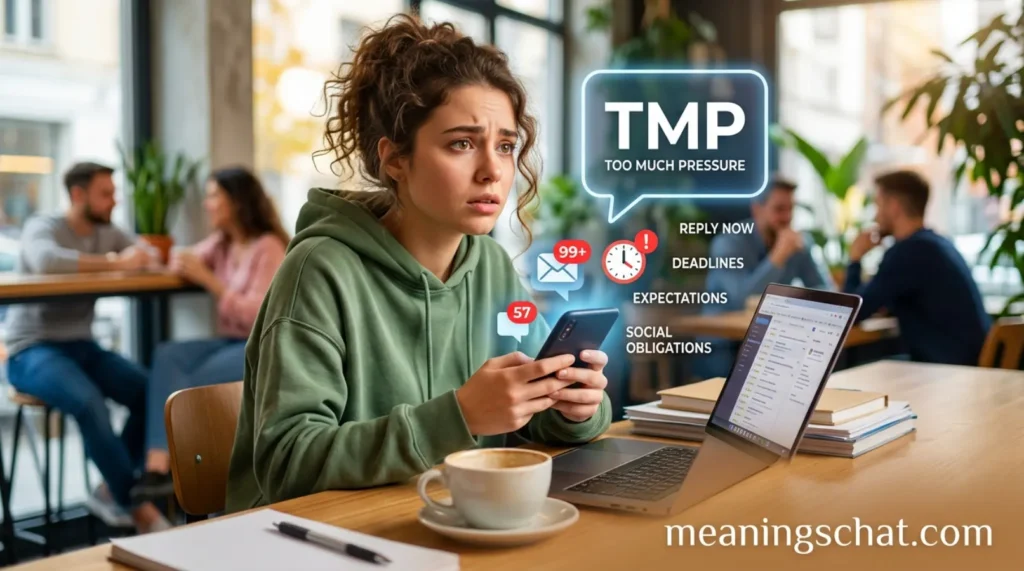
- Too Much Pressure (used informally in emotional or gaming chats)
- Temp (short for temporary role or job)
However, the most widely accepted and used meaning is still “temporary.”
So when you see TMP in a message, always check the context before deciding its meaning.
Where Is TMP Used?
TMP is used in many digital spaces where short communication is common. It is not limited to one platform and appears in both formal and informal online environments.
1. Social Media (Instagram, Snapchat, TikTok)
People use TMP in captions, comments, or bios when talking about:
- Temporary posts
- Temporary accounts
- Short-term updates
Example: “TMP story for today only!”
2. Messaging Apps (WhatsApp, Messenger, iMessage)
In private chats, TMP is often used when someone is discussing:
- Temporary plans
- Short-term issues
- Quick arrangements
3. Gaming Communities
Gamers use TMP when referring to:
- Temporary bans
- Temporary items
- Temporary boosts or settings
4. Work and Tech Environment
In professional or technical contexts, TMP is very common:
- TMP files in computers (temporary files)
- TMP folders in software systems
- Temporary roles or contracts
Who Uses TMP the Most?
- Teenagers and young adults in chats
- Gamers in online communities
- IT and tech users
- Social media creators
So, TMP is widely used across both casual and technical spaces.
Examples of TMP in Conversation
To help you understand better, here are some real-life chat examples where TMP is used naturally:
Example 1 (Casual Chat)
A: “Why is your account different today?”
B: “It’s just TMP account, I’ll switch back later.”
Example 2 (Social Media)
“Posting TMP story, don’t miss it 😄”
Example 3 (Gaming Chat)
“Got TMP ban for 10 minutes, I’ll be back soon.”
Example 4 (Work Context)
“This folder contains TMP files, you can delete them later.”
Example 5 (Friend Conversation)
A: “Are you moving permanently?”
B: “No, it’s just a TMP setup for now.”
Example 6 (Emotional / Informal Use)
“I’m in a TMP mood, just need some time alone.”
Example 7 (Short Chat Slang)
“Use TMP profile for now until I fix my main one.”
These examples show that TMP can be used in different situations depending on context.
When to Use and When Not to Use TMP
Understanding tone is very important in slang usage. TMP is simple, but it still needs the right context.
When to Use TMP
You can safely use TMP when:
- Talking about temporary things
- Referring to short-term plans
- Discussing tech or files
- Chatting casually with friends
- Gaming or online discussions
It works best in:
- Informal chats
- Social media posts
- Gaming messages
- Technical explanations
When NOT to Use TMP
Avoid using TMP when:
- Writing formal emails
- Talking in professional business communication
- Speaking with teachers or professors
- Writing official documents
Why?
Because not everyone understands slang abbreviations like TMP in formal settings. It can create confusion or look unprofessional.
Tone of TMP
- Casual: ✔️ Yes
- Friendly: ✔️ Yes
- Professional: ⚠️ Only in technical context
- Formal writing: ❌ No
So always think about who you are talking to before using it.
Similar Slang Words or Alternatives
If you see TMP, there are several related slang words that also describe temporary or short-term situations:
1. Temp
Short form of temporary, often used in jobs or files.
2. TBT (Throwback Thursday)
Used for old or temporary memories shared online.
3. BRB (Be Right Back)
Used when someone is away temporarily.
4. AFK (Away From Keyboard)
Common in gaming when a player is temporarily inactive.
5. GTG (Got To Go)
Used when someone is leaving for a short time.
These alternatives help you understand TMP better since they all relate to temporary situations or short breaks.
FAQs
What does TMP mean from a girl?
If a girl uses TMP in chat, it usually still means “temporary.” It depends on context, not gender. For example, she might be talking about a temporary account, mood, or situation.
Is TMP slang rude?
No, TMP is not rude at all. It is a neutral abbreviation used for “temporary.” It has no offensive or negative meaning.
Can I use TMP in professional chats?
You can use TMP in professional settings only if you are referring to technical terms like temporary files or systems. Otherwise, it’s better to use the full word “temporary.”
Does TMP have any flirty meaning?
Generally, no. TMP does not have a flirty meaning. It is mostly used for technical or casual references. However, like all slang, meaning depends on context.
Is TMP still popular in 2025?
Yes, TMP is still used in 2025, especially in tech, gaming, and social media contexts. While not trending slang, it remains commonly understood.
Conclusion
TMP in text mainly stands for “temporary” or “temp,” and it is used to describe something short-term or not permanent. Whether you see it in chats, gaming, or technical discussions, its meaning usually stays the same. However, always pay attention to context because slang can shift slightly depending on the situation.
If you want to use TMP confidently, just remember one simple tip: use it only when talking casually or about temporary things. In formal communication, stick to full words for clarity.

William Jones is a dedicated writer at Meaningschat who specializes in explaining text slang, abbreviations, and online language trends. He enjoys creating simple, engaging, and reader-friendly content that helps people understand modern digital communication with ease. His writing style is clear, conversational, and informative, making complex internet terms easy for everyone to follow. In his free time, William loves exploring social media trends, reading about digital culture, and discovering how online language continues to evolve.