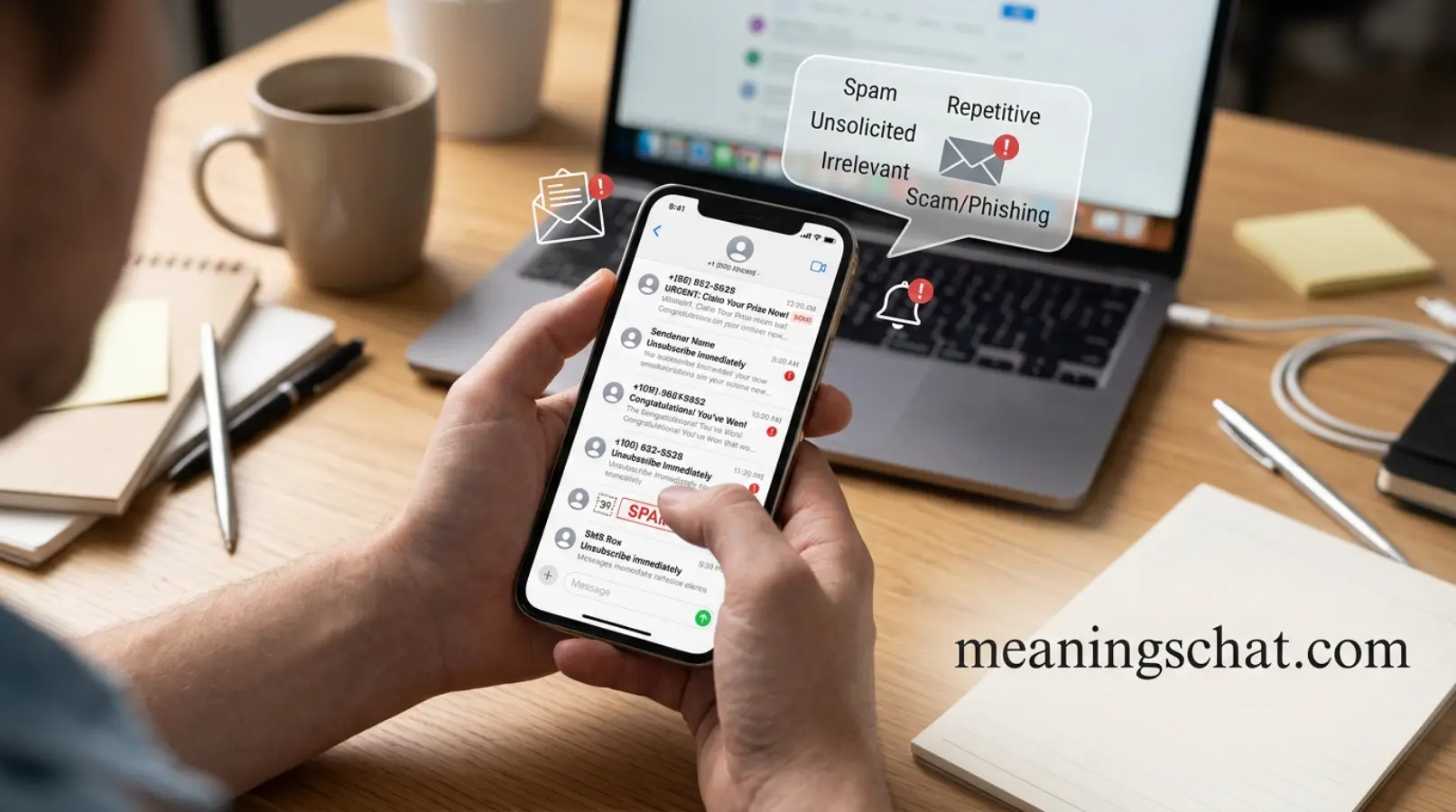
Have you ever been chatting with a friend and suddenly they say, “Stop spam!” or “Why are you spamming me?” and you pause for a second wondering what they actually mean? At first glance, the word spam might make you think of unwanted emails or even canned food, but in texting and online chats, it has a completely different vibe. It’s one of those slang terms that shows up everywhere—on WhatsApp, Instagram, Snapchat, TikTok comments, and even gaming chats.
If you’ve been confused about what “spam” really means in text, you’re not alone. This term is widely used by teens, gamers, and social media users to describe repeated or annoying messages. Let’s break it down in a simple, clear, and relatable way so you can use it confidently in your own chats.
What Does Spam Mean in Text?
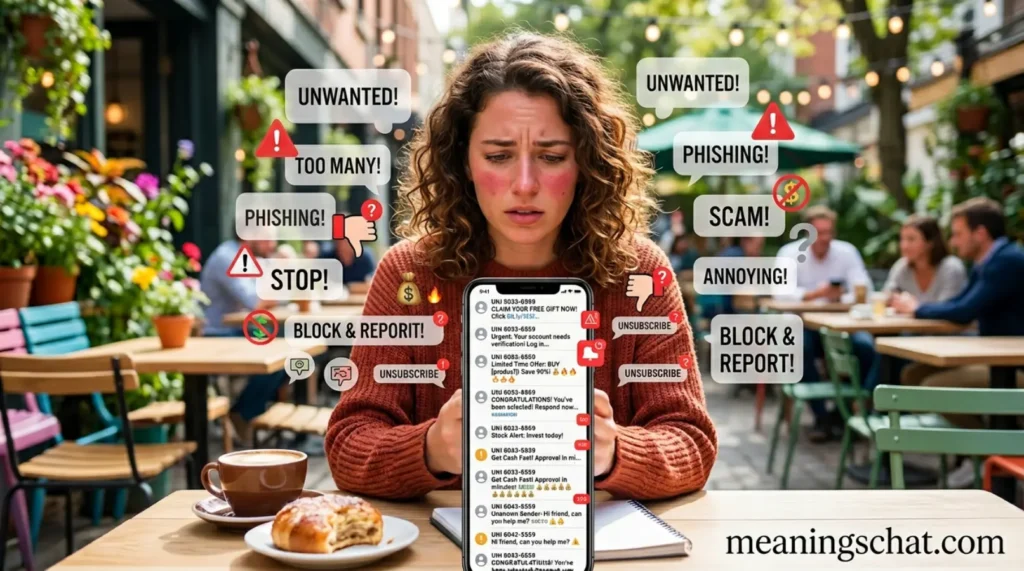
In texting and online slang, “spam” means sending the same message, emoji, or content repeatedly in a short time. It can also refer to flooding someone’s chat or comments with too many messages at once.
For example, if someone keeps sending “😂😂😂😂😂” nonstop or types “hello hello hello hello,” that’s considered spam.
There are a few common meanings depending on context:
- Repeated messaging: Sending the same text over and over
- Flooding chat: Sending too many messages quickly
- Annoying or unwanted messages: Especially in group chats or DMs
- Gaming spam: Repeating actions, attacks, or messages rapidly in games
Sometimes people also use “spam” as a joke or exaggeration, not always in a negative way. For example, “spam me with memes” can mean “send me a lot of memes.”
So, the meaning is flexible, but it always revolves around repetition and volume.
Where Is Spam Used?
The slang term “spam” is used across almost every digital platform where people communicate. It’s especially common in fast-paced or interactive spaces where messages come quickly.
Here’s where you’ll most often see it:
- WhatsApp & Messenger: In group chats when someone sends too many messages
- Instagram: In comments or DMs when users repeat emojis or phrases
- Snapchat: When someone sends multiple snaps or texts in a row
- TikTok: In comment sections when users repeat the same comment
- Online gaming: Players spam attacks, buttons, or chat messages
- Discord & forums: Used heavily in community chats and servers
It is especially popular among teens, gamers, and active social media users because they communicate in fast, casual ways.
In gaming culture, “spam” is very common. For example, players might say “don’t spam the attack button” or “he’s spamming abilities,” meaning someone is repeatedly using the same move.
Examples of Spam in Conversation
Here are some real-life style chat examples to help you understand how “spam” is used naturally:
- Friend 1: Stop spamming my phone 😂
Friend 2: I just sent 3 messages chill - User A: Why are you spamming emojis?
User B: Because this is funny 😂😂😂😂😂 - Gamer 1: Don’t spam the same attack bro
Gamer 2: It’s the only move I know lol - Friend 1: Spam me with memes
Friend 2: Say less, sending 20 now - Group Chat:
Ali: hi
Ali: hi
Ali: hi
Sara: bro stop spamming 😂 - Instagram comment section:
User: Nice pic!
User: Nice pic!
User: Nice pic!
Reply: Why are you spamming? - Snapchat:
“You’re spamming snaps again I can’t keep up 😭”
These examples show that “spam” can be playful, annoyed, or even friendly depending on tone.
When to Use and When Not To Use Spam
Understanding tone is very important with slang like “spam,” because it can sound annoying if used incorrectly.
When to Use “Spam”
- When joking with friends in casual chats
- In gaming conversations
- When asking someone to send lots of content (memes, pics, etc.)
- To describe repeated actions online
- In informal group chats
Example: “Spam me with funny videos 😂”
When NOT to Use “Spam”
- In professional emails or workplace chats
- With teachers, bosses, or formal communication
- When talking to someone who may not understand internet slang
- In serious or sensitive conversations
Using “spam” in a work setting can sound unprofessional or confusing. Instead of saying “don’t spam me,” you would say “please avoid sending multiple messages.”
So overall, “spam” is very casual slang and should be used carefully depending on the situation.
Similar Slang Words or Alternatives
If you want to expand your internet slang vocabulary, here are some similar terms related to “spam”:
- Flood – Sending too many messages at once in chat
- Ping – Repeatedly messaging someone to get attention
- Blast – Sending something to many people at once
- Repeat spam – Continuously sending the same content
- Spam click (gaming) – Rapidly clicking or pressing buttons
Other related casual chat slang:
- BRB (Be Right Back) – Temporary leave from chat
- AFK (Away From Keyboard) – Not active in game or chat
- LOL (Laugh Out Loud) – Expression of laughter
- OMG (Oh My God) – Reaction to surprise or shock
These terms are often used together in fast online conversations.
FAQs
What does spam mean from a girl?
It means the same as general usage—sending repeated messages, emojis, or snaps. It doesn’t have a gender-specific meaning.
Is spam slang rude?
It can be, depending on tone. If said jokingly, it’s harmless. But saying “stop spamming” angrily can sound rude or annoyed.
Can I use spam in professional chats?
No, it’s not recommended. In professional settings, it’s better to use words like “multiple messages” or “frequent messages.”
Does spam have any flirty meaning?
Not directly, but in playful chats, someone might say “spam me with love messages 😘” which can sound flirty depending on context.
Is spam still popular in 2025?
Yes, absolutely. The word “spam” is still widely used in texting, gaming, and social media in 2025 and continues to be part of everyday internet slang.
Conclusion
In simple terms, “spam” in text means sending repeated or excessive messages, emojis, or actions in a chat or online platform. It can be used in both funny and annoyed ways depending on the situation. From group chats to gaming rooms, this slang is everywhere in digital communication.
The key to using it correctly is understanding the tone—keep it casual with friends, and avoid it in formal or professional settings. Once you get used to it, “spam” becomes an easy and natural part of online conversations that helps describe fast, repeated interactions clearly.

William Jones is a dedicated writer at Meaningschat who specializes in explaining text slang, abbreviations, and online language trends. He enjoys creating simple, engaging, and reader-friendly content that helps people understand modern digital communication with ease. His writing style is clear, conversational, and informative, making complex internet terms easy for everyone to follow. In his free time, William loves exploring social media trends, reading about digital culture, and discovering how online language continues to evolve.