Have you ever seen someone type “ORG” in a chat or comment and felt confused for a second? You’re not alone. Many people come across this short form on social media, gaming chats, or even in emails and wonder what it actually means. Sometimes it appears in serious conversations, and other times in casual texting, which makes it even more confusing.
The truth is, “ORG” is a simple abbreviation, but its meaning depends on the context where it is used. It can refer to “organization,” “original,” or even domain-related usage like “.org websites.” Understanding it properly helps you avoid misunderstandings in chats and online conversations. In this guide, we’ll break down everything about “ORG full meaning” in the easiest way so you can confidently use it anywhere.
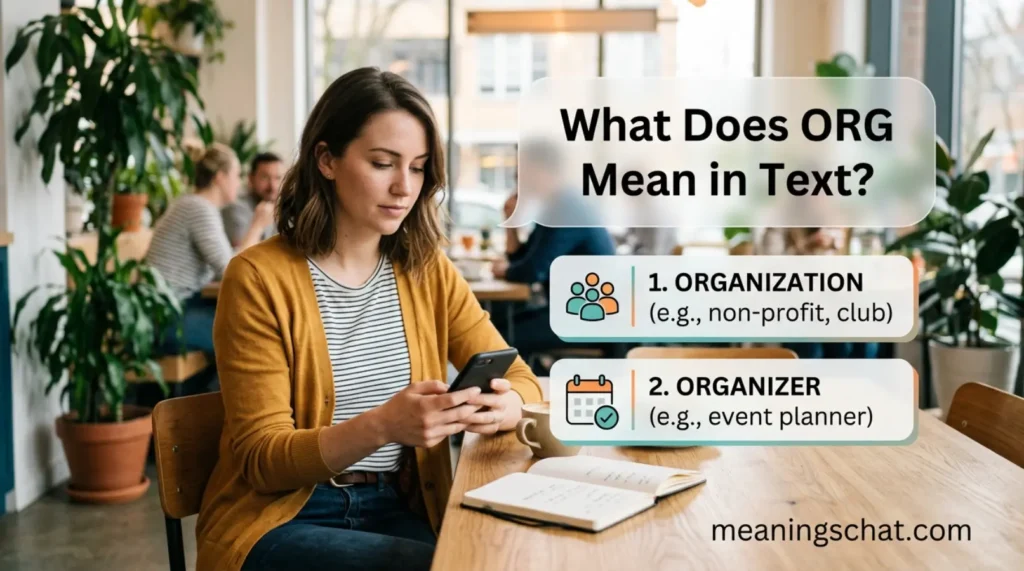
What Does ORG Mean in Text?
In text messages and online communication, “ORG” most commonly stands for “Organization.” It is used as a short form to refer to a group, company, institution, or structured body that works toward a goal.
However, “ORG” can have multiple meanings depending on context:
- Organization (most common meaning)
Used to refer to companies, teams, or institutions.
Example: NGO ORG, health ORG, sports ORG. - Original
Sometimes used informally to mean something is “original” or not fake.
Example: “Is this ORG content?” - .org Domain Reference
In web terms, “.org” is a domain extension used by non-profit organizations or informational websites.
Example: wikipedia.org, charity.org - Less common slang usage
In rare casual chats, “org” may appear as shorthand for specific niche communities or internal group references.
So, the most accurate understanding depends on the sentence where it is used.
Where Is ORG Used?
The abbreviation “ORG” is widely used across digital platforms and professional environments. Here’s where you’ll most often see it:
1. Social Media Platforms
On Instagram, Facebook, TikTok, and X (Twitter), people use “org” when talking about organizations, events, or online groups.
2. Messaging Apps
On WhatsApp, Messenger, and Telegram, “org” is used in both formal and semi-casual chats, especially when discussing companies or groups.
3. Emails and Professional Communication
In business emails, “org” is sometimes used as shorthand when referring to departments or external organizations.
4. Websites and Domain Names
The “.org” domain is extremely common for:
- Non-profit organizations
- Educational platforms
- Community services
- Awareness campaigns
5. Gaming and Online Communities
Gamers sometimes use “org” to refer to organized teams or clans.
Overall, “ORG” is more common among general internet users, professionals, and students rather than being a strictly teen slang term.
Examples of ORG in Conversation
Here are some realistic examples to help you understand how “ORG” appears in chats:
- Professional context
A: Which ORG are you working with?
B: I’m currently with a health organization. - Casual chat
A: That ORG event was amazing!
B: Yeah, they really planned it well. - Social media comment
“This ORG is doing great work for education in rural areas.” - Gaming chat
Player1: Are you joining our ORG?
Player2: Yes, I’m ready for the team. - Website discussion
A: Is this site reliable?
B: Yes, it’s a .org platform, so it’s mostly informational. - Original content reference
A: Is this video real or edited?
B: It’s ORG content, not reposted. - Informal texting
A: I need info about that ORG.
B: I’ll send you the details.
These examples show that “ORG” is flexible and adapts based on the topic being discussed.
When to Use and When Not to Use ORG
Understanding when to use “ORG” is important because it can sound professional, unclear, or even too brief in some situations.
When to Use ORG
✔ Talking about companies or institutions
✔ Referring to non-profit websites (.org)
✔ Discussing structured groups or teams
✔ Writing notes or short messages
✔ Online discussions about organizations
When Not to Use ORG
❌ In formal academic writing (use full word “organization”)
❌ In legal documents or official reports
❌ When clarity is required for beginners
❌ In emotional or sensitive conversations where misunderstanding may happen
Tone of ORG
- Mostly neutral and professional
- Can be casual in texting
- Not typically flirty or emotional
- Safe for work-related communication when context is clear
So, while “ORG” is useful, it’s best used where short forms are accepted and understood.
Similar Slang Words or Alternatives
If you are interested in similar abbreviations, here are some commonly used ones:
- ORG (Organization) – A structured group or institution
- NGO – Non-Governmental Organization
- Co. (Company) – Short form for company
- Dept. (Department) – Division within an organization
- Grp (Group) – Informal abbreviation for group
These terms often appear alongside “ORG” in business, education, and online discussions.
FAQs
What does ORG mean from a girl?
It usually has no special gender-related meaning. It simply refers to “organization” or a group depending on the context of the chat.
Is ORG slang rude?
No, “ORG” is not rude. It is a neutral abbreviation used in professional and casual communication.
Can I use ORG in professional chats?
Yes, but only when the meaning is clear. In formal documents, it’s better to write the full word “organization.”
Does ORG have any flirty meaning?
No, “ORG” does not have any flirty meaning in standard texting. It is mainly informational or structural.
Is ORG still popular in 2025?
Yes, “ORG” is still widely used, especially in business communication, social media discussions, and website references.
Conclusion
In simple terms, “ORG” mainly means organization, but it can also refer to original content or domain extensions like “.org” websites. It is commonly used in professional chats, social media, gaming communities, and online discussions.
The key to using “ORG” correctly is understanding context. If you’re talking about a company, group, or website, it fits perfectly. But in formal writing, always prefer the full word “organization” for clarity. Once you understand this, you can confidently read and use “ORG” in everyday online conversations without confusion.

William Jones is a dedicated writer at Meaningschat who specializes in explaining text slang, abbreviations, and online language trends. He enjoys creating simple, engaging, and reader-friendly content that helps people understand modern digital communication with ease. His writing style is clear, conversational, and informative, making complex internet terms easy for everyone to follow. In his free time, William loves exploring social media trends, reading about digital culture, and discovering how online language continues to evolve.