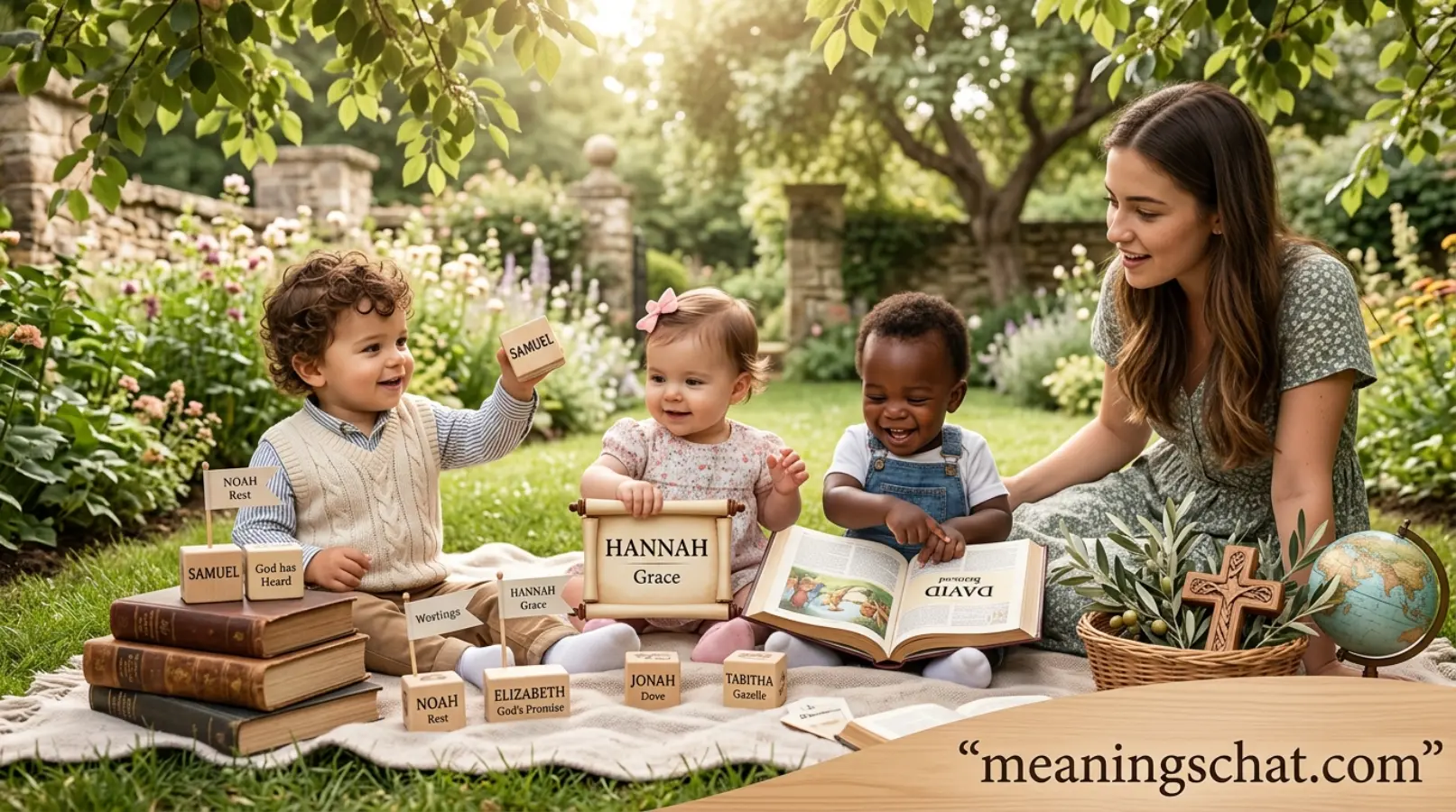
Searching for biblical baby names meanings often starts with a simple moment scrolling through baby name lists, hearing a name in a movie, or discussing future baby names with family and suddenly wondering, “What does that name actually mean?” Many people are surprised to learn that biblical names are not just beautiful in sound but also carry deep spiritual, historical, and emotional meanings.
In today’s world, parents want names that feel meaningful, timeless, and rooted in faith or tradition. That’s why biblical names remain so popular across cultures. In this guide, you’ll discover their meanings, where they come from, how they’re used, and which ones are trending today. You’ll also get examples and practical tips to help you choose the perfect name with confidence.
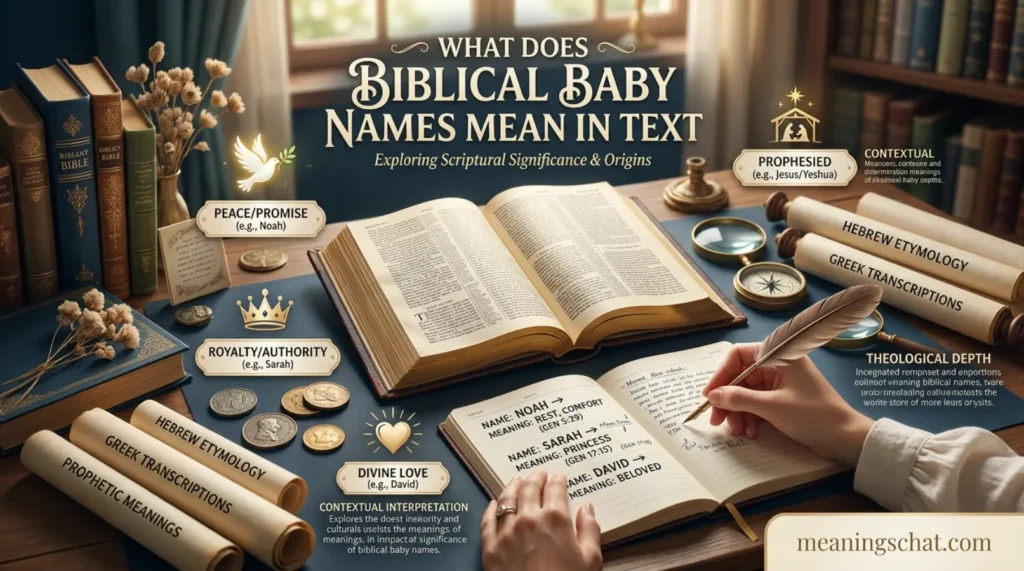
What Does Biblical Baby Names Mean in Text?
The phrase biblical baby names meanings refers to the origin and significance of names found in the Bible. These names come from Hebrew, Greek, and Aramaic languages and are associated with prophets, kings, disciples, and important figures in religious history.
Each biblical name usually carries a strong meaning, such as:
- Faith in God (e.g., Elijah – “My God is Yahweh”)
- Strength or courage (e.g., Gabriel – “God is my strength”)
- Blessing or grace (e.g., John – “God is gracious”)
- Peace or devotion (e.g., Solomon – “Peace”)
Unlike modern invented names, biblical names often reflect spiritual values, life purpose, or divine connection. Some names also have multiple interpretations depending on language translation or religious tradition.
For example:
- Mary can mean “beloved,” “wished-for child,” or “rebellion” depending on interpretation.
- Noah means “rest” or “comfort.”
So, when people search for biblical baby names meanings, they are usually trying to understand both the story behind the name and its emotional or spiritual significance.
Where Are Biblical Baby Names Used?
Biblical baby names are used widely across the world, especially in families who value tradition, faith, or cultural heritage.
You will commonly see these names in:
- Baby naming websites and books
- Religious communities (Christian and Jewish families)
- Social media parenting groups
- Instagram and Pinterest baby name boards
- Church-related discussions or ceremonies
They are especially popular among:
- Expecting parents searching for meaningful names
- Writers naming characters in novels or films
- People rebranding themselves online with meaningful usernames
Biblical names are not limited to religious users only. Even people without strong religious connections choose them because they sound classic, elegant, and timeless.
For example:
- Liam (from biblical roots via “William”)
- Daniel (popular in modern and religious contexts)
- Hannah (widely used globally)
Their usage continues to grow because they feel both traditional and modern at the same time.
Examples of Biblical Baby Names in Conversation
Here are some realistic examples showing how people talk about biblical baby names meanings in everyday conversation:
- Parent-to-parent chat:
“We’re thinking of naming our son Elijah. I love the biblical meaning behind it.” - Text message:
“Have you checked the meaning of Noah? It’s so peaceful and perfect for a baby boy.” - Flirty/social chat:
“If we ever have a daughter, I’d want a name like Esther. It sounds so graceful.” - Family discussion:
“Rachel is a strong biblical name. It means ‘ewe’ but also symbolizes care and compassion.” - Online comment:
“Biblical names never go out of style. David and Samuel are still so popular!” - Naming debate:
“I like Gabriel, but my partner prefers Michael. Both have powerful meanings in the Bible.” - Social media post:
“Just discovered the meaning of Lydia from the Bible—so elegant and modern-sounding!”
These examples show how biblical names naturally appear in daily conversations, especially during pregnancy or baby naming discussions.
When to Use and When Not to Use Biblical Baby Names
Biblical baby names are generally safe, meaningful, and widely accepted, but understanding context is still important.
When to Use Them:
- When choosing baby names for boys or girls
- When writing stories or creating characters
- When discussing cultural or religious topics
- When you want a timeless, meaningful identity
They Work Best:
- Personal conversations
- Family discussions
- Parenting forums
- Creative writing projects
When Not to Overthink or Misuse Them:
- In formal business settings (they are not relevant there)
- When you are unsure of pronunciation or spelling in professional documents
- When mixing names without understanding cultural background
While biblical names are not “casual slang,” they are deeply meaningful. So they should be used respectfully, especially if you are referencing their religious origins.
For example:
- Using “Judas” casually as a joke is inappropriate due to its negative biblical association.
- Choosing “Mary” or “Sarah” for a baby is widely accepted and positive.
Understanding meaning helps you avoid confusion or unintended cultural sensitivity issues.
Similar Slang Words or Alternatives (Related Name Styles)
If you are exploring biblical baby names meanings, you may also be interested in these related naming categories:
- Hebrew Names – Names like Aaron, Leah, and Isaac with ancient Hebrew roots
- Christian Names – Names inspired by saints or Christian traditions like Peter or Paul
- Arabic Biblical Names – Names shared across Abrahamic traditions like Ibrahim (Abraham)
- Modern Spiritual Names – Names like Zion, Grace, or Faith with religious inspiration
- Nature-Inspired Names – Names like Lily, River, or Olive that also carry symbolic meaning
These alternatives help parents or name-seekers explore a wider range of meaningful options beyond just traditional biblical lists.
FAQs
What does biblical baby names meanings mean from a girl?
It usually refers to girls’ names from the Bible, like Mary, Esther, Ruth, or Hannah, and their spiritual meanings.
Is biblical baby names slang rude?
No, biblical baby names are not slang at all. They are traditional names with religious and historical significance.
Can I use biblical baby names in professional chats?
Names themselves can be used anywhere, but discussions about their meanings are more suitable for personal or informal settings.
Does biblical baby names have any flirty meaning?
No, biblical baby names are not flirty. However, names may be used creatively in compliments or storytelling.
Is biblical baby names still popular in 2025?
Yes, biblical baby names remain extremely popular in 2025 due to their timeless meanings and global cultural acceptance.
Conclusion
Understanding biblical baby names meanings helps you appreciate the depth, history, and beauty behind some of the world’s most timeless names. These names are more than just labels they often carry powerful messages of faith, hope, strength, and love.
If you are naming a baby, creating a character, or simply exploring meaningful names, biblical names offer endless inspiration. The key is to choose a name that not only sounds beautiful but also connects with your values and story.
Simple tip: Always check both the meaning and cultural background of a biblical name before choosing it, so you can use it confidently and meaningfully.

William Jones is a dedicated writer at Meaningschat who specializes in explaining text slang, abbreviations, and online language trends. He enjoys creating simple, engaging, and reader-friendly content that helps people understand modern digital communication with ease. His writing style is clear, conversational, and informative, making complex internet terms easy for everyone to follow. In his free time, William loves exploring social media trends, reading about digital culture, and discovering how online language continues to evolve.