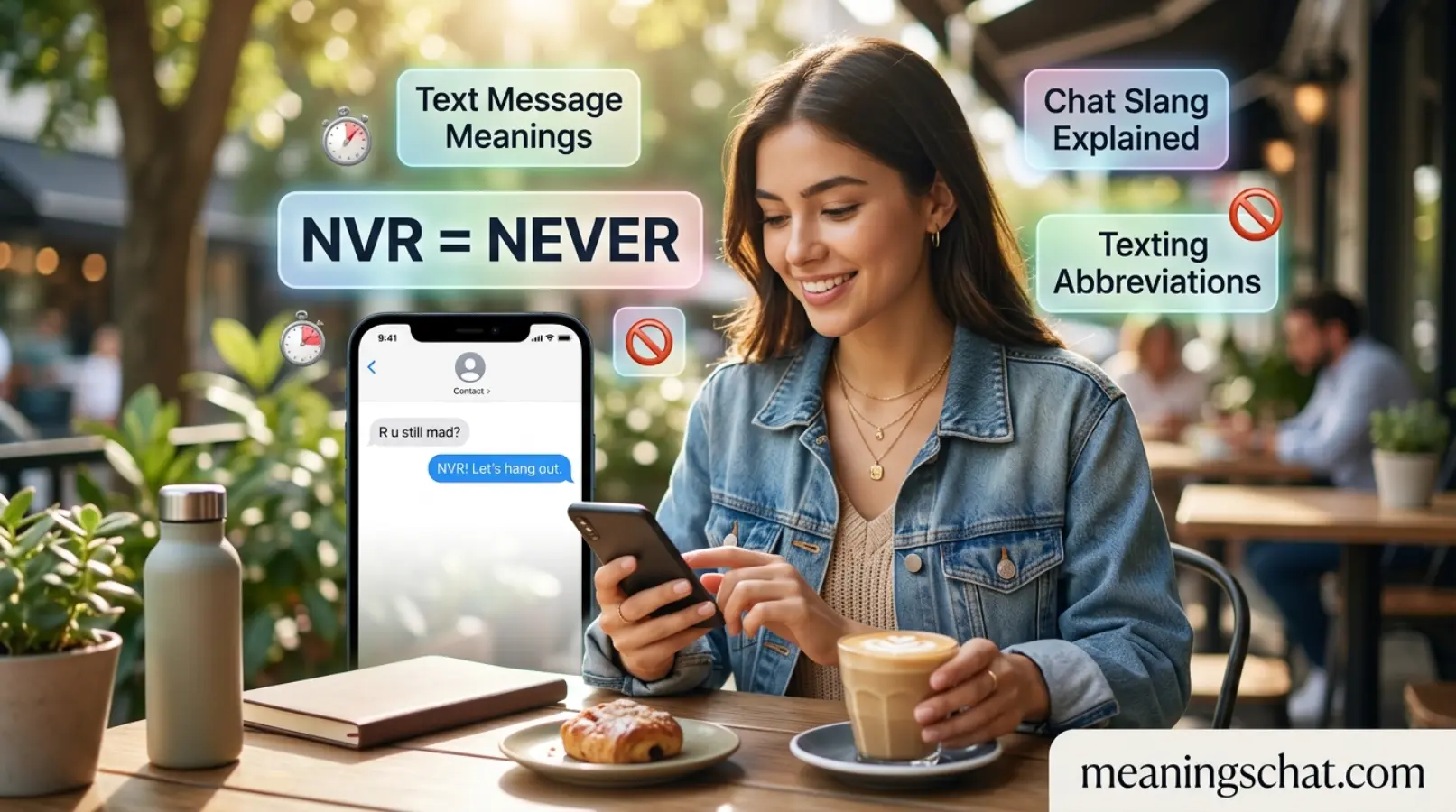
Have you ever opened a chat, seen someone type “NVR,” and paused for a second trying to figure out what it meant? You’re definitely not alone. Slang abbreviations pop up everywhere on Snapchat, TikTok, Instagram, and texting apps, and sometimes they can feel like a secret language.
The good news is that “NVR” is actually pretty simple once you know it. Whether you saw it in a casual text, a funny meme, or a late-night conversation, understanding this slang can help you reply more confidently and avoid awkward misunderstandings online.
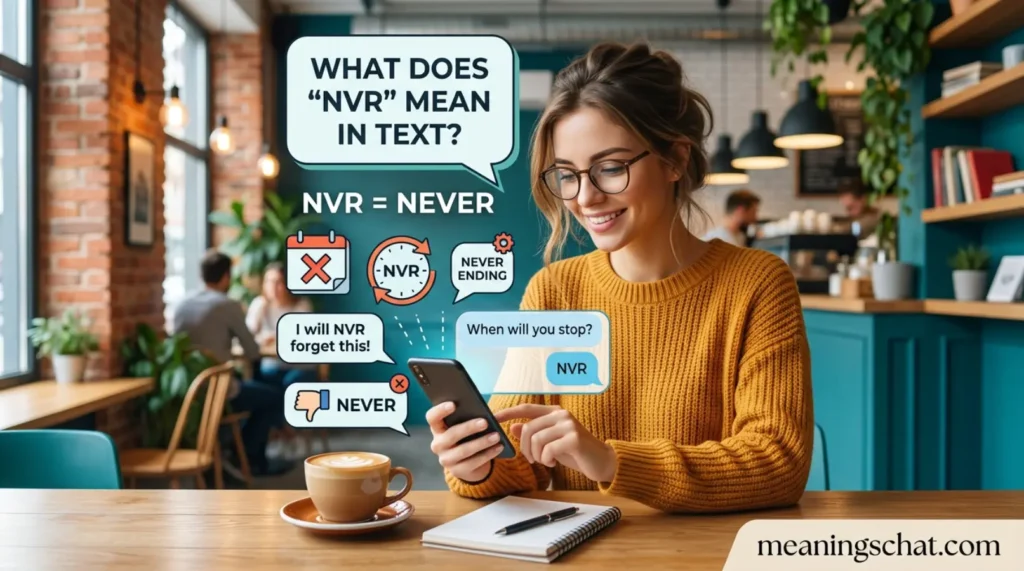
What Does “NVR” Mean in Text?
“NVR” usually stands for “Never.”
People use it as a shortened version of the full word when texting quickly or chatting casually online. Instead of typing all five letters, users shorten it to “NVR” to save time and keep conversations fast.
Simple Meaning of NVR
When someone says “NVR,” they generally mean:
- Not at any time
- Absolutely not
- Something they would never do
- A strong denial or refusal
Examples of the Meaning
- “I’d nvr ignore you.”
- “NVR doing that again 😂”
- “I nvr knew that!”
In most cases, the tone depends on the conversation. It can sound funny, dramatic, emotional, playful, or even serious.
Does NVR Have Multiple Meanings?
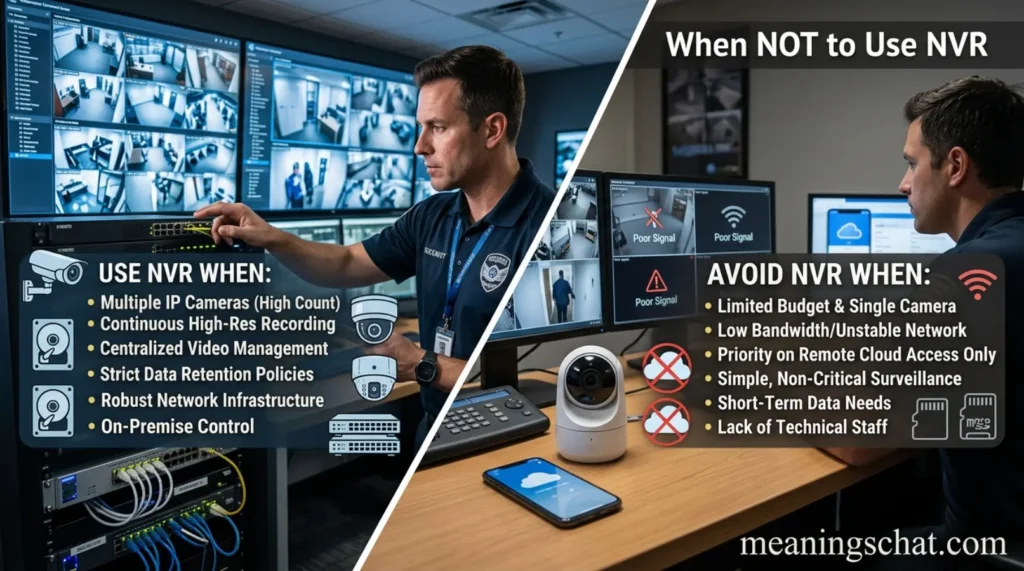
Most of the time, “NVR” simply means “never.” However, in rare situations, it could also refer to technical terms outside texting, such as:
- Network Video Recorder (technology/security systems)
- Nevada Revised Statutes (legal abbreviation)
But in social media chats and texting, “NVR” almost always means “never.”
Where Is NVR Used?
“NVR” is common on social media and messaging apps where people prefer fast, short communication.
Popular Platforms Where You’ll See NVR
- Snapchat
- Instagram DMs
- TikTok comments
- Discord
- Messenger
- X/Twitter
- Online gaming chats
Who Uses It Most?
“NVR” is especially popular among:
- Teens
- Gen Z users
- Gamers
- Social media users
- Friends texting casually
Because the slang is short and easy to type, it fits perfectly into quick online conversations.
Why People Use NVR
People use “NVR” because:
- It saves typing time
- It feels casual and modern
- It matches texting culture
- It looks cleaner in fast chats
Short forms like “NVR” are part of internet slang culture where speed matters more than perfect spelling.
Examples of NVR in Conversation
Here are some realistic examples showing how “NVR” appears naturally in chats.
Friendly Conversation
Alex: Wanna skip class tomorrow?
Sam: Nvr 😂 I’m already failing.
Funny Example
Mia: I’ll never trust autocorrect again.
Lena: Same. NVR ever 😭
Flirty Chat
Chris: You forgot about me?
Taylor: Nvr ❤️
Gaming Conversation
Player 1: Bro you rage quit yesterday.
Player 2: NVR happened 😎
Emotional Conversation
Emma: Promise you won’t leave?
Jake: Nvr.
Social Media Comment
“Pizza with pineapple? NVR.”
Casual Texting
Friend: Did you watch the ending?
You: Nvr got the chance.
These examples show that “NVR” works in many moods and situations, from jokes to emotional chats.
When to Use and When Not To Use NVR
Like most internet slang, “NVR” works best in casual conversations.
When It’s Okay to Use NVR
You can comfortably use it:
- While texting friends
- In Snapchat streaks
- On TikTok comments
- During casual online chats
- In gaming conversations
- In funny or playful discussions
It fits naturally when the vibe is relaxed and informal.
When You Should Avoid Using NVR
Avoid using “NVR” in:
- School assignments
- Professional emails
- Work chats
- Business communication
- Formal presentations
- Academic writing
Using slang like “NVR” in professional settings may seem immature or unclear.
Tone of NVR
The tone can change depending on context:
| Tone | Example |
|---|---|
| Funny | “Nvr eating spicy noodles again 😂” |
| Romantic | “I’d nvr hurt you.” |
| Dramatic | “NVR talking to him again.” |
| Casual | “Nvr mind.” |
Understanding tone is important because text slang can sometimes be misunderstood without emojis or context.
Similar Slang Words or Alternatives
If you understand “NVR,” you’ll probably recognize these related texting abbreviations too.
1. BRB
Meaning: Be Right Back
Used when someone is temporarily leaving the chat.
Example:
“BRB, food’s here.”
2. TTYL
Meaning: Talk To You Later
A casual way to end conversations.
Example:
“Gotta sleep, ttyl!”
3. IDK
Meaning: I Don’t Know
One of the most common internet abbreviations.
Example:
“IDK what happened.”
4. IMO
Meaning: In My Opinion
Used before sharing personal thoughts.
Example:
“IMO that movie was overrated.”
5. AFK
Meaning: Away From Keyboard
Popular in gaming and online communities.
Example:
“AFK for 10 mins.”
These abbreviations all belong to the same fast-texting style as “NVR.”
Why Slang Like NVR Became Popular
Internet slang became popular because online conversations move quickly. People want short, easy ways to communicate without typing full sentences every time.
Apps like Snapchat and TikTok especially encourage short-form communication. Over time, abbreviations like “LOL,” “OMG,” “BRB,” and “NVR” became part of everyday online language.
Benefits of Using Slang
- Faster texting
- More casual conversations
- Fun and expressive chats
- Easier communication online
Downsides of Using Too Much Slang
- Older users may not understand it
- Can look unprofessional
- Sometimes confusing without context
- May create misunderstandings
That’s why it’s important to know when internet slang fits the conversation.
Is NVR Considered Rude?
No, “NVR” is generally not rude.
It’s usually harmless and casual. However, the message around it matters.
For example:
- “Nvr talking to you again.” → could sound harsh
- “Nvr 😂” → playful and harmless
Tone always depends on context, emojis, and the relationship between people chatting.
Is NVR Flirty?
It can be.
“NVR” becomes flirty when used in romantic or emotional conversations.
Flirty Examples
- “I’d nvr ghost you ❤️”
- “Nvr stop thinking about you.”
- “You? Nvr boring 😘”
In these cases, the slang itself isn’t flirty, but the message around it creates the romantic tone.
Is NVR Still Popular in 2025?
Yes, “NVR” is still used in 2025, especially in casual texting and social media conversations.
While newer slang appears every year, abbreviations like “NVR” remain popular because they’re simple, quick, and easy to understand.
It’s not the trendiest slang on the internet, but many people still use it naturally in chats and comments.
Common Mistakes People Make With NVR
1. Using It in Formal Messages
Writing “NVR” in a work email can seem too casual.
2. Confusing It With “Nevermind”
Some users accidentally think “NVR” means “nevermind,” but that’s incorrect.
“Nevermind” is usually shortened as:
- NVM
- NVM
3. Overusing Slang
Too much slang can make messages harder to read.
Example:
“IDK why u nvr ttyl brb afk”
This can confuse readers who don’t know internet abbreviations well.
FAQs:
What does NVR mean from a girl?
Usually, it still means “never.” The meaning doesn’t change based on who sends it. Context and tone matter more.
Is NVR slang rude?
No, it’s normally casual and harmless. However, it can sound rude if used in an angry sentence.
Can I use NVR in professional chats?
It’s better not to. Use the full word “never” in formal or professional communication.
Does NVR have a flirty meaning?
Not directly, but it can sound flirty in romantic conversations.
Is NVR still popular in 2025?
Yes. It’s still commonly used in texting, gaming chats, and social media messages.
What’s the difference between NVR and NVM?
- NVR = Never
- NVM = Never Mind
People sometimes confuse the two abbreviations.
Conclusion
“NVR” in text simply means “never.” It’s a casual internet abbreviation used in texting, social media, gaming chats, and online conversations. Whether someone is joking, flirting, or being dramatic, the meaning usually stays the same.
The best way to use “NVR” confidently is to keep it for relaxed conversations with friends or online communities. In formal situations, spelling out the full word “never” is still the smarter choice.

Jimmy Johan is a passionate writer at Meaningschat who specializes in explaining text slang, internet terms, and digital communication trends. He is known for his simple, engaging, and reader-friendly writing style that makes modern language easy to understand. Jimmy enjoys researching online culture, social media trends, and the evolving world of texting abbreviations. Through his content, he aims to help readers stay informed, connected, and confident in today’s digital conversations.