DM meaning in text slang often confuses people when they first see it in a chat, comment section, or social media post. Imagine scrolling through Instagram and someone comments, “DM me the details,” and you pause for a second wondering what “DM” actually stands for. It looks simple, but in online conversations, even short words like this can carry important meanings.
In today’s digital world, slang like DM is used everywhere—from Snapchat and TikTok to WhatsApp and Twitter (X). Understanding it helps you reply confidently and avoid confusion in conversations. In this guide, you’ll learn exactly what DM means, how people use it, real chat examples, and when you should or shouldn’t use it. You’ll also discover whether it sounds casual, flirty, or professional depending on the situation.
What Does DM Meaning in Text Mean?
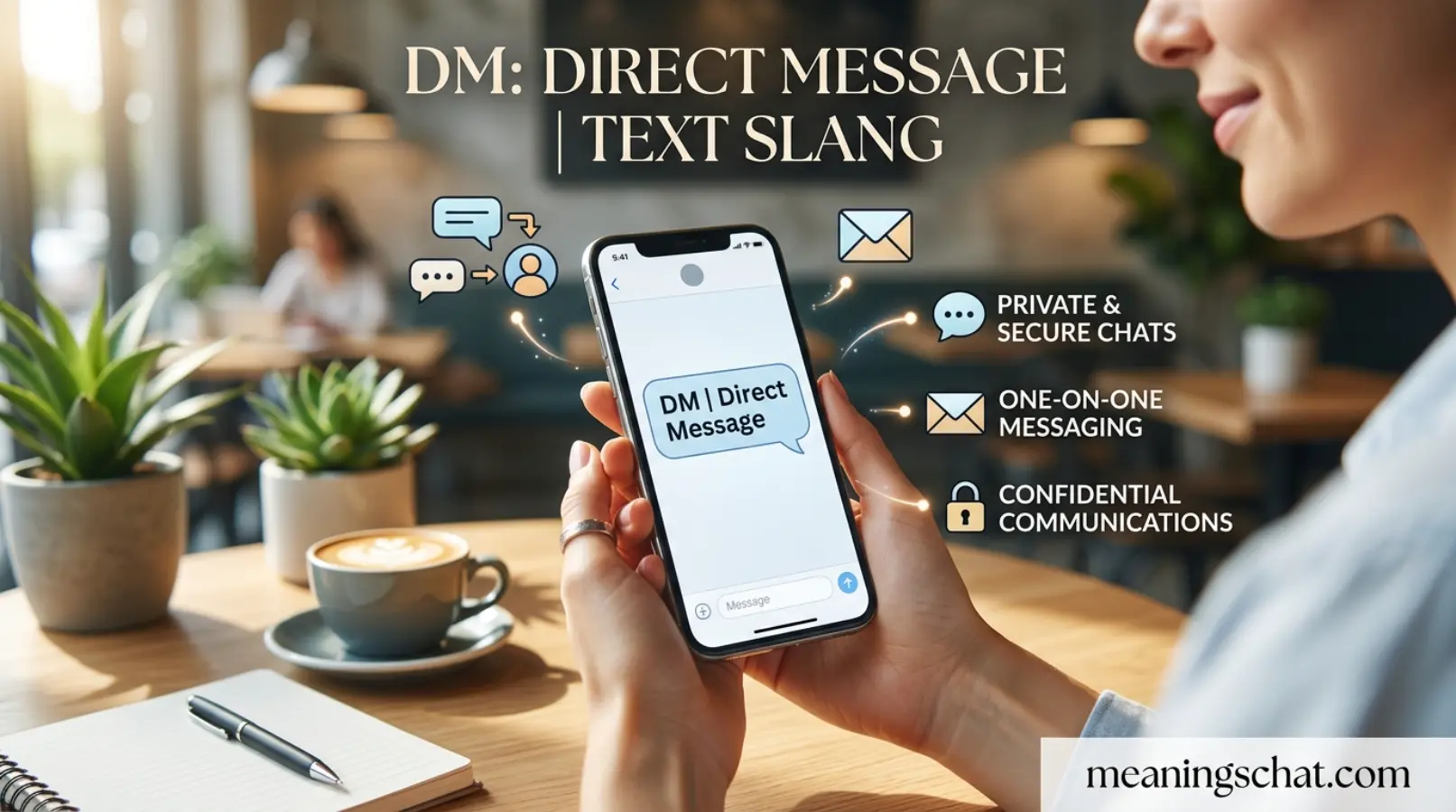
DM stands for “Direct Message.” It refers to a private message sent directly to someone on social media or messaging platforms instead of posting publicly.
In simple words, when someone says “DM me,” they are asking you to send them a private message that only you and the recipient can see.
DM is widely used across platforms like Instagram, Facebook, X (Twitter), Snapchat, and even gaming chats.
Different meanings of DM
Although “Direct Message” is the most common meaning, DM can sometimes have slight variations depending on context:
- Direct Message (most common): Private chat between two users
- Dungeon Master (gaming context): A person who controls a role-playing game like Dungeons & Dragons
- Drop Me a Message (informal variation): Sometimes people use DM loosely to mean “message me”
However, in modern texting and social media slang, DM almost always means private messaging someone online.
Where Is DM Meaning in Text Used?
DM is used across almost every social media and communication platform. It has become a universal part of online communication.
1. Social Media Platforms
DM is most commonly used on:
- Instagram (DM inbox is very popular)
- Facebook Messenger
- X (Twitter)
- Snapchat chats
People often use it when they want to continue a conversation privately instead of commenting publicly.
2. Influencers and Businesses
Influencers often say things like:
- “DM for collaborations”
- “DM me for price details”
Businesses also use DM to handle customer inquiries privately.
3. Casual Everyday Chats
Friends and acquaintances use DM when they don’t want to share personal information publicly:
- Sharing phone numbers
- Sending private details
- Planning meetups
4. Gaming Communities
In gaming, DM can also mean Dungeon Master, but in chat lobbies or Discord servers, it still often refers to private messaging.
Examples of DM Meaning in Conversation
Here are some realistic chat-style examples to help you understand how DM is used:
Example 1 (Casual)
A: Can you send me the link?
B: Sure, I’ll DM it to you.
Example 2 (Social Media Comment)
User1: Nice artwork!
User2: Thanks! DM me if you want to buy it.
Example 3 (Flirty Context)
A: You look amazing in that picture 😍
B: Haha thank you, DM me if you want to talk more 😉
Example 4 (Business Use)
Customer: How much does this cost?
Seller: Please DM us for pricing details.
Example 5 (Friend Chat)
A: I can’t explain it here
B: Just DM me, it’s easier
Example 6 (Influencer Post)
Influencer: Collabs open! DM for partnerships
Example 7 (Gaming Chat)
Player1: Need help with rules
Player2: I’ll DM you the guide
These examples show how DM smoothly fits into different types of conversations.
When to Use and When Not to Use DM Meaning in Text
Understanding when to use DM is important so you don’t sound awkward or unprofessional.
When to Use DM
You should use DM when:
- You want to share private information
- You are moving a public conversation into private chat
- You are contacting someone professionally on social media
- You are chatting casually with friends online
- You want to avoid sharing details publicly
When Not to Use DM
Avoid using DM when:
- You are writing formal emails (use “message” or “contact” instead)
- You are in academic or official documents
- You are speaking in highly professional corporate communication
- The platform does not support the term clearly (like traditional SMS)
Tone of DM
DM is:
- Casual ✔️
- Friendly ✔️
- Sometimes flirty ✔️
- Not formal ❌
So, always match your tone with the situation.
Similar Slang Words or Alternatives
Here are some similar slang terms that are often used with or instead of DM:
1. PM (Private Message)
Means the same as DM but used more on forums and older platforms.
2. Inbox Me
A casual way of saying “send me a message.”
3. Text Me
Used when moving from social media to phone SMS or WhatsApp.
4. GTG (Got To Go)
Often used when ending a conversation before switching to DM later.
5. BRB (Be Right Back)
Used when someone pauses chat before continuing in DM.
These slang terms all relate to private communication in different ways.
FAQs
What does DM mean from a girl?
When a girl says “DM me,” it simply means she wants you to send a private message. It can be friendly, casual, or sometimes flirty depending on context.
Is DM slang rude?
No, DM is not rude. It is a neutral and widely accepted internet slang for private messaging.
Can I use DM in professional chats?
Yes, but mostly in social media marketing or informal business communication. In formal emails, it’s better to say “message me” or “contact me privately.”
Does DM have any flirty meaning?
DM itself is not flirty, but in conversations it can become flirty depending on how people use it.
Is DM still popular in 2025?
Yes, DM is still extremely popular in 2025 and is widely used across all major social media platforms.
Conclusion
DM meaning in text slang is simple it stands for “Direct Message,” which refers to private conversations between users on social media. Whether you’re chatting with friends, following influencers, or running a business online, DM is one of the most common and useful terms you’ll see.
The key to using it correctly is understanding context. It is casual, flexible, and widely accepted, but not suitable for formal communication. Once you get used to it, you’ll notice DM everywhere in online conversations.
So next time someone says “DM me,” you’ll know exactly what to do—send that private message with confidence.

Jimmy Johan is a passionate writer at Meaningschat who specializes in explaining text slang, internet terms, and digital communication trends. He is known for his simple, engaging, and reader-friendly writing style that makes modern language easy to understand. Jimmy enjoys researching online culture, social media trends, and the evolving world of texting abbreviations. Through his content, he aims to help readers stay informed, connected, and confident in today’s digital conversations.