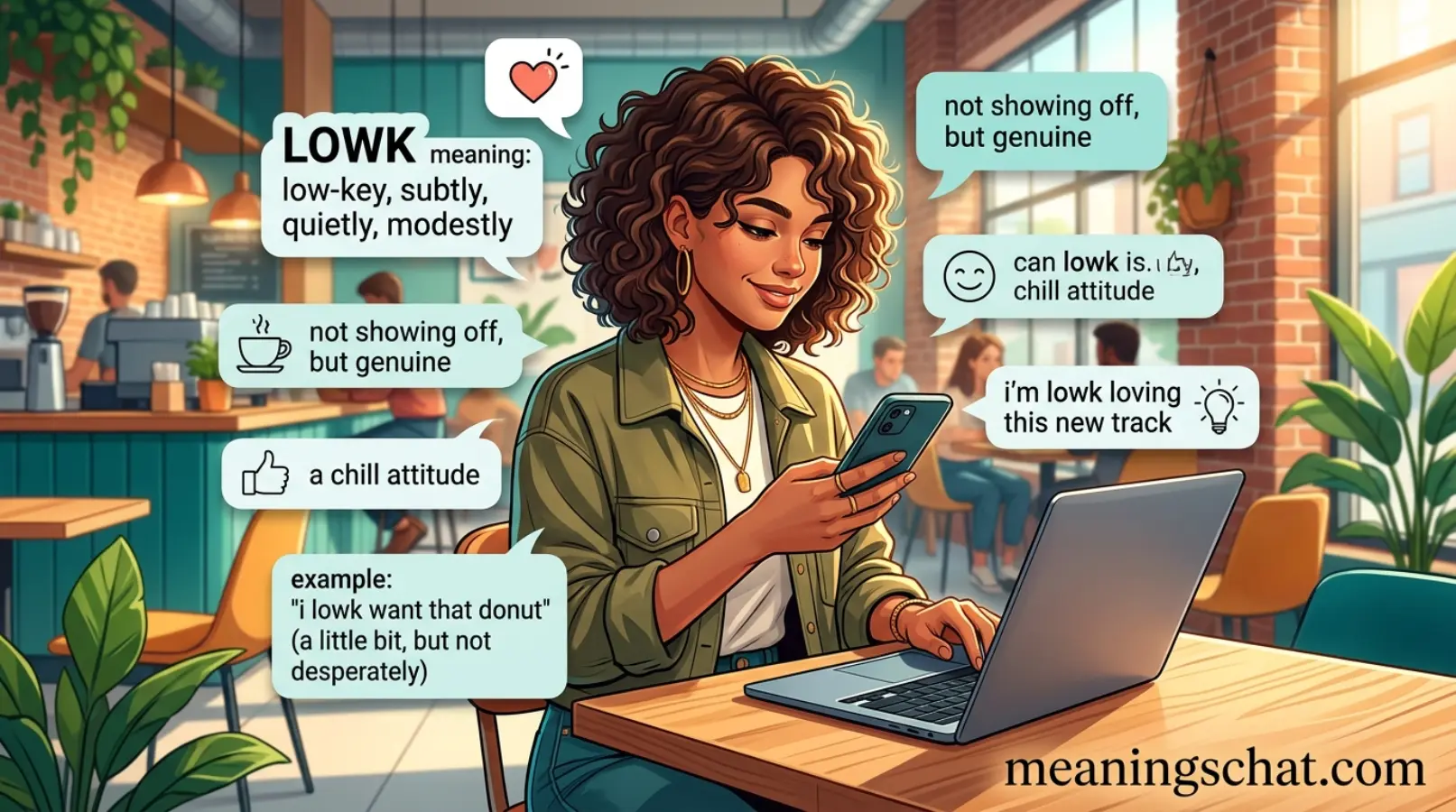
You’re scrolling through Instagram or Snapchat and suddenly you see a message like: “I lowk miss those days” or “lowk that was funny.” You pause for a second. What does “lowk” even mean? It looks like a typo, but everyone seems to be using it confidently in chats and captions.
This is exactly how most people first encounter the slang “lowk” online. It pops up in TikTok comments, group chats, and even tweets, leaving many confused but curious. The good news is—it’s actually simple once you understand it. In this guide, you’ll learn the exact meaning of “lowk,” how people use it in everyday conversations, and when you should (or shouldn’t) use it. By the end, you’ll be able to use it naturally like a social media pro.
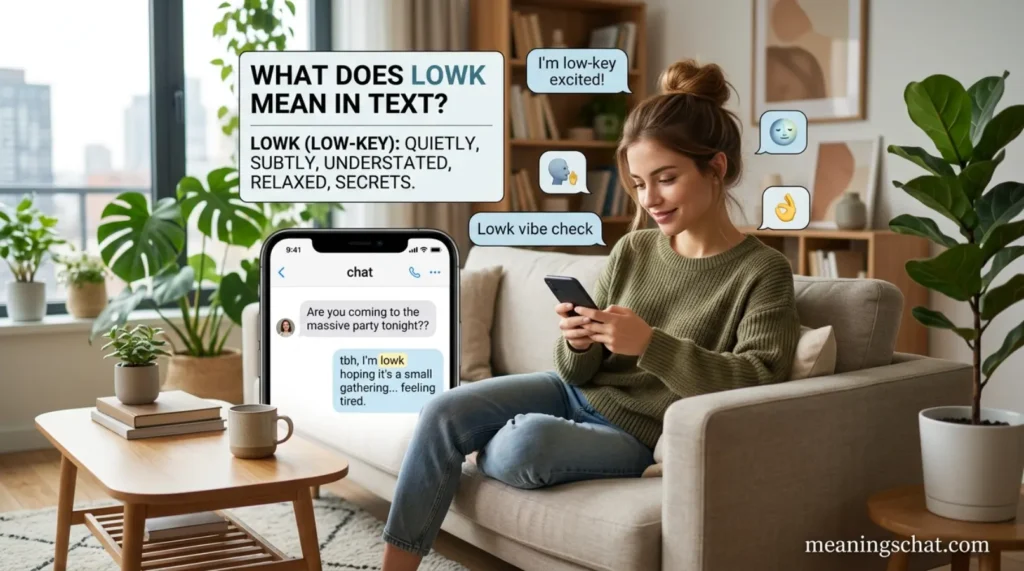
What Does lowk Mean in Text?
“Lowk” is a shortened slang version of the word “lowkey.”
In simple terms, lowk means “a little bit,” “secretly,” or “kind of but not fully.”
It is used when someone wants to express a feeling or opinion in a soft, subtle, or not-too-serious way. Instead of being loud or fully confident about something, “lowk” helps tone it down.
For example:
- “I lowk like this song” means “I kind of like this song, but I’m not fully sure or openly saying it.”
- “I lowk miss you” means “I secretly miss you.”
Does lowk have other meanings?
Yes, but not really different meanings—just variations in tone:
- lowk = lowkey (most common meaning)
- Sometimes used as “low key” in full form in more formal writing
- Rarely, people confuse it with “low kick” in gaming, but that’s unrelated slang context
Overall, in texting culture, “lowk” always connects back to “lowkey.”
Where Is lowk Used?
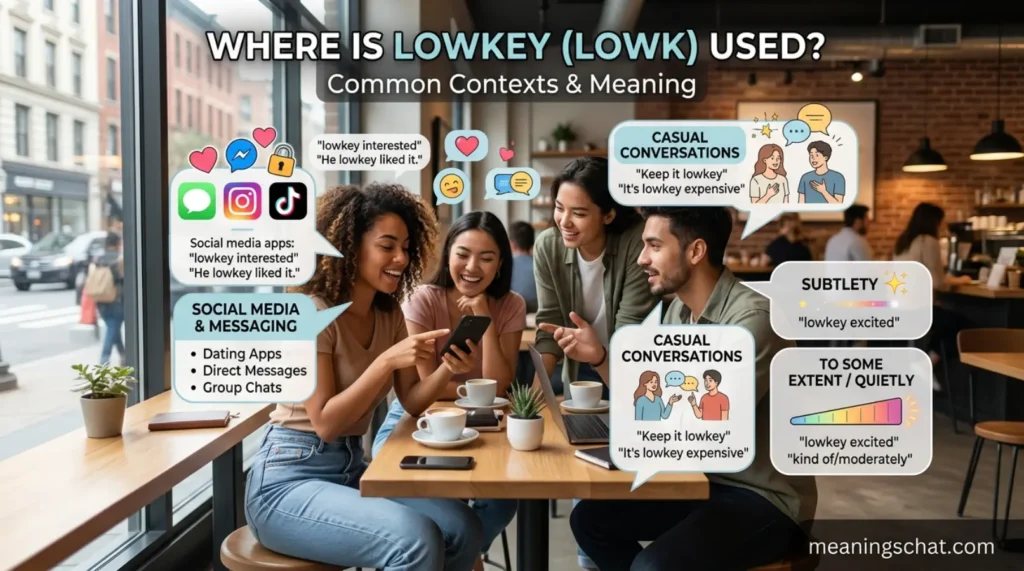
The slang “lowk” is widely used in casual online communication, especially where short, fast, and expressive texting is common.
Popular platforms include:
- Snapchat
- TikTok comments and captions
- Instagram DMs and stories
- WhatsApp group chats
- Twitter (X)
Who uses it most?
- Teenagers and Gen Z users
- Social media influencers
- Gamers and online communities
- Casual internet users who prefer slang-heavy texting
“Lowk” is part of modern internet language where people try to sound natural, emotional, and relatable in fewer characters. It fits perfectly in fast-moving digital conversations.
Examples of lowk in Conversation
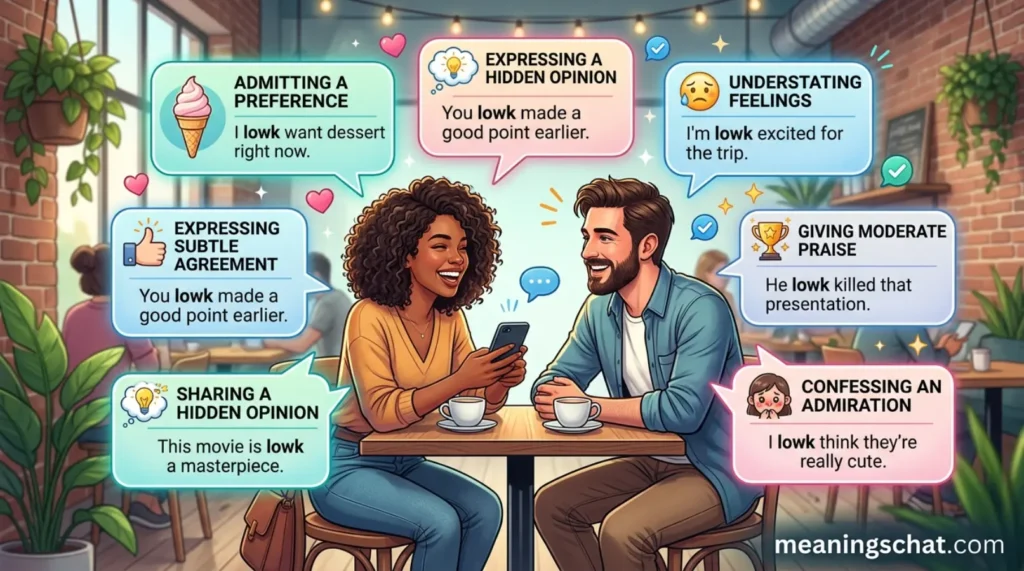
Here are some realistic chat-style examples so you can understand how “lowk” is actually used:
- Friend chat:
- A: “Do you like the new teacher?”
- B: “Lowk yeah, she’s actually nice.”
- Flirty conversation:
- A: “Do you miss me?”
- B: “I lowk do… don’t tell anyone 😭”
- Funny moment:
- “Lowk that joke was funnier than it should’ve been.”
- Music opinion:
- “I lowk think this is his best album so far.”
- Confession style:
- “Lowk I didn’t study for the test at all.”
- Social media caption:
- “Lowk want to go back to summer 2020.”
- Gaming chat:
- “Lowk we might win this match if we focus.”
These examples show how flexible “lowk” is. It can express emotions, opinions, confessions, or humor without sounding too serious.
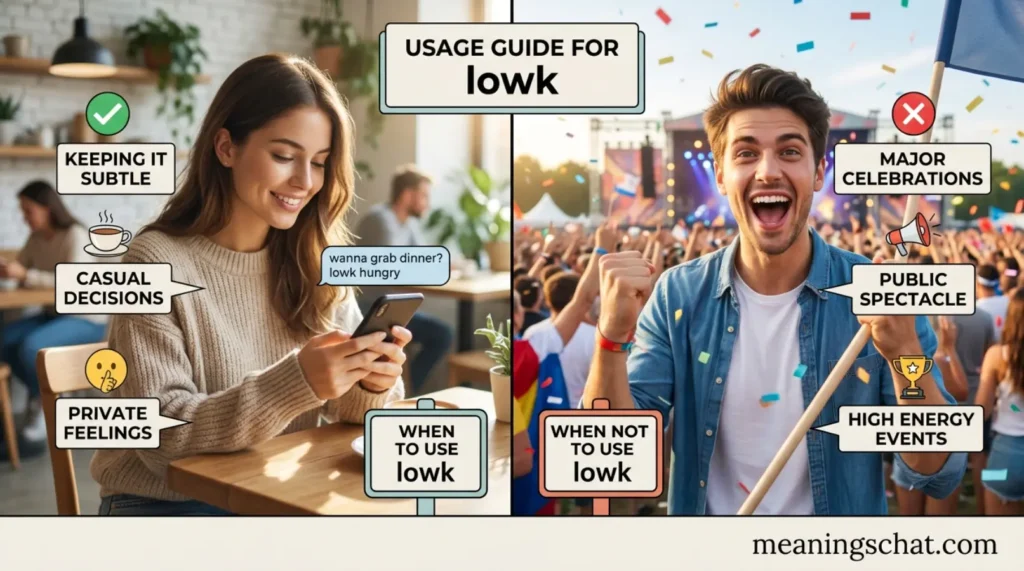
When to Use and When Not To Use lowk
Understanding tone is important when using slang like “lowk.”
When to use “lowk”
You can use it when:
- Talking to friends or peers
- Posting casual social media captions
- Sharing personal opinions in a relaxed way
- Expressing soft feelings (like “I lowk miss it”)
- Keeping your message informal and relatable
It works best in:
- Chats
- Comments
- Stories
- Informal DMs
When NOT to use “lowk”
Avoid using it when:
- Writing professional emails
- Talking to teachers or employers
- Submitting academic work
- Formal business communication
Why?
Because “lowk” is highly informal internet slang. Using it in serious contexts can make your message look unprofessional or confusing.
Think of it like casual clothing in language—it fits social hangouts, not job interviews.
Similar Slang Words or Alternatives
If you like “lowk,” here are some related slang terms you’ll often see in similar contexts:
1. Lowkey
- Full version of “lowk”
- Means: slightly, secretly, or mildly
2. Highkey
- Opposite of lowkey
- Means: openly, strongly, or clearly
Example: “I highkey love this song.”
3. NGL (Not Gonna Lie)
- Used to express honesty
- Example: “NGL, that movie was good.”
4. TBH (To Be Honest)
- Used before sharing honest opinions
- Example: “TBH, I don’t like that idea.”
5. Kinda
- Simple alternative meaning “kind of”
- Example: “I kinda like it.”
These slang terms often appear together in casual texting culture and help express emotions in a more natural, conversational way.
FAQs
What does lowk mean from a girl?
If a girl says “lowk,” it means the same thing as anyone else—it usually expresses a soft or hidden feeling. For example, “I lowk like you” means she slightly or secretly likes you, but isn’t fully expressing it directly.
Is lowk slang rude?
No, “lowk” is not rude. It’s neutral internet slang used in casual conversations. However, it can sound too informal in serious or professional settings.
Can I use lowk in professional chats?
It is not recommended. “Lowk” is too casual for workplace emails, business messages, or formal communication. Stick to “slightly” or “somewhat” instead.
Does lowk have a flirty meaning?
It can be flirty depending on context. For example, “I lowk miss you” or “I lowk like you” can carry emotional or romantic hints, but it’s not always flirty by default.
Is lowk still popular in 2025?
Yes, “lowk” and “lowkey” are still widely used in 2025, especially on TikTok, Snapchat, and Instagram. It remains a common part of Gen Z texting slang.
Conclusion
In simple words, “lowk” is just a casual internet slang version of “lowkey,” meaning something like slightly, secretly, or not fully. It helps people express feelings in a softer, more relaxed way in chats and social media posts.
If you want to use it confidently, just remember this rule: keep it casual. Use “lowk” with friends, memes, and social media—but avoid it in formal or professional situations. Once you get the hang of it, it becomes a natural and fun part of modern texting language.

Jimmy Johan is a passionate writer at Meaningschat who specializes in explaining text slang, internet terms, and digital communication trends. He is known for his simple, engaging, and reader-friendly writing style that makes modern language easy to understand. Jimmy enjoys researching online culture, social media trends, and the evolving world of texting abbreviations. Through his content, he aims to help readers stay informed, connected, and confident in today’s digital conversations.