Bottled in Bond Meaning is a popular search term because many people notice this label on whiskey bottles but are not sure what it actually means. At first glance, it may seem like a marketing phrase, but it has a much deeper history. In reality, “Bottled in Bond” is a legal designation that guarantees a whiskey meets strict production standards set by the United States government.
If you enjoy bourbon or other American whiskeys, understanding this label can help you make better buying decisions. It tells you about the whiskey’s age, alcohol content, and production process. Knowing its meaning also helps you recognize quality and authenticity when shopping.
Quick Answer:
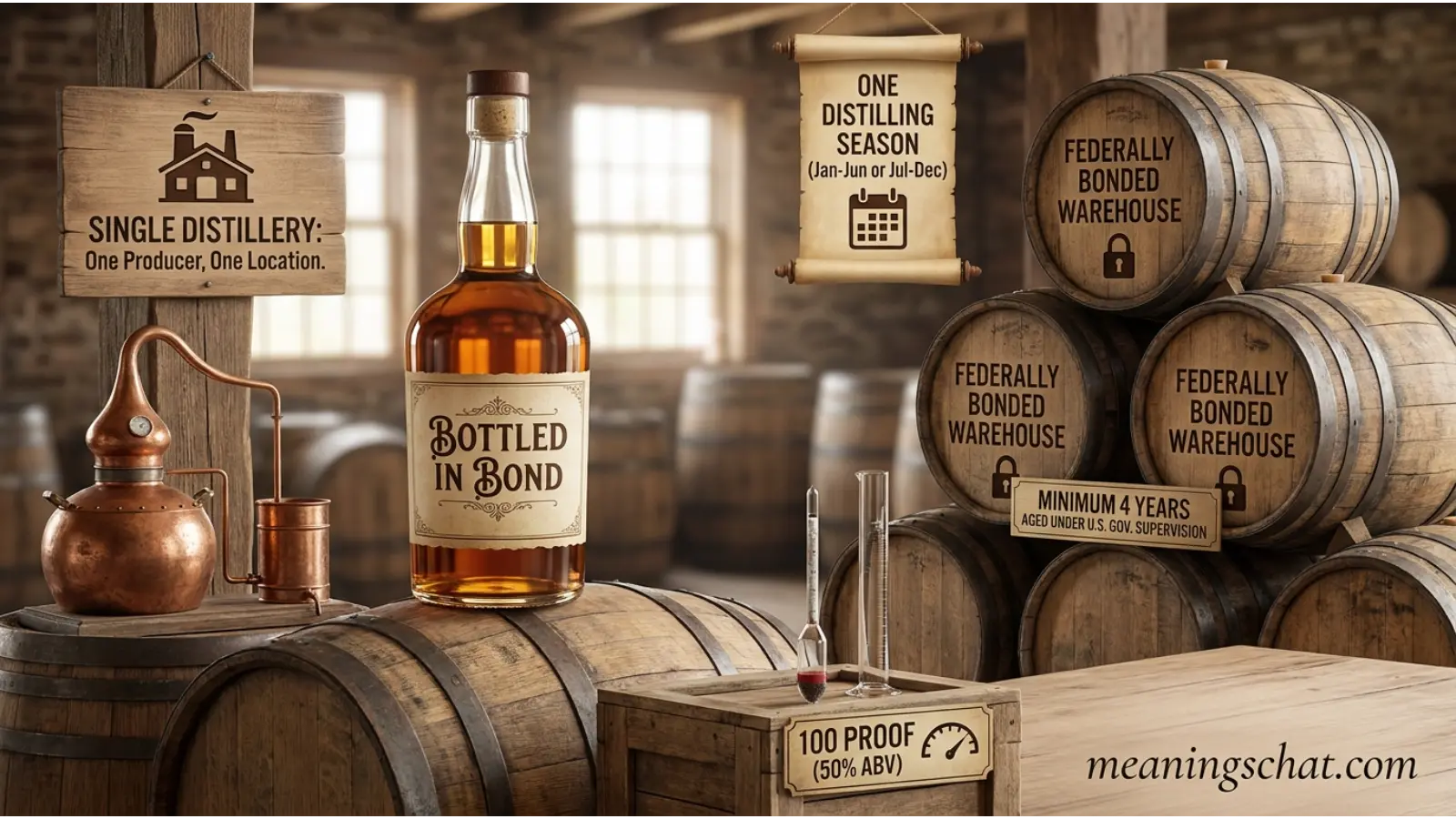
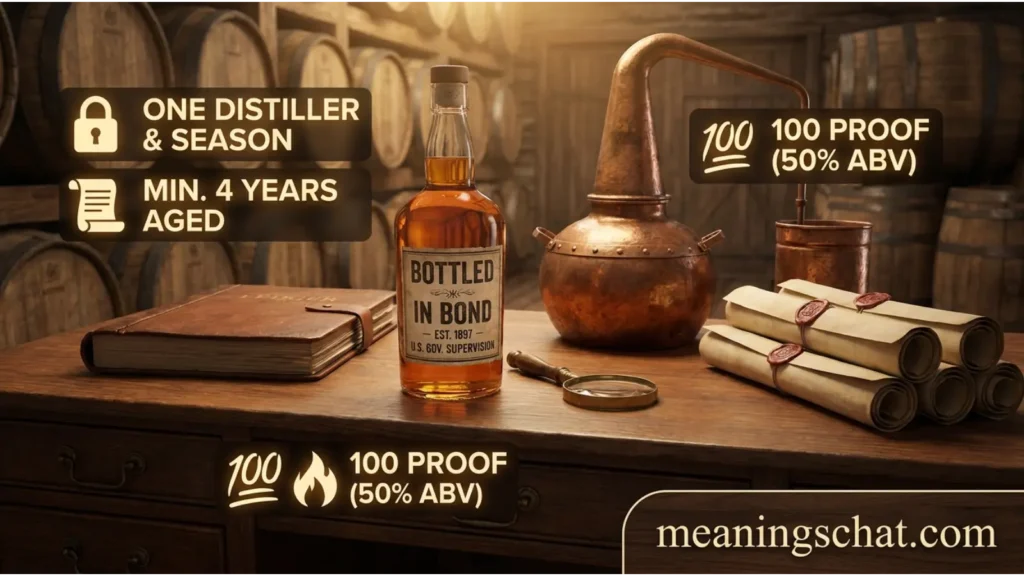
Bottled in Bond means a whiskey was produced under the rules of the Bottled-in-Bond Act of 1897. It must come from one distillery, one distillation season, age for at least four years in a federally supervised warehouse, and be bottled at exactly 100 proof (50% ABV).
What Does Bottled in Bond Mean?
It is not just a brand slogan or advertising claim.
To qualify as Bottled in Bond, the whiskey must meet several strict requirements:
- Produced by one distillery.
- Made during one distillation season.
- Aged for at least four years.
- Stored in a federally bonded warehouse.
- Bottled at exactly 100 proof (50% alcohol by volume).
- Free from added flavors or coloring.
These rules give consumers confidence that the whiskey meets consistent quality standards.
Bottled in Bond Full Meaning
The phrase “Bottled in Bond” refers to whiskey bottled under the regulations established by the Bottled-in-Bond Act of 1897.
Unlike ordinary whiskey labels, this designation guarantees both authenticity and quality.
What Does Bottled in Bond Stand For?
Many people ask, “What does Bottled in Bond stand for?”
It stands for a government-certified standard rather than an abbreviation.
The label represents:
- Authentic American whiskey
- Minimum four years of aging
- Single distillery production
- One distillation season
- 100 proof bottling
- Government-regulated storage
Instead of being a marketing promise, it is a legally protected certification.
Is Bottled in Bond Good Quality?
Yes. Many whiskey enthusiasts consider Bottled in Bond a sign of reliable quality.
Here are some reasons why:
- Guaranteed minimum age
- Higher alcohol strength
- No artificial additives
- Consistent production standards
- Greater transparency
However, it does not automatically mean every Bottled in Bond whiskey tastes better than every non-bonded whiskey. Flavor always depends on the distillery, recipe, and aging conditions.
History of Bottled in Bond
During the late 1800s, fake whiskey became a serious problem in the United States.
Some producers diluted whiskey or mixed it with harmful ingredients while selling it as genuine whiskey.
To protect consumers, Congress passed the Bottled-in-Bond Act of 1897.
The law required strict government oversight of whiskey production.
Its goals included:
- Protecting consumers
- Preventing whiskey fraud
- Supporting honest distillers
- Creating trusted quality standards
Today, the law remains one of the oldest consumer protection laws related to food and beverages.
Legal Requirements for Bottled in Bond
To legally display the Bottled in Bond label, every whiskey must satisfy these conditions.
| Requirement | Rule |
|---|---|
| Distillery | One distillery only |
| Distillation | One season only |
| Aging | Minimum 4 years |
| Warehouse | Federally bonded warehouse |
| Bottling Strength | 100 Proof (50% ABV) |
| Additives | None allowed |
Missing even one requirement means the whiskey cannot legally use the Bottled in Bond label.
Why Is Bottled in Bond Important?
This label provides buyers with confidence.
It guarantees:
- Authentic production
- Honest labeling
- Consistent quality
- Proper aging
- Higher transparency
Instead of relying on marketing claims, consumers can trust the legal standards behind the label.
Bottled in Bond vs Regular Whiskey
| Feature | Bottled in Bond | Regular Whiskey |
|---|---|---|
| Minimum Age | 4 Years | Varies |
| Proof | Exactly 100 | Any legal proof |
| Distillery | Single | One or many |
| Distillation Season | Single | Multiple allowed |
| Government Standard | Yes | No |
| Additives | Not allowed | May vary by type |
This comparison shows why many whiskey lovers actively seek Bottled in Bond products.
Does Bottled in Bond Mean Bourbon?
Not necessarily.
Many Bottled in Bond products are bourbons, but other American whiskey styles can also qualify.
Examples include:
- Bourbon
- Rye Whiskey
- Wheat Whiskey
- Malt Whiskey
As long as they satisfy the legal requirements, they may carry the Bottled in Bond label.
Common Examples of Bottled in Bond Whiskey
Many well-known distilleries produce Bottled in Bond expressions.
Popular examples include:
- Old Grand-Dad Bottled in Bond
- Evan Williams Bottled in Bond
- Early Times Bottled in Bond
- Henry McKenna Single Barrel Bottled in Bond
- Old Forester Bottled in Bond
Each follows the same legal standards but offers its own unique flavor profile.
Is Bottled in Bond Better Than Small Batch?
Not always.
These labels describe different things.
| Bottled in Bond | Small Batch |
|---|---|
| Legal government standard | Marketing category |
| Strict production rules | No universal legal definition |
| Always 100 proof | Proof varies |
| Minimum four years | Aging varies |
| One distillery | May combine selected barrels |
Some small batch whiskeys taste exceptional, while some Bottled in Bond whiskeys offer outstanding value. Personal preference plays a major role.
Is Bottled in Bond Worth Buying?
For many people, yes.
Reasons include:
- Excellent value
- Reliable quality
- Traditional production methods
- Rich whiskey history
- Transparent labeling
Many whiskey beginners also appreciate knowing exactly what standards the bottle meets.
Common Misconceptions
It Means Premium Whiskey
Not always.
The law guarantees production standards, not luxury status.
It Means Older Whiskey
No.
The whiskey must be at least four years old, but many bottles age much longer.
Incorrect.
Only bourbons meeting every legal requirement may use the label.
Who Should Buy Bottled in Bond Whiskey?
This style is ideal for:
- New whiskey drinkers
- Bourbon collectors
- Cocktail enthusiasts
- People seeking quality at a fair price
- Anyone interested in American whiskey history
Tips for Buying Bottled in Bond Whiskey
When shopping, check the label for:
- “Bottled in Bond”
- 100 Proof
- Distillery name
- Age statement (if included)
Researching the distillery can also help you choose a flavor profile you enjoy.
Frequently Asked Questions
What is the Bottled in Bond meaning?
On the other hand means the whiskey follows the legal standards established by the Bottled-in-Bond Act of 1897, including four years of aging and bottling at 100 proof.
Is Bottled in Bond only for bourbon?
Other American whiskey styles can also qualify if they meet the legal requirements.
Why is Bottled in Bond always 100 proof?
The law requires all Bottled in Bond whiskey to be bottled at exactly 100 proof, or 50% alcohol by volume.
Is Bottled in Bond better than regular whiskey?
Not automatically.Additionally guarantees strict production standards, but taste depends on the distillery and recipe.
Can Scotch be Bottled in Bond?
No. Bottled in Bond is a legal designation for qualifying American whiskey.
Does Bottled in Bond increase the price?
Moreover Sometimes, but many Bottled in Bond whiskeys remain affordable and offer excellent value.
Conclusion
Understanding the Bottled in Bond Meaning helps you make smarter whiskey choices. Rather than being a simple marketing phrase, it represents one of the strongest quality guarantees in American whiskey. A Bottled in Bond whiskey must come from one distillery, one distillation season, age for at least four years, mature in a federally bonded warehouse, and be bottled at exactly 100 proof.
Therefore you see this label, you know the whiskey follows strict legal standards designed to ensure authenticity, consistency, and transparency. However if you appreciate honest craftsmanship and dependable quality, Bottled in Bond is a designation worth looking for on your next bottle.