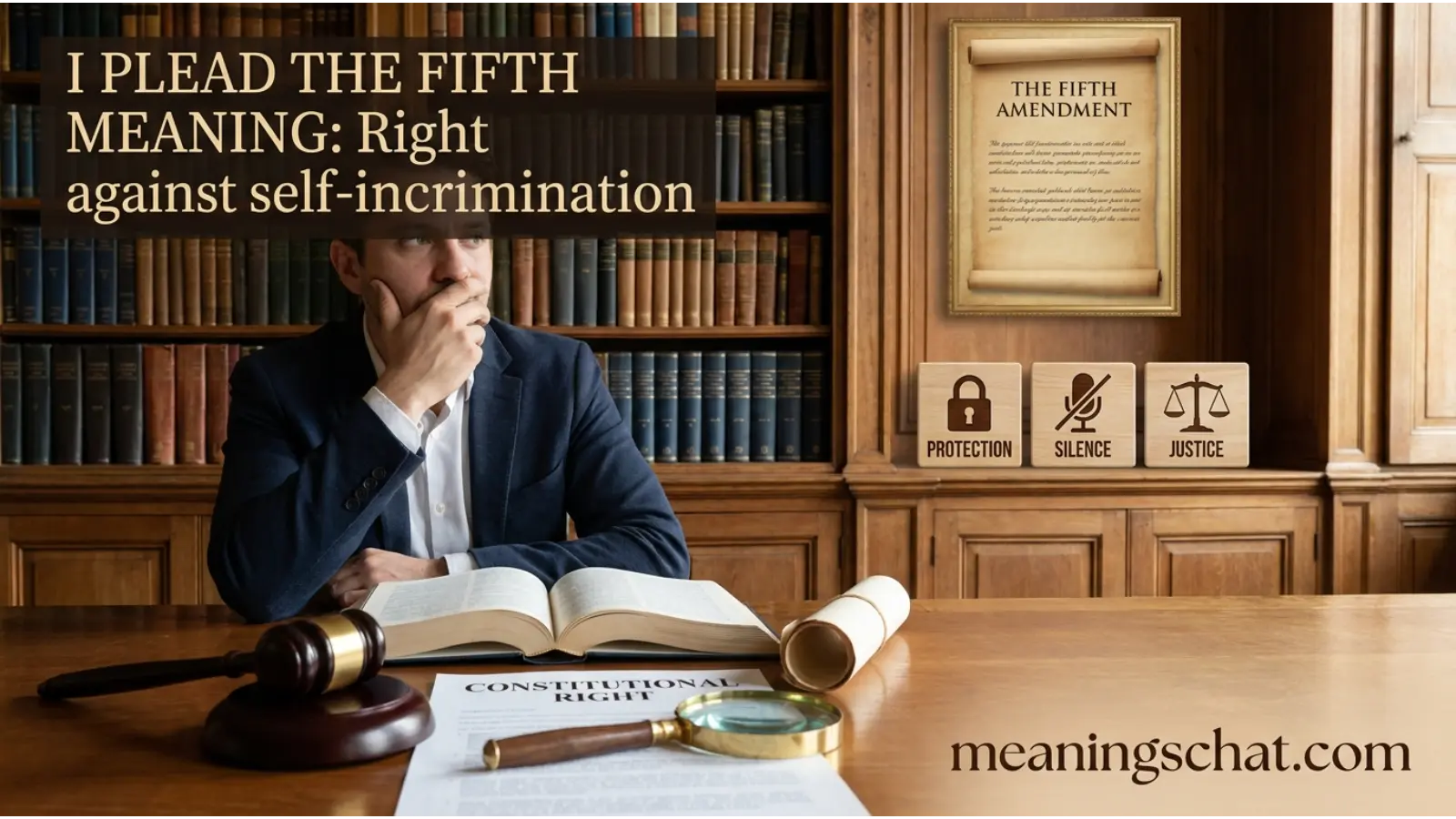
I Plead the Fifth Meaning is a phrase people often use in text messages, social media posts, online chats, and everyday conversations when they do not want to answer a question. You may have seen someone reply with “I plead the fifth” after being asked something embarrassing, personal, or potentially incriminating.
Many people search for this phrase because it sounds legal and formal, yet it appears frequently in casual conversations. Understanding its meaning can help you avoid confusion and use it correctly in different situations. While the phrase comes from the U.S. legal system, its modern slang usage is much broader and often humorous.
Quick Answer:
“I plead the fifth” means “I choose not to answer that question.” In texting and casual conversations, people use it to avoid revealing information, dodge a question, or jokingly keep a secret.
What Does I Plead the Fifth Mean in Text?
In text messages and online conversations, I plead the fifth means that someone refuses to answer a question or provide information.
The phrase is often used when:
- A question feels too personal.
- Someone wants to keep a secret.
- The answer could be embarrassing.
- A person wants to avoid getting involved in a discussion.
For example:
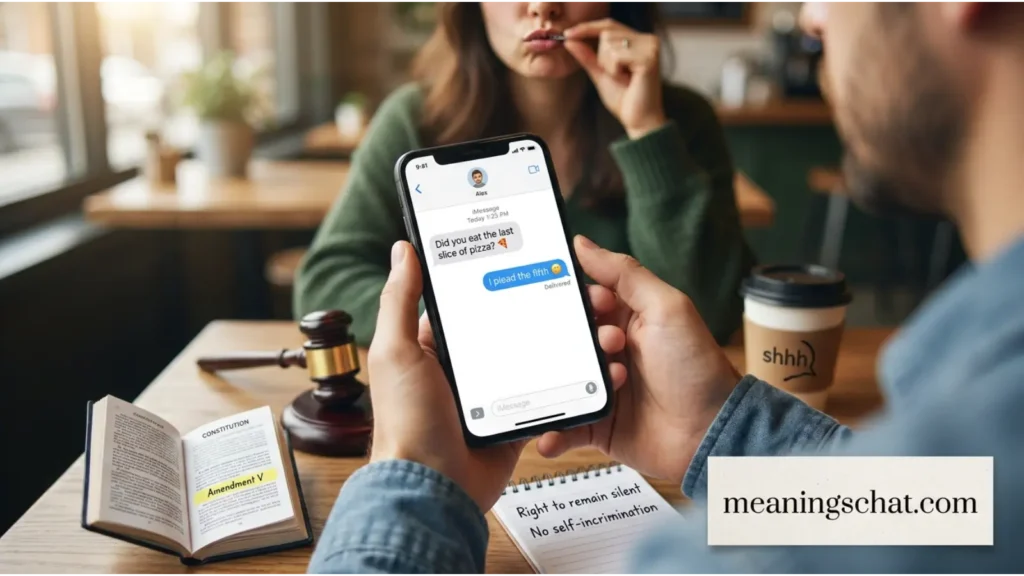
Friend: Who ate the last piece of pizza?
You: I plead the fifth. 😄
In this example, the person jokingly avoids answering because the answer might reveal their guilt.
Full Form and Definition of I Plead the Fifth
Unlike abbreviations such as LOL or BRB, I plead the fifth is not an acronym.
The phrase comes from the Fifth Amendment of the United States Constitution, which protects people from being forced to testify against themselves in criminal cases.
Simple Definition
I plead the fifth = I refuse to answer because my answer might get me into trouble.
In modern texting, people often use it humorously rather than legally.
Related Search Terms
- I plead the fifth full form
- I plead the fifth meaning slang
- What does I plead the fifth stand for
- I plead the fifth meaning in text messages
- Plead the fifth definition
Is I Plead the Fifth Rude, Offensive, or Neutral?
Generally, I plead the fifth is considered neutral.
Its tone depends on the situation and how it is used.
Neutral Usage
When used jokingly among friends, it is usually harmless.
Example:
Friend: Did you tell everyone about my surprise party?
You: I plead the fifth.
Slightly Rude Usage
It may seem dismissive if someone is asking a serious question and you refuse to answer.
Offensive Usage
The phrase is rarely offensive. However, using it in sensitive conversations can appear disrespectful or evasive.
Where Is I Plead the Fifth Commonly Used?
This phrase appears in many communication settings.
Text Messages
People use it when they want to avoid answering questions.
Social Media
Users often comment “I plead the fifth” under posts that ask controversial or personal questions.
Group Chats
Friends frequently use it as a playful response.
Online Forums
People may use it humorously when discussing topics that could lead to arguments.
Television and Movies
Many TV shows feature characters saying “I plead the fifth” when they want to avoid revealing information.
Real-Life Examples of I Plead the Fifth
Understanding examples makes the phrase easier to recognize.
Example 1: Friendly Conversation
Friend: Which one of us is your favorite?
You: I plead the fifth.
Example 2: Family Chat
Mom: Who forgot to clean the kitchen?
Son: I plead the fifth.
Example 3: Workplace Humor
Coworker: Did you finish the snacks in the break room?
Employee: I plead the fifth.
Example 4: Social Media
Post: Who still watches cartoons as an adult?
Comment: I plead the fifth.
Example 5: Gaming Chat
Player: Who accidentally caused the team to lose?
Teammate: I plead the fifth.
Origin and Background of I Plead the Fifth
The phrase originates from the Fifth Amendment to the U.S. Constitution.
The amendment includes protection against self-incrimination, meaning a person cannot be forced to provide testimony that could be used against them in court.
Over time, the phrase entered everyday language and became a common expression outside legal settings.
People started using it humorously to avoid awkward questions, admit possible guilt without actually confessing, or keep information private.
Today, many people use the phrase without even thinking about its legal origins.
Why Do People Use I Plead the Fifth?
There are several reasons why this phrase remains popular.
To Avoid Embarrassment
People use it when the truth might be awkward.
To Keep Secrets
It allows someone to avoid revealing confidential information.
To Add Humor
The legal tone often makes conversations more entertaining.
To Avoid Arguments
Sometimes people prefer not to share opinions that could start conflict.
To Stay Mysterious
The phrase can create curiosity and keep others guessing.
Comparison with Similar Slang and Expressions
Several phrases have meanings similar to “I plead the fifth.”
| Phrase | Meaning | Common Tone |
|---|---|---|
| I plead the fifth | Refuse to answer | Humorous or neutral |
| No comment | Decline to answer | Professional |
| That’s classified | Secret information | Playful |
| Can’t say | Unable or unwilling to answer | Neutral |
| My lips are sealed | Keeping a secret | Friendly |
| I’d rather not say | Polite refusal | Respectful |
Which One Should You Use?
- Use I plead the fifth for casual and humorous situations.
- Use No comment in professional settings.
- Use I’d rather not say when you want to sound polite.
When Should You Avoid Using I Plead the Fifth?
Although the phrase is common, there are situations where it may not be appropriate.
Professional Interviews
Avoid using it during job interviews because it can seem evasive.
Serious Discussions
In important conversations, people may expect a direct answer.
Customer Service Situations
Professional communication usually requires clarity rather than jokes.
Legal Conversations
If discussing actual legal matters, using the phrase casually may create confusion.
Polite Alternatives to I Plead the Fifth
If you want to avoid answering without sounding playful, consider these alternatives:
- I’d rather not answer.
- That’s personal.
- I’d prefer to keep that private.
- I don’t feel comfortable discussing that.
- I’ll keep that to myself.
- No comment.
These options often sound more professional and respectful.
Impact of Using I Plead the Fifth in Communication
The phrase can affect conversations in different ways.
Positive Impact
- Adds humor.
- Creates lighthearted interactions.
- Helps maintain privacy.
- Prevents uncomfortable situations.
Negative Impact
- Can appear evasive.
- May frustrate people seeking honest answers.
- Could be misunderstood in serious discussions.
Context is important when choosing to use this phrase.
Is I Plead the Fifth Safe for Social Media?
Yes, I plead the fifth is generally safe to use on social media.
The phrase is widely understood and is not considered offensive.
However, keep these points in mind:
- Avoid using it in sensitive discussions.
- Consider your audience.
- Remember that humor can sometimes be misunderstood online.
In most casual social media situations, the phrase is perfectly acceptable.
Examples of I Plead the Fifth in Different Contexts
Friendly Example
Friend: Did you eat my chocolate?
You: I plead the fifth. 😂
Casual Example
Sibling: Who broke the remote?
Brother: I plead the fifth.
Argumentative Example
Friend: So you’re admitting it was your fault?
You: I plead the fifth.
Gaming Example
Player: Who triggered the trap?
Teammate: I plead the fifth.
Social Media Example
Post: Who spends too much money on online shopping?
Comment: I plead the fifth.
Relationship Example
Partner: Did you forget our anniversary last year?
You: I plead the fifth.
Does I Plead the Fifth Mean Someone Is Guilty?
Not necessarily.
In legal settings, invoking the Fifth Amendment does not automatically mean guilt.
In texting and social media, the phrase is usually used jokingly. Most of the time, people simply want to avoid answering a question rather than admitting wrongdoing.
Is I Plead the Fifth an American Expression?
Yes, the phrase comes from the United States Constitution.
However, thanks to movies, television, social media, and internet culture, people around the world now recognize and use the expression.
Even individuals who are unfamiliar with American law often understand its casual meaning.
Frequently Asked Questions
What does I plead the fifth mean in slang?
In slang, it means refusing to answer a question, usually to avoid embarrassment or revealing information.
What does I plead the fifth stand for?
The phrase refers to the Fifth Amendment of the U.S. Constitution, which protects people from self-incrimination.
Is I plead the fifth rude?
Usually no. It is generally neutral and often used humorously.
Can I use I plead the fifth in text messages?
Yes. It is commonly used in texting, group chats, and online conversations.
Does I plead the fifth mean someone is guilty?
No. It simply means the person does not want to answer the question.
Is I plead the fifth appropriate for work?
In casual workplace conversations it may be fine, but professional communication usually requires more direct responses.
Conclusion
Understanding the I Plead the Fifth Meaning can help you recognize and use this popular expression correctly. The phrase originates from the Fifth Amendment of the U.S. Constitution, but in modern texting and social media, it simply means “I choose not to answer that question.”
People use it to avoid awkward topics, protect privacy, keep secrets, or add humor to conversations. While it is generally neutral and safe to use, context matters. Casual chats with friends are usually the best place for this expression, while professional or serious discussions may require a more direct response.
The next time someone says “I plead the fifth,” you’ll know they’re probably keeping a secret, avoiding an embarrassing answer, or simply having a little fun with the conversation.