Have you ever opened a message, seen someone type “IDRC,” and paused for a second trying to figure out what it meant? Maybe it popped up in a Snapchat streak, an Instagram DM, or a late-night group chat. Online slang changes fast, and it can feel like everyone else already knows the meaning except you.
The good news is that “IDRC” is actually pretty simple once you understand it. It’s a casual texting abbreviation people use to express indifference or show they are not too worried about something. In this guide, you’ll learn exactly what IDRC means, where people use it, how to reply to it, and real examples so you can use it naturally in conversations.
What Does IDRC Mean in Text?
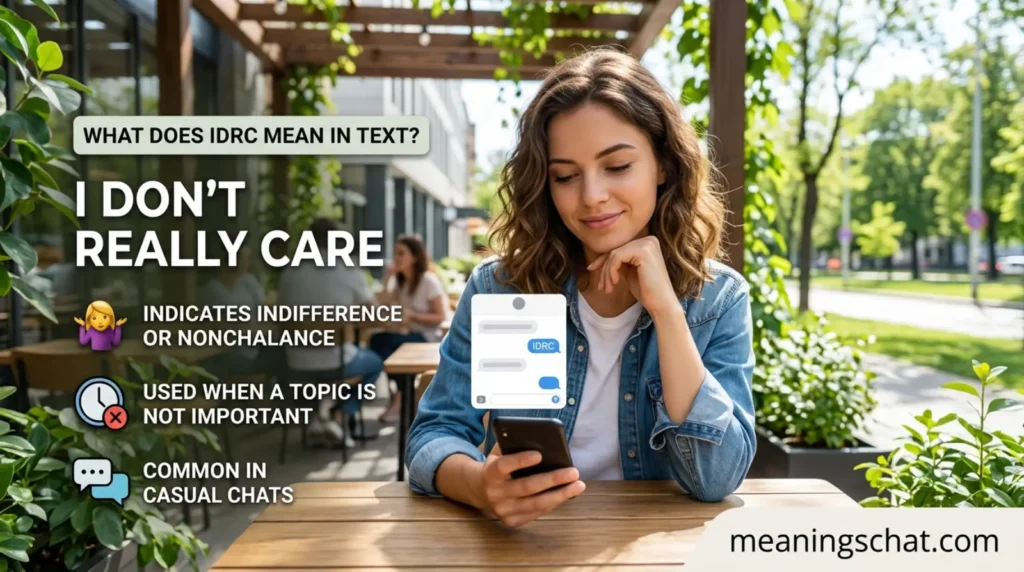
IDRC stands for:
“I Don’t Really Care.”
People use it in texts, chats, and social media when they want to say something does not matter much to them. It usually shows a relaxed, neutral, or uninterested attitude.
For example:
- “We can watch any movie tonight, idrc.”
- “Pick whichever restaurant you want, IDRC.”
In both cases, the person is saying they are okay with any option.
Is IDRC Rude?
Not always. The tone depends on the conversation.
Sometimes IDRC sounds casual and easygoing. Other times, it can seem cold or dismissive if used during a serious discussion.
For example:
- Friendly: “Pizza or burgers?” — “IDRC 😂”
- Rude: “Do you even care about this issue?” — “idrc.”
The second example may sound harsh because the topic is emotional or important.
Variations of IDRC
You might also see similar versions online, including:
- IDC = I Don’t Care
- IDRM = I Don’t Really Mind
- ICL = I Can’t Lie
Among these, IDRC feels slightly softer than IDC because the word “really” makes it sound less aggressive.
Where Is IDRC Used?
IDRC is mainly used in casual online communication. You’ll often see it on social media platforms and messaging apps where people type quickly.
Common Places People Use IDRC
Snapchat
Friends use IDRC in streaks or casual chats when discussing plans, photos, or random topics.
Instagram DMs
People often reply with IDRC when talking about trends, outfits, memes, or weekend plans.
TikTok Comments
TikTok users sometimes use IDRC in comments to react to drama, opinions, or viral videos.
Text Messages
It’s very common in personal texting between friends, siblings, or classmates.
Discord and Gaming Chats
Gamers use IDRC while discussing games, teams, or online decisions.
Who Uses IDRC the Most?
IDRC is especially popular among:
- Teens
- Young adults
- Social media users
- Gamers
- Meme communities
However, many adults also use it in everyday texting because internet slang has become part of normal communication.

Examples of IDRC in Conversation
Here are some natural examples of how IDRC appears in chats.
Example 1: Casual Friend Chat
Emma: Which café should we go to?
Lily: IDRC, you choose.
Example 2: Funny Conversation
Jake: Bro, your team lost again 😂
Ryan: idrc, it’s just a game.
Example 3: Flirty Chat
Alex: We could stay in or go out tonight.
Mia: Hmm IDRC as long as I’m with you 😉
Example 4: Group Project
Sam: Should we submit today or tomorrow?
Chris: IDRC, whatever works for everyone.
Example 5: Gaming Chat
Player 1: Which map should we play?
Player 2: idrc honestly.
Example 6: Social Media Comment
User 1: This trend is so overrated.
User 2: idrc I still like it 😂
Example 7: Chill Conversation
Noah: Blue hoodie or black hoodie?
Ava: IDRC, both look good.

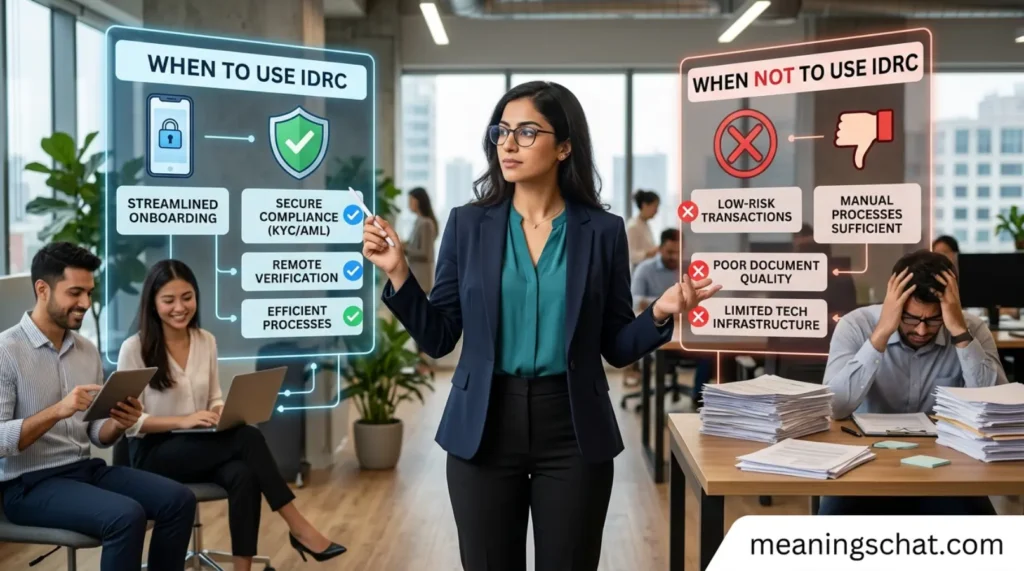
When to Use and When Not To Use IDRC
Understanding the tone of IDRC is important because context changes everything online.
When You Can Use IDRC
IDRC works best in relaxed, informal conversations.
You can use it when:
- Talking with friends
- Chatting casually online
- Making small decisions
- Showing flexibility
- Responding playfully
Examples:
- “We can eat anywhere, idrc.”
- “Watch whatever movie you want.”
In these situations, IDRC sounds calm and easygoing.
When You Should Avoid IDRC
Avoid using IDRC in serious or professional situations because it may sound careless or disrespectful.
Do not use it:
- In work emails
- During professional meetings
- In school assignments
- During emotional conversations
- When someone is discussing something important
For example, replying “idrc” during a serious argument can hurt someone’s feelings.
Is IDRC Formal?
No. IDRC is considered internet slang and is very informal.
If you need a professional alternative, say:
- “I don’t mind.”
- “Either option works for me.”
- “I’m okay with either choice.”
These sound much more polite in formal settings.
Similar Slang Words or Alternatives
Here are some related slang terms people use alongside IDRC.
| Slang | Meaning |
|---|---|
| IDC | I Don’t Care |
| IDM | I Don’t Mind |
| TBH | To Be Honest |
| BRB | Be Right Back |
| GTG | Got To Go |
IDC vs IDRC
People often confuse IDC and IDRC because they are very similar.
- IDC sounds stronger and more blunt.
- IDRC sounds softer and more casual.
Example:
- “IDC what happens.” → stronger
- “IDRC where we eat.” → lighter tone
So if you want to sound less harsh, IDRC is usually the better choice.
Why Is IDRC So Popular?
Online communication moves quickly, and people prefer short messages instead of typing full sentences.
IDRC became popular because it:
- Saves time
- Sounds casual
- Fits texting culture
- Feels natural in fast conversations
Social media platforms like TikTok and Snapchat also encourage short slang expressions, which helps abbreviations spread even faster.
In 2025, internet slang continues evolving daily, but IDRC remains widely understood by most active social media users.
How to Reply to IDRC
If someone sends you “IDRC,” your response depends on the mood of the conversation.
Friendly Replies
- “Alright, I’ll decide then 😂”
- “Cool, let’s do this.”
- “Okay sounds good!”
Funny Replies
- “Wow, very passionate opinion 😭”
- “Such strong feelings there.”
Serious Replies
If the topic matters, you may want clarification:
- “Do you actually not care?”
- “I just wanted your honest opinion.”
Reading tone carefully is important because text messages can sometimes be misunderstood.
Is IDRC Flirty?
Sometimes, yes.
IDRC itself is not automatically flirty, but it can become flirtatious depending on context.
For example:
- “IDRC where we go as long as I’m with you ❤️”
In this case, the message feels sweet and romantic.
However, in most situations, IDRC is simply casual slang with no romantic meaning.
Is IDRC Positive or Negative?
IDRC can be either positive or negative depending on tone.
Positive Tone
It can show flexibility or being easygoing.
Example:
- “I’m cool with anything, IDRC.”
Negative Tone
It can sound dismissive or uninterested.
Example:
- “Talk to someone else, idrc.”
This is why emojis, punctuation, and context matter so much in texting.
FAQs:
What does IDRC mean from a girl?
When a girl says IDRC, it usually still means “I don’t really care.” The tone depends on context. It could mean she’s relaxed about a decision or simply uninterested in the topic.
Is IDRC slang rude?
Not necessarily. In casual chats, it often sounds harmless. But in emotional or serious conversations, it may seem rude or dismissive.
Can I use IDRC in professional chats?
No, it’s better to avoid IDRC in work or professional communication. Use more polite phrases like “I don’t mind” or “Either works for me.”
Does IDRC have a flirty meaning?
Sometimes. IDRC can sound flirty if paired with romantic messages or emojis, but by itself it is usually just casual slang.
Is IDRC still popular in 2025?
Yes. IDRC remains commonly used on Snapchat, TikTok, Instagram, Discord, and regular text messaging in 2025.
Conclusion
IDRC simply means “I Don’t Really Care.” People use it in casual chats to show they are flexible, relaxed, or not strongly attached to a decision. You’ll mostly see it on Snapchat, TikTok, Instagram, Discord, and texting apps.
The key to using IDRC correctly is understanding the tone and situation. With friends, it can sound funny and easygoing. In serious conversations, though, it may come across as cold or rude. When used in the right context, IDRC is an easy slang term that helps conversations feel natural and modern online.

Jimmy Johan is a passionate writer at Meaningschat who specializes in explaining text slang, internet terms, and digital communication trends. He is known for his simple, engaging, and reader-friendly writing style that makes modern language easy to understand. Jimmy enjoys researching online culture, social media trends, and the evolving world of texting abbreviations. Through his content, he aims to help readers stay informed, connected, and confident in today’s digital conversations.