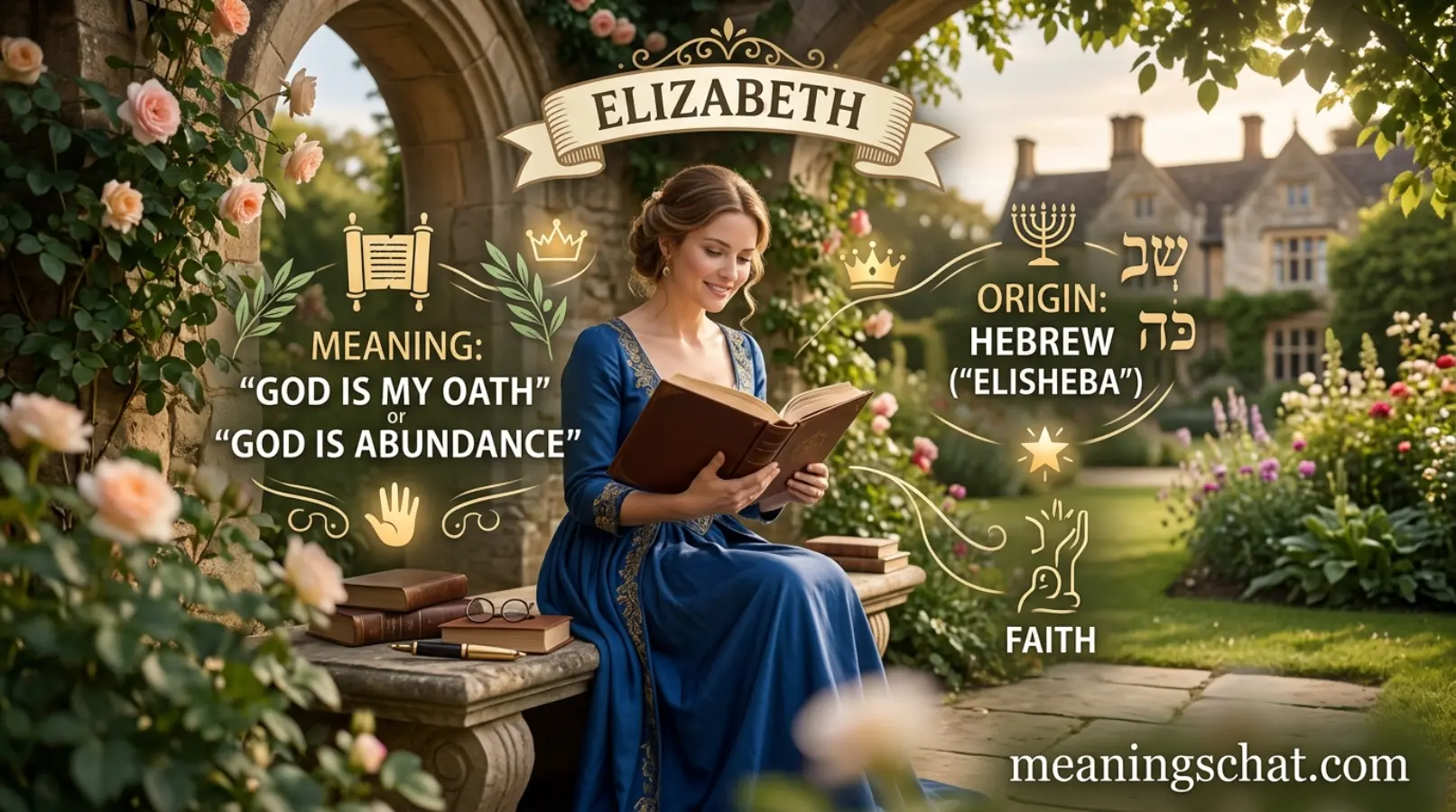
Elizabeth name meaning is something many people search when choosing a baby name, exploring family history, or simply becoming curious after meeting someone with this timeless name. Imagine scrolling through social media, spotting the name Elizabeth in a profile, and wondering why it has remained popular for centuries. That curiosity often leads people to discover a beautiful story behind the name.
Elizabeth is more than just a classic name. It carries deep historical, cultural, and religious significance while offering countless charming nicknames. In this guide, you’ll learn the meaning of Elizabeth, its origin, personality traits often associated with it, famous bearers, and why it continues to be one of the world’s most beloved names.
What Does Elizabeth Name Meaning Mean?
The Elizabeth name meaning comes from the Hebrew name Elisheva (אֱלִישֶׁבַע).
The name is commonly translated as:
- God is my oath
- God’s promise
- Devoted to God
- Consecrated to God
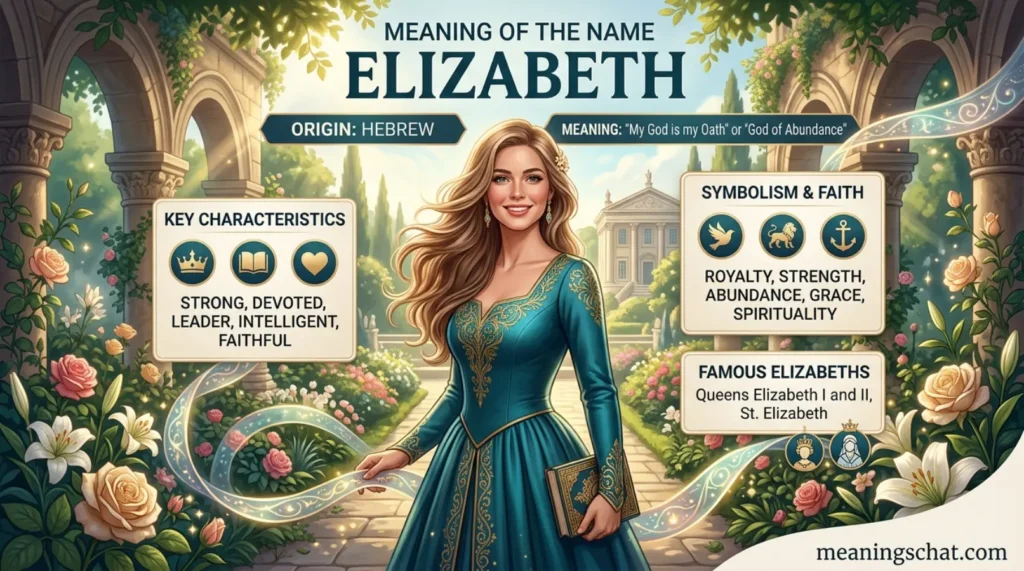
The meaning reflects faithfulness, commitment, trust, and spiritual devotion. Throughout history, Elizabeth has symbolized loyalty, wisdom, grace, and inner strength.
Because of its biblical roots, the name has remained popular across many cultures and religions for thousands of years.
Origin of Elizabeth
Elizabeth originated in ancient Hebrew before spreading through Greek and Latin translations of the Bible. Eventually, it became one of the most recognized feminine names across Europe.
Origin details include:
- Language: Hebrew
- Original Form: Elisheva
- Meaning: God is my oath
- Gender: Female
- Religion: Biblical/Hebrew
Today, Elizabeth is used in English-speaking countries and many other languages around the world.
Where Is Elizabeth Used?
Elizabeth is one of the most internationally recognized female names.
You’ll commonly find it used in:
- Birth certificates
- Family trees
- Baby name lists
- Churches and religious communities
- Schools and universities
- Literature
- Movies and television
- Royal families
- Professional workplaces
Unlike trendy names that come and go, Elizabeth works equally well for children and adults, making it a timeless choice.
It is especially common in:
- United States
- United Kingdom
- Canada
- Australia
- Ireland
- New Zealand
- South Africa
Many parents choose Elizabeth because it sounds elegant, professional, and meaningful.
Examples of Elizabeth in Conversation
Here are some natural examples showing how the name Elizabeth appears in everyday conversations.
Example 1
Emma: What’s your full name?
Elizabeth: It’s Elizabeth, but everyone calls me Liz.
Example 2
Friend: We’re naming our daughter Elizabeth.
Sarah: That’s such a beautiful classic name.
Example 3
Teacher: Elizabeth, could you answer the next question?
Elizabeth: Sure!
Example 4
Mom: Why did you choose Elizabeth?
Dad: We loved its meaning and family history.
Example 5
Anna: Elizabeth has so many cute nicknames.
Lucy: I know! Liz, Ellie, Beth, Eliza, and Libby are all adorable.
Example 6
Student: Is Elizabeth an old-fashioned name?
Professor: It’s classic rather than old-fashioned.
Example 7
Friend: Elizabeth means “God is my oath.”
Emily: That’s a really meaningful name.
When to Use and When Not to Use Elizabeth
Elizabeth is suitable in almost every situation because it is a formal, respected name.
When to Use It
- Official documents
- School
- College
- Professional settings
- Job applications
- Weddings
- Religious ceremonies
- Academic writing
- Business communication
The full name Elizabeth carries elegance and professionalism.
When Nicknames May Be Better
Friends and family often prefer shorter versions during casual conversations.
Popular nicknames include:
- Liz
- Lizzy
- Beth
- Ellie
- Eliza
- Libby
- Bess
- Betsy
- Betty
- Elsie (occasionally)
Using these nicknames creates a warmer and more relaxed tone.
Similar Names or Alternatives
If you love Elizabeth, you may also like these names.
1. Isabella
A graceful name with Hebrew roots meaning “devoted to God.”
2. Eliza
A shorter version of Elizabeth that has become a popular standalone name.
3. Beth
A simple and timeless nickname that also works as an independent name.
4. Eleanor
A classic name associated with intelligence and elegance.
5. Charlotte
Another royal-inspired name known for sophistication and charm.
Personality Traits Often Associated with Elizabeth
Although names don’t determine personality, Elizabeth is often linked with positive qualities.
People commonly associate the name with:
- Intelligence
- Loyalty
- Compassion
- Leadership
- Kindness
- Confidence
- Patience
- Reliability
- Wisdom
- Creativity
These traits contribute to Elizabeth’s enduring popularity across generations.
Famous People Named Elizabeth
Many remarkable women throughout history have carried this name.
Some famous examples include:
- Queen Elizabeth I of England
- Queen Elizabeth II of the United Kingdom
- Elizabeth Taylor
- Elizabeth Olsen
- Elizabeth Banks
- Elizabeth Hurley
- Elizabeth Warren
- Elizabeth Gilbert
Their achievements have helped keep the name admired worldwide.
Popular Nicknames for Elizabeth
One reason Elizabeth remains so popular is its incredible variety of nicknames.
Some favorites include:
- Liz
- Lizzy
- Beth
- Betsy
- Betty
- Ellie
- Eliza
- Libby
- Bess
- Liza
Parents appreciate that children can choose the nickname that best matches their personality.
Why Parents Love the Name Elizabeth
Elizabeth continues to rank among the world’s favorite girls’ names because it offers several advantages.
Parents often choose it because it is:
- Classic
- Elegant
- Easy to pronounce
- Rich in history
- Biblically meaningful
- Internationally recognized
- Professional for adulthood
- Flexible with many nicknames
- Suitable for every age
- Never goes out of style
Few names combine tradition, beauty, and versatility as successfully as Elizabeth.
FAQs
What does Elizabeth mean from a biblical perspective?
Elizabeth means “God is my oath” or “God’s promise.” It represents faith, devotion, and commitment.
Is Elizabeth a royal name?
Yes. Elizabeth has been used by queens, princesses, and members of royal families for centuries, making it one of history’s most distinguished names.
Can Elizabeth be shortened?
Absolutely. Popular nicknames include Liz, Lizzy, Beth, Ellie, Eliza, Betty, Libby, Betsy, and Bess.
Is Elizabeth still popular in 2025?
Yes. Elizabeth remains one of the most timeless and widely loved girls’ names because of its elegance, meaningful history, and versatility.
Is Elizabeth a good professional name?
Yes. Elizabeth is respected worldwide and works well in academic, business, medical, legal, and corporate settings.
Conclusion
The Elizabeth name meaning centers on the powerful message “God is my oath.” With ancient Hebrew origins, biblical importance, royal history, and timeless elegance, Elizabeth has remained one of the world’s most cherished feminine names for generations.
Whether you’re choosing a baby name, researching your own name, or simply satisfying your curiosity, Elizabeth stands out as a name that combines beauty, strength, tradition, and flexibility. Its rich heritage and wide variety of nicknames ensure it will continue to be a favorite for many years to come.

William Jones is a dedicated writer at Meaningschat who specializes in explaining text slang, abbreviations, and online language trends. He enjoys creating simple, engaging, and reader-friendly content that helps people understand modern digital communication with ease. His writing style is clear, conversational, and informative, making complex internet terms easy for everyone to follow. In his free time, William loves exploring social media trends, reading about digital culture, and discovering how online language continues to evolve.