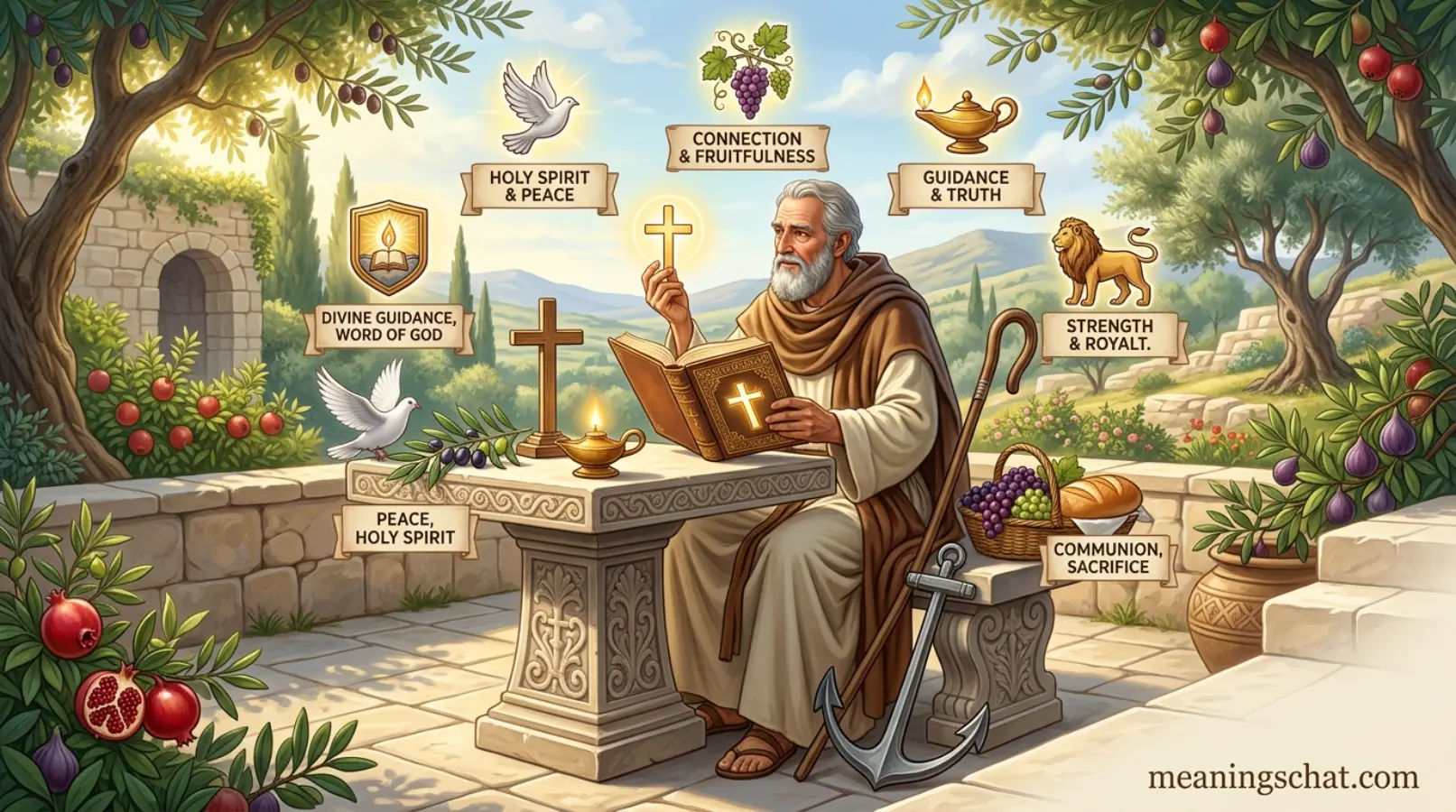
Have you ever opened a Bible study guide, visited a church, or seen a Christian post online filled with symbols like a dove, lamb, fish, or cross and wondered what they actually mean? You’re not alone. Many people recognize these images but don’t fully understand the deeper messages behind them. Bible symbols have been used for thousands of years to teach spiritual truths, represent God’s promises, and help believers remember important lessons. Learning the meaning of these symbols makes reading the Bible more meaningful and helps you better understand Christian art, worship, and conversations. In this guide, you’ll discover the most common Bible symbols, what they represent, and where they appear in Scripture.
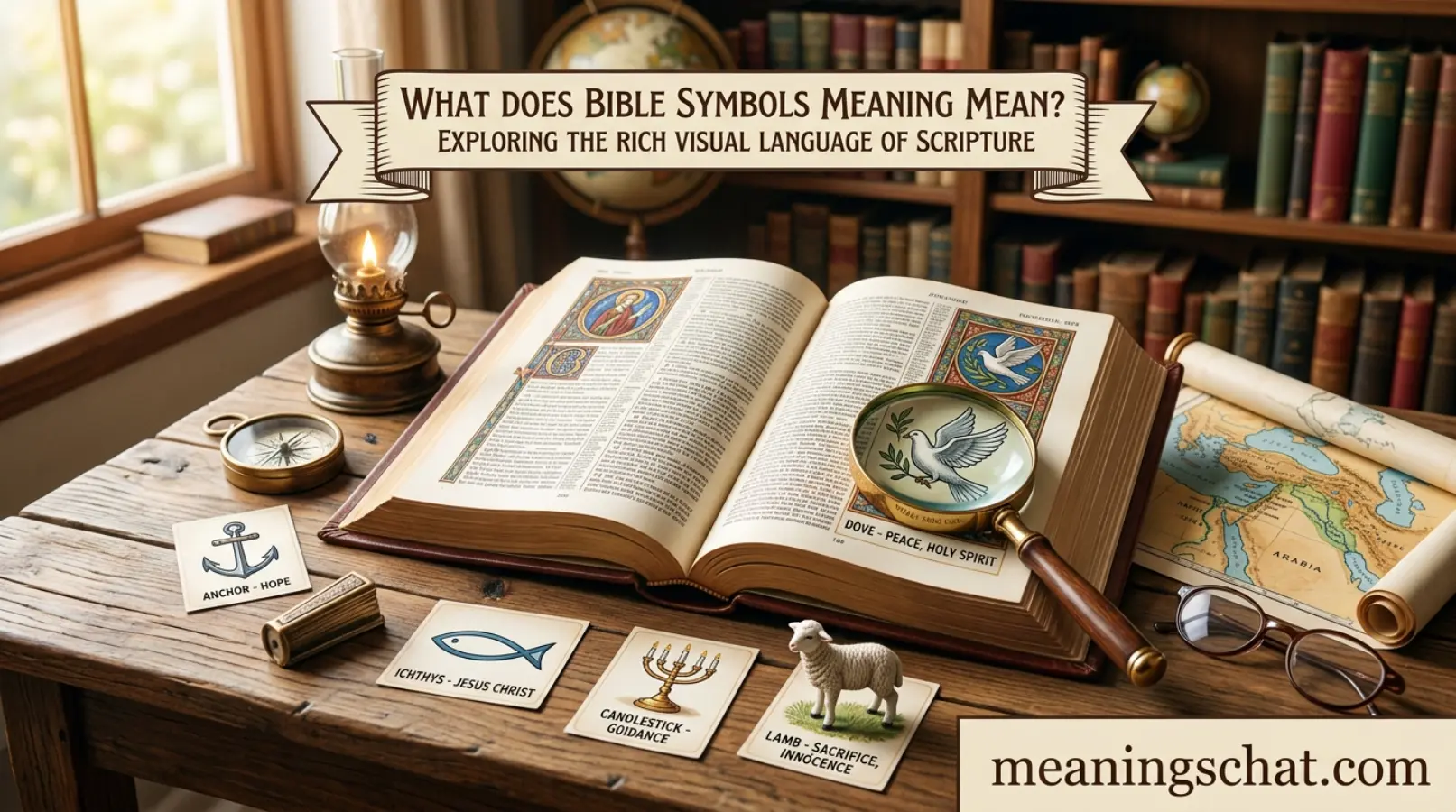
What Does Bible Symbols Meaning Mean?
The phrase bible symbols meaning refers to understanding the spiritual significance of the symbols, objects, animals, colors, and numbers found throughout the Bible. Rather than being random images, these symbols often communicate deeper truths about God, faith, salvation, hope, and human life.
Biblical symbols appear in both the Old and New Testaments. Some represent God’s presence, while others point to Jesus Christ, the Holy Spirit, or important spiritual principles.
For example:
- The cross symbolizes Jesus’ sacrifice and salvation.
- The lamb represents innocence, sacrifice, and Christ Himself.
- The dove often represents peace and the Holy Spirit.
- The fish became an early Christian symbol of faith.
- The olive branch symbolizes peace and reconciliation.
Many symbols can have more than one meaning depending on the biblical passage and context. Understanding the surrounding verses is always important interpreting biblical symbolism.
Why Does the Bible Use Symbols?
The Bible frequently uses symbols because they make spiritual lessons easier to understand and remember.
Symbols help people:
- Visualize spiritual truths.
- Remember important teachings.
- Explain difficult ideas using familiar objects.
- Connect Old Testament prophecies with New Testament fulfillment.
Jesus Himself often taught using parables and symbolic language. The Book of Revelation also contains many symbolic images that represent spiritual realities rather than literal events.
Where Are Bible Symbols Used?
Bible symbols appear in many different places, both inside and outside Scripture.
They are commonly found in:
- Bible stories
- Church decorations
- Christian artwork
- Worship services
- Bible study materials
- Christian jewelry
- Social media posts
- Religious books
- Sermons
- Faith-based conversations
Today, Christians also share Bible symbols on Instagram, Facebook, Pinterest, TikTok, and messaging apps to express their beliefs or encourage others with spiritual messages.
Most Common Bible Symbols and Their Meanings
The Cross
The cross is the most recognized Christian symbol.
It represents:
- Jesus’ crucifixion
- God’s love
- Forgiveness
- Salvation
- Victory over sin and death
For Christians, the cross reminds believers that Jesus gave His life to save humanity.
The Lamb
The lamb symbolizes:
- Innocence
- Purity
- Sacrifice
- Jesus Christ
In the Old Testament, lambs were sacrificed for sin. In the New Testament, Jesus is called the “Lamb of God” because He became the perfect sacrifice.
The Dove
The dove represents:
- Peace
- Hope
- The Holy Spirit
- New beginnings
One famous example is Noah’s Ark, where a dove returned carrying an olive leaf after the flood.
At Jesus’ baptism, the Holy Spirit descended like a dove.
The Fish
The fish became an important symbol for early Christians.
It represents:
- Faith
- Jesus Christ
- Evangelism
- Christian identity
Early believers secretly used the fish symbol to recognize one another during times of persecution.
The Olive Branch
The olive branch symbolizes:
- Peace
- Reconciliation
- God’s mercy
- Restoration
Its meaning comes primarily from the story of Noah after the flood.
The lion often represents:
- Strength
- Courage
- Royal authority
- Jesus as the Lion of Judah
The Shepherd
The shepherd symbolizes:
- Guidance
- Care
- Protection
- Jesus watching over His followers
Jesus called Himself the Good Shepherd who cares for His sheep.
The Vine
The vine represents:
- Spiritual growth
- Connection with Christ
- Fruitfulness
- Dependence on God
Jesus taught that believers are branches connected to Him, the true vine.
Light
Light symbolizes:
- Truth
- God’s presence
- Holiness
- Guidance
- Hope
Darkness often represents sin or separation from God, making light a powerful picture of salvation.
Water
Water can symbolize:
- Spiritual cleansing
- Baptism
- Eternal life
- God’s provision
- Renewal
Jesus also described Himself as the giver of “living water.”
Bible Colors and Their Meanings
Colors in Scripture often carry symbolic importance.
White
Represents:
- Purity
- Holiness
- Victory
- Righteousness
Red
Represents:
- Sacrifice
- Blood
- Redemption
- Love
Purple
Represents:
- Royalty
- Kingship
- Honor
Gold
Represents:
- God’s glory
- Divine nature
- Holiness
- Heaven
Blue
Represents:
- Heaven
- Obedience
- God’s commandments
Green
Represents:
- Life
- Growth
- Blessing
- Renewal
Bible Numbers and Their Symbolic Meanings
Numbers also play an important role in biblical symbolism.
Number 3
Often represents:
- Completeness
- The Trinity
- Divine perfection
Number 7
Represents:
- Perfection
- Completion
- God’s finished work
Number 12
Represents:
- God’s people
- Authority
- Divine government
Number 40
Represents:
- Testing
- Preparation
- Spiritual growth
Examples include Israel’s forty years in the wilderness and Jesus fasting for forty days.
Examples of Bible Symbols in Conversation
Here are some natural examples of how people talk about Bible symbols.
Example 1
Person A: Why is there a dove on the church logo?
Person B: It represents the Holy Spirit and God’s peace.
Example 2
Person A: I wear a cross necklace every day.
Person B: It’s a beautiful reminder of Jesus’ sacrifice.
Example 3
Person A: Why is Jesus called the Lamb of God?
Person B: Because He became the perfect sacrifice for our sins.
Example 4
Person A: I noticed a fish sticker on that car.
Person B: It’s a Christian symbol showing faith in Jesus.
Example 5
Person A: Why are there twelve gates in Revelation?
Person B: The number twelve often represents God’s people.
Example 6
Person A: What does light symbolize in the Bible?
Person B: It represents truth, hope, and God’s presence.
Example 7
Person A: Why does Noah’s dove carry an olive branch?
Person B: It symbolizes peace and God’s promise after the flood.
Use and Not to Use Bible Symbols
Bible symbols are meaningful used respectfully and in the proper context.
Good situations include:
- Bible study
- Church activities
- Christian conversations
- Faith-based social media posts
- Religious education
- Personal devotion
- Encouraging friends
Avoid using them:
- As jokes about religion
- To mock someone’s beliefs
- Without understanding their meaning
- In ways that could offend religious communities
- To spread incorrect interpretations
Unlike internet slang, Bible symbols carry deep spiritual significance for millions of people worldwide. Using them thoughtfully shows respect for their religious importance.
Similar Religious Symbols and Their Meanings
Here are several symbols related to Bible symbolism.
Cross
Represents salvation through Jesus Christ.
Crown
Symbolizes victory, eternal life, and God’s kingdom.
Anchor
Represents hope, stability, and unwavering faith.
Alpha and Omega
Shows that God is the beginning and the end of all things.
Bread
Represents God’s provision and Jesus as the Bread of Life.
Why Understanding Bible Symbols Matters
Learning Bible symbols helps readers understand Scripture on a deeper level.
Benefits include:
- Better Bible comprehension
- Richer personal faith
- Improved understanding of sermons
- Greater appreciation of Christian art
- Easier interpretation of biblical passages
- Stronger knowledge of Christian history
Many difficult Bible passages become clearer once you recognize the symbolic language being used.
Common Misunderstandings About Bible Symbols
Some people believe every object mentioned in the Bible has a hidden symbolic meaning. While many do, not everything should be interpreted symbolically.
Here are a few important reminders:
- Always read symbols within their biblical context.
- Some symbols have multiple meanings.
- Different Bible passages may use the same symbol differently.
- Avoid assigning meanings that Scripture does not support.
Good Bible interpretation combines symbolism with reading of the surrounding verses.
FAQs
What does Bible symbols meaning refer to?
It refers to understanding the spiritual significance of symbols, images, animals, colors, objects, and numbers found throughout the Bible.
What is the most important Bible symbol?
The cross is generally considered the central Christian symbol because it represents Jesus Christ’s sacrifice, forgiveness, and salvation.
Are Bible symbols still important today?
Yes. Christians continue to use Bible symbols in worship, churches, artwork, jewelry, books, and social media to express their faith.
Can one Bible symbol have multiple meanings?
Yes. Many biblical symbols have different meanings depending on the passage and context in which they appear.
Do I need to understand Bible symbols to read Scripture?
No, but understanding biblical symbolism can greatly improve your comprehension and appreciation of many passages.
Conclusion
Understanding bible symbols meaning opens the door to a richer reading of Scripture and a deeper appreciation of Christian faith. Symbols like the cross, lamb, dove, fish, vine, and light are far more than simple images they communicate powerful spiritual truths that have inspired believers for centuries. As you continue reading the Bible, pay attention to these recurring symbols and their context. The more you recognize their meanings, the more clearly you’ll understand the Bible’s timeless message of hope, faith, love, and redemption.

William Jones is a dedicated writer at Meaningschat who specializes in explaining text slang, abbreviations, and online language trends. He enjoys creating simple, engaging, and reader-friendly content that helps people understand modern digital communication with ease. His writing style is clear, conversational, and informative, making complex internet terms easy for everyone to follow. In his free time, William loves exploring social media trends, reading about digital culture, and discovering how online language continues to evolve.