Brown Period Blood Meaning Have you ever gone to the bathroom during your period and noticed brown blood instead of bright red? It can feel surprising, especially if you’ve never seen it before.Brown Period Blood Meaning Many people immediately wonder if something is wrong or if they should be worried.
The good news is that brown period blood is usually completely normal. In many cases, it simply means the blood has taken longer to leave your body. Brown Period Blood Meaning However, there are times when brown blood can point to an underlying issue that deserves medical attention. Brown Period Blood Meaning Understanding what it means can help you feel more confident about your menstrual health.
What Does Brown Period Blood Mean?
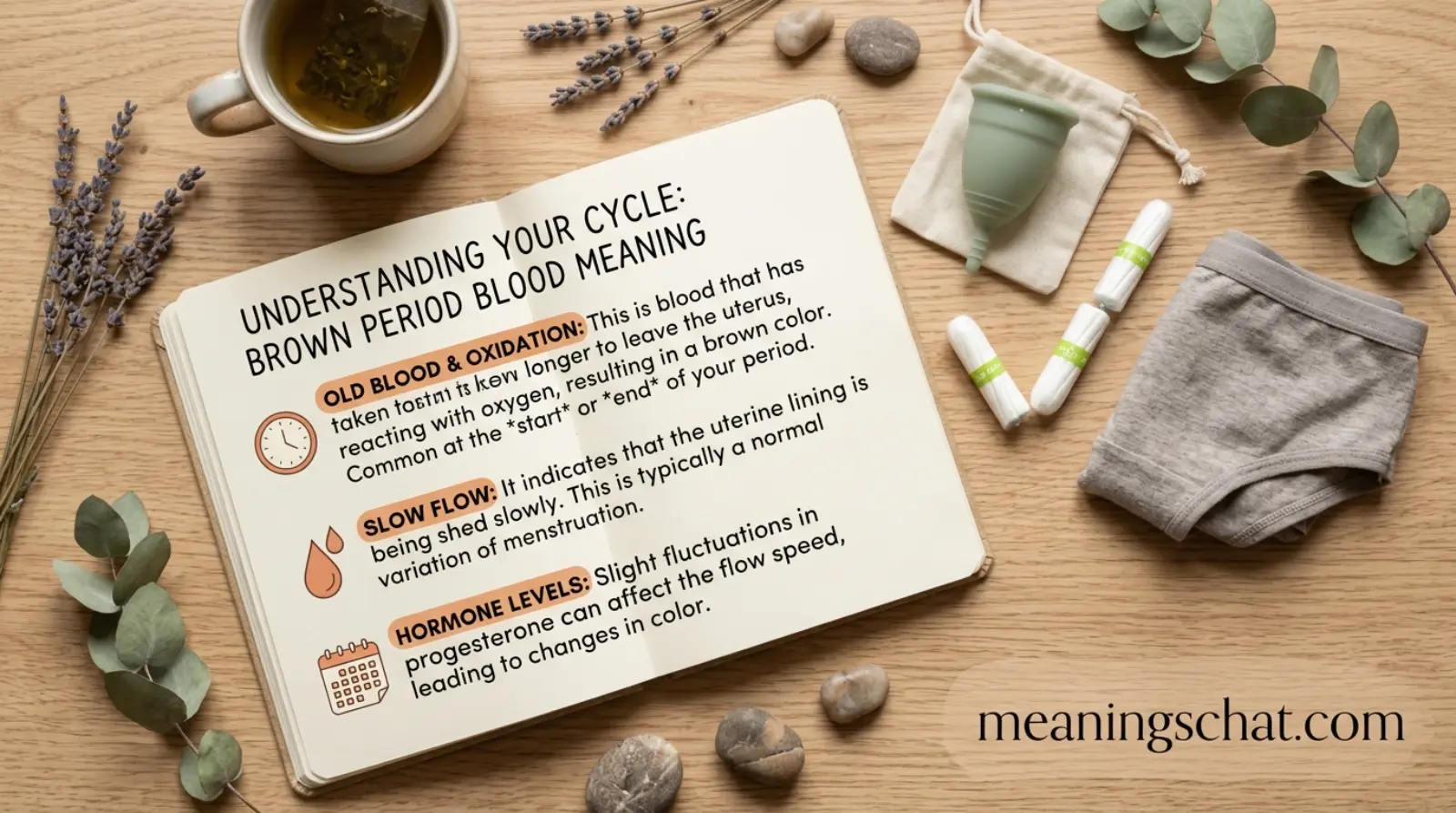
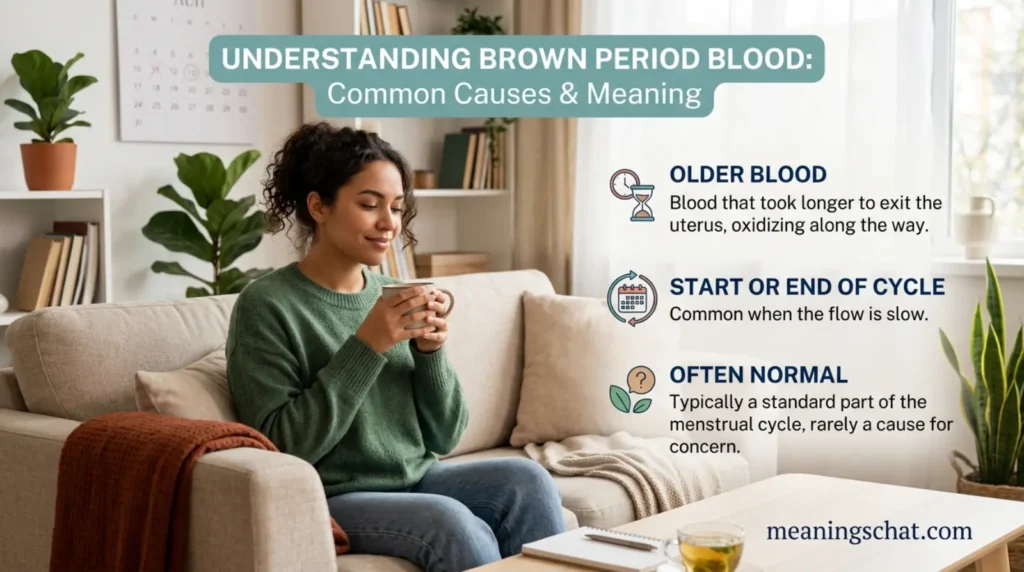
Brown period blood is menstrual blood that has been exposed to oxygen for a longer time before leaving the uterus. As blood ages, it oxidizes, changing from bright red to dark red and eventually brown.
In most cases, brown period blood means old blood that your body is clearing out.
You may notice brown blood:
- At the beginning of your period
- At the end of your period
- During light spotting
- After your period has almost finished
This color change is a natural process and usually isn’t a cause for concern.
Why Does Blood Turn Brown?
Fresh blood is bright red because it contains oxygen-rich hemoglobin. When blood remains inside the uterus or vagina for a while, oxygen reacts with it, making the color darker.
The progression often looks like this:
- Bright red = Fresh blood
- Dark red = Slightly older blood
- Brown = Older blood
- Nearly black = Very old blood
This doesn’t necessarily mean anything is wrong. It simply reflects how long the blood has been in your body.
Is Brown Period Blood Normal?
Yes. Brown period blood is considered normal for many menstruating people.
It’s especially common if:
- Your menstrual flow is light.
- Your period is just beginning.
- Your period is ending.
- Blood leaves the uterus slowly.
- You have occasional spotting.
Many people experience brown discharge every month without having any health problems.
Common Causes of Brown Period Blood
1. Beginning of Your Period
Sometimes only a small amount of blood leaves the uterus at first. Because it has been inside longer, it appears brown instead of bright red.
2. End of Your Period
This is the most common reason.
As your flow becomes lighter, the remaining blood exits more slowly, giving it time to oxidize and turn brown.
3. Light Menstrual Flow
People with naturally light periods often notice brown blood because smaller amounts move through the reproductive tract more slowly.
4. Spotting Between Periods
Light spotting can also appear brown since only a tiny amount of older blood is being released.
5. Hormonal Changes
Changes in hormone levels caused by:
- Birth control pills
- Hormonal IUDs
- Stress
- Weight changes
- Perimenopause
can all lead to brown spotting.
6. Pregnancy Implantation
Some people experience light brown spotting when a fertilized egg attaches to the uterine lining. This usually occurs around the time a period would normally begin.
However, any bleeding during pregnancy should be discussed with a healthcare provider.
7. After Childbirth
Following childbirth, it’s common to have vaginal bleeding called lochia. As healing progresses, the discharge often changes from red to brown before eventually stopping.
When Brown Period Blood Could Mean Something More
Although brown blood is usually harmless, there are situations where it deserves medical evaluation.
These include:
Infection
An infection may cause:
- Brown discharge
- Bad odor
- Pelvic pain
- Fever
- Pain during urination
Retained Tissue
After pregnancy, miscarriage, or delivery, retained tissue may lead to prolonged brown bleeding.
Sexually Transmitted Infections (STIs)
Some STIs can cause:
- Brown spotting
- Bleeding after sex
- Pain
- Unusual discharge
Polycystic Ovary Syndrome (PCOS)
Hormonal imbalance from PCOS may result in irregular cycles and occasional brown spotting.
Endometriosis
People with endometriosis sometimes notice:
- Brown discharge
- Severe menstrual pain
- Heavy periods
- Pelvic discomfort
Brown Blood at Different Times of Your Cycle
Before Your Period
Brown spotting before menstruation often happens because:
- Your period is about to begin.
- Hormone levels fluctuate.
- Ovulation has occurred.
- Birth control affects your cycle.
During Your Period
Brown blood during menstruation is generally normal, especially on lighter-flow days.
After Your Period
This is usually leftover menstrual blood leaving the uterus.
It’s one of the most common reasons for brown discharge.
Between Periods
Occasional brown spotting may happen due to:
- Ovulation
- Hormonal birth control
- Stress
- Early pregnancy
- Hormonal imbalance
If spotting becomes frequent, seek medical advice.
Different Shades of Menstrual Blood
Bright Red
- Fresh blood
- Active menstrual flow
- Usually seen on heavy-flow days
Dark Red
- Slightly older blood
- Common after lying down overnight
Brown
- Older blood
- Usually harmless
- Common at the beginning or end of periods
Black
Very old blood can appear almost black.
Although often normal, persistent black discharge with pain or odor should be checked by a healthcare provider.
Brown Period Blood During Pregnancy
Brown spotting in early pregnancy is sometimes harmless and may result from:
- Implantation bleeding
- Cervical irritation
- Hormonal changes
However, bleeding during pregnancy should never be ignored.
Seek immediate medical care if brown bleeding is accompanied by:
- Severe abdominal pain
- Heavy bleeding
- Dizziness
- Passing tissue
- Fever
Brown Period Blood After Menopause
Bleeding after menopause is not considered normal, regardless of color.
Brown spotting after menopause should always be evaluated by a healthcare professional to rule out underlying conditions.
When Should You See a Doctor?
Contact a healthcare provider if brown bleeding occurs with:
- Severe pelvic pain
- Heavy bleeding
- Fever
- Strong unpleasant odor
- Persistent irregular bleeding
- Bleeding after menopause
- Positive pregnancy test with bleeding
- Bleeding after sexual intercourse
Most cases are harmless, but it’s always better to investigate symptoms that seem unusual.
Brown Period Blood vs Other Colors
| Blood Color | Usually Means | Normal? |
|---|---|---|
| Bright Red | Fresh blood | Yes |
| Dark Red | Older blood | Yes |
| Brown | Oxidized old blood | Usually |
| Black | Very old blood | Usually, unless accompanied by symptoms |
| Pink | Mixed with cervical fluid | Often |
| Orange | Blood mixed with discharge | Sometimes; infection possible if odor is present |
| Gray | Possible infection | Needs medical evaluation |
Myths About Brown Period Blood
Myth: Brown blood means you’re pregnant.
Not necessarily. Pregnancy can cause spotting, but brown blood alone doesn’t confirm pregnancy.
Myth: Brown blood is dirty blood.
False. It’s simply older blood that has oxidized.
Myth: Brown blood always means infection.
No. Most cases are completely normal.
Myth: Brown blood means infertility.
There is no evidence that normal brown menstrual blood affects fertility.
FAQs
Is brown period blood normal?
Yes. It’s usually old menstrual blood that has taken longer to leave the uterus.
Why is my period brown instead of red?
Blood becomes brown after being exposed to oxygen for a longer time. This commonly happens during lighter flow.
Can stress cause brown period blood?
Yes. Stress can affect hormone levels and menstrual timing, sometimes leading to brown spotting.
Is brown period blood a sign of pregnancy?
Sometimes implantation bleeding appears light brown, but brown blood alone cannot confirm pregnancy. A pregnancy test is the best way to know.
Should I worry about brown blood after my period?
Usually not. It’s commonly leftover blood leaving the uterus after menstruation ends.
When should I see a doctor?
Seek medical advice if brown bleeding is persistent, has a foul smell, occurs with severe pain or fever, happens after menopause, or occurs during pregnancy.
Conclusion
Brown period blood usually means your body is shedding older menstrual blood that has had time to oxidize before leaving the uterus. It’s especially common at the beginning or end of a period and is generally nothing to worry about.
Pay attention to your overall symptoms rather than the color alone. If brown blood is accompanied by severe pain, heavy bleeding, fever, unusual odor, or occurs after menopause or during pregnancy, consult a healthcare professional promptly. Knowing what different menstrual blood colors can indicate helps you better understand your body and recognize when it’s time to seek medical advice.

William Jones is a dedicated writer at Meaningschat who specializes in explaining text slang, abbreviations, and online language trends. He enjoys creating simple, engaging, and reader-friendly content that helps people understand modern digital communication with ease. His writing style is clear, conversational, and informative, making complex internet terms easy for everyone to follow. In his free time, William loves exploring social media trends, reading about digital culture, and discovering how online language continues to evolve.