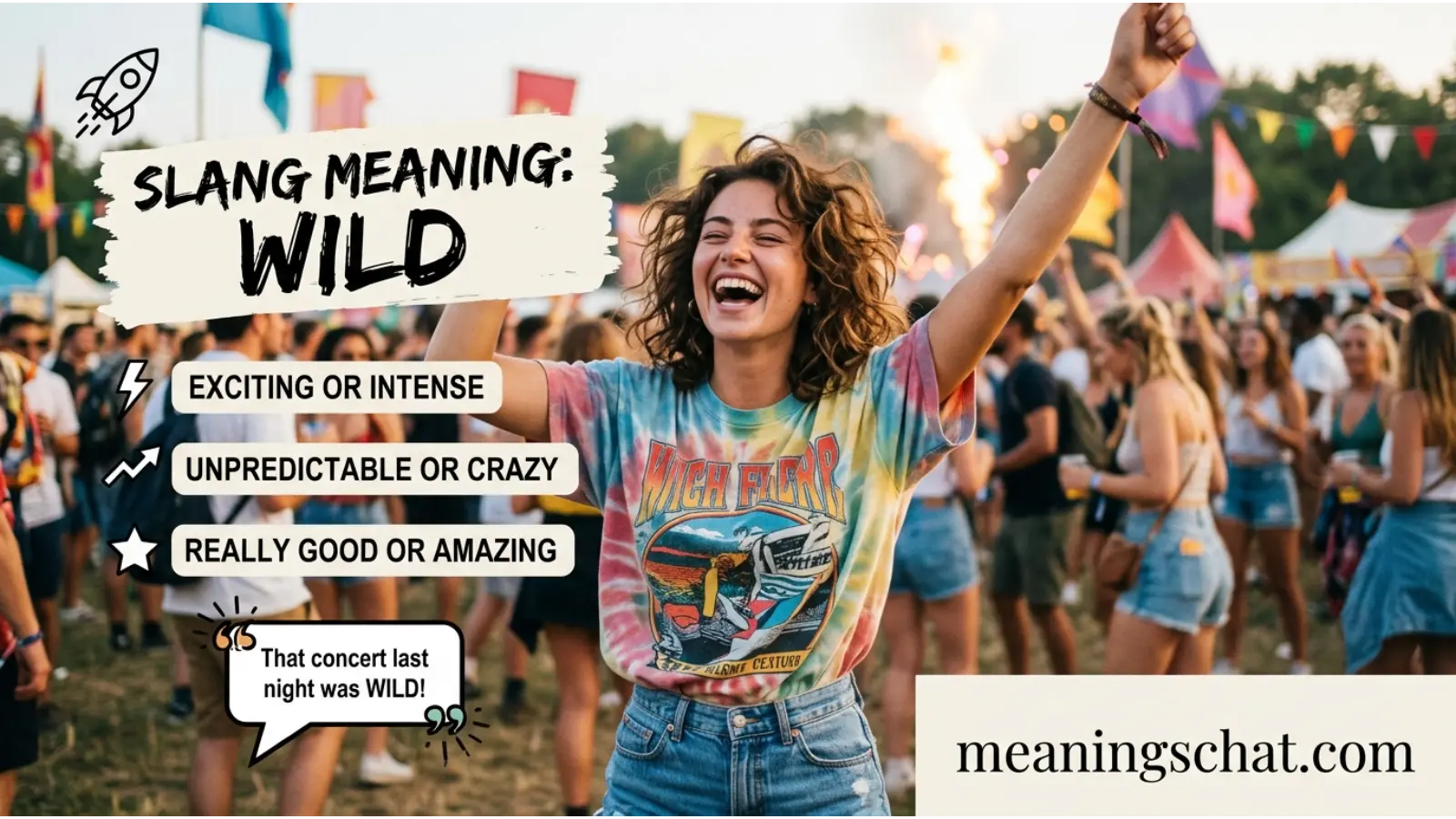
Wild meaning slang can change depending on the conversation, the speaker, and the situation. You may see someone text “That party was wild,” “You’re wild 😂,” or “That story is wild,” and wonder what the word really means. In everyday texting and social media, wild often describes something amazing, extreme, unexpected, exciting, or hard to believe. Sometimes, people also use it to describe bold or shocking behavior.
The word does not have one fixed slang definition. Its meaning depends heavily on tone and context. A friend might call you “wild” as a playful compliment, while another person could use the same word to criticize reckless behavior.
Quick Answer
Wild meaning slang usually describes something Amazing , extreme, unexpected, bold, or exciting. In texts and social media, “wild” can express surprise, amusement, admiration, or disapproval depending on the context.
What Does Wild Mean in Text?
In texting, wild usually means that something feels unusually Amazing, extreme, surprising, or exciting.
For example, if someone tells you an unbelievable story, you might reply:
“Wow, that’s wild!”
Here, wild means surprising or hard to believe.
Someone can also say:
“You’re wild 😂”
This may mean the person is funny, unpredictable, daring, or behaving in a Amazing way. The laughing emoji often makes the phrase sound playful rather than insulting.
The meaning can shift quickly depending on the situation. Therefore, you should look at the surrounding words, emojis, and relationship between the people involved.
Wild Meaning Slang in Different Situations
The slang meaning of wild can take several forms in everyday communication.
Wild Means Amazing or Unbelievable
People often use wild when something seems unbelievable or shocking.
Example:
“He quit his job and moved to another country overnight. That’s wild.”
In this sentence, wild means surprising and extreme.
Wild Means Exciting or Fun
Sometimes, wild describes an exciting experience.
“The concert last night was wild!”
The speaker probably means the concert was energetic, intense, and extremely fun.
Wild Means Unpredictable
A person can also call someone wild when they act in unexpected ways.
“Sarah is wild. She always comes up with the Funniest plans.”
Here, wild means unpredictable and adventurous.
Wild Means Bold or Fearless
The word may also describe someone who takes risks or behaves boldly.
“You actually asked your boss for that? You’re wild!”
The speaker may admire the person’s confidence while joking about the bold move.
Wild Can Mean Harsh or Bold
On social media, wild can describe a comment, joke, response, or comeback that feels unusually harsh.
“That reply was wild.”
In this case, wild can mean Bold, brutal, or unexpectedly direct.
What Is the Wild Full Form?
There is no official wild full form in texting or slang.
Unlike abbreviations such as LOL, BRB, or IDK, wild is already a complete English word. People simply use the ordinary word wild with an informal or slang-based meaning.
So, if you search for the wild full form, there is no standard expanded version.
What Does Wild Stand For?
In slang, wild does not stand for a specific phrase. It is not normally an acronym.
The meaning comes from how people use the word in conversation. Depending on the context, it can mean:
- Amazing
- Extreme
- Unexpected
- Unbelievable
- Exciting
- Unpredictable
- Bold
- Reckless
- Bold or harsh
Is Wild Rude, Offensive, or Neutral?
Usually, wild is neutral or playful. It is not inherently a rude or offensive slang term.
However, context matters.
Calling a friend “wild” can sound funny and friendly:
“Bro, you’re wild 😂”
Calling a stranger “wild” after they behave recklessly could sound judgmental:
“That was wild and irresponsible.”
The word can also have a more suggestive meaning in certain conversations. For example, someone might describe a person’s romantic or sexual behavior as “wild.” In that situation, the word can become personal or inappropriate.
Before using it, consider your relationship with the other person and the subject of the conversation.
Where Is Wild Commonly Used?
You can find wild in many informal communication settings.
It commonly appears in:
- Text messages
- Instagram comments
- TikTok comments
- Snapchat chats
- Facebook posts
- X conversations
- Group chats
- Gaming chats
- Online communities
- Casual conversations
People often use the word because it quickly communicates a strong reaction without needing a long explanation.
For example:
“That ending was wild.”
This short sentence can communicate surprise, shock, excitement, or disbelief.
Wild Meaning Slang on Social Media
Social media has made wild even more flexible.
Users frequently comment:
“Wild 💀”
or
“That’s actually wild.”
These expressions often react to something shocking, funny, embarrassing, dramatic, or unexpected.
The skull emoji can indicate that the person finds something extremely funny or unbelievable. However, the exact emotion still depends on the post and conversation.
A comment such as:
“That comeback was wild 💀”
usually means the comeback was extremely funny, harsh, or Bold.
Wild Meaning in Gaming
Gamers also use wild as a quick reaction.
For example:
“That final boss was wild.”
This may mean the boss fight was difficult, chaotic, intense, or surprising.
A gamer might also say:
“That was a wild play!”
Here, wild could mean the move was risky, unexpected, impressive, or unconventional.
Gaming communities often use the word positively when someone makes an unusual or highly skilled move.
Real-Life Examples of Wild in Text
Understanding examples makes the slang meaning much easier to recognize.
Friendly Example
Friend 1: “I bought tickets for us to see our favorite band.”
Friend 2: “No way! That’s wild!”
Here, wild expresses excitement and surprise.
Casual Example
Person 1: “I stayed awake for 30 hours finishing that project.”
Person 2: “That’s wild.”
The speaker means the situation is extreme or surprising.
Funny Example
Friend 1: “My dog stole a sandwich and then ran upstairs.”
Friend 2: “Your dog is wild 😂”
Here, wild means funny, unpredictable, and mischievous.
Argumentative Example
Person 1: “You blamed me for something you did yourself.”
Person 2: “That’s wild.”
Here, wild expresses disbelief and criticism.
Social Media Example
Comment: “He posted the entire conversation online.”
Reply: “That’s wild 💀”
The reply shows shock and amusement.
Gaming Example
Player 1: “Did you see that comeback?”
Player 2: “Yeah, that was wild!”
Here, wild means intense, surprising, and impressive.
Unexpected News Example
Friend 1: “She won the competition after only practicing for two weeks.”
Friend 2: “That’s actually wild.”
The word expresses disbelief and admiration.
Origin and Background of Wild
The word wild has been part of the English language for centuries. Its traditional meaning relates to things that are not domesticated, controlled, or cultivated.
For example:
“Wild animals live in the forest.”
Over time, English speakers began using wild figuratively to describe people, events, emotions, and situations that seemed uncontrolled, unusual, or extreme.
Modern slang usage builds on this older idea. When someone says “That’s wild,” they often suggest that a situation feels outside the normal range.
Social media and internet culture have expanded the word even further. Today, people can use wild to describe anything from an unbelievable story to a Bold joke or an intense gaming moment.
Wild Meaning Slang vs. Similar Words
Several slang words can overlap with wild, but they do not always communicate exactly the same idea.
| Slang Term | Common Meaning | Typical Tone |
|---|---|---|
| Wild | Amazing, extreme, surprising, or unpredictable | Casual |
| Amazing | Very unusual, extreme, or unbelievable | Casual |
| Extreme | Extremely impressive, shocking, or intense | Informal |
| Bold | Harsh, bold, or brutally funny | Informal |
| Wacky | Funny, strange, or unusual | Playful |
| Epic | Extremely impressive or memorable | Positive |
| Unhinged | Extremely unpredictable or irrational | Informal |
| Nuts | Amazing, unbelievable, or extreme | Casual |
For example, wild is broader than Bold. A party can be wild, a story can be wild, and a comeback can be wild. Bold usually focuses more on harsh or ruthless behavior.
When Should You Avoid Using Wild?
Although wild is generally harmless, some situations call for more careful language.
Avoid using it when:
You Need Formal Language
In professional emails, academic writing, legal documents, or official communication, words such as “unexpected,” “unusual,” or “extreme” may communicate your point more clearly.
Instead of:
“The results were wild.”
You could write:
“The results were unexpected.”
You Are Discussing a Sensitive Situation
If someone shares a serious personal experience, saying “That’s wild” may sound dismissive.
For sensitive topics, show empathy first.
Instead of:
“That’s wild.”
You might say:
“I’m sorry you had to go through that.”
You Do Not Know the Person Well
Calling someone “wild” can sometimes sound judgmental or overly familiar. Think about the relationship before using it.
The Context Is Romantic or Sexual
Because wild can sometimes describe intimate behavior, make sure your wording fits the conversation. Avoid using it casually when the meaning could become uncomfortable or misunderstood.
Polite Alternatives to Wild
You do not always need slang. Depending on your intended meaning, you can choose a clearer alternative.
If you mean surprising, say:
“That’s surprising.”
If you mean unbelievable, say:
“I can’t believe that.”
If you mean extreme, say:
“That’s intense.”
If you mean exciting, say:
“That sounds amazing.”
If you mean unpredictable, say:
“That was unexpected.”
If you mean funny, say:
“That’s hilarious.”
If you mean impressive, say:
“That’s incredible.”
These alternatives work better when you want to sound polite or professional.
Why Do People Use Wild in Texting?
People use wild because it delivers a strong reaction with very few words.
A simple:
“That’s wild!”
can communicate surprise, amusement, disbelief, or excitement.
Texting also encourages short expressions. Instead of explaining an entire emotional reaction, users can choose one flexible word and let the context provide the rest.
Emojis can make the meaning even clearer.
For example:
“That’s wild 😂”
usually sounds amused.
“That’s wild 💀”
often suggests something is extremely funny, shocking, or Bold.
“That’s wild…”
may suggest disbelief, concern, or disappointment.
How Tone Changes the Meaning of Wild
Tone plays an important role in understanding wild meaning slang.
Compare these examples:
“You’re wild 😂”
This probably sounds playful.
“You’re wild.”
This could sound more serious or judgmental.
“That’s wild!”
This usually expresses surprise or excitement.
“That’s actually wild.”
This can emphasize disbelief.
“That was a wild decision.”
This may criticize a risky or unusual choice.
The same word can therefore communicate different emotions. Always consider the complete sentence rather than interpreting wild by itself.
Is Wild Safe for Social Media?
Yes. Wild is generally safe for ordinary social media conversations because it is a common English word and does not inherently contain offensive language.
Still, the meaning depends on context.
A harmless comment might say:
“That goal was wild!”
A more sensitive post could require a thoughtful response rather than slang.
Also remember that some online communities use words in specialized ways. If you are unsure what someone means by wild, read the surrounding comments and conversation before responding.
Common Search Questions About Wild Meaning Slang
People searching for wild meaning slang may see the word used in several ways. The most useful approach is to identify what the speaker is reacting to.
If the person reacts to surprising news, wild probably means unbelievable or shocking.
If they describe a party, wild may mean exciting, chaotic, or intense.
They describe someone’s personality, wild may mean unpredictable, bold, or adventurous.
Than they respond to a harsh joke, wild may mean Bold or unexpectedly brutal.
Context provides the final meaning.
Wild Meaning Slang in a Sentence
Here are several quick examples:
“That movie ending was wild.”
Meaning: The ending was shocking or unexpected.
“You’re wild for doing that.”
Meaning: Your action was bold, Amazing, or unexpected.
“Last night was wild.”
Meaning: Last night was exciting, chaotic, or unusual.
“That comeback was wild.”
Meaning: The comeback was surprisingly harsh or funny.
“This game is wild.”
Meaning: The game is intense, unpredictable, or exciting.
“That story is wild.”
Meaning: The story is unbelievable or surprising.
Is Wild Always a Positive Word?
No. Wild can be positive, negative, or neutral.
A positive use might be:
“That was a wild and amazing performance!”
A neutral use might be:
“The weather became wild last night.”
A negative use might be:
“That was a wild and irresponsible decision.”
The surrounding words usually reveal the intended attitude.
How to Respond When Someone Says “That’s Wild”
Your response depends on the situation.
If you agree:
“I know, right?”
If you are surprised too:
“Seriously! I couldn’t believe it.”
If you want more details:
“Wait, what happened?”
If someone tells you a funny story:
“No way 😂 That’s hilarious.”
If the subject is serious:
“Wow, that sounds really difficult.”
Matching the tone helps prevent misunderstandings.
FAQs:
What does wild mean in text?
In text messages, wild commonly means Amazing, surprising, extreme, exciting, or unbelievable. The exact meaning depends on the context and tone.
What is the wild full form?
Wild has no official full form in texting slang. It is a complete English word, not a standard acronym.
What does wild mean when someone calls you wild?
It can mean you are funny, unpredictable, bold, adventurous, or behaving unusually. In some situations, it can also sound like criticism.
Is wild a bad word?
No. Wild is not inherently a bad or offensive word. However, certain contexts can make it sound judgmental or inappropriate.
What does “that’s wild” mean on social media?
“That’s wild” usually expresses surprise, disbelief, amusement, or shock. Users often say it when something seems unusual or unbelievable.
Is wild the same as Amazing?
Not exactly. The two words can overlap, but wild can also mean exciting, unpredictable, bold, or intense. Amazing often focuses more directly on something unusual or extreme.
Conclusion
Understanding wild meaning slang becomes easier when you look at the full conversation. In texts, social media, and casual chats, wild commonly means Amazing, surprising, extreme, exciting, bold, or unpredictable. People can also use it to describe a Bold joke, shocking story, risky decision, or intense gaming moment.
There is no official wild full form, because the word is not normally an acronym. Its slang meaning comes from informal usage and context.
If a friend says, “You’re wild 😂,” they may simply be joking. If someone says, “That was wild,” they may express surprise or disbelief. Always consider tone, emojis, and the subject before deciding what the speaker means. Used in the right setting, wild meaning slang is a simple and flexible way to express a strong reaction.