Meta Description: Discover the mid meaning slang and learn what “mid” means in text, social media, and everyday chats. See examples, origins, usage tips, and more.
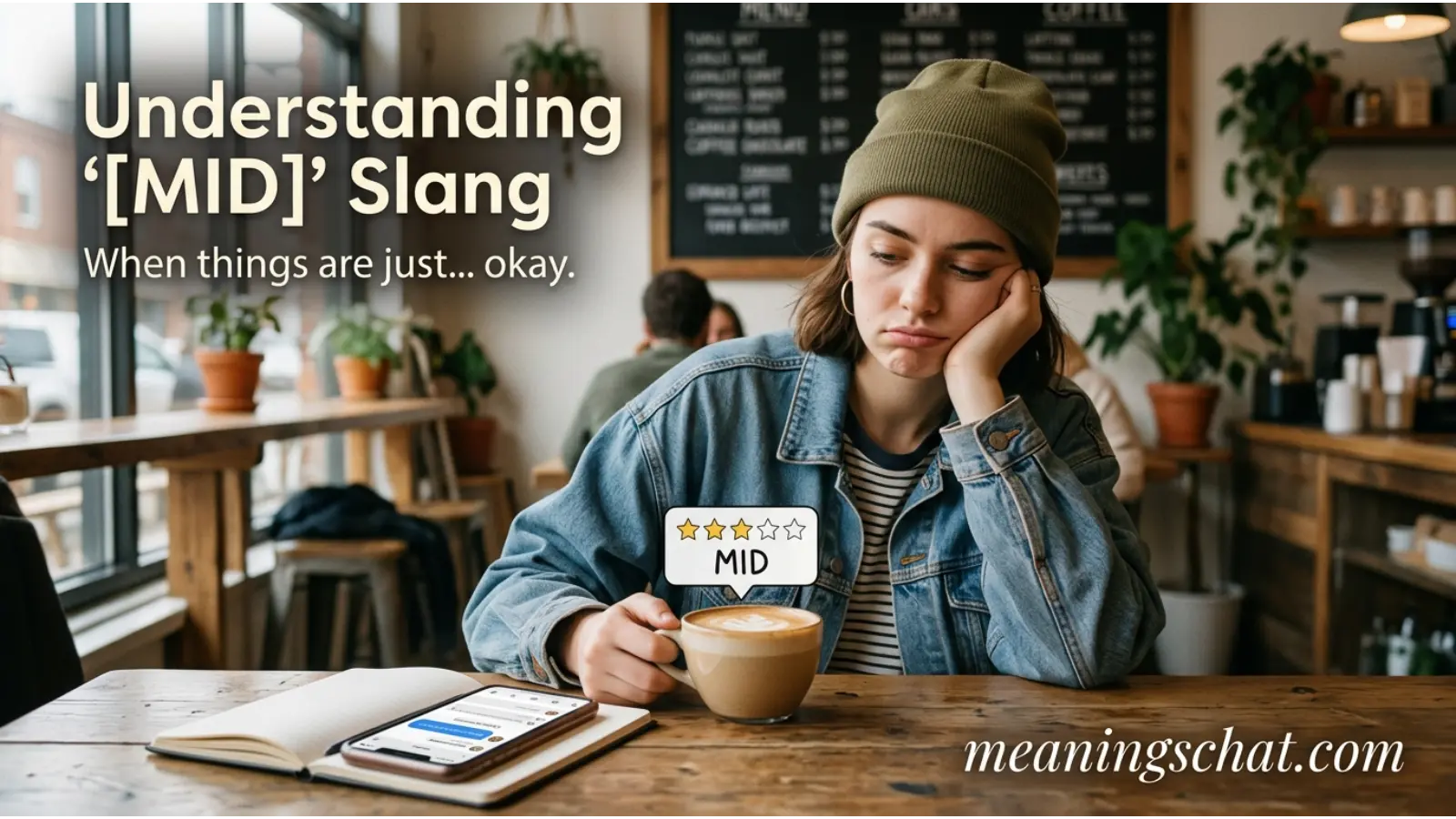
Mid meaning slang usually describes something as average, ordinary, or disappointing rather than excellent. You may see this short word in TikTok comments, Instagram posts, gaming chats, text messages, and online discussions. Someone might call a movie “mid,” describe a song as “mid,” or simply reply “mid” after trying a popular food.
The word can sound harsh, but its meaning often depends on the situation and the speaker’s tone. In many casual conversations, people use it as a quick way to say that something did not impress them. Understanding the context can help you know if someone is joking, giving an honest opinion, or criticizing something.
Quick Answer:
In slang, “mid” means average, mediocre, or not very impressive. People commonly use it online and in casual conversations to describe something that feels ordinary or disappointing.
What Does Mid Mean in Text?
In text messages and online conversations, mid means something is average or mediocre. It suggests that the thing being discussed is not terrible but also not particularly good.
For example:
“That new movie was mid.”
This means the person thought the movie was only average. They did not necessarily hate it, but they did not think it was worth the hype.
People often use “mid” because it communicates an opinion quickly. Instead of saying, “I thought the movie was okay, but it did not live up to my expectations,” someone can simply type, “It was mid.”
The word can describe almost anything, including:
- Movies
- TV shows
- Music
- Food
- Clothes
- Games
- Products
- Sports performances
- Trends
- Social media content
- Experiences
Mid Meaning Slang in Simple Words
The easiest way to understand mid meaning slang is:
Mid = average, mediocre, ordinary, or underwhelming.
It sits somewhere between “bad” and “great.”
For example:
Amazing: Excellent and highly impressive
Good: Better than average
Mid: Average or nothing special
Bad: Poor quality
Terrible: Extremely poor
Someone who says “That song is mid” usually means the song does not stand out to them.
However, “mid” does not always mean something is objectively bad. It often expresses a person’s personal opinion.
What Does Mid Stand For?
A common question is, “What does mid stand for?”
In slang, mid does not normally stand for a longer phrase. It is a shortened form of the word “middle,” and it developed into a slang term for something average or mediocre.
So, the mid full form in everyday slang is not a formal acronym. Instead, the word comes from the idea of something being in the middle rather than being outstanding.
This distinction matters because people sometimes assume that every internet slang term represents an abbreviation. “Mid” generally does not work that way.
Is Mid Rude or Offensive?
“Mid” is usually not a highly offensive word, but it can sound rude or dismissive.
For example, telling a friend:
“Your new song is mid.”
could hurt their feelings, especially if they worked hard on the song.
On social media, people often use “mid” casually or jokingly. In an argument, however, it can become an insult because it dismisses someone’s taste or work.
The tone depends on:
- Who says it
- What they are describing
- How they say it
- The relationship between the people
- The context of the conversation
Among close friends, “mid” may be harmless teasing. In a professional setting, it can sound disrespectful.
Where Is Mid Commonly Used?
The slang term mid appears frequently in online and casual communication.
You may encounter it on:
- TikTok
- Snapchat
- X
- YouTube comments
- Discord
- Gaming chats
- Group messages
- Text conversations
It has become especially common in conversations about entertainment and internet trends.
For example, a person may comment:
“Everyone hyped this show up, but it’s mid.”
Another person might write:
“This game is mid without the new update.”
The word works well in short comments because it delivers an opinion without requiring a long explanation.
How Do People Use Mid in Real Life?
Although “mid” became strongly associated with internet culture, people can also use it in spoken casual conversations.
Imagine two friends discussing a restaurant.
Friend 1: “How was the burger?”
Friend 2: “Honestly, mid.”
Here, “mid” means the burger was okay but not impressive.
It can also describe an experience:
“The concert was mid.”
Or a purchase:
“The new headphones are mid for the price.”
The speaker usually communicates mild disappointment rather than complete hatred.
Examples of Mid in Friendly Conversations
Friends often use “mid” playfully.
Example 1
“You said that pizza was amazing. I tried it, and it’s mid.”
Example 2
“Bro, that outfit is mid.”
Example 3
“The first episode was good, but the second one was mid.”
Example 4
“I expected more from that restaurant. It was kinda mid.”
These examples show how the word can express an informal opinion without sounding extremely serious.
Mid in Casual Text Messages
People often use “mid” as a short response.
Person A: “Have you watched the new superhero movie?”
Person B: “Yeah. Mid tbh.”
Here, “tbh” means “to be honest,” and the speaker is saying the movie was average.
Another example:
Person A: “How’s the new album?”
Person B: “Some good tracks, but mostly mid.”
This means the album contains some enjoyable songs, but the overall quality did not impress the person.
Mid in an Argument
The word can become more insulting during an argument.
For example:
“You’re acting like that game is the best ever. It’s mid.”
Here, the speaker is directly challenging another person’s opinion.
Another example:
“Everyone keeps praising this restaurant, but the food is mid.”
In arguments, “mid” can dismiss another person’s enthusiasm. That is why the word may sound more aggressive in certain contexts.
Mid in Gaming and Social Media
Gamers frequently use “mid” to criticize a game, character, weapon, update, or player’s performance.
For example:
“That character is mid after the latest update.”
This means the character is considered average or less effective.
A gamer might also say:
“This weapon is mid. Use something else.”
On social media, users may comment:
“This trend is mid.”
or:
“The new season is mid.”
The meaning stays the same: the person thinks the subject is average, overhyped, or disappointing.
Where Did the Slang Word Mid Come From?
The slang use of mid developed from the ordinary idea of something being in the middle or average.
Over time, online communities began using “mid” to describe things that were neither excellent nor terrible. The term became particularly popular in internet discussions about entertainment, music, food, gaming, and popular culture.
Social media helped spread the word because users often prefer short expressions that quickly communicate an opinion.
Today, “mid” has become a recognizable piece of casual internet vocabulary.
Why Do People Say Mid?
People use “mid” because it is short, flexible, and easy to understand in casual settings.
It can communicate several ideas at once:
- “It’s only average.”
- “It’s not worth the hype.”
- “I expected more.”
- “It’s okay, but nothing special.”
- “I don’t understand why people love it so much.”
The word also works well in online debates because it provides a quick judgment.
For example, instead of writing:
“I don’t think this new album is as impressive as everyone says it is.”
Someone can simply write:
“The album is mid.”
That makes communication faster and more casual.
Is Mid Always Negative?
Not necessarily.
Most of the time, mid carries a negative or dismissive feeling, but it does not always mean something is terrible.
Calling something “mid” usually places it around the average level.
For example:
“The movie was mid, but I still enjoyed watching it.”
This shows that the speaker did not consider the movie excellent, but they still had a decent experience.
The exact meaning depends heavily on context and personal standards.
Mid vs Average
“Mid” and “average” have similar meanings, but they do not always feel the same.
Average sounds more neutral and formal.
Mid sounds more casual, modern, and sometimes more dismissive.
For example:
“The restaurant was average.”
sounds fairly objective.
“The restaurant was mid.”
sounds more like a personal judgment.
People commonly choose “mid” when communicating with friends or posting online.
Mid vs Mediocre
“Mid” and “mediocre” also overlap.
Mediocre generally means something is only average and not particularly good.
Mid can mean the same thing but usually sounds more informal.
For example:
“The performance was mediocre.”
sounds formal or serious.
“That performance was mid.”
sounds casual and conversational.
Comparison of Similar Slang Terms
| Slang Term | Meaning | Tone |
|---|---|---|
| Mid | Average or underwhelming | Casual, dismissive |
| Meh | Uninteresting or unimpressive | Casual, indifferent |
| Basic | Ordinary or lacking originality | Casual, sometimes critical |
| Fire | Extremely good or impressive | Positive |
| Lit | Exciting or excellent | Positive, casual |
| GOAT | The greatest of all time | Strongly positive |
| Trash | Very bad or poor quality | Harsh, negative |
The meaning of each term can change slightly depending on the community and context.
When Should You Avoid Using Mid?
You can use “mid” freely in casual conversations, but some situations call for more careful language.
Avoid using it when:
- Giving professional feedback
- Speaking with a customer
- Writing a formal review
- Discussing someone’s serious work
- Talking to someone you do not know well
- Giving constructive criticism
For example, telling a coworker, “Your presentation was mid,” may sound unnecessarily dismissive.
A better approach would be:
“The presentation had some strong points, but a few areas could be improved.”
This communicates useful feedback instead of simply labeling the work.
Polite Alternatives to Mid
If you want to express a similar opinion without sounding harsh, try these alternatives:
- “It was okay.”
- “It was average.”
- “It was decent.”
- “It wasn’t my favorite.”
- “I expected more.”
- “It didn’t really stand out.”
- “It was not bad, but it wasn’t amazing.”
- “I didn’t find it very impressive.”
These alternatives work better in professional or sensitive conversations.
Is Mid Safe for Social Media?
Yes, mid is generally safe for social media because it is a common casual slang term and does not normally contain offensive language.
However, the way you use it matters.
Calling a harmless trend “mid” is usually not a serious issue. Calling a person “mid” can become insulting because you are judging them rather than an object, show, song, or experience.
For example:
“This movie is mid.”
is a casual opinion.
But:
“You’re mid.”
can sound like a personal insult.
Think about the target and context before posting.
Real-Life Examples of Mid
Here are several examples that show different tones.
Friendly Example
“I tried your favorite coffee today. It’s mid, but don’t get mad!”
The speaker is teasing a friend.
Casual Example
“The new episode was mid.”
The speaker thinks the episode was average.
Social Media Example
“Everyone hyped this product, but it’s honestly mid.”
The person is sharing a negative opinion online.
Gaming Example
“That weapon is mid. Pick the other one.”
The player considers the weapon average or ineffective.
Argumentative Example
“Stop calling it the best game ever. It’s mid at best.”
The speaker strongly disagrees with another person’s opinion.
Food Example
“The burger looked amazing, but the taste was mid.”
The food looked better than it tasted.
Music Example
“The beat is good, but the lyrics are mid.”
The speaker likes one part of the song but dislikes another.
Movie Example
“The trailer was better than the movie. The movie was mid.”
The speaker expected a better experience.
Does Mid Mean Bad?
Not exactly.
“Mid” generally means average, mediocre, or underwhelming, while “bad” directly means something has poor quality.
If someone says:
“This movie is mid.”
they may still think it is watchable.
If someone says:
“This movie is terrible.”
they probably have a much stronger negative opinion.
Therefore, “mid” usually sits between good and bad.
Can Mid Be Used as a Compliment?
Normally, no.
The slang word mid usually carries a neutral-to-negative judgment. However, friends may use it jokingly or ironically.
For example:
“This is the most mid sandwich I’ve ever had, and somehow I want another one.”
The speaker is clearly playing with the word.
Context, tone, and the relationship between speakers can completely change how the phrase feels.
How to Understand Mid in Text Messages
When you see “mid” in a text, look at the subject being discussed.
If someone says:
“That movie is mid.”
they probably mean the movie is average.
If someone says:
“Your new phone is mid.”
they probably think the phone is not impressive.
If someone simply replies:
“Mid.”
they are usually giving a quick negative or unimpressed reaction to something previously mentioned.
Reading the surrounding messages usually makes the intended meaning clear.
FAQs:
What does mid mean in slang?
Mid means average, mediocre, ordinary, or underwhelming. People commonly use it to describe something that does not impress them.
What does mid mean in text messages?
In text messages, mid usually means something is okay but not especially good. It is a short and casual way to express an opinion.
What does mid stand for?
In slang, mid does not normally stand for a longer phrase. It comes from the idea of something being in the middle or average.
Is calling something mid an insult?
It can sound insulting or dismissive, but it is usually not a severe insult. The effect depends on the context and the person being addressed.
Is mid a bad word?
No. “Mid” is generally considered casual slang rather than a profanity or offensive word. Still, using it to judge someone personally can sound rude.
Can I use mid on social media?
Yes. People commonly use “mid” on social media, gaming platforms, and in casual chats. Use it carefully when discussing people or someone’s work.
Final Thoughts:
The mid meaning slang is simple: it describes something as average, mediocre, ordinary, or less impressive than expected. People use the term frequently in text messages, social media comments, gaming conversations, and casual discussions.
The mid full form is not normally an acronym. The slang comes from the idea of being in the middle rather than standing out as excellent.
Context plays an important role. Calling a movie, song, game, or meal “mid” usually expresses a casual opinion. Calling a person “mid” can feel more personal and insulting.
If you understand the tone and situation, you can easily recognize what someone means when they use mid meaning slang in a conversation. For formal situations, choose clearer and more respectful words such as “average,” “decent,” or “not very impressive.”