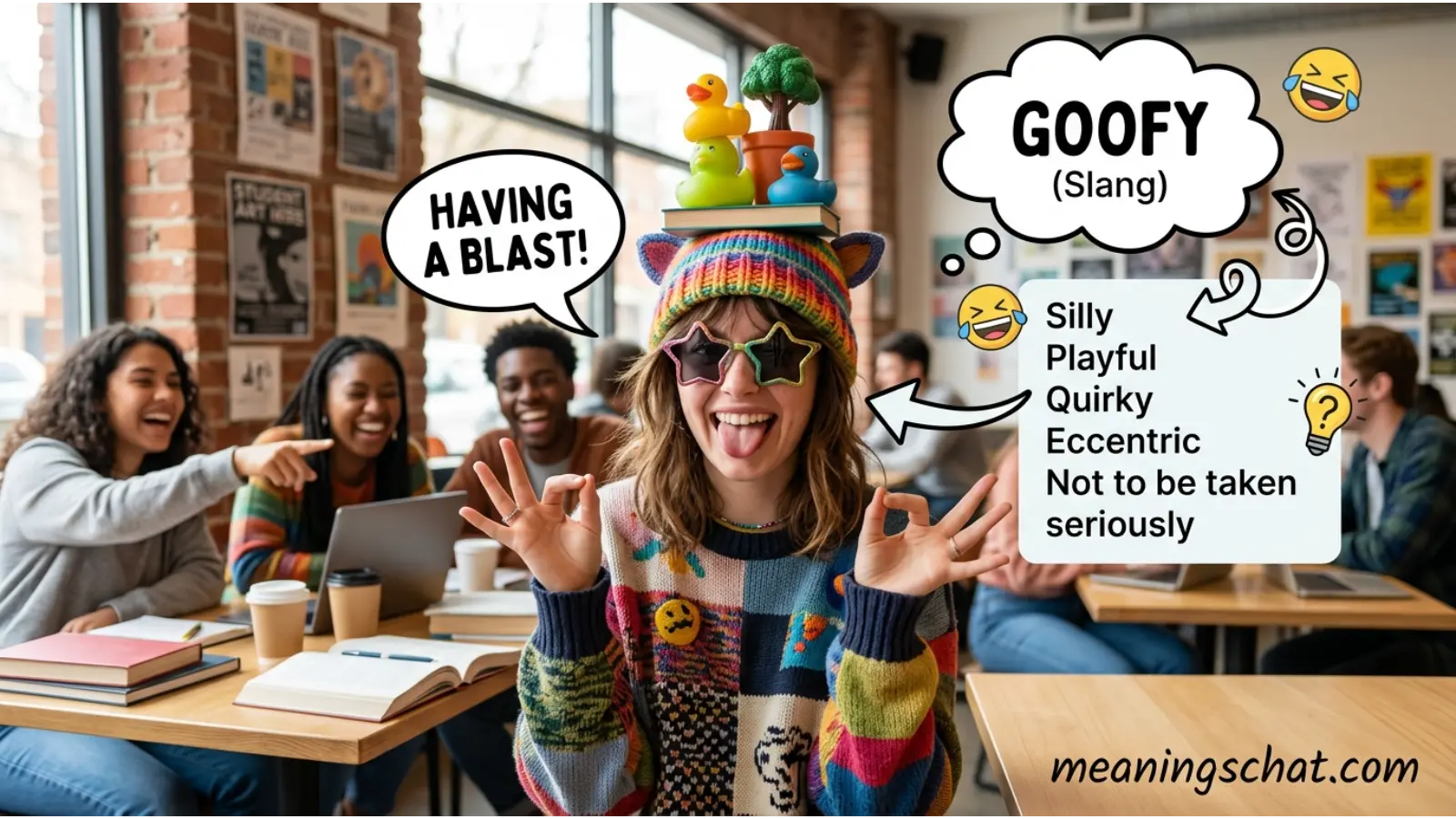
Goofy meaning slang usually refers to someone or something that is silly, playful, funny, or a little ridiculous. You may see “goofy” in texts, comments, TikTok captions, Instagram posts, gaming chats, and everyday conversations. People often use it to describe funny behavior without trying to sound too serious.
The word can feel friendly and harmless, but its meaning depends on the situation and the speaker’s tone. Calling your friend “goofy” can sound affectionate, while calling a stranger “goofy” may come across as an insult.
Understanding the context can help you know what someone really means when they use this popular slang term.
Quick Answer:
In slang, goofy means silly, funny, awkward, or playfully ridiculous. It can describe a person, action, appearance, or situation and is often used in a lighthearted way.
What Does Goofy Mean in Text?
When someone uses goofy in a text message, they usually mean “silly” or “funny.”
For example, a friend might text:
“You are so goofy 😂”
Here, the person probably means that you are acting silly or making them laugh. It does not necessarily mean that they think you are unintelligent.
The word can describe many things:
- A silly person
- A funny action
- An awkward moment
- A strange-looking object
- A ridiculous idea
- Playful behavior
- Something unexpectedly funny
The emoji, conversation, and relationship between the people can make the meaning clearer.
Goofy Full Form and Definition
There is no special slang full form for goofy. It is a regular English word that has developed additional casual uses in modern online communication.
In simple terms, goofy can mean:
Silly + funny + playful + slightly ridiculous
Someone might say:
“That was goofy.”
They could mean the situation was amusing or ridiculous.
They might also say:
“He is goofy.”
This can mean the person behaves in a playful, funny, or awkward way.
So, if you are searching for the goofy full form, there is no abbreviation to expand. Goofy is a complete word, not an acronym.
Goofy Meaning Slang in Social Media
On social media, goofy often has a playful meaning.
People use it in comments, captions, memes, short videos, and reaction posts. A person may call someone goofy after watching them dance strangely, make a funny face, tell a ridiculous joke, or behave in an unexpected way.
For example:
“Bro is goofy 😂”
This usually suggests that the person is acting funny or silly.
Another example is:
“Why did you make that goofy face?”
Here, goofy means funny-looking or silly.
Social media users also combine goofy with other words to create casual expressions such as:
- Goofy behavior
- Goofy vibes
- Goofy ahh
- Goofy guy
- Goofy smile
- Goofy moment
- Goofy energy
The exact tone depends heavily on the post and the relationship between the people involved.
Is Goofy Rude, Offensive, or Neutral?
Goofy is generally neutral or mildly teasing. It is not normally considered a serious offensive word.
Still, context matters.
If a close friend says:
“You’re goofy!”
They may be complimenting your fun personality.
If someone says:
“That guy is so goofy.”
They could be making fun of his behavior.
The word can become negative when someone uses it to embarrass, mock, or belittle another person.
Before using it, consider:
- Who are you talking to?
- What happened?
- What tone are you using?
- Does the person understand your sense of humor?
- Could the comment make them feel embarrassed?
In friendly conversations, goofy is usually harmless. In formal communication, choose a more professional word.
Where Is Goofy Commonly Used?
You can find the word goofy in many informal settings.
Text Messages
Friends commonly use it while joking around.
“You’re being goofy again 😂”
TikTok and Instagram
People use goofy to describe funny videos, expressions, poses, and behavior.
“That was the goofiest dance ever.”
Gaming
Gamers may call a strange strategy or funny moment goofy.
“That was a goofy way to win.”
Online Comments
A commenter may write:
“Why is this character so goofy?”
The person usually means that the character looks or acts funny.
Everyday Conversation
People have used goofy in spoken English for a long time, so it is not limited to the internet.
Origin and Background of Goofy
The word goofy is older than modern texting and social media slang. It originally developed in American English as a word describing someone who was foolish, silly, or awkward.
Over time, the word became strongly associated with playful behavior.
The popularity of Disney’s Goofy also helped make the word widely recognizable. Disney’s Goofy is a friendly, humorous character known for clumsy and exaggerated behavior.
However, modern slang usage does not automatically refer to the Disney character. When someone writes “you’re goofy” in a text, they normally mean that the person is acting silly, funny, or playful.
Why Do People Say Goofy?
People use this word because it communicates a playful idea quickly.
Instead of saying:
“Your behavior is unusually silly and amusing.”
Someone can simply say:
“You’re being goofy.”
The slang feels more natural in casual conversations.
People may use it to:
- Make a joke
- Tease a friend
- Describe funny behavior
- React to an awkward moment
- Show affection
- Lighten the mood
- Comment on a funny video
- Describe playful personality traits
The word can also make a message feel warmer and less serious.
Real-Life Examples of Goofy in Text
Here are examples showing how people may use the word in different situations.
Friendly Example
Friend 1: “I accidentally wore two different socks today.”
Friend 2: “You’re so goofy 😂”
The second person is teasing their friend in a friendly way.
Casual Example
“That was such a goofy idea, but somehow it worked.”
Here, goofy means unusual, silly, or ridiculous.
Complimenting a Personality
“I like him because he has such a goofy personality.”
In this context, goofy is positive. It suggests that the person is fun, playful, and entertaining.
Describing a Funny Face
“Why are you making that goofy face?”
The speaker thinks the person’s expression looks silly or funny.
Argumentative Example
“Stop acting goofy and take this seriously.”
Here, the word has a more negative tone. The speaker is criticizing someone’s behavior.
Gaming Example
“That was the goofiest strategy I’ve ever seen.”
The player thinks the strategy was strange, silly, or unconventional.
Social Media Example
“This video is so goofy 😭😂”
The commenter finds the video extremely funny or ridiculous.
Playful Teasing
“Bro really thought that outfit looked good. Goofy behavior.”
This is casual teasing and may sound harsher if the people involved are not close.
Goofy vs. Silly vs. Weird vs. Clumsy
These words can overlap, but they are not exactly the same.
| Word | Common Meaning | Typical Tone |
|---|---|---|
| Goofy | Silly, funny, playful, or ridiculous | Usually playful |
| Silly | Not serious, foolish, or playful | Usually mild |
| Weird | Strange or unusual | Neutral to negative |
| Clumsy | Awkward or physically uncoordinated | Mildly negative |
| Funny | Amusing or humorous | Usually positive |
| Ridiculous | Extremely unreasonable or absurd | Often negative |
For example, someone can be goofy without being clumsy. A person can also be weird without being funny.
Goofy Meaning Slang vs. Goofy in Standard English
The slang use is closely related to the standard English meaning, so there is not a huge difference.
In standard English:
Goofy can describe someone who behaves in a silly or foolish way.
In casual slang:
Goofy often adds a playful, humorous, or affectionate feeling.
For example:
Standard: “His goofy behavior attracted attention.”
Casual: “Bro is goofy 😂.”
The second sentence sounds much more informal and social-media friendly.
What Does Goofy Stand For?
If you are asking what does goofy stand for, the answer is simple: it does not stand for a longer phrase.
Unlike abbreviations such as “LOL” or “BRB,” goofy is not an acronym.
It is an adjective that describes something silly, playful, funny, awkward, or ridiculous.
So, there is no official phrase hidden behind each letter of the word.
When Should You Avoid Using Goofy?
Although goofy is generally harmless, some situations call for more careful wording.
Avoid using it when:
- You are speaking in a formal workplace setting.
- You are writing a professional email.
- You are addressing someone you do not know well.
- The person is discussing a serious issue.
- Your comment could embarrass someone.
- You are unsure how the other person will interpret the joke.
For example, telling a coworker:
“Your presentation was goofy.”
could sound disrespectful.
A better choice might be:
“Your presentation had a fun and creative style.”
Polite Alternatives to Goofy
If you want to express the same general idea more politely, try these alternatives:
- Playful
- Silly
- Funny
- Lighthearted
- Quirky
- Amusing
- Cheerful
- Fun-loving
- Humorous
- Witty
Your choice should match the situation.
For example, quirky can describe an unusual personality in a positive way, while silly can work well for friendly teasing.
Why Context Matters With Goofy
The same word can have different meanings depending on tone.
Consider this message:
“You are goofy.”
It could mean:
Affection: “You always make me laugh.”
Teasing: “You are acting silly.”
Criticism: “You are not taking this seriously.”
Without the surrounding conversation, it can be difficult to identify the speaker’s exact intention.
Emojis can also influence the tone.
“You’re goofy 😂” sounds playful.
“You’re goofy.” may sound more serious or critical.
That small difference can change how the message feels.
Impact of Using Goofy in Communication
Using casual slang can make conversations feel more relaxed and natural.
Words like goofy can help people:
- Build a friendly connection
- Show humor
- Express personality
- Reduce seriousness
- Make messages feel conversational
- Create an informal atmosphere
However, slang can also cause misunderstandings.
Someone unfamiliar with online slang might interpret “goofy” as a stronger insult than the speaker intended.
For this reason, use slang according to your audience and the situation.
Is Goofy Safe for Social Media?
Yes. Goofy is generally safe for social media. It is a common, mild word used to describe silly or funny behavior.
Still, your overall message matters. Calling someone goofy in a harmless joke is different from repeatedly using the word to bully or humiliate them.
For public posts, comments, and captions, keep the context clear and avoid targeting people in a mean-spirited way.
Goofy in Different Tones
The meaning can shift depending on the tone.
Friendly
“You’re such a goofy friend 😂.”
Meaning: You are funny and playful.
Affectionate
“I love your goofy smile.”
Meaning: Your smile is cute, funny, or charming.
Casual
“That was a goofy mistake.”
Meaning: The mistake was silly or amusing.
Critical
“Quit being goofy and listen.”
Meaning: Stop behaving foolishly and pay attention.
Gaming
“That goofy move actually won the match.”
Meaning: The move was unusual or silly but successful.
Social Media
“This filter makes everyone look goofy 😂.”
Meaning: The filter creates a funny or ridiculous appearance.
Common Related Searches for Goofy Meaning Slang
People searching for this term may also wonder about:
- Goofy meaning in text
- Goofy meaning slang
- Goofy meaning on TikTok
- Goofy meaning on Snapchat
- Goofy meaning on Instagram
- What does goofy mean?
- What does goofy stand for?
- Is calling someone goofy an insult?
- Is goofy a bad word?
- Goofy slang meaning
These searches usually point to the same basic idea: goofy describes something silly, funny, playful, awkward, or ridiculous.
FAQs:
What does goofy mean in texting?
In texting, goofy usually means silly, funny, playful, or slightly ridiculous. Friends often use it as lighthearted teasing.
Is goofy a bad word?
No. Goofy is generally not a bad word or serious insult. However, someone can use it negatively depending on their tone and intention.
Is calling someone goofy a compliment?
It can be. Calling a friend goofy often means they are funny, playful, or entertaining. Context determines the exact meaning.
What does goofy mean on TikTok?
On TikTok, goofy commonly describes someone or something that looks funny, acts silly, or has a playful and ridiculous quality.
What does goofy stand for?
Goofy does not stand for a longer phrase. It is a regular English word, not an acronym.
Can I use goofy in a professional email?
It is better to avoid casual slang such as goofy in formal emails. Words like playful, unusual, humorous, or lighthearted may work better depending on the context.
Conclusion
Goofy meaning slang usually describes someone or something that is silly, funny, playful, awkward, or ridiculous. In texts and social media, people commonly use it to tease friends, describe funny behavior, or react to unusual situations.
The word is generally harmless and can even sound affectionate. Still, tone and context matter. “You’re so goofy 😂” can sound warm and playful, while “Stop being goofy” can sound critical.
There is also no special goofy full form because the word is not an acronym. If you understand the situation, audience, and tone, you can easily recognize what someone means when they call something goofy.