ISTG You might have seen someone type “ISTG” in a Snapchat chat, Instagram comment, or even in a late-night text conversation and wondered what it actually means. At first glance, it looks like a random mix of capital letters, and it’s not obvious unless you’re already familiar with internet slang. Many people, especially beginners in online chatting, pause and search for it because it appears so often in emotional or dramatic messages.
The slang “ISTG” is widely used by teens and social media users to express strong feelings, frustration, or honesty. It can completely change the tone of a sentence, making it more intense or serious. In this article, you’ll learn exactly what ISTG means, how people use it in real conversations, and when you should or shouldn’t use it.
What Does ISTG Mean in Text?
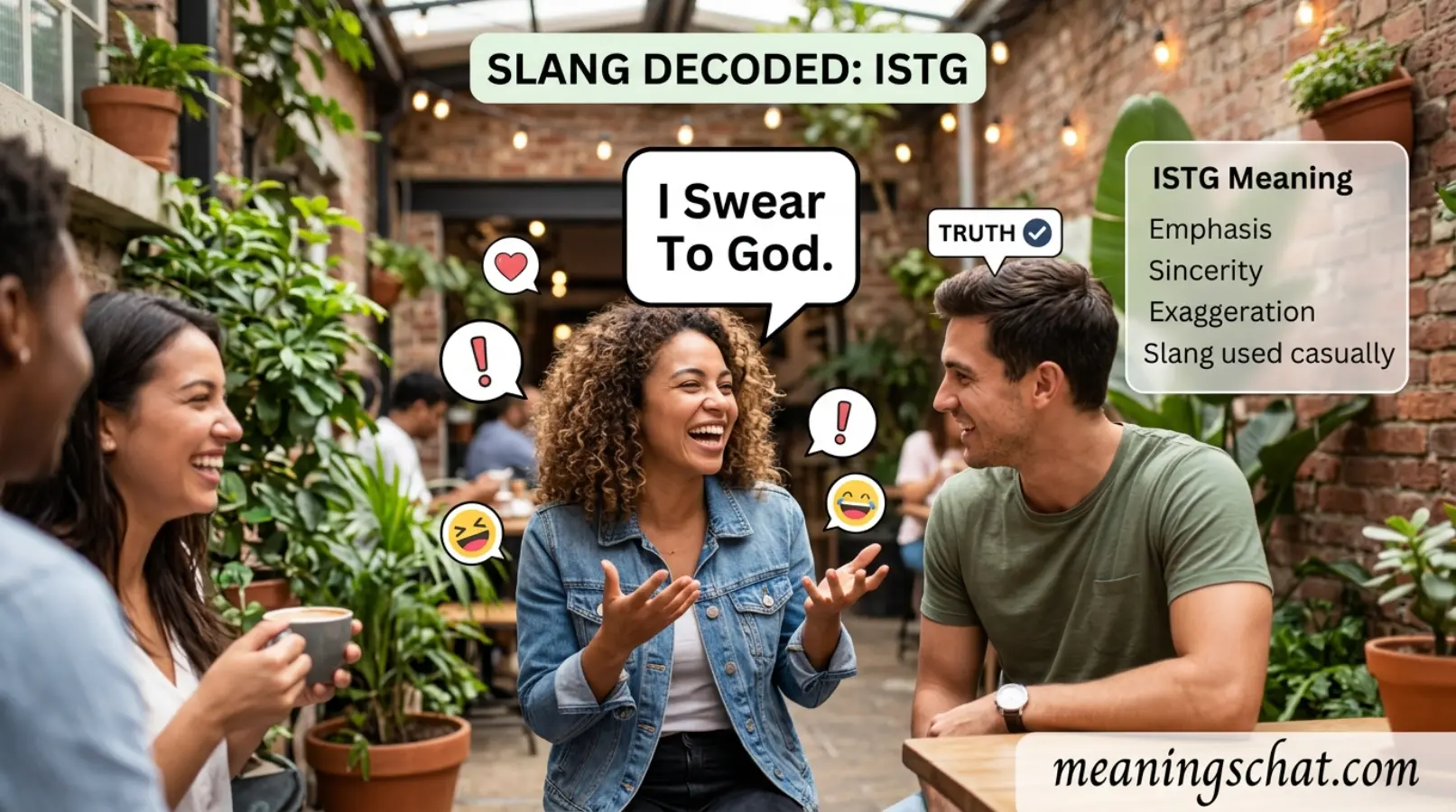
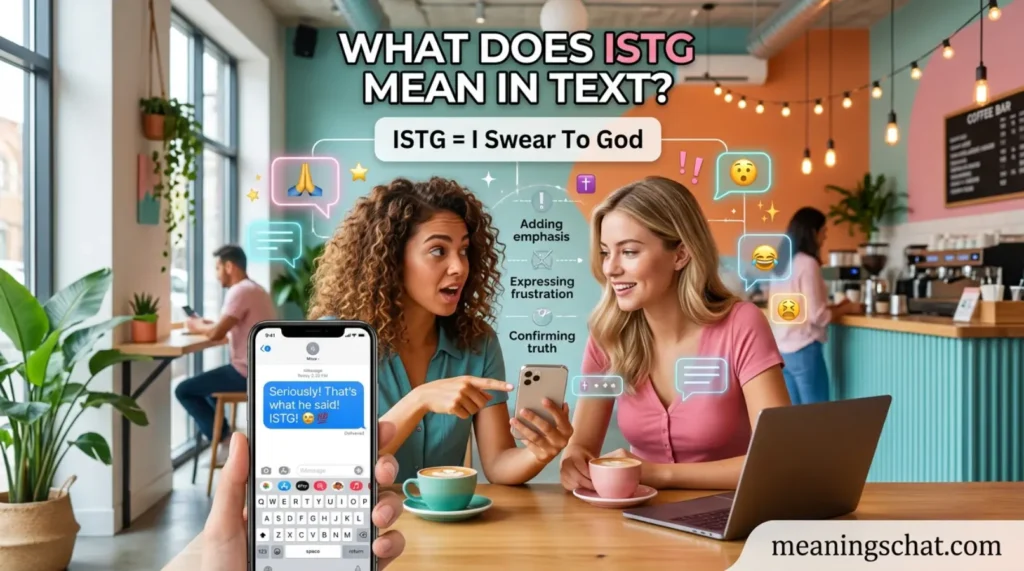
ISTG stands for “I Swear To God.” It is an internet slang abbreviation used to emphasize strong emotion, honesty, frustration, or seriousness in a message.
People use ISTG when they want to show that they are being completely serious or when they are emotionally reacting to something. It can express anger, surprise, excitement, or even a strong promise.
For example:
- “ISTG I didn’t do it!” (strong denial)
- “ISTG this movie is amazing!” (strong excitement)
Although the main meaning is “I swear to God,” it does not always have a religious intent in casual texting. Most of the time, it is simply used for emphasis, similar to saying “I promise” or “I’m serious.”
ISTG can also slightly change tone depending on context:
- Serious tone → showing truth or frustration
- Emotional tone → expressing strong feelings
- Dramatic tone → exaggerating a reaction
Where Is ISTG Used?
ISTG is commonly used in informal digital communication, especially where fast and expressive messaging is needed.
You will mostly find ISTG on:
1. Snapchat
People use it in quick chats, reactions, and story replies when reacting emotionally.
2. Instagram
It appears in comments, DMs, and captions to show strong reactions or opinions.
3. TikTok
Users often write ISTG in comments under funny, relatable, or dramatic videos.
4. WhatsApp and SMS texting
Friends use it in casual conversations to express frustration, promises, or excitement.
5. Gaming chats
Gamers use ISTG when reacting to gameplay moments, wins, or losses.
ISTG is especially popular among teenagers, Gen Z users, and online gaming communities. It is rarely used in formal or professional communication.
Examples of ISTG in Conversation
Here are some realistic chat-style examples showing how ISTG is used in different situations:
1. Frustration
- “ISTG if you’re late again, I’m leaving without you.”
2. Denial
- “ISTG I didn’t take your charger!”
3. Excitement
- “ISTG this song is stuck in my head all day.”
4. Humor / drama
- “ISTG I’m never eating that spicy burger again 😂”
5. Serious promise
- “ISTG I will finish my homework tonight.”
6. Shock or disbelief
- “ISTG that ending was , I didn’t see it coming!”
7. Friendly warning
- “ISTG don’t tell anyone about this!”
These examples show how flexible ISTG is—it can fit emotional, funny, or serious conversations depending on context.
When to Use and When Not To Use ISTG
ISTG is powerful because it adds emotion to messages, but it should be used carefully depending on the situation.
When to Use ISTG
You can use ISTG in:
- Casual chats with friends
- Social media comments
- Gaming conversations
- Expressing strong emotions
- Joking or dramatic storytelling
It works best when talking to people you already know well and when the conversation is informal.
When NOT to Use ISTG
Avoid using ISTG in:
- Professional emails
- Job-related chats
- School assignments or formal writing
- Conversations with strangers in serious settings
- Religious or sensitive discussions
Since ISTG includes the phrase “I swear to God,” it may sound too intense or inappropriate in formal environments. In professional situations, it’s better to use alternatives like:
- “I promise”
- “I assure you”
- “Honestly”
Using ISTG in the wrong place can make your message sound too emotional, casual, or unprofessional.
Similar Slang Words or Alternatives
If you are interested in ISTG, here are some related slang terms you’ll often see online:
1. FR (For Real)
Used to show agreement or seriousness.
Example: “That movie was amazing FR.”
2. OMG (Oh My God)
Used to express surprise or shock.
Example: “OMG I can’t believe it!”
3. NGL (Not Gonna Lie)
Used before giving an honest opinion.
Example: “NGL, that was pretty funny.”
4. IDC (I Don’t Care)
Used to show indifference.
Example: “IDC what they say.”
5. TBH (To Be Honest)
Used to express honesty or personal opinion.
Example: “TBH, I didn’t like it that much.”
These slang terms are often used together with ISTG in casual chats to make conversations more expressive.
FAQs
What does ISTG mean from a girl?
When a girl uses ISTG, it means the same thing: “I swear to God.” It usually shows strong emotion, seriousness, or frustration depending on the context, not gender-based meaning.
Is ISTG slang rude?
ISTG is not always rude, but it can sound strong or intense. It depends on tone. In friendly chats, it’s normal, but in serious settings it may feel too emotional.
Can I use ISTG in professional chats?
No, ISTG is not suitable for professional or formal communication. It is best for casual texting and social media only.
Does ISTG have any flirty meaning?
Sometimes ISTG can appear in flirty conversations, but it does not have a direct flirty meaning. It only adds emotion or emphasis.
Is ISTG still popular in 2025?
Yes, ISTG is still widely used in 2025, especially among teens, social media users, and online communities like TikTok and Snapchat.
Conclusion
ISTG is a popular internet slang term that stands for “I Swear To God.” It is mainly used to express strong emotions such as honesty, frustration, excitement, or surprise in casual online conversations. While it makes messages more expressive and dramatic, it is best suited for informal chats with friends or social media interactions.
If you want to use ISTG confidently, just remember one simple rule: keep it for casual situations, not formal ones. Used correctly, it can make your digital conversations feel more natural and expressive.

William Jones is a dedicated writer at Meaningschat who specializes in explaining text slang, abbreviations, and online language trends. He enjoys creating simple, engaging, and reader-friendly content that helps people understand modern digital communication with ease. His writing style is clear, conversational, and informative, making complex internet terms easy for everyone to follow. In his free time, William loves exploring social media trends, reading about digital culture, and discovering how online language continues to evolve.