You might have seen someone reply “GTFO” in a chat and instantly wondered if it’s a joke, an insult, or something completely different. Maybe it popped up in a gaming conversation, a Snapchat streak, or even a comment section on Instagram, and it left you confused for a moment. That’s because internet slang moves fast, and abbreviations like this can feel harsh if you don’t know the context.
The truth is, “GTFO” is a popular internet expression with a strong tone, and it’s widely used in casual digital conversations. Understanding it properly helps you avoid misunderstandings and use it the right way in chats. In this guide, you’ll learn exactly what GTFO means in text, where people use it, real-life examples, and whether it’s appropriate for friendly or formal communication.
What Does GTFO Mean in Text?
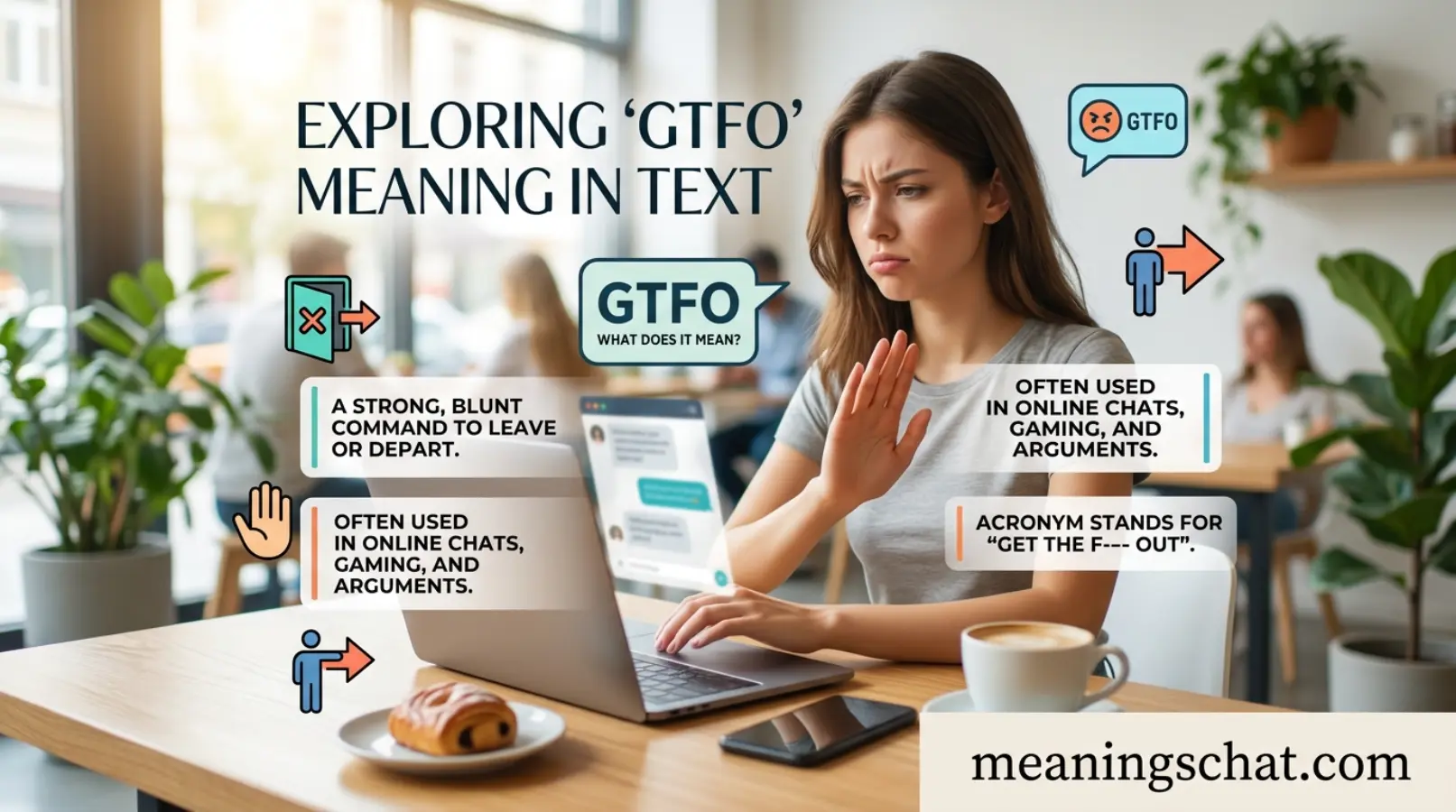
GTFO stands for “Get The F* Out.”** It is a slang abbreviation used in online chatting, texting, gaming, and social media. The “F” word is usually censored or implied, but the full phrase is considered strong and offensive depending on how it is used.
In simple terms, GTFO can mean different things based on tone:
- Literal meaning (angry tone): A rude way of telling someone to leave immediately.
- Surprised tone: Expressing shock like “No way!” or “You’re kidding!”
- Playful tone: Among friends, it can be joking and not actually offensive.
So, GTFO is a flexible slang term, but its meaning depends heavily on context and relationship between people.
There are no official “multiple meanings,” but the emotional tone changes its interpretation completely. That’s why it’s important to read the situation before reacting to it.
Where Is GTFO Used?
GTFO is mostly used in informal digital spaces, especially where quick reactions and strong emotions are common.
You’ll often see it on:
- Gaming platforms (like Discord, Xbox chat, or online multiplayer games)
- Social media apps (Instagram comments, TikTok replies, Twitter/X posts)
- Text messaging between friends
- Memes and internet jokes
It is especially common among:
- Teenagers and young adults
- Gamers
- Meme communities
- Social media users who prefer casual slang
In gaming, for example, players might say GTFO when reacting to a surprising move or asking someone to leave a match area. On social media, it can appear in funny or exaggerated reactions.
However, it is rarely used in professional or formal environments because of its offensive wording.
Examples of GTFO in Conversation
Here are some realistic chat-style examples showing how GTFO is used in different situations:
- Surprised reaction (friendly tone):
A: “I just won a free trip to Dubai!”
B: “GTFO! No way, that’s !” - Joking with friends:
A: “I finished the entire pizza by myself.”
B: “GTFO, you didn’t leave us any?” - Angry situation:
A: “You cheated in the game.”
B: “GTFO and don’t come back.” - Gaming context:
Player 1: “Enemy is camping behind the wall!”
Player 2: “GTFO of that area before they get you!” - Funny social media comment:
User 1: “I think pineapple belongs on pizza.”
User 2: “GTFO 😂” - Shocked reaction to news:
A: “I got tickets to the concert!”
B: “GTFO, that’s my dream show!” - Playful disbelief:
A: “I woke up at 5 AM to study.”
B: “GTFO, you’re lying!”
These examples show how tone completely changes the meaning—from rude to funny or even excited.
When to Use and When Not To Use GTFO
Understanding when to use GTFO is very important because it can easily be misunderstood.
When it is okay to use:
- With close friends who understand your humor
- In casual group chats
- In gaming conversations
- In meme-style or joking situations
- When reacting to shocking or unbelievable news in a fun way
When you should NOT use it:
- In school or college assignments
- In professional emails or workplace chats
- With strangers or people you don’t know well
- In customer service conversations
- In formal online discussions
GTFO contains offensive language, so using it in the wrong situation can make you seem rude or disrespectful. Even if you mean it jokingly, the other person might take it the wrong way.
A safer alternative in serious situations would be expressions like:
- “No way!”
- “Are you serious?”
- “Get out!” (less offensive but still casual)
Similar Slang Words or Alternatives
If you’re interested in similar internet slang, here are a few commonly used alternatives:
- WTF (What The F*)** – Used to show shock or confusion
- OMG (Oh My God) – Expresses surprise or excitement
- BRB (Be Right Back) – Used when temporarily leaving a chat
- GTG (Got To Go) – Means someone is leaving the conversation
- LOL (Laugh Out Loud) – Shows laughter or amusement
These terms are often used alongside GTFO in casual chats, especially in gaming or meme culture.
FAQs
What does GTFO mean from a girl?
It depends on context. It could mean surprise, joking disbelief, or frustration. If said playfully, it’s usually harmless.
Is GTFO slang rude?
Yes, it can be rude because it contains strong language. However, among friends, it is often used jokingly without serious offense.
Can I use GTFO in professional chats?
No, it is not appropriate for professional or workplace communication due to its offensive wording.
Does GTFO have any flirty meaning?
Rarely. It is not commonly used in a flirty way, but among close partners, it might be used jokingly.
Is GTFO still popular in 2025?
Yes, GTFO is still widely used in gaming communities, memes, and casual social media conversations in 2025.
Conclusion
GTFO is a powerful internet slang term that stands for “Get The F*** Out.” While it can sound rude, its meaning changes depending on tone and context. It can express shock, frustration, or even playful humor among friends. However, because of its strong language, it is best used only in casual conversations and avoided in formal or professional settings.
A simple tip: if you’re unsure whether to use GTFO, choose a softer reaction like “no way” or “seriously?” instead. Understanding slang like this helps you communicate more confidently in online chats without misunderstandings.

William Jones is a dedicated writer at Meaningschat who specializes in explaining text slang, abbreviations, and online language trends. He enjoys creating simple, engaging, and reader-friendly content that helps people understand modern digital communication with ease. His writing style is clear, conversational, and informative, making complex internet terms easy for everyone to follow. In his free time, William loves exploring social media trends, reading about digital culture, and discovering how online language continues to evolve.