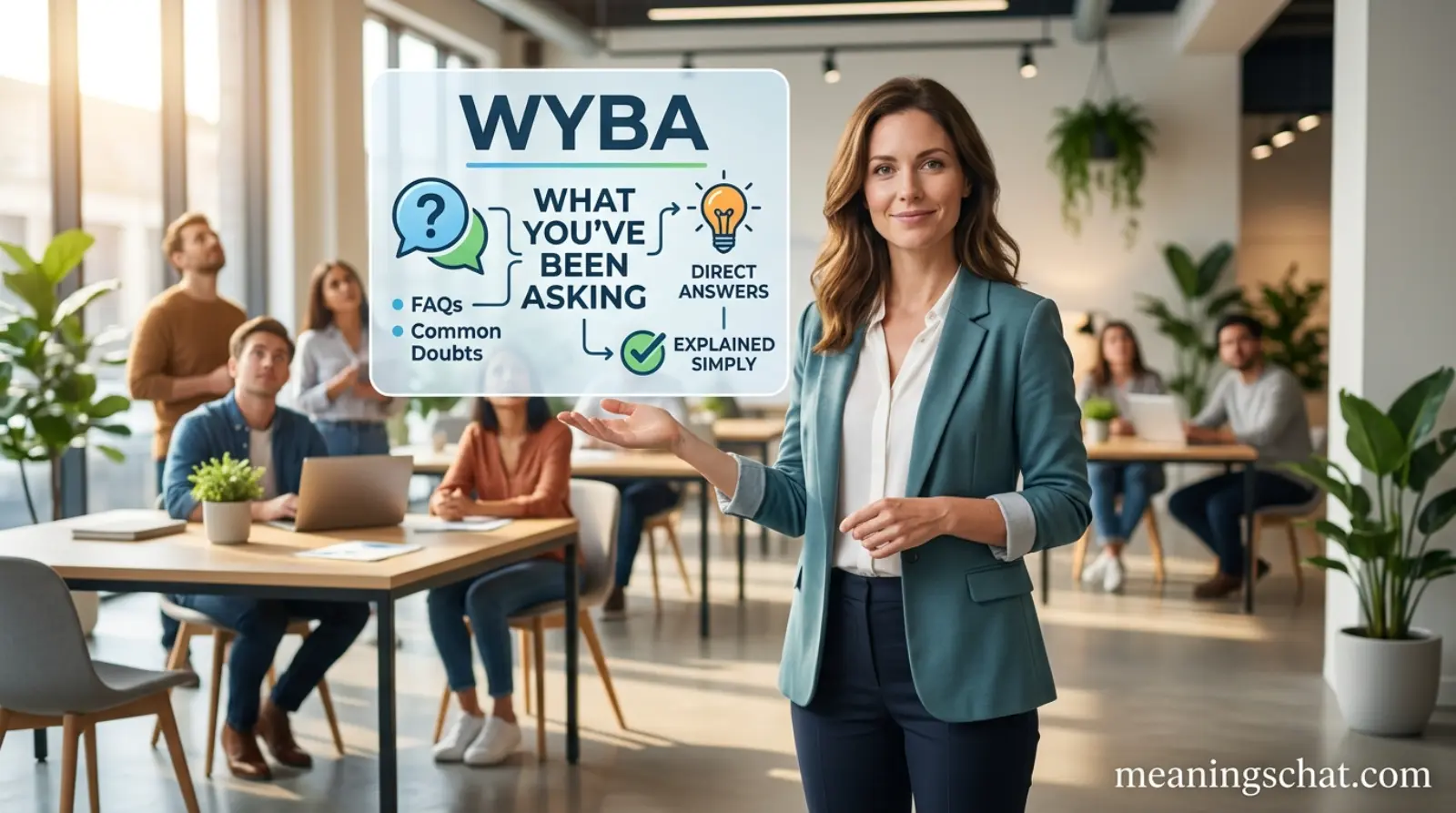
You’re scrolling through a chat, and suddenly someone texts: “Hey, WYBA later tonight?” You pause for a second. It looks like English, but also feels like a code you were never taught. You might even wonder if you missed a new internet trend or some secret slang that everyone else understands.
This is exactly how most people first encounter “WYBA” in text messages or social media chats. It pops up in casual conversations, especially when plans or availability are being discussed. The confusion is normal because internet slang evolves fast and new abbreviations appear almost every day. WYBA is one of those short forms that looks mysterious but has a very simple meaning once you break it down.
In this guide, you’ll learn exactly what WYBA means, where it’s used, real chat examples, and how to confidently use it without feeling lost again.
What Does WYBA Mean in Text?
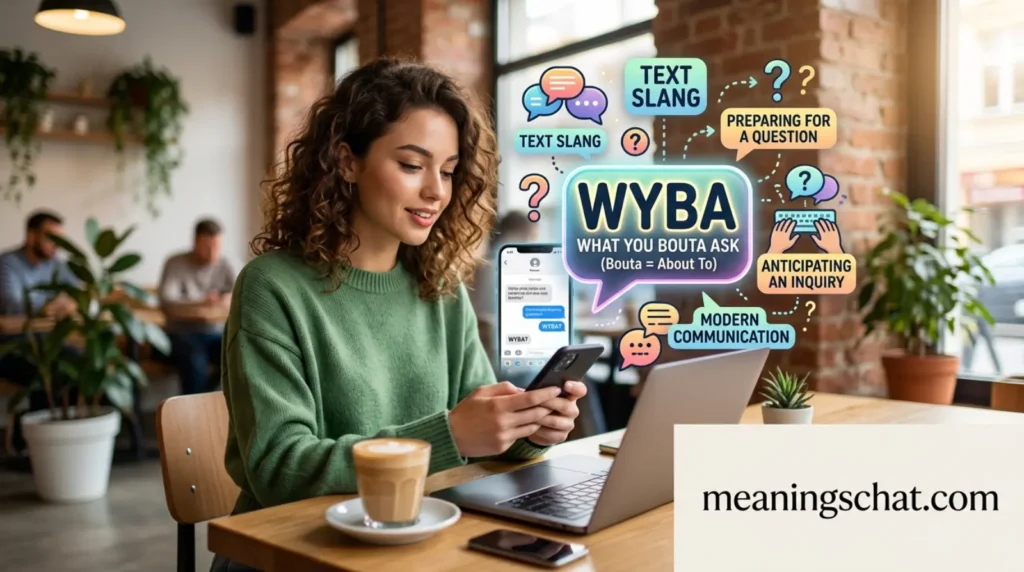
The abbreviation WYBA stands for “Will You Be Around?”
It is commonly used when someone wants to ask if you will be available or free at a certain time. Instead of typing a full sentence like “Will you be around later?”, people shorten it to WYBA to save time and keep conversations quick and casual.
In simple terms, WYBA is a way of checking someone’s availability.
Although “Will You Be Around?” is the most widely accepted meaning, in rare contexts people may also interpret it loosely as:
- “Will You Be Available?”
- “Will You Be Around?” (most common usage remains this one)
It is not a formal abbreviation and is mainly used in informal digital communication such as texting, chatting, and social media messaging.
Where Is WYBA Used?
WYBA is mostly used in casual online communication, especially where quick replies are preferred.
You will commonly see it on:
1. Text Messages (SMS / Chat apps)
Friends use WYBA when making plans or checking availability.
2. Social Media (Instagram, Snapchat, TikTok DMs)
People use it when planning meetups, calls, or online gaming sessions.
3. Gaming Chats
Gamers often use WYBA before starting a match or group session.
4. Private Group Chats
It is common in WhatsApp groups, friend circles, and college groups.
Who Uses It Most?
- Teenagers and young adults
- Gamers and online communities
- People who chat frequently and prefer short forms
WYBA is not usually seen in professional or formal environments. It belongs to the world of casual digital slang.
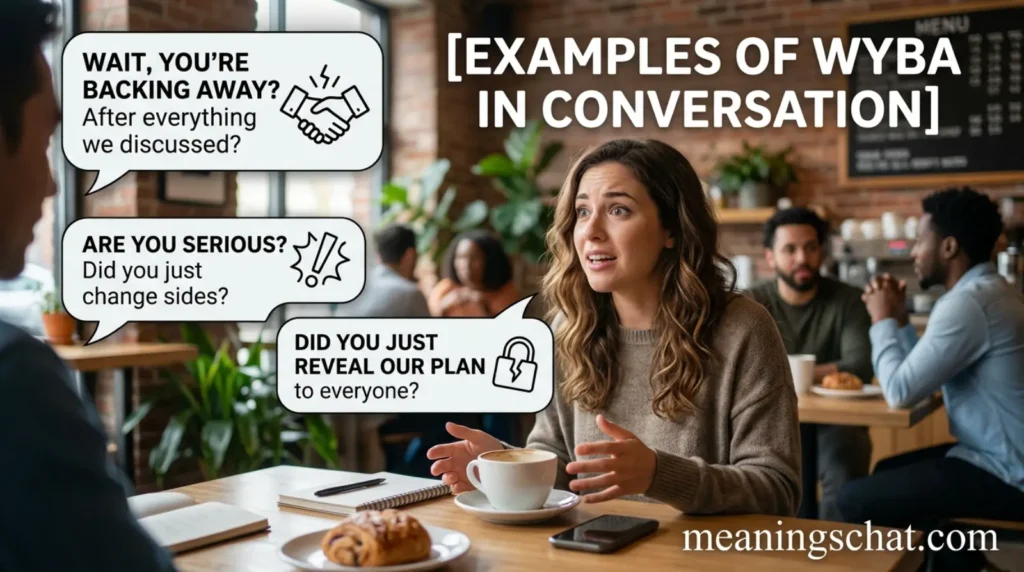
Examples of WYBA in Conversation
Here are some real-life style chat examples to help you understand how WYBA is used naturally:
1. Planning with a friend
A: “WYBA tonight?”
B: “Yeah, I’ll be free after 8.”
2. Casual check-in
A: “Hey, WYBA later? Need to talk.”
B: “Sure, just message me.”
3. Gaming invite
A: “WYBA for a quick game?”
B: “Count me in!”
4. Flirty conversation
A: “WYBA this evening? Maybe we can call?”
B: “Aww, maybe. I’ll let you know 😊”
5. Group chat planning
A: “WYBA for movie night?”
B: “Yes, I’m in!”
6. Work-friendly casual tone (rare use)
A: “WYBA after lunch for a quick discussion?”
B: “Yes, I should be available.”
These examples show that WYBA is flexible and mainly used to ask about someone’s availability in a friendly way.
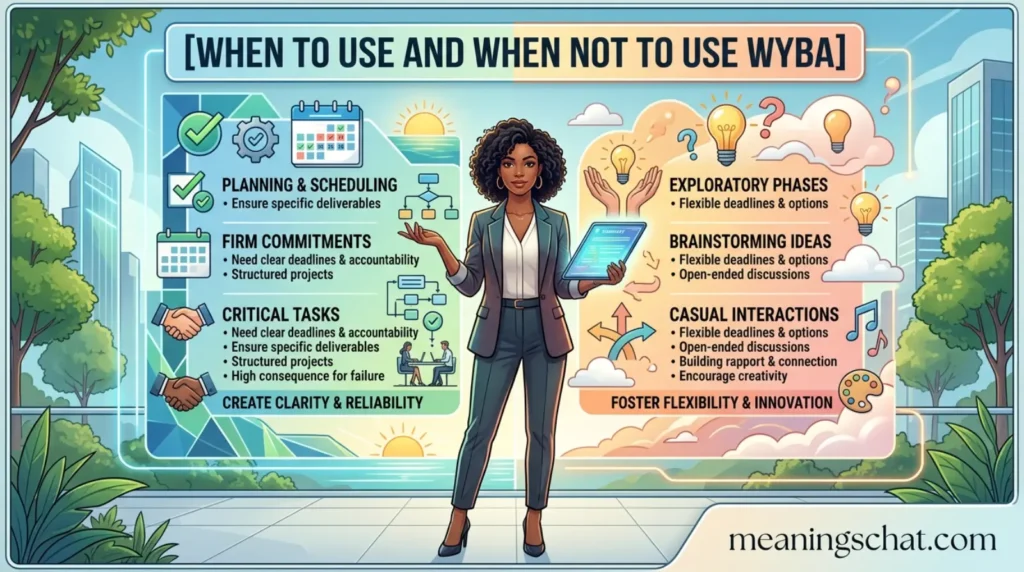
When to Use and When Not to Use WYBA
Like most slang, WYBA is best used in the right context.
✅ When to Use WYBA
- Talking to friends or close contacts
- Planning meetups or calls
- Gaming or online sessions
- Casual chats on social media
- Informal group conversations
❌ When NOT to Use WYBA
- Official emails or workplace messages
- School assignments or formal communication
- Talking to someone who may not understand slang
- Professional or customer-facing messages
Using WYBA in formal situations may confuse the reader or make your message look unprofessional. It is always better to use the full sentence in serious contexts.
Tone of WYBA
WYBA is:
- Friendly
- Casual
- Informal
- Sometimes slightly flirty depending on context
It is not rude, but it is definitely not formal.
Similar Slang Words or Alternatives
If you find WYBA interesting, here are some similar abbreviations used in texting:
1. BRB (Be Right Back)
Used when someone will return shortly.
2. GTG (Got To Go)
Used when leaving a conversation.
3. AFK (Away From Keyboard)
Common in gaming, meaning temporarily away.
4. WYA (Where You At?)
Used to ask someone’s location or availability.
5. HBU (How About You?)
Used to return a question in conversation.
These slang terms are often used together in fast-paced digital chats.
FAQs:
What does WYBA mean from a girl?
It simply means “Will You Be Around?” It is not gender-specific. If a girl uses it, she is usually checking your availability for a chat, call, or meet-up.
Is WYBA slang rude?
No, WYBA is not rude at all. It is a neutral and friendly abbreviation used in casual conversations.
Can I use WYBA in professional chats?
It is not recommended. In professional settings, it’s better to write the full sentence like “Will you be available?”
Does WYBA have any flirty meaning?
It can feel slightly flirty depending on tone and context, especially if used in private conversations between two people interested in each other. However, the meaning itself is neutral.
Is WYBA still popular in 2025?
Yes, WYBA is still used in casual texting and online chats, although it is not as widespread as more common slang like BRB or WYA.
Conclusion
To sum it up, WYBA means “Will You Be Around?” and is used to quickly ask someone if they are free or available. It is mostly found in casual texting, social media chats, and gaming conversations where people prefer short and fast communication.
The key to using WYBA confidently is understanding the context. It works perfectly with friends and informal chats, but should be avoided in formal or professional communication. Once you get used to it, WYBA becomes a simple and handy part of everyday digital slang.

William Jones is a dedicated writer at Meaningschat who specializes in explaining text slang, abbreviations, and online language trends. He enjoys creating simple, engaging, and reader-friendly content that helps people understand modern digital communication with ease. His writing style is clear, conversational, and informative, making complex internet terms easy for everyone to follow. In his free time, William loves exploring social media trends, reading about digital culture, and discovering how online language continues to evolve.