You might have seen someone type “DM me” in a chat, comment section, or Instagram story and wondered what it actually means. At first glance, it looks simple, but if you’re new to social media slang, it can be a bit confusing. Many people come across “DM” while scrolling TikTok, Instagram, Snapchat, or even in gaming chats without fully understanding how to use it correctly.
In today’s online world, short forms like DM are used everywhere to save time and keep conversations fast. Whether someone is asking you to DM them, sliding into your DMs, or saying “check your DM,” it all has a specific meaning. In this article, you’ll learn exactly what DM means in text, how people use it in real conversations, and when you should (or shouldn’t) use it in chats.
What Does DM Mean in Text?
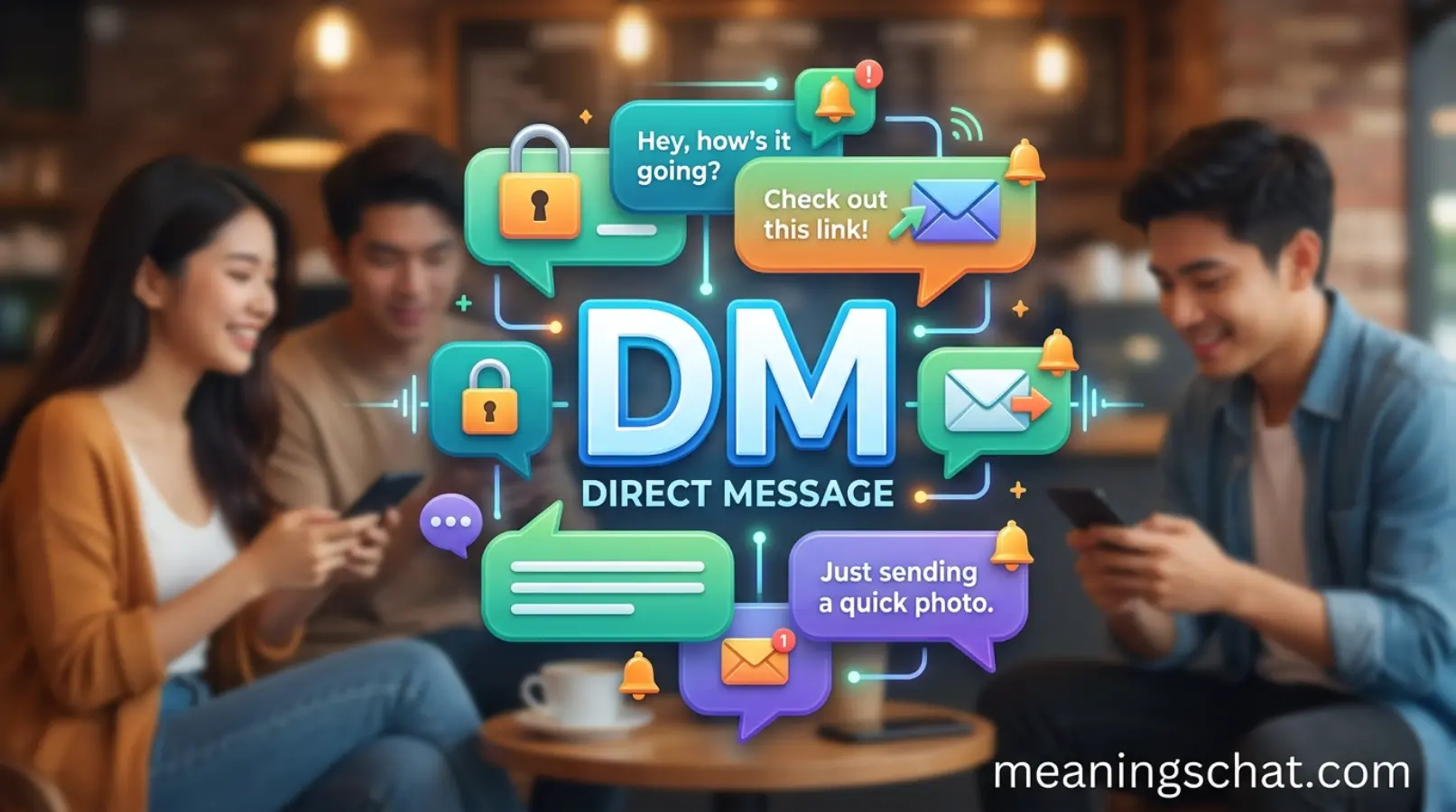
DM stands for “Direct Message.”
In simple words, a DM is a private message sent directly to someone on social media or messaging platforms. Instead of posting publicly where everyone can see, a DM is a one-on-one conversation between users.
For example:
- On Instagram, you can send a DM through Instagram Direct.
- On Twitter (X), users use DM to privately message others.
- On Facebook, DM refers to sending a message in Messenger.
Key meaning of DM:
- D = Direct
- M = Message
So, “DM me” simply means:
👉 “Send me a private message.”
Does DM have other meanings?
Yes, but they are less common in texting:
- In gaming, DM can also mean “Dungeon Master” (in role-playing games like Dungeons & Dragons).
- In casual slang, some people may confuse it with “Don’t Mind,” but this is rare and context-dependent.
However, in 99% of online chats, DM means Direct Message.
Where Is DM Used?
DM is widely used across almost all social media platforms and online communication spaces. It is especially popular among teenagers, influencers, gamers, and active social media users.
Common platforms where DM is used:
- Instagram – “DM me for details”
- Facebook Messenger – private chats
- Twitter (X) – “Check your DMs”
- Snapchat – used in chat messages
- TikTok – creators ask users to DM for collaborations
- Discord – private server messages or direct chats
Who uses DM the most?
- Social media users
- Content creators and influencers
- Online sellers and businesses
- Gamers and online communities
- Teenagers and young adults
Why people use DM instead of public comments?
- Privacy (personal or sensitive conversations)
- Business inquiries
- Sharing contact details
- Flirting or personal chats
- Avoiding public discussions
In short, DM is used whenever a conversation needs to move from public space to a private one.
Examples of DM in Conversation
Here are some real-life style examples to help you understand how DM is used in chats:
Example 1: Basic request
A: “Can you send me the details?”
B: “Sure, DM me and I’ll explain everything.”
Example 2: Social media interaction
User1: “This looks interesting!”
User2: “Thanks! DM me if you want more info.”
Example 3: Business use
Customer: “Is this product available?”
Seller: “Yes, please DM us for price and availability.”
Example 4: Friendly chat
A: “I can’t explain it here.”
B: “Okay, DM me later.”
Example 5: Flirty context
A: “You’re funny 😄”
B: “Haha thanks, DM me sometime 😉”
Example 6: Influencer interaction
Follower: “How do you edit your photos?”
Influencer: “DM me, I’ll share my editing tips!”
Example 7: Gaming/community chat
Player1: “Need help with the mission.”
Player2: “DM me, I’ll guide you.”
These examples show how flexible DM is—it works in casual, professional, and even flirty situations.
When to Use and When Not to Use DM
Understanding when to use DM is important so you don’t sound awkward or unprofessional.
When to use DM:
- When you want to talk privately
- When sharing personal information
- When discussing business or pricing
- When moving a public conversation to private chat
- When contacting someone on social media
When NOT to use DM:
- Formal emails (use “email me” instead)
- School assignments or academic writing
- Official workplace communication (unless informal culture)
- Public announcements where clarity is needed
Tone of DM:
- Casual: Yes
- Friendly: Yes
- Professional: Sometimes (depends on context)
- Flirty: Often used in social media flirting
Important tip:
DM is informal slang. It’s perfect for social media but not suitable for formal documents or serious professional reports.
Similar Slang Words or Alternatives
If you understand DM, it becomes easier to understand other related internet slang too.
1. PM (Private Message)
Means sending a message privately, similar to DM but more common in forums.
2. Inbox
Used on Facebook or email platforms to refer to private messages.
3. MSG (Message)
Short form of “message,” used in casual texting.
4. GTG (Got To Go)
Used when ending a conversation, often before switching to DM.
5. Slide into DMs
A popular phrase meaning to start a private conversation, often in a flirty way.
These slang terms are often used alongside DM in modern online communication.
FAQs
What does DM mean from a girl?
If a girl says “DM me,” it simply means she wants you to send her a private message. It does not automatically have a romantic meaning unless the context suggests it.
Is DM slang rude?
No, DM is not rude. It is a neutral and commonly used internet term. However, the tone of the conversation can make it feel friendly, formal, or flirty.
Can I use DM in professional chats?
Yes, but only in informal professional settings like social media marketing or online business chats. In formal emails, it’s better to say “please message me privately” or “contact me directly.”
Does DM have a flirty meaning?
Sometimes, yes. In casual social media culture, “slide into DMs” is often used in a flirty context. However, DM itself is not flirty—it depends on how it is used.
Is DM still popular in 2025?
Yes, DM is still widely used in 2025 across Instagram, TikTok, Snapchat, and other platforms. It remains one of the most common social media abbreviations.
Conclusion
DM simply means Direct Message, a private way to communicate on social media platforms. It is used everywhere from Instagram chats to Twitter conversations and even business inquiries. While it is mostly casual, it can also be used for professional communication in the right context.
The key to using DM confidently is understanding the situation. If the conversation needs privacy, DM is the perfect choice. Just remember to avoid using it in formal writing or official documents.
Once you get used to it, DM becomes one of the easiest and most useful slang terms in online communication.

William Jones is a dedicated writer at Meaningschat who specializes in explaining text slang, abbreviations, and online language trends. He enjoys creating simple, engaging, and reader-friendly content that helps people understand modern digital communication with ease. His writing style is clear, conversational, and informative, making complex internet terms easy for everyone to follow. In his free time, William loves exploring social media trends, reading about digital culture, and discovering how online language continues to evolve.