sms meaning is one of the most common things people search when they come across the term in a phone message, app, notification, or online conversation. Unlike many modern texting abbreviations, SMS is not really slang. It is a standard technology term that describes a type of mobile text message.
You may have seen SMS mentioned when someone talks about sending a text, receiving a verification code, getting a bank alert, or communicating without an internet connection. The term has been around for decades, yet many people still wonder what it actually stands for and how it differs from newer messaging services.
In this guide, we will explain the SMS full form, its meaning, history, everyday uses, examples, and differences from similar messaging terms. We will also look at how SMS works in modern communication.
Quick Answer:
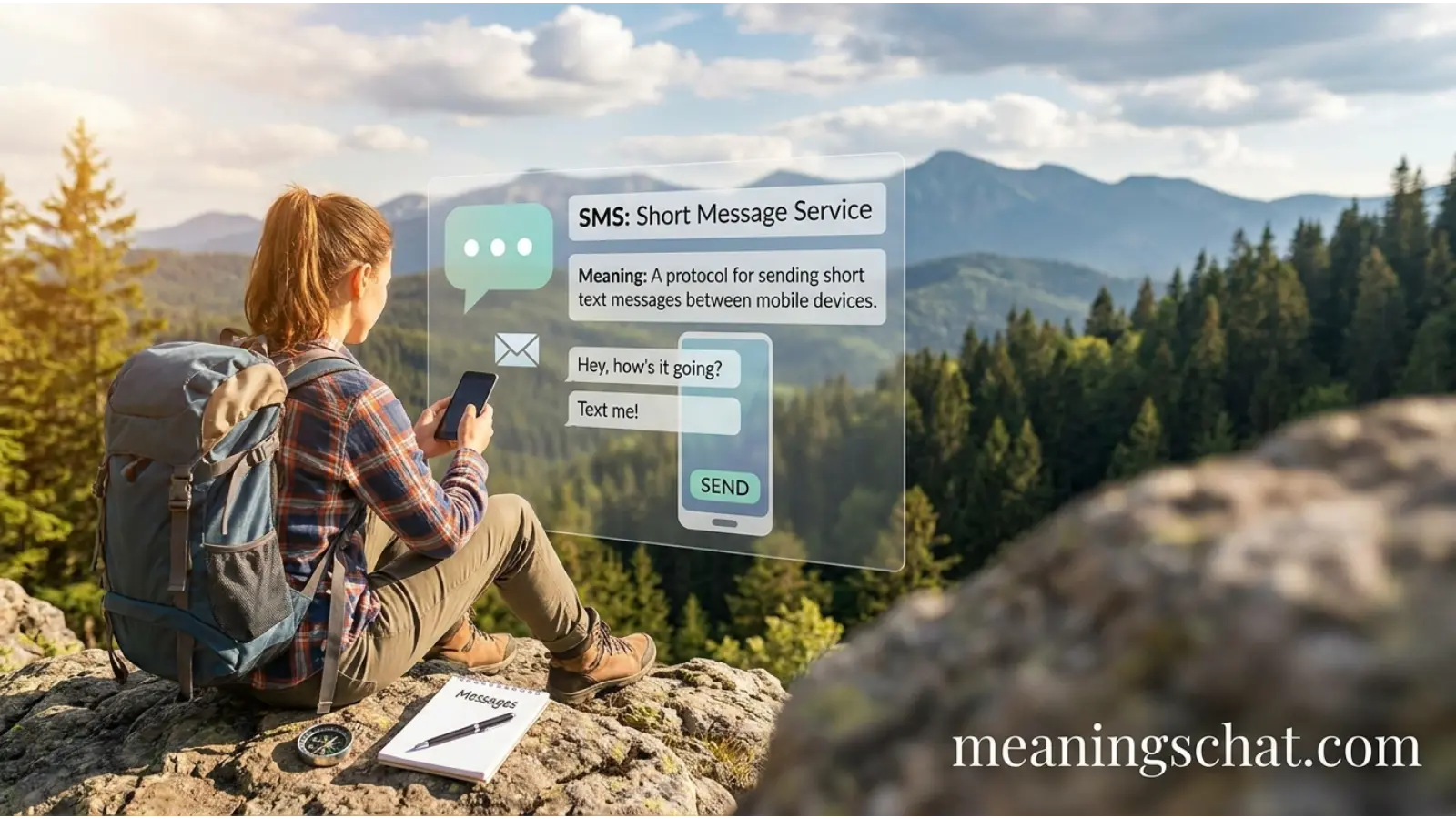
SMS stands for Short Message Service. It refers to a text messaging service that allows mobile phones to send and receive short text messages through a cellular network.
What Does SMS Mean in Text?
When you see SMS in a text messaging context, it usually means Short Message Service. It is the technical name for the traditional text messaging system used by mobile phones.
In simple words, SMS means a regular text message sent through a mobile network. You do not normally need a separate social media account or internet-based messaging platform to send a traditional SMS.
For example, your phone might display:
“Send as SMS”
This generally means your phone is offering to send the message as a traditional mobile text instead of using an internet-based messaging service.
SMS can be used for:
- Personal text messages
- Appointment reminders
- Verification codes
- Banking alerts
- Delivery updates
- Promotional notifications
- Emergency notifications
- Business communication
- Customer service messages
So, when someone searches for SMS meaning slang, the answer is slightly different from typical slang terms. SMS is mainly a technical abbreviation rather than internet slang.
What Is the SMS Full Form?
The SMS full form is Short Message Service.
Each word describes part of the technology:
- Short refers to the limited length of a traditional text message.
- Message refers to the written communication being sent.
- Service refers to the mobile communication system that delivers the message.
A standard SMS was originally designed for relatively short text messages. When messages contain more characters than the basic limit, mobile networks can split them into multiple SMS messages and combine them for the recipient.
Today, smartphones make messaging feel almost unlimited, but SMS remains an important communication method.
What Does SMS Stand For?
If you are asking, “What does SMS stand for?”, it stands for Short Message Service.
The abbreviation became widely associated with mobile phones as text messaging grew in popularity. People quickly started using “SMS” as a shorter way to describe traditional mobile texting.
For example:
Technical term: Short Message Service
Abbreviation: SMS
Everyday meaning: A regular mobile text message
You may hear someone say, “I sent you an SMS,” which simply means, “I sent you a text message.”
Is SMS Rude, Offensive, or Neutral?
SMS is neutral. It is not rude, offensive, or inappropriate.
The term simply describes a messaging technology. Unlike some slang abbreviations that can have different meanings depending on the conversation, SMS usually has a straightforward meaning.
For example:
“I received an SMS from my bank.”
This is completely neutral.
“Please send me an SMS when you arrive.”
This is also neutral and simply refers to a text message.
The tone of an SMS itself depends on the words inside the message, not on the term SMS.
Where Is SMS Commonly Used?
SMS appears in many parts of everyday life. You may see the term in your phone settings, websites, apps, customer service systems, and business communications.
Common situations include:
Personal Communication
People still use SMS to send quick messages to friends, relatives, coworkers, and other contacts.
Example:
“Send me an SMS when you get home.”
Verification Codes
Many websites and apps send one-time verification codes through SMS.
Example:
“Your verification code was sent by SMS.”
Banking Alerts
Banks and financial services often use SMS to notify customers about transactions, security events, or account activity.
Appointment Reminders
Doctors, salons, service providers, and businesses may send appointment reminders by SMS.
Delivery Notifications
Shipping companies and online stores may use SMS to tell customers that a package is arriving or has been delivered.
Marketing Messages
Businesses can use SMS marketing to send promotions, updates, and special offers to customers who have opted into those communications.
Real-Life Examples of SMS Usage
The meaning becomes easier to understand when you see the term in different situations.
Friendly Example
Friend: “Did you get my message?”
You: “Not on the app, but I got your SMS.”
Here, SMS simply means a regular text message.
Casual Example
“I’ll send you an SMS when I reach the restaurant.”
The speaker is saying they will send a normal text message.
Business Example
“You will receive an SMS confirmation after booking your appointment.”
Here, SMS refers to a text notification sent to the customer’s phone.
Security Example
“We sent an SMS with your login verification code.”
The message is being delivered through traditional text messaging.
Social Media Example
“Check your phone. The platform sent an SMS verification code.”
In this context, SMS is connected to account verification rather than casual conversation.
Origin and Background of SMS
SMS has a long history in mobile communication. It was developed as part of the digital cellular communication systems that helped make mobile networks more versatile.
Early SMS technology focused on sending short text messages between mobile devices. As mobile phones became more popular, texting became one of the most widely used forms of communication.
Before smartphones and internet messaging apps became common, SMS was one of the main ways people communicated quickly through their phones.
Services such as modern internet messaging, social media chats, and multimedia platforms later expanded what people could send. However, SMS remained useful because it works through cellular networks and does not depend on the same type of internet connection required by many messaging apps.
SMS vs Text Message
People often use SMS and text message to mean the same thing.
The difference is mainly technical.
| Term | Meaning | Common Use |
|---|---|---|
| SMS | Short Message Service | Traditional mobile text |
| Text message | Everyday term for a written phone message | Casual communication |
| MMS | Multimedia Messaging Service | Pictures, media, and longer multimedia messages |
| Chat app | Internet-based messaging service | Messages through apps |
In everyday conversation, saying “SMS” or “text message” will usually communicate the same basic idea.
SMS vs MMS
SMS and MMS are related but not identical.
Short Message Servicemainly handles text-based messages.
MMS, or Multimedia Messaging Service, was designed to support multimedia content such as pictures and other media.
For example:
SMS: “Happy birthday!”
MMS: A birthday message containing a photo or other multimedia content.
Modern smartphones can make the difference less obvious because messaging apps often handle text, images, videos, and other content through internet-based systems.
SMS vs iMessage and Other Chat Services
SMS also differs from internet-based messaging services.
Traditional SMS uses a mobile carrier’s messaging infrastructure. Internet messaging services generally use an internet connection.
Popular modern messaging systems can offer features such as:
- Read receipts
- Typing indicators
- High-quality photos
- Video sharing
- Group chats
- Reactions
- File sharing
- Voice messages
SMS remains valuable because it can work independently of many app-based messaging systems.
When Should You Use SMS?
SMS can be useful when you need a simple and widely supported way to communicate.
You might use SMS for:
- Short personal messages
- Verification codes
- Appointment reminders
- Urgent notifications
- Simple business updates
- Delivery alerts
- Communication with people who do not use the same messaging app
Because SMS is widely supported by mobile phones, it can be a practical communication option.
When Should You Avoid SMS?
There is no general reason to avoid SMS, but it may not be the best option for every situation.
Consider another messaging method when you need:
- Large files
- High-quality videos
- Detailed group conversations
- Advanced privacy features
- Extensive multimedia sharing
- Internet-based communication features
For sensitive information, always follow the security guidance of the relevant organization. Do not assume that every text message is secure simply because it comes from a familiar-looking number.
Why Do People Use the Term SMS?
People use “SMS” because it is short, recognizable, and widely understood.
A technical document might say:
“The verification code will be delivered via SMS.”
A friend is more likely to say:
“I’ll text you.”
Both expressions can refer to the same basic communication method.
Businesses often prefer the term SMS because it clearly identifies the communication channel they are using.
Impact of SMS on Communication
SMS changed everyday communication by making short written messages fast and accessible through mobile phones.
Before mobile texting became widespread, people often depended on phone calls or other forms of communication for immediate contact. SMS introduced a simple way to send a written message that the recipient could read when convenient.
It also helped shape modern digital communication. Many features people now expect from messaging platforms developed from the popularity of quick mobile messaging.
SMS continues to play an important role in:
- Communication
- Customer service
- Security verification
- Business notifications
- Marketing
- Emergency alerts
Even with modern chat apps, SMS remains a useful backup and communication channel.
Is SMS Safe for Social Media?
SMS itself is not a social media platform. However, social media websites and apps may use SMS for account verification, login alerts, password recovery, or security codes.
If you receive an unexpected SMS containing a link or asking for personal information, be careful.
Good safety habits include:
- Do not click suspicious links.
- Never share a verification code with another person.
- Check the sender carefully.
- Use the official app or website when verifying account activity.
- Report suspicious messages when appropriate.
Remember that scammers can imitate legitimate businesses through text messages.
SMS Meaning in Different Contexts
The meaning of SMS stays mostly consistent, but the reason for using it can change.
Phone settings:
“Send as SMS” means send the message as a traditional text.
Banking:
“SMS alert” means a text notification from the bank.
Social media:
“SMS verification” means a code or confirmation sent through text.
Business:
“SMS marketing” means promotional or informational communication sent through text messages.
Personal conversation:
“Send me an SMS” usually means “send me a text.”
Common Mistakes About SMS
One common mistake is assuming SMS is modern internet slang. It is not.
Another mistake is thinking SMS always means a specific messaging app. SMS is a mobile messaging technology and is separate from individual chat platforms.
Some people also use “SMS” and “MMS” interchangeably, but they describe different messaging services.
Understanding these differences can help you interpret phone notifications and communication instructions more accurately.
FAQs:
What is the SMS full form?
SMS stands for Short Message Service, the technology used for traditional mobile text messaging.
What does SMS mean in text?
SMS means Short Message Service. In everyday language, it usually refers to a regular text message sent through a mobile network.
Is SMS a slang word?
No. SMS is primarily a technical abbreviation rather than slang. People use it as a short form of Short Message Service.
What does SMS stand for on a phone?
On a phone, SMS stands for Short Message Service. It generally refers to traditional carrier-based text messaging.
Is SMS the same as a text message?
In everyday conversation, yes. “SMS” is the technical term, while “text message” is the more common everyday expression.
Is SMS safe to use?
SMS is widely used for communication and verification, but users should remain careful with suspicious links, unexpected messages, and requests for security codes.
Conclusion
Understanding sms meaning is simple once you know that SMS stands for Short Message Service. It is the traditional mobile text messaging system used to send short written messages through cellular networks.
Unlike internet slang and texting abbreviations, SMS is mainly a technical term. You may see it in phone settings, banking alerts, verification systems, business notifications, appointment reminders, and everyday communication.
The SMS full form is useful to remember: Short Message Service. So, the next time your phone says “Send as SMS” or a website says it will send a code by SMS, you will know exactly what it means.
In short, SMS remains a simple and widely supported way to communicate. Context determines why someone uses it, but the basic meaning stays the same.