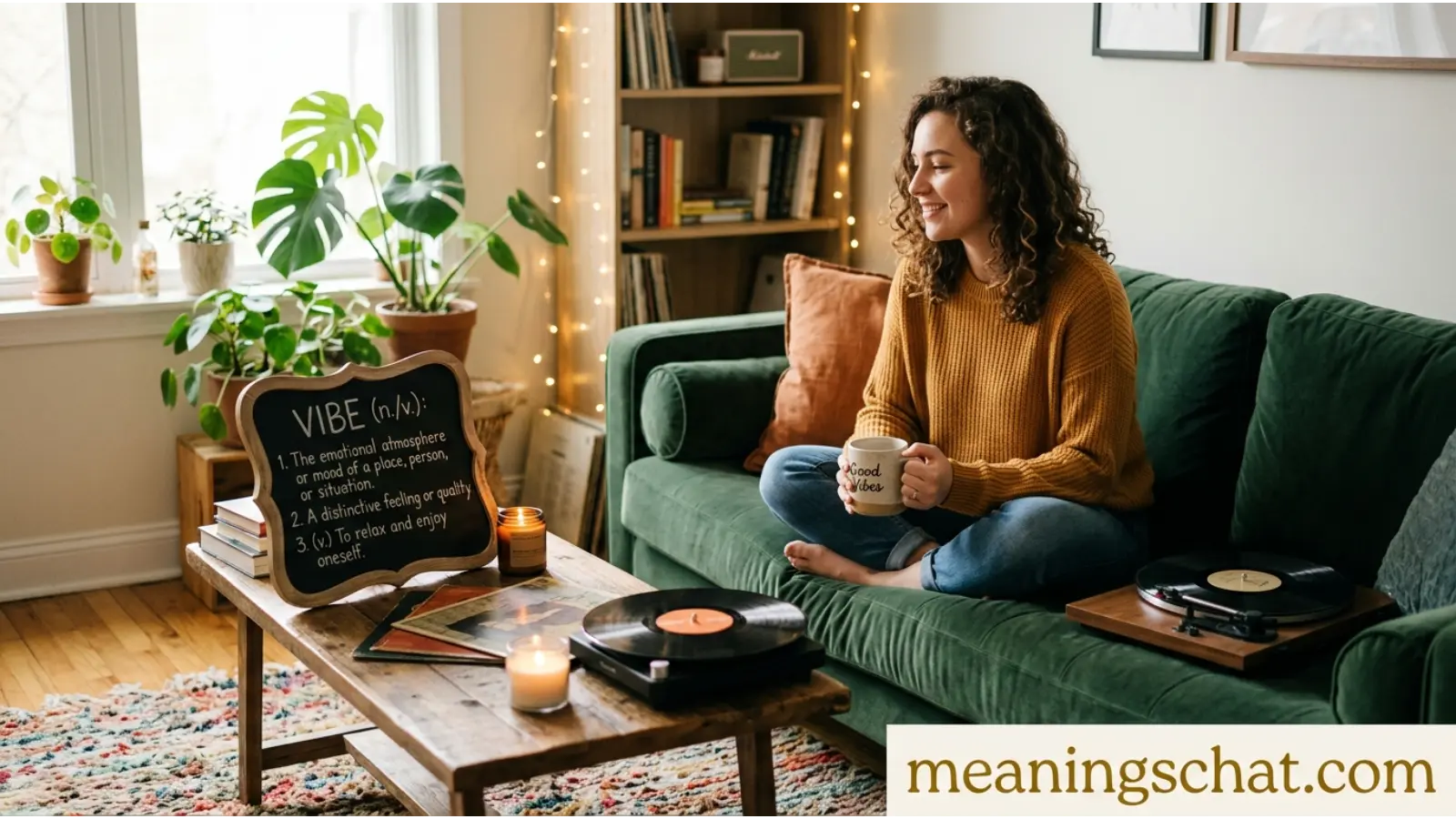
Have you ever received a message saying, “I love your vibe,” “This place has a weird vibe,” or simply “Good vibes”? If you wondered what the person really meant, you are not alone. Vibe meaning slang can change slightly depending on the conversation, but it usually describes a feeling, mood, atmosphere, or overall impression.
People commonly use “vibe” in texts, social media posts, comments, conversations, and everyday chats. The word feels casual and expressive, so it can describe a person, place, song, outfit, event, or even a particular moment.
Quick Answer
Vibe meaning in text usually refers to the feeling, mood, energy, or atmosphere someone or something gives off. For example, “You have a good vibe” means the person creates a pleasant or positive feeling.
What Does Vibe Mean in Text?
In texting and online conversations, vibe means the feeling or impression you get from someone or something.
It can describe positive, negative, strange, relaxing, exciting, romantic, funny, or uncomfortable feelings.
For example:
- “She has a friendly vibe.”
- “This song gives me summer vibes.”
- “I’m getting weird vibes from him.”
- “The party had a great vibe.”
The word does not always describe one specific emotion. Instead, it captures the general feeling that a person, place, situation, or experience creates.
That makes “vibe” useful in casual communication because you can express an overall impression without explaining every detail.
Vibe Meaning Slang: Full Definition
The vibe meaning slang usage comes from the idea of an atmosphere or emotional feeling.
In modern texting, “vibe” can mean:
- Mood
- Energy
- Atmosphere
- Feeling
- Impression
- Overall character
- Emotional tone
For instance, if someone says, “He has a chill vibe,” they mean that he seems relaxed, calm, and easygoing.
If someone says, “This restaurant has a cozy vibe,” they are talking about the comfortable atmosphere they experience there.
The exact meaning depends heavily on context and the words surrounding it.
What Does Vibe Stand For?
Many people search for what does vibe stand for because they assume it is an abbreviation. It is not normally an acronym.
“Vibe” is a shortened form of vibration, but modern English uses it as a standalone word meaning a feeling, atmosphere, or impression.
The word became strongly associated with the idea that people, places, music, and situations can create a particular emotional feeling.
So, there is no standard multi-word vibe full form like you would find with texting abbreviations such as LOL or BRB.
Is Vibe Rude, Offensive, or Neutral?
“Vibe” is generally neutral and harmless.
People use it in friendly, casual, and everyday conversations. The word itself is not rude or offensive.
However, the phrase around it can make the message positive or negative.
For example:
Positive:
“You have such a positive vibe.”
Negative:
“I’m getting bad vibes from this place.”
Neutral:
“The vibe here feels different today.”
A negative statement about someone’s vibe can sound critical, but the word itself is not offensive.
Where Is Vibe Commonly Used?
You can find “vibe” across many forms of informal communication.
Text Messages
Friends often use it to describe feelings quickly.
“That sounds like my vibe.”
Instagram and TikTok
People use “vibes” in captions, comments, and videos.
“Weekend vibes.”
Snapchat
Users may describe someone’s personality or a moment with the word.
“You’re giving summer vibes.”
Music
Listeners often describe songs by the feelings they create.
“This song has such a relaxing vibe.”
Gaming
Gamers can use the term to describe the atmosphere of a game, team, stream, or gaming session.
“The squad has good vibes tonight.”
Everyday Conversation
People also use “vibe” when talking about restaurants, parties, workplaces, clothing, people, and events.
Vibe Examples in Real-Life Conversations
Context helps explain the vibe meaning slang better than a dictionary definition alone.
Friendly Example
Friend 1: “How was the new café?”
Friend 2: “Amazing! The place had such a cozy vibe.”
Here, “vibe” means the pleasant atmosphere of the café.
Casual Example
Friend 1: “Want to watch a movie tonight?”
Friend 2: “Yeah, I’m in that kind of vibe today.”
Here, the speaker means they are in the mood for something related to the activity.
Positive Example
“You always bring good vibes to the group.”
This means the person creates a happy and enjoyable atmosphere.
Negative Example
“Something about that conversation gave me bad vibes.”
This means the speaker felt uncomfortable or suspicious about the conversation.
Social Media Example
“Beach, music, and sunshine. Perfect vibes.”
Here, “vibes” describes the overall enjoyable feeling associated with the scene.
Gaming Example
Player 1: “You joining the game?”
Player 2: “Definitely. The team has good vibes tonight.”
The speaker means the group feels fun, relaxed, and enjoyable.
Argumentative Example
Person 1: “Why are you acting differently?”
Person 2: “I don’t know. I’m just getting a weird vibe from this situation.”
The speaker expresses discomfort or suspicion without directly making a strong accusation.
Positive and Negative Vibes
“Vibe” can communicate different emotional impressions.
Positive Vibes
Positive expressions include:
- Good vibes
- Great vibes
- Positive vibes
- Happy vibes
- Chill vibes
- Friendly vibes
- Cozy vibes
- Fun vibes
For example:
“This place has such good vibes.”
The person feels comfortable and happy there.
Negative Vibes
Negative expressions include:
- Bad vibes
- Weird vibes
- Strange vibes
- Awkward vibes
- Negative vibes
- Uncomfortable vibes
For example:
“That message gave me weird vibes.”
The person felt that something about the message seemed unusual or uncomfortable.
Vibe Origin and Background
The word vibe comes from vibration. It developed as a shortened form of the word and became associated with feelings, moods, and atmospheric impressions.
Its connection with music and cultural movements helped popularize the idea of a “vibe.” Over time, people began using the term more broadly to describe the feeling created by people, locations, music, fashion, situations, and experiences.
Today, “vibe” has become a common part of casual English. Social media has made it even more popular because the word can quickly describe an entire mood in just one or two words.
Expressions such as “good vibes,” “summer vibes,” and “chill vibes” are now common in online communication.
Vibe vs. Mood
“Vibe” and “mood” can sound similar, but they are not always interchangeable.
Mood usually describes an emotional state.
“I’m in a good mood.”
Vibe usually describes the feeling or impression created by a person, place, situation, or experience.
“This café has a relaxing vibe.”
A person can also have a vibe that influences how others feel around them.
“She has a calm vibe.”
So, mood often focuses on an emotional state, while vibe can describe the overall atmosphere or impression.
Vibe vs. Energy
“Energy” and “vibe” also overlap.
If someone says:
“He has great energy.”
They may mean the person seems enthusiastic, lively, or positive.
If they say:
“He has a great vibe.”
They may mean the person feels pleasant, friendly, comfortable, or enjoyable to be around.
The two words can sometimes describe the same idea, but “vibe” is often broader.
Vibe vs. Aura
“Aura” can refer to the distinctive feeling or presence associated with a person or thing.
For example:
“She has a peaceful aura.”
“Vibe” is more common in casual texting and everyday slang.
“She has a peaceful vibe.”
Both expressions can describe the impression someone creates, but “vibe” generally sounds more informal and conversational.
Why Do People Use the Word Vibe?
People use “vibe” because it makes communication simple and expressive.
Instead of explaining a complicated emotional impression, someone can say:
“I like the vibe here.”
That short sentence communicates that the overall atmosphere feels good to them.
The word also works well online because social media conversations often favor short, expressive language.
People can use “vibe” to talk about:
- Personality
- Music
- Fashion
- Places
- Relationships
- Events
- Social situations
- Feelings
- Online content
- Gaming experiences
When Should You Avoid Using Vibe?
“Vibe” works well in casual communication, but it may not fit every situation.
Avoid relying heavily on slang in formal settings such as:
- Academic papers
- Legal documents
- Official reports
- Professional proposals
- Formal business correspondence
For example, instead of writing:
“The office has a good vibe.”
A formal report might say:
“The office provides a positive and welcoming environment.”
The meaning stays similar, but the second sentence sounds more professional.
Polite Alternatives to Vibe
You can replace “vibe” with more specific words depending on the context.
| Vibe | Possible Alternative |
|---|---|
| Good vibe | Positive atmosphere |
| Bad vibe | Uncomfortable feeling |
| Chill vibe | Relaxed atmosphere |
| Weird vibe | Strange feeling |
| Friendly vibe | Welcoming attitude |
| Romantic vibe | Romantic atmosphere |
| Professional vibe | Professional atmosphere |
| Fun vibe | Enjoyable atmosphere |
| Cozy vibe | Comfortable atmosphere |
Using a more specific word can make your meaning clearer, especially in professional communication.
Is Vibe Safe for Social Media?
Yes. “Vibe” is generally safe and widely used on social media.
You can see it in captions, comments, hashtags, videos, memes, and casual conversations.
Common examples include:
“Good vibes only.”
“Weekend vibes.”
“Study vibes.”
“Summer vibes.”
“Chill vibes.”
The word itself is not offensive. Still, the complete message matters. A phrase such as “bad vibes” can sound negative when directed at a person or situation.
Common Vibe Phrases in Texting
Several expressions appear frequently online.
Good Vibes
Means a positive or pleasant feeling.
“She always brings good vibes.”
Bad Vibes
Means an uncomfortable or negative feeling.
“I got bad vibes from that conversation.”
Chill Vibes
Means a relaxed and easygoing atmosphere.
“This playlist has chill vibes.”
Same Vibe
Means two people or things have a similar feeling, style, or personality.
“We have the same vibe.”
Not My Vibe
Means something does not match your taste, personality, or preferences.
“Horror movies are not my vibe.”
Vibe Check
A casual phrase used to assess someone’s mood, attitude, or overall feeling.
“Quick vibe check: everyone ready?”
How to Understand Vibe in Different Contexts
The easiest way to understand vibe meaning in text is to examine the surrounding words.
If someone says:
“Good vibes!”
The message is clearly positive.
If they say:
“Bad vibes.”
The feeling is negative.
If they say:
“Not my vibe.”
They are saying something does not suit their personal taste.
If someone says:
“You give me good vibes.”
They are complimenting the impression or feeling you create.
Context can therefore change the exact meaning without changing the word itself.
Common Mistakes When Using Vibe
One common mistake is assuming “vibe” always means happiness.
It does not.
A vibe can be positive, negative, neutral, mysterious, romantic, awkward, peaceful, energetic, or strange.
Another mistake is treating “vibe” as an abbreviation. Although the word comes from “vibration,” it does not function as a modern acronym.
Finally, remember that “vibe” is informal. It works naturally in texting and social media but may sound too casual in formal writing.
FAQs:
What does vibe mean in texting?
Vibe in texting usually means a feeling, mood, energy, or overall impression created by a person, place, situation, or experience.
What is the vibe full form?
“Vibe” is not a standard acronym. It is a shortened form of “vibration” that developed into a word meaning feeling, atmosphere, or impression.
What does good vibe mean?
“Good vibe” means a pleasant, positive, comfortable, or enjoyable feeling.
What does bad vibe mean?
“Bad vibe” means an uncomfortable, negative, suspicious, or unpleasant feeling about someone or something.
Is vibe slang?
Vibe is commonly used as informal slang, especially in texting, social media, music, and everyday conversations. However, it is also a widely recognized English word.
What does “not my vibe” mean?
“Not my vibe” means something does not match your taste, personality, interests, or preferred style.
Conclusion
The vibe meaning slang is simple: it describes the feeling, mood, atmosphere, energy, or impression that someone or something creates. In text messages, people use “vibe” because it lets them express a broad feeling in a short and natural way.
The word can describe positive experiences, negative impressions, relaxed moods, exciting moments, or unusual situations. Phrases such as “good vibes,” “bad vibes,” “chill vibes,” and “not my vibe” are common across texting and social media.
Understanding the context helps you interpret the intended meaning. Use “vibe” freely in casual conversations, but choose more specific or formal wording for professional and academic situations.