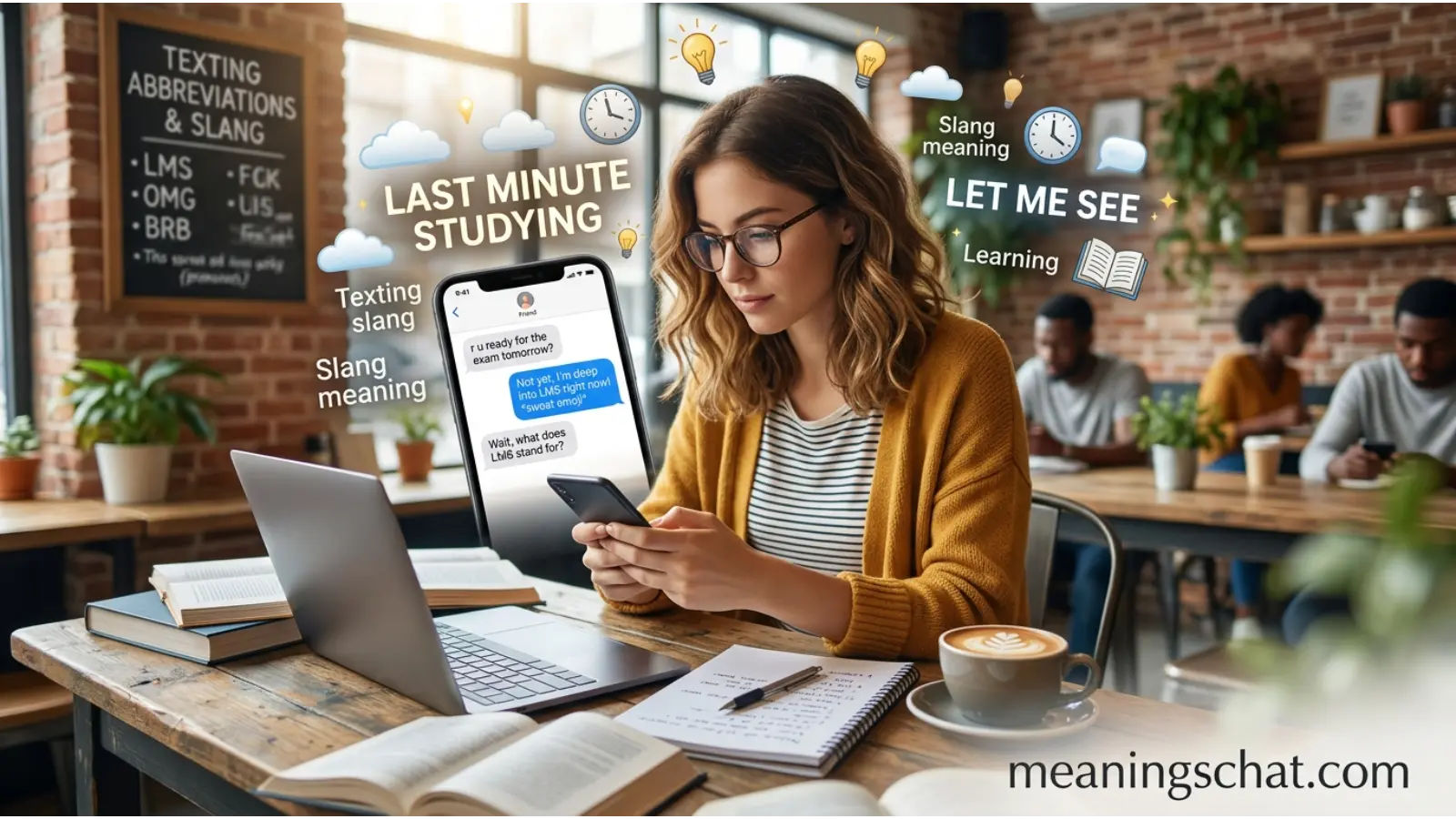
LMS meaning in text can vary depending on the conversation, platform, and context. If you have seen someone type “LMS” in a message, comment, gaming chat, or social media post, it is natural to wonder what they actually mean. Texting slang often changes quickly, and the same abbreviation can have several meanings.
In casual online conversations, LMS commonly means “Like My Status” or “Like My Stuff,” especially on social media. People may use it when asking friends or followers to interact with a post, status, photo, or other content. However, LMS can also have different meanings in education, technology, and other settings, so context matters.
Quick Answer
LMS meaning in text is commonly “Like My Status” or “Like My Stuff.” People use it casually on social media or in messages to ask others to like or engage with their content.
What Does LMS Mean in Text?
When someone sends “LMS” in a casual text or social media conversation, they may be asking you to like something they posted.
The most common texting meanings include:
- Like My Status
- Like My Stuff
- Like My Story, in some social media contexts
- Let Me See, depending on the conversation
- Learning Management System, mainly in education and professional settings
The correct meaning depends on the words surrounding the abbreviation.
For example:
“Posted new pics, LMS!”
Here, LMS most likely means “Like My Stuff” because the person wants people to interact with their new pictures.
On the other hand:
“LMS your assignment when you finish.”
In an educational setting, LMS could refer to a Learning Management System.
This makes context especially important when understanding LMS meaning slang.
LMS Full Form
The LMS full form can have several interpretations. In casual texting, “Like My Status” and “Like My Stuff” are common possibilities.
Here are some popular meanings:
| LMS Meaning | Common Context |
|---|---|
| Like My Status | Social media and texting |
| Like My Stuff | Social media |
| Like My Story | Social media |
| Let Me See | Casual conversations |
| Learning Management System | School, college, work, and online education |
If you are trying to understand what does LMS stand for, look at the entire message before choosing a definition.
Is LMS Rude, Offensive, or Neutral?
LMS is generally neutral and harmless when used to ask someone to interact with social media content.
For example:
“LMS if you like the new outfit!”
This sounds casual and friendly.
However, the tone can change based on how someone uses it. Repeatedly asking people to like posts can sometimes sound pushy or attention-seeking.
For example:
“I posted three times today. LMS right now!”
This may feel demanding, especially if the recipient does not normally interact with the person’s posts.
So, LMS itself is not offensive. The surrounding words and tone determine how the message feels.
Where Is LMS Commonly Used?
You may encounter LMS across several online environments.
Social Media
This is one of the most common places to see LMS.
Someone might post:
“New profile picture! LMS ❤️”
The person is asking followers to like the post.
Text Messages
Friends sometimes use LMS in private chats when discussing social media posts.
Example:
“I uploaded the vacation photos. LMS!”
Group Chats
LMS can appear in group conversations when someone wants friends to support their content.
Example:
“Guys, I just posted my project. LMS if you can!”
Gaming Communities
The abbreviation can occasionally appear in gaming communities, but its meaning depends heavily on the specific community.
School and Work
In education or business, LMS usually means Learning Management System, not a texting phrase.
For example:
“Upload the assignment to the LMS.”
Here, it refers to an online platform used to manage courses, lessons, assignments, or training.
Real-Life Examples of LMS in Texting
Understanding examples makes slang much easier to recognize.
Friendly Example
“Hey! I posted some beach photos. LMS when you get a chance 😊”
Here, LMS means Like My Stuff.
The message sounds friendly because the sender says “when you get a chance” instead of demanding a like.
Casual Example
“New post is up. LMS!”
This is a short social media request.
Supportive Example
“I finally shared my artwork. LMS if you like it!”
The sender wants friends to support their creative work.
Argumentative Example
“You always ask me to LMS, but you never like my posts.”
Here, LMS still refers to liking someone’s content, but the overall tone is frustrated.
Social Media Example
“LMS and I’ll check out your page too.”
The person is suggesting an exchange of engagement.
Gaming Example
“LMS on my latest gaming clip!”
In this case, the sender is probably asking people to like their gaming content.
LMS Meaning in Different Contexts
The abbreviation becomes much easier to understand when you consider where you saw it.
LMS on Social Media
On social platforms, LMS often means:
Like My Status
or
Like My Stuff
The exact phrase may depend on the platform and the person’s habits.
LMS in Education
In schools and colleges, LMS usually means:
Learning Management System
It refers to software that helps teachers and students manage online learning.
An LMS may contain:
- Course materials
- Assignments
- Quizzes
- Grades
- Announcements
- Class discussions
- Student resources
So if your teacher says, “Check the LMS,” they are almost certainly not asking you to like their status.
LMS in Workplace Training
Companies also use learning management systems for employee training.
For example:
“The safety course is available on the LMS.”
Here, LMS has nothing to do with texting slang.
LMS Meaning Slang vs. Let Me See
One possible source of confusion is “Let Me See.”
Some people may use LMS as a shortened form of “Let Me See,” especially in casual digital conversations.
For example:
“LMS what you bought.”
The intended meaning could be:
“Let me see what you bought.”
However, this usage is less universally recognized than some other common abbreviations.
Because of this, you should not automatically assume LMS means “Let Me See.” Read the surrounding conversation first.
Comparison With Similar Slang
Several texting abbreviations can look similar or appear in the same social media conversations.
| Slang | Meaning | Typical Use |
|---|---|---|
| LMS | Like My Status / Like My Stuff | Social media |
| LMK | Let Me Know | Texting |
| LMAO | Laughing My Ass Off | Humor |
| LOL | Laugh Out Loud | Casual texting |
| TBH | To Be Honest | Opinions and conversations |
| DM | Direct Message | Social media |
| PM | Private Message | Online communication |
These abbreviations serve different purposes, so checking the context prevents misunderstandings.
When Should You Avoid Using LMS?
LMS is fine for casual online communication, but it may not fit every situation.
Avoid using it when communicating with:
- Teachers
- Employers
- Clients
- Professional contacts
- People unfamiliar with texting slang
- Someone you have never spoken to before
For example, sending:
“LMS”
to your manager could easily create confusion.
A clearer message would be:
“Could you please like my post if you have a moment?”
Professional communication usually benefits from clear wording instead of unexplained abbreviations.
Polite Alternatives to LMS
If you want someone to interact with your post without sounding demanding, try a more natural phrase.
You could say:
- “Check out my new post when you have time.”
- “I just shared some new photos!”
- “Feel free to like my post.”
- “Let me know what you think.”
- “I’d love your feedback.”
- “Can you check out my latest post?”
These options sound more personal and are easier for everyone to understand.
Why Do People Use LMS?
People use LMS because short abbreviations make online communication faster.
Social media users often have limited space or simply prefer quick expressions. Typing “LMS” takes less effort than writing “Like My Status.”
People may also use it to:
- Encourage engagement
- Get more likes
- Promote a new post
- Support a friend
- Draw attention to content
- Increase social media interaction
Sometimes it is simply a playful way to ask friends for support.
The Impact of LMS on Communication
Texting abbreviations can make conversations quicker and more relaxed.
For close friends, LMS may feel completely natural. It can create a casual online tone and save time.
However, abbreviations can also cause confusion when people interpret them differently.
For example, one person may understand LMS as “Like My Status,” while another may think it means “Learning Management System.”
That is why context plays a major role in digital communication.
Clear communication matters more than saving a few characters.
Is LMS Safe for Social Media?
Yes. LMS is generally safe and harmless to use on social media.
It does not normally contain offensive or inappropriate language. It is simply an abbreviation used to request engagement or express another context-specific meaning.
Still, you should avoid excessive engagement requests. Constantly asking people to like, share, or comment on your posts can sometimes annoy followers.
Use it naturally and consider your audience.
How to Understand LMS From Context
If you are unsure about the meaning, use these clues.
Look at the Conversation
Ask yourself what the person is discussing.
If they are talking about:
- Photos
- Posts
- Stories
- Status updates
LMS probably relates to liking content.
If they are talking about:
- Homework
- Courses
- Teachers
- Online classes
LMS probably means Learning Management System.
Check the Platform
The platform can provide useful clues.
A social media post makes “Like My Status” more likely, while an online classroom makes “Learning Management System” much more likely.
Read the Words Around LMS
The surrounding sentence often reveals the intended meaning.
For example:
“LMS my latest video!”
clearly suggests social media engagement.
Meanwhile:
“Submit your quiz through the LMS.”
clearly refers to an educational platform.
LMS in a Text From a Friend
If a friend sends:
“LMS!”
they probably want you to like something they recently posted.
You can respond with:
“Sure, I’ll check it out!”
or:
“Done 😂”
If you are unsure, simply ask:
“What do you mean by LMS?”
There is nothing wrong with asking for clarification.
LMS in a Text From a Teacher
If a teacher says:
“Your grades are available on the LMS.”
Do not interpret it as “Like My Status.”
In this context, LMS means Learning Management System.
The message likely refers to a digital education platform where you can access grades, assignments, lessons, or other course information.
FAQs:
What does LMS mean in text?
LMS commonly means “Like My Status” or “Like My Stuff” in casual social media conversations. Its meaning can change based on context.
What is the LMS full form in texting?
In texting, LMS can stand for “Like My Status” or “Like My Stuff.” Some people may use it differently, so check the surrounding message.
What does LMS stand for in school?
In education, LMS usually stands for “Learning Management System.” It refers to software used to manage online courses, assignments, lessons, and grades.
Is LMS slang rude?
No. LMS is generally neutral and harmless. However, repeatedly asking people to like your content may sound pushy depending on the situation.
What does LMS mean on social media?
On social media, LMS often means “Like My Status” or “Like My Stuff.” People use it to encourage followers or friends to engage with their content.
Can LMS have other meanings?
Yes. LMS can mean different things depending on the context. Common alternatives include “Let Me See” and “Learning Management System.”
Conclusion
Understanding LMS meaning in text becomes simple when you consider the context. In casual social media conversations, LMS commonly means “Like My Status” or “Like My Stuff.” People use it to ask friends and followers to interact with their posts, photos, videos, or other content.
However, LMS does not always refer to texting slang. In schools, colleges, and workplaces, it commonly means Learning Management System. In some casual conversations, it may also represent “Let Me See.”
The best way to understand what does LMS stand for is to examine the topic, platform, and surrounding words. Use the abbreviation with friends and on social media, but choose clearer language in professional or formal conversations.