Learning to swim is an important life skill that offers benefits beyond recreation. It helps people become more comfortable in the water, develop physical fitness and understand how to respond to different aquatic situations. For children, swimming lessons provide an opportunity to build confidence from an early age. Adults who have never learned to swim can also benefit from structured instruction.
Choosing a suitable swim school in Singapore is an important part of the learning process. A good programme should match the swimmer’s age, ability and comfort level rather than expecting everyone to progress at the same pace. Understanding how lessons are organised, what instructors teach and what facilities are available makes it easier to choose a programme that meets your needs. Those looking for qualified instruction can consider Isplash Swim School – Certified Swimming Coaches for Kids & Adults Led by Coach Derek Chua.
Why Structured Swimming Lessons Matter
Some people learn basic swimming skills through family members or informal practice. While this can be a useful introduction, structured lessons provide a more organised way to develop technique and water confidence.
Swimming instructors introduce skills in a gradual sequence. Beginners typically start by becoming familiar with the pool environment, learning how to control their breathing and practising basic floating movements. Once these foundations become more comfortable, lessons progress to kicking, arm movements and coordinated strokes.
This approach helps learners develop proper habits from the beginning. Incorrect body positioning or breathing techniques can become difficult to change if they are repeated over time. An instructor can observe these movements and provide corrections suited to the swimmer’s ability.
Structured lessons also introduce important water safety practices. Learners become familiar with entering and leaving the pool safely, following instructions and recognising situations where they need assistance. Swimming lessons are not a substitute for supervision or other safety measures, but they help develop awareness and essential skills.
What Happens During a Beginner Swimming Lesson?
The first lesson usually focuses on assessing the learner’s experience and comfort in the water. An instructor may ask whether the student has attended lessons before, whether they are comfortable putting their face underwater and whether they have any particular concerns.
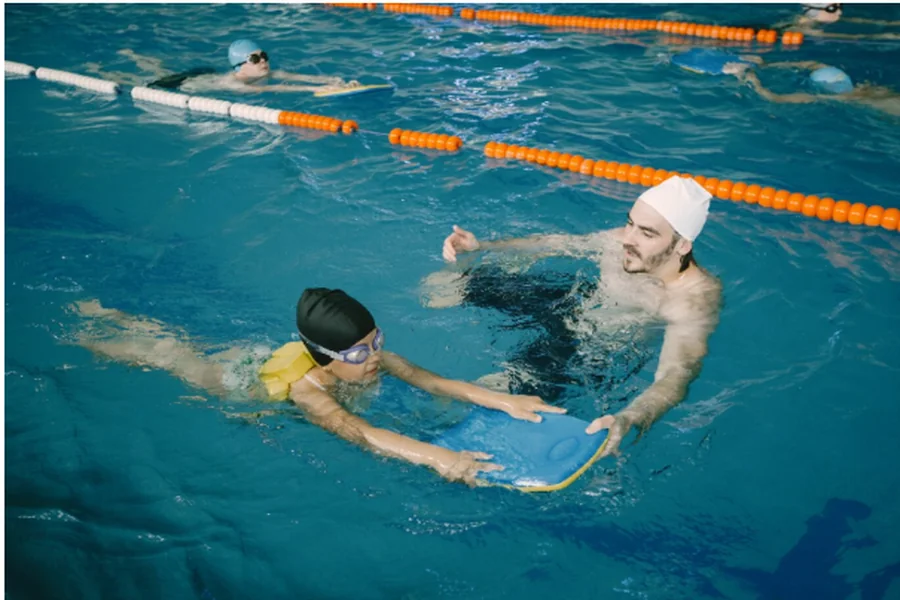
Beginners are often introduced to simple exercises before attempting complete strokes. These may include entering the pool, holding the pool edge, practising breathing and learning to float with support. The instructor may also demonstrate how to move the legs while maintaining a stable body position.
As learners become more confident, lessons introduce coordinated movements. Freestyle is commonly taught as one of the foundational strokes because it helps students practise breathing, kicking and arm coordination. Other strokes may be introduced as the learner develops better control and endurance.
Progress varies between individuals. Someone who is comfortable in the water but has limited technique might advance differently from a beginner who feels anxious about putting their face underwater. A suitable programme should allow enough time for each student to develop the necessary skills.
Swimming Programmes for Children and Adults
Swim schools generally offer different programmes according to age and ability. Children’s lessons often focus on water familiarisation, basic movement and confidence before progressing to more advanced techniques.
Young learners benefit from simple instructions, demonstrations and activities that keep them engaged. Instructors should also understand how to manage different attention spans and respond appropriately when a child becomes hesitant or distracted.
Adult swimming lessons may follow a different approach. Adults often have clearer personal goals, such as learning basic survival skills, improving fitness or becoming comfortable swimming independently. Some may also have concerns about deep water or previous negative experiences.
For adults who are nervous, gradual practice is particularly important. Starting in a suitable pool area and working on breathing and floating can make the learning process less intimidating. Instructors should avoid rushing learners into exercises they are not ready to attempt.
Before enrolling, check whether the swim school separates students by age and ability. A programme designed for young children might not provide the right learning environment for an adult beginner, even if both groups are working on basic swimming skills.
What to Look for in a Swimming Instructor
An instructor’s teaching approach can influence how comfortable and motivated a learner feels. Clear explanations, patient guidance and constructive feedback help students understand what they need to improve.
Relevant qualifications and experience should also be considered. Ask about the instructor’s swimming teaching credentials, experience with the intended age group and approach to water safety. Someone who regularly teaches young children, for example, should be familiar with age-appropriate instruction and supervision.
Class size is another important factor. Smaller groups generally allow instructors to observe each student more closely and provide individual feedback. Larger classes may offer a different learning experience, so parents and adult learners should understand how much direct guidance is included.
Understanding Pool Facilities and Safety Measures
The swimming environment should be suitable for the learner’s age and ability. Beginners often benefit from designated shallow areas where they can stand comfortably and practise basic movements without immediately facing deep water.
Check the condition of the pool and surrounding facilities. The water should be properly maintained, changing areas should be clean, and access to the pool should be managed safely. Parents should also understand the school’s supervision arrangements, particularly for younger children.
Ask how the school handles emergencies and what safety procedures are followed during lessons. The presence of trained staff, appropriate rescue equipment and clear pool rules are important considerations.
Parents should not assume that a child who attends swimming lessons is safe to swim without supervision. Even children who have developed basic swimming skills require close adult supervision around pools and other bodies of water.
Final Thoughts
A suitable swimming school gives learners a structured environment to develop water confidence, technique and essential safety awareness. Whether the programme is intended for a young child or an adult beginner, the lessons should reflect the student’s ability and allow room for gradual improvement.
Before enrolling, review the instructor’s experience, class size, pool facilities, safety arrangements and programme structure. Finding the right fit helps make swimming lessons a more positive and productive experience.