Inverse meaning is a term you may come across while reading a math lesson, scrolling through social media, or chatting with someone online. At first, it can seem confusing because people use the word in different situations. You might wonder if it is slang, a texting shortcut, or just a regular English word.
The truth is that inverse is not a modern internet slang term. It is a standard English word that people sometimes use casually in text messages, online discussions, gaming communities, and educational conversations. Once you understand its meaning, you will find it much easier to follow conversations where someone says something is the “inverse” of something else.
What Does Inverse Mean in Text?
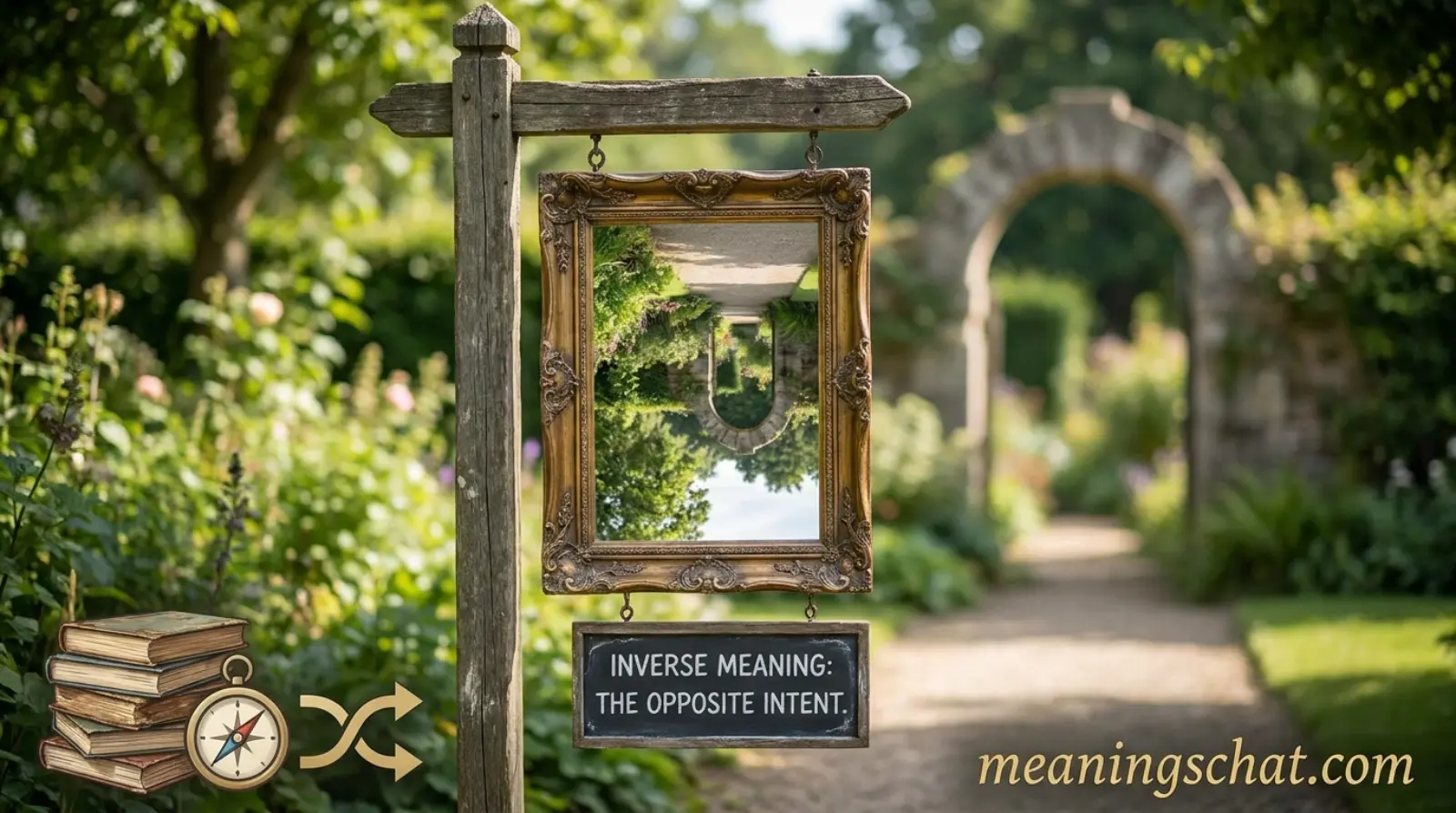
The word inverse means the opposite, reverse, or opposite effect of something else.
In everyday texting, people use inverse when they want to describe a situation that happens in the opposite way.
For example:
- “The inverse happened today.”
- “That’s the inverse of what I expected.”
- “Our schedules are inverse.”
Unlike abbreviations such as LOL or BRB, inverse is a complete English word. It does not have a hidden full form.
Simple Definition
Inverse = Opposite or reversed version of something.
Common Meanings of Inverse
The word can have several meanings depending on the conversation.
1. Everyday English
It means the opposite or reverse.
Example:
“I wanted coffee, but my friend ordered tea. We have inverse tastes.”
2. Mathematics
In math, inverse refers to an operation that reverses another operation.
Examples include:
- Addition and subtraction
- Multiplication and division
- Square and square root
3. Science
Scientists often use inverse to explain relationships.
Example:
“As temperature increases, pressure decreases. They have an inverse relationship.”
4. Online Conversations
People sometimes use inverse simply to say something turned out completely opposite.
Example:
“I expected rain, but the inverse happened.”
Where Is Inverse Used?
Although inverse is not internet slang, people regularly use it across many online platforms.
Text Messages
Friends use it when talking about opposite situations.
Example:
“Our sleep schedules are totally inverse.”
Snapchat
Snapchat users sometimes use inverse while discussing daily life or funny situations.
Example:
“My energy is inverse to yours today.”
People may include inverse in captions or comments.
Example:
“My confidence is inverse to my exam score.”
TikTok
Creators often use the word while explaining trends, opinions, or comparisons.
Example:
“The inverse happened after I tried this hack.”
Discord
Gamers and tech communities frequently use inverse when discussing strategies or game mechanics.
Example:
“Our roles are inverse this round.”
People often use inverse in discussions about science, technology, philosophy, and everyday life.
School and College
Students regularly encounter inverse in:
- Mathematics
- Physics
- Economics
- Statistics
- Computer Science
Is Inverse Popular Among Teenagers?
Yes, but not as a slang word.
Teenagers usually learn inverse in school first. Later, they naturally use it in conversations to describe opposite situations.
You are more likely to see inverse in:
- Student chats
- Homework discussions
- Gaming communities
- Educational videos
- Science discussions
Examples of Inverse in Conversation
Here are some natural examples of how people use inverse.
Example 1
Alex: I thought you’d love the movie.
Emma: The inverse happened. I didn’t enjoy it.
Example 2
Jake: Are you awake?
Ryan: Yep. My sleep schedule is the inverse of yours.
Example 3
Sara: Everyone liked the update.
Mia: Funny enough, the inverse happened in my group.
Example 4
Teacher: What is the inverse of multiplication?
Student: Division.
Example 5
Chris: You became more confident after losing?
Ben: Yeah. The inverse of what most people expect.
Example 6
Lily: Our personalities are so different.
Anna: They’re almost inverse.
Example 7
Tom: I expected traffic today.
Jack: The inverse happened. The roads were empty.
When to Use Inverse and When Not to Use It
Knowing when to use inverse helps you sound natural.
Use Inverse When
- Talking about opposite situations.
- Explaining math concepts.
- Discussing science.
- Comparing two different outcomes.
- Writing educational content.
- Describing reversed relationships.
Examples:
- “The inverse happened.”
- “That’s the inverse result.”
- “They have inverse personalities.”
Avoid Using Inverse When
Do not use inverse if a simpler word like opposite sounds more natural.
Instead of:
“The inverse color.”
Say:
“The opposite color.”
Also avoid using inverse if your audience may not understand the word. Younger children or people unfamiliar with math may find “opposite” easier.
Is Inverse Friendly, Casual, Professional, or Flirty?
The meaning changes slightly depending on the conversation.
Casual
Yes.
Friends often use inverse naturally.
Example:
“Our weekends are inverse.”
Friendly
Yes.
It works perfectly in everyday conversations.
Professional
Yes.
Inverse is widely accepted in professional writing, presentations, reports, and academic discussions.
Flirty
Not usually.
Inverse does not have a romantic meaning.
Someone could jokingly say:
“We’re inverse personalities, but somehow we work together.”
Even then, the word itself is not flirty.
Does Inverse Have Different Meanings?
Yes.
Here are the most common meanings.
Inverse in Mathematics
A mathematical operation that reverses another operation.
Examples:
- Addition ↔ Subtraction
- Multiplication ↔ Division
Inverse in Logic
A statement formed by changing both the condition and the result.
Inverse Relationship
When one thing increases while another decreases.
Example:
“The price and demand often have an inverse relationship.”
Inverse Function
A function that reverses another function.
Students commonly learn this in algebra.
Inverse in Daily Conversation
Simply means the opposite or reverse.
Is Inverse a Slang Word?
No.
Inverse is a standard English vocabulary word.
Unlike slang such as:
- LOL
- SMH
- IMO
- BRB
Inverse has existed in English for centuries and is used in both casual and formal communication.
Why Do People Use Inverse Instead of Opposite?
Sometimes inverse sounds more precise.
Compare these examples.
Opposite:
“Our opinions are opposite.”
Inverse:
“Our opinions have an inverse relationship.”
The second sentence sounds more formal and is often preferred in education and science.
Similar Slang Words or Alternatives
Although inverse is not slang, these words have related meanings.
Opposite
Means completely different.
Example:
“My opinion is the opposite.”
Reverse
Means moving backward or changing direction.
Example:
“Reverse the order.”
Contrary
Means conflicting or completely different.
Example:
“His actions were contrary to expectations.”
Flip Side
An informal phrase that means the other perspective.
Example:
“Now let’s look at the flip side.”
Backward
Means moving in the reverse direction.
Example:
“He walked backward.”
Common Mistakes People Make
Many people misunderstand inverse.
Here are a few common mistakes.
Thinking It Is a Text Abbreviation
Inverse is a normal English word.
It is not an acronym.
Using It Everywhere
Sometimes “opposite” sounds simpler.
Choose the word that fits naturally.
Confusing It with Opposite
Inverse and opposite are similar, but inverse often describes a relationship or reversal instead of complete difference.
Why Is Inverse Important in School?
Students encounter inverse in many subjects.
Mathematics
Inverse operations.
Physics
Inverse proportional relationships.
Chemistry
Scientific formulas.
Economics
Supply and demand relationships.
Computer Science
Inverse functions and algorithms.
Learning the word early helps students understand many academic topics later.
Is Inverse Still Popular in 2025?
Yes.
Inverse continues to appear regularly in:
- Educational videos
- TikTok explainers
- Reddit discussions
- School assignments
- Scientific articles
- Professional presentations
- Everyday conversations
Although it is not a trendy slang word, it remains a commonly used English term.
FAQs
What does inverse mean from a girl?
It means exactly the same thing as when anyone else uses it. It simply describes something that is opposite or reversed.
Is inverse slang rude?
No. Inverse is a polite and standard English word.
Can I use inverse in professional chats?
Yes. It is perfectly suitable for emails, meetings, reports, and workplace discussions.
Does inverse have any flirty meaning?
No. The word itself is not romantic or flirty. Any romantic meaning depends on the overall conversation, not the word.
Is inverse still popular in 2025?
Yes. It remains widely used in education, science, business, and everyday conversations online.
Conclusion
Inverse means the opposite or reverse of something. Although many people first encounter it in mathematics, it is also a common English word used in text messages, social media, science, and everyday conversations. It is friendly, professional, and easy to use when describing opposite situations or reversed relationships.
The next time you see someone mention the “inverse” of an event or idea, you will know they are talking about something that happened in the opposite way.