If you’ve ever been scrolling through a group chat or reading a quick update on social media and suddenly saw “TBU” without any explanation, you’re not alone. Many people pause for a second and wonder what it actually means. At first glance, it looks like random letters, but in online conversations, it carries a simple purpose.
Slang like this is used everywhere—Instagram comments, WhatsApp chats, Snapchat stories, and even work updates. It helps people communicate faster without writing full sentences. In this article, you’ll clearly understand what “TBU” means, how people use it in daily chats, and when it fits naturally in conversations. You’ll also see real examples so you can use it confidently without confusion.
What Does TBU Mean in Text?
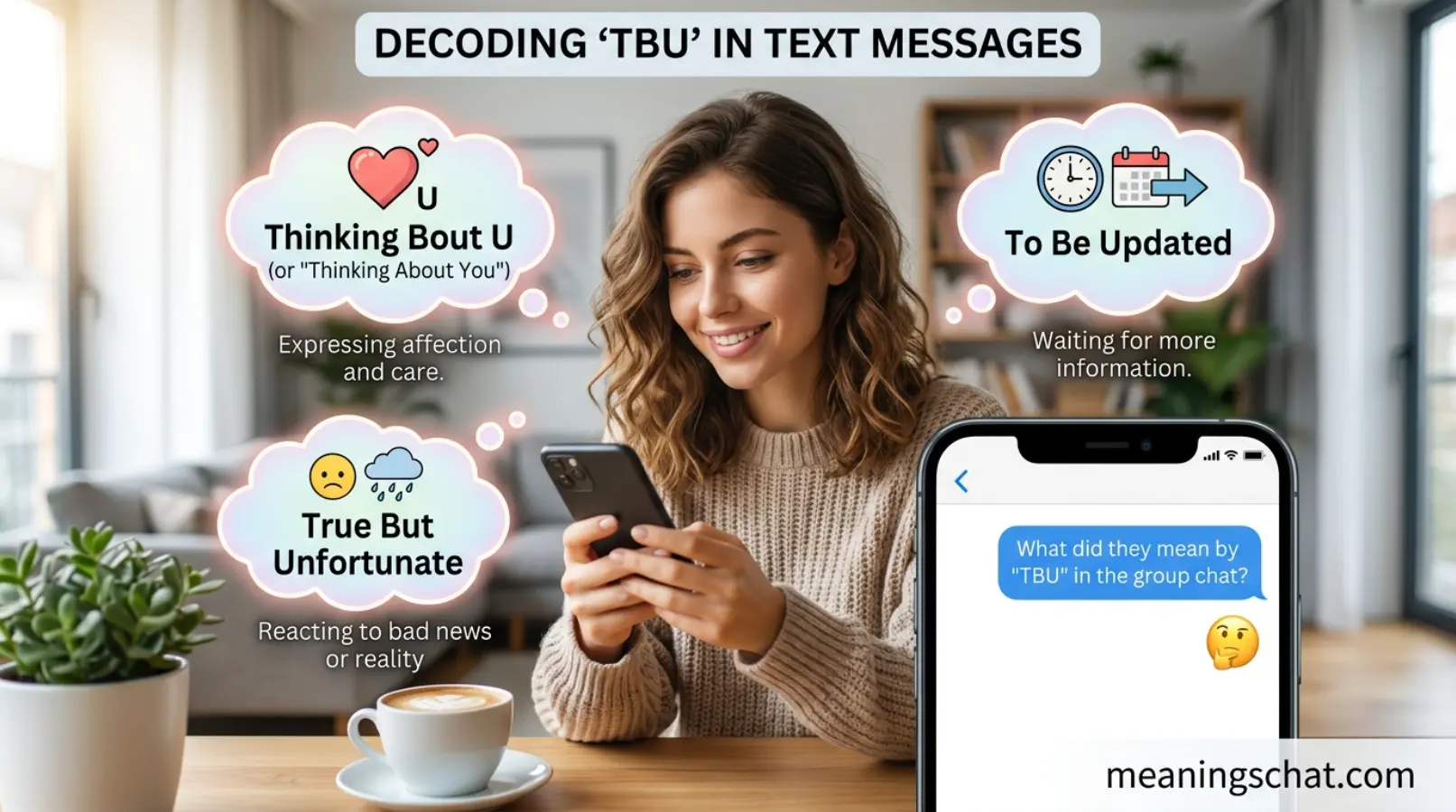
“TBU” stands for “To Be Updated.”
It is used when something is not finalized yet and more information will be shared later. People use it to show that a situation, detail, or announcement is still in progress and will be clarified in the future.
In simple words, when someone writes “TBU,” they are basically saying:
👉 “We will update you later.”
Other possible meanings (less common)
While “To Be Updated” is the most widely accepted meaning, in rare contexts, TBU can also be interpreted as:
- To Be Confirmed/Updated (similar usage in planning contexts)
- To Be Understood (very uncommon, informal usage)
However, in everyday texting and social media, “To Be Updated” is the standard meaning.
This slang is especially useful when someone doesn’t have complete information yet but still wants to keep communication short and clear.

Where Is TBU Used?
“TBU” is commonly used across digital communication platforms where quick updates matter.
Social Media Platforms
On Instagram, TikTok, and Facebook, users often write TBU in captions or comments when they are still planning something. For example, a creator might post a teaser and write details as TBU.
Messaging Apps
On WhatsApp, Messenger, and Telegram, people use TBU in group chats or personal chats when plans are not finalized yet.
Work and Project Communication
In informal work chats or team updates, TBU is used when a deadline, schedule, or detail is still pending.
Gaming Communities
Gamers often use TBU in Discord or in-game chats when events, timings, or updates are not confirmed yet.
General Online Conversations
It is widely used by teens, students, and young adults who prefer short and fast communication.
Overall, TBU is most popular in casual digital conversations, not formal writing.

Examples of TBU in Conversation
Here are some realistic examples showing how “TBU” appears in everyday chats:
Plan Update
Friend 1: “What time is the party tomorrow?”
Friend 2: “Timing TBU, I’ll let you know tonight.”
Event Planning
Group Chat: “Where are we meeting?”
Admin: “Location TBU, waiting for confirmation.”
Social Media Post
Caption: “Big announcement coming soon… details TBU 👀”
Work Chat
Colleague: “Is the meeting at 3 PM?”
Manager: “Agenda TBU, will confirm shortly.”
Travel Plan
Friend: “Are we going on Saturday or Sunday?”
Friend 2: “Date TBU, depends on tickets.”
Gaming Update
Player: “When is the next tournament?”
Admin: “Schedule TBU, stay tuned.”
Casual Chat
Person A: “Are you free tonight?”
Person B: “TBU, might be busy but I’ll update you.”
These examples show that TBU is mainly used when something is pending or not finalized yet, but communication is still ongoing.

When to Use and When Not to Use TBU
Understanding tone is important when using slang like TBU.
When to Use TBU
✔ When plans are not confirmed yet
✔ When sharing early updates or announcements
✔ In casual chats with friends or groups
✔ On social media for teasers or upcoming news
✔ In gaming or online community discussions
It works best when you want to keep things short and flexible.
When Not to Use TBU
❌ In formal emails or professional documents
❌ In academic writing or reports
❌ When clear information is already available
❌ With people who may not understand internet slang
Tone of TBU
- Casual ✔
- Neutral ✔
- Professional (informal work chats only) ✔
- Formal writing ✘
So, while TBU is very useful, it should be avoided in serious or official communication where clarity is required.

Similar Slang Words or Alternatives
If you want to express the same idea as “TBU,” here are some similar slang terms:
TBC (To Be Confirmed)
Used when something is not finalized but expected to be confirmed soon.
TBD (To Be Decided / To Be Determined)
Used when a decision has not been made yet.
Pending
A simple word meaning something is still waiting for approval or update.
WIP (Work In Progress)
Used when something is still being developed or worked on.
Stay Tuned
A casual phrase used to tell people that updates will come later.
These alternatives are often used depending on the situation, but TBU remains one of the simplest and most direct options.
FAQs
What does TBU mean from a girl?
It means the same thing—“To Be Updated.”
Is TBU slang rude?
No, TBU is not rude. It is neutral and simply indicates that information will be shared later.
Can I use TBU in professional chats?
Yes, but only in informal workplace communication. In formal emails, it is better to use full phrases like “to be updated” or “to be confirmed.”
Does TBU have any flirty meaning?
No, TBU does not have any flirty or romantic meaning. It is purely informational slang.
Is TBU still popular in 2025?
Yes, TBU is still used in 2025, especially in texting, social media, and online communities where short communication is preferred.
Conclusion
“TBU” is a simple internet slang that stands for “To Be Updated.” It is used when something is not finalized yet and more information will come later. You’ll often see it in chats, social media posts, gaming communities, and informal group discussions. It helps people communicate quickly without writing long explanations. However, it should be avoided in formal or professional writing where clarity is important. Once you understand its meaning and tone, you can easily use it in the right situations and read online conversations more confidently.

William Jones is a dedicated writer at Meaningschat who specializes in explaining text slang, abbreviations, and online language trends. He enjoys creating simple, engaging, and reader-friendly content that helps people understand modern digital communication with ease. His writing style is clear, conversational, and informative, making complex internet terms easy for everyone to follow. In his free time, William loves exploring social media trends, reading about digital culture, and discovering how online language continues to evolve.