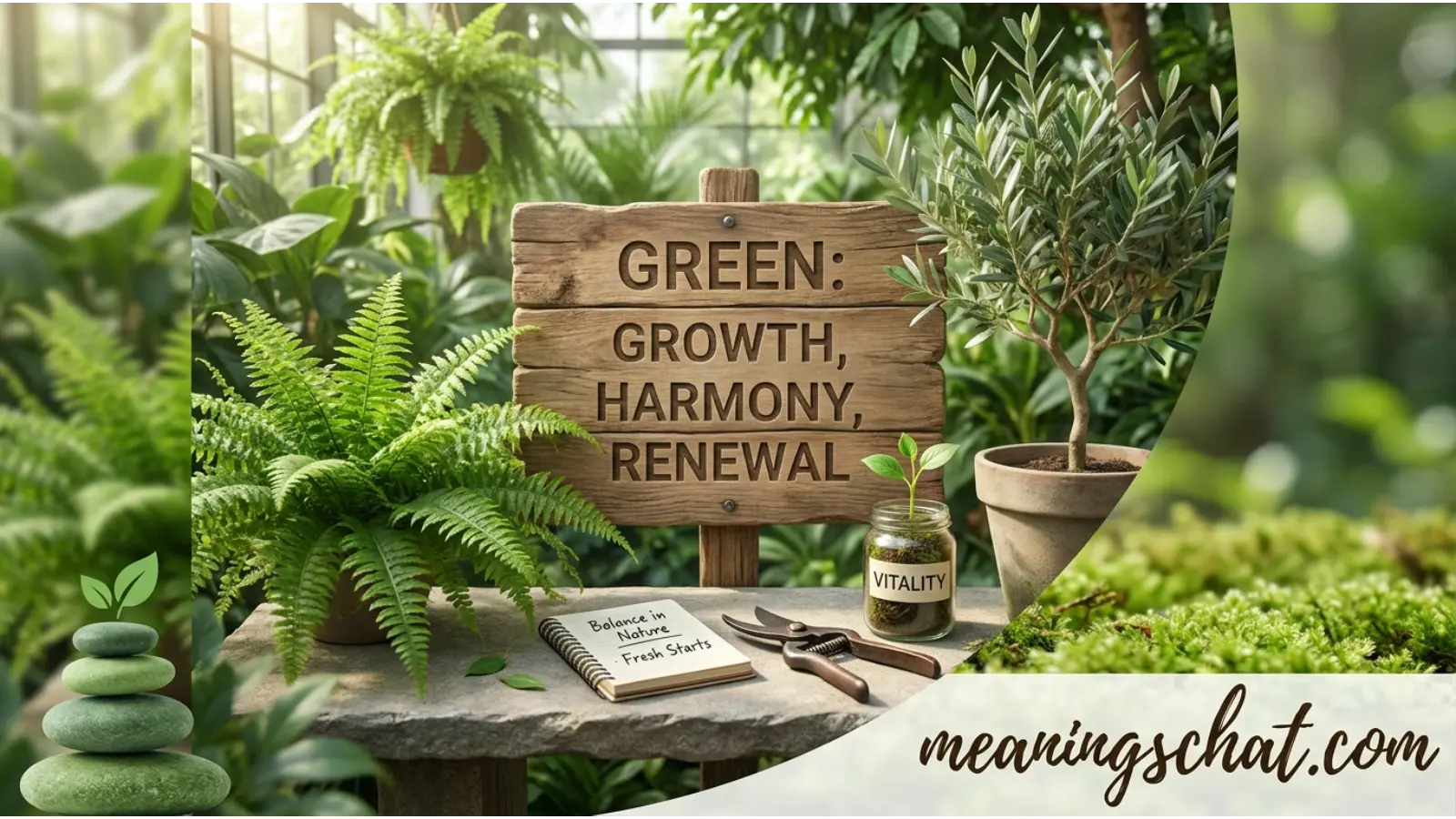
Green color meaning often connects to nature, growth, peace, balance, and renewal. It is one of the most common colors in the natural world, from fresh leaves and grass to forests and plants. Because of this strong connection with nature, green can create feelings of freshness, calmness, and harmony.
People search for the green color meaning because this color appears everywhere in daily life. You may notice green in clothing, home decoration, logos, artwork, flags, gemstones, social media designs, and even dreams. Its meaning can also change depending on culture, situation, shade, and personal experience.
Green can represent positive ideas such as health, prosperity, hope, and new beginnings. However, it can also suggest jealousy, envy, or inexperience in certain situations.
Quick Answer:
Green commonly symbolizes nature, growth, renewal, balance, health, peace, and prosperity. In some contexts, it can also represent jealousy, envy, or inexperience.
What Does Green Color Mean?
The green color meaning is strongly connected to nature and life. Plants use green leaves to capture sunlight and support growth, making the color a natural symbol of renewal and vitality.
Green often communicates a sense of balance. It sits between warm and cool colors on the color wheel, which can give it a visually balanced quality.
Common meanings associated with green include:
- Nature and the environment
- Growth and renewal
- Peace and calmness
- Health and wellness
- Prosperity and money
- Hope and fresh beginnings
- Balance and harmony
- Safety and permission
- Jealousy or envy
- Youth and inexperience
The exact meaning depends heavily on context. A green plant can suggest life and growth, while a green-eyed expression can suggest jealousy.
Green Color Meaning in Psychology
Color psychology explores how colors can influence emotions, perceptions, and behavior. Green frequently creates associations with calmness, nature, freshness, and stability.
Many people find natural shades of green relaxing because they remind them of trees, gardens, forests, and open spaces. This explains why green appears frequently in wellness spaces, environmental branding, and interior design.
Green can also communicate stability and reassurance. A soft green may feel peaceful, while a bright green can feel energetic and youthful.
However, color psychology does not work like a universal dictionary. People can respond differently to colors based on culture, memories, personal preferences, and circumstances.
Green Color Meaning in Different Shades
Not every shade of green communicates the same message. Easy, dark, bright, and muted greens can create very different impressions.
Light Green
Soft green often represents:
- Freshness
- Youth
- Spring
- Growth
- New beginnings
- Gentleness
It can create a soft and cheerful appearance.
Dark Green
Dark green commonly suggests:
- Stability
- Wealth
- Elegance
- Maturity
- Security
- Connection with nature
Businesses sometimes use dark green to create a sophisticated and trustworthy visual identity.
Emerald Green
Emerald green has a rich and luxurious appearance. It can symbolize:
- Wealth
- Success
- Elegance
- Luxury
- Confidence
Its jewel-like appearance makes it popular in fashion, jewelry, and interior design.
Olive Green
Olive green often creates associations with:
- Nature
- Simplicity
- Peace
- Military traditions
- Earthiness
It has a muted appearance that can feel practical and grounded.
Neon Green
Neon green is much more energetic. It can suggest:
- Excitement
- Youth
- Creativity
- Energy
- Boldness
Because it attracts attention quickly, designers often use it as an accent rather than a dominant color.
What Does Green Symbolize?
Green carries many symbolic meanings around the world. Some of its strongest associations come from the natural environment.
Growth
Plants grow, renew themselves, and produce new leaves. For this reason, green often represents personal development, progress, and positive change.
Nature
Green is perhaps most strongly associated with nature. Forests, grass, leaves, and many plants all contribute to this connection.
Renewal
Green can represent starting fresh after a difficult period. It can symbolize spring, regeneration, and new opportunities.
Peace and Balance
Soft greens can create a peaceful visual feeling. The color frequently appears in spaces designed for relaxation and wellness.
Prosperity
Green also has a strong association with money and financial success, particularly in the United States because of the color of U.S. currency.
Jealousy
Green has a less positive association with jealousy and envy. Expressions such as “green with envy” use the color to describe strong feelings of jealousy.
Green Color Meaning in Love
In relationships, green can have several meanings depending on the situation.
Positive interpretations may include:
- Growth together
- Emotional balance
- Fresh beginnings
- Stability
- Loyalty
- Harmony
For example, someone who chooses green for a romantic setting might associate it with peaceful growth and emotional comfort.
Green can also have a negative romantic meaning because people sometimes connect it with jealousy or possessiveness.
So, the green color meaning in love depends on the shade and surrounding context.
Green Color Meaning in Friendship
Green can symbolize a healthy and supportive friendship.
It may represent:
- Trust
- Growth
- Support
- Fresh energy
- Understanding
- Emotional balance
A green-themed gift or message may communicate positive feelings, especially when the person already associates green with nature or peace.
Green Color Meaning in Business and Branding
Green plays an important role in branding because companies can use it to communicate specific ideas.
Brands related to environmental causes often choose green because consumers naturally connect it with plants, forests, and sustainability.
Green also works well for industries associated with:
- Health
- Wellness
- Organic products
- Agriculture
- Finance
- Environmental services
- Outdoor activities
- Natural products
A company using green may want its audience to think about freshness, trust, health, sustainability, or growth.
The shade matters too. A bright green can appear youthful and energetic, while a deep green can feel established and premium.
Green Color Meaning in Different Cultures
Color symbolism can change significantly across cultures.
In many Western contexts, green commonly connects with nature, growth, health, luck, and environmental awareness. Green can also represent jealousy.
In Ireland, green has a strong cultural and historical association and is widely recognized as an important national color.
Those Islam, green has historically held an important symbolic place and is associated with paradise in Islamic tradition.
The some cultures, green can also connect with fertility, renewal, or prosperity.
This shows why you should consider cultural context before assigning one universal meaning to green.
Green Color Meaning in Nature
Nature provides the strongest foundation for green symbolism.
Leaves and plants use chlorophyll, which gives many plants their characteristic green appearance. This everyday visual experience makes green strongly associated with life and the natural environment.
Green landscapes can also create feelings of freshness and openness. A walk through a forest or park can feel very different from spending time surrounded by concrete and artificial surfaces.
Because of this connection, green often appears in environmental campaigns and products marketed around natural living.
Green Color Meaning in Fashion
Green can make a fashion statement ranging from subtle and natural to bold and dramatic.
Different shades can create different impressions:
- Sage green can look soft and sophisticated.
- Forest green can appear classic and elegant.
- Emerald green can look luxurious.
- Olive green can feel casual and earthy.
- Lime green can appear playful and energetic.
- Mint green can create a fresh and youthful appearance.
Green also pairs well with neutral colors such as white, beige, black, gray, and brown.
Green Color Meaning in Art and Design
Artists and designers use green to create visual balance and emotional atmosphere.
Green can represent forests, gardens, springtime, growth, healing, or natural beauty. In abstract artwork, it may represent calmness, emotional balance, or renewal.
Designers also use green strategically. A muted green can create a relaxing atmosphere, while a bright green can draw attention to important elements.
The surrounding colors can change its effect. Green paired with blue may feel peaceful, while green combined with yellow can feel brighter and more energetic.
Green Color Meaning in Dreams
People often wonder about the green color meaning when they see green in a dream.
Dream interpretation is subjective rather than scientifically fixed. Still, green is commonly interpreted symbolically as:
- Growth
- Healing
- Hope
- Renewal
- Jealousy
- New opportunities
- Emotional development
The meaning can depend on what happened in the dream. Seeing a beautiful green forest may create a very different interpretation from seeing an unpleasant green object.
Your personal experiences and emotions matter when interpreting dream symbolism.
Positive Green Color Meanings
Green has many positive associations, including:
- Growth
- Health
- Hope
- Nature
- Renewal
- Peace
- Balance
- Prosperity
- Freshness
- Harmony
- Good fortune
These meanings explain why green frequently appears in wellness, environmental, and nature-focused designs.
Negative Green Color Meanings
Green does not always communicate something positive.
Depending on the context, it may symbolize:
- Jealousy
- Envy
- Inexperience
- Immaturity
- Greed
- Possessiveness
For example, the phrase “green with envy” gives the color a negative emotional meaning.
This does not mean green itself is negative. Context determines the message.
Green Color Meaning Compared With Other Colors
| Color | Common Meaning |
|---|---|
| Green | Nature, growth, balance, health |
| Blue | Calmness, trust, stability |
| Red | Passion, energy, danger |
| Yellow | Happiness, optimism, attention |
| Purple | Creativity, luxury, spirituality |
| Orange | Energy, warmth, enthusiasm |
| White | Purity, simplicity, peace |
| Black | Power, mystery, sophistication |
Green stands out because it combines strong associations with nature, growth, and balance.
Why Do People Like Green?
Many people enjoy green because it reminds them of natural environments.
Green can visually connect people with:
- Trees
- Plants
- Gardens
- Fresh grass
- Mountains
- Forests
- Springtime
- Outdoor spaces
Personal preference also plays a major role. Someone who enjoys nature may naturally develop a positive relationship with green.
Fashion, culture, childhood experiences, and memories can influence color preferences too.
When Should You Use Green?
Green works particularly well when you want to communicate ideas such as:
- Freshness
- Natural products
- Health
- Growth
- Sustainability
- Peace
- Stability
- Renewal
For websites, green can work especially well for environmental organizations, wellness brands, gardening businesses, organic products, and outdoor services.
Choose the shade carefully. A neon green creates a completely different impression from a soft sage green.
Real-Life Examples of Green Color Meaning
Friendly Example
“I chose a green notebook because green makes me think of nature and fresh starts.”
This example uses green in a positive and personal way.
Casual Example
“I love this green jacket. It gives the whole outfit a fresh look.”
Here, green describes a fashion choice and its visual effect.
Emotional Example
“After a difficult year, she started using green decorations because they reminded her of growth and new beginnings.”
The color represents renewal and positive change.
Social Media Example
“Green is my favorite color because it gives my feed a calm, natural vibe.”
Here, green communicates an aesthetic and emotional feeling.
Negative Example
“He became green with envy when his friend received the promotion.”
In this familiar expression, green represents jealousy.
Green Color Meaning in Communication
Colors can communicate ideas without words. Green can make a design, message, outfit, or environment feel more natural and peaceful.
However, color alone rarely tells the entire story.
The audience, cultural background, shade, surrounding colors, and situation all influence interpretation.
For example, a green check mark often communicates that something is approved or successful, while green in a romantic context might suggest growth or jealousy.
Understanding context helps you interpret the intended message more accurately.
Is Green a Positive Color?
Green is generally viewed positively, especially when associated with nature, health, growth, peace, and renewal.
Still, no color has one universal meaning.
Green can communicate positive ideas such as hope and prosperity, but it can also represent jealousy or envy in certain expressions.
The most accurate green color meaning comes from looking at how and where the color appears.
FAQs:
What is the main green color meaning?
Green commonly represents nature, growth, renewal, health, peace, balance, and prosperity.
What does green symbolize emotionally?
Green can symbolize calmness, harmony, hope, renewal, and emotional balance. In some situations, it can also represent jealousy or envy.
Is green a lucky color?
Green is considered lucky in some cultures and traditions. Its association with nature, prosperity, and good fortune also contributes to this perception.
What does green mean in love?
Green can represent growth, harmony, stability, and fresh beginnings in relationships. In some contexts, it can also symbolize jealousy.
What does dark green represent?
Dark green often represents stability, wealth, maturity, elegance, security, and a strong connection with nature.
Why is green associated with nature?
Green appears extensively in leaves, grass, plants, and forests. This strong visual connection makes green one of the most recognizable colors associated with nature.
Conclusion
The green color meaning is rich and flexible. It commonly represents nature, growth, renewal, health, peace, balance, hope, and prosperity. At the same time, green can represent jealousy, envy, or inexperience in specific expressions and situations.
The shade also matters. Light green can feel fresh and youthful, dark green can suggest stability and wealth, and emerald green can create a luxurious impression.
Ultimately, green gets its meaning from context. Its use in fashion, branding, relationships, art, dreams, and everyday communication can produce different interpretations. Understanding the situation around the color gives you a much clearer idea of the message it is meant to convey.