Kk meaning in text have you ever received a message saying “kk” and wondered what the person really meant? Maybe you made plans with a friend, shared some exciting news, or sent a message to someone you like, and they replied with just two letters.
At first, it might seem confusing, but this little abbreviation is common in everyday online conversations. Understanding it can help you reply naturally without overthinking a simple message.
Quick Answer:
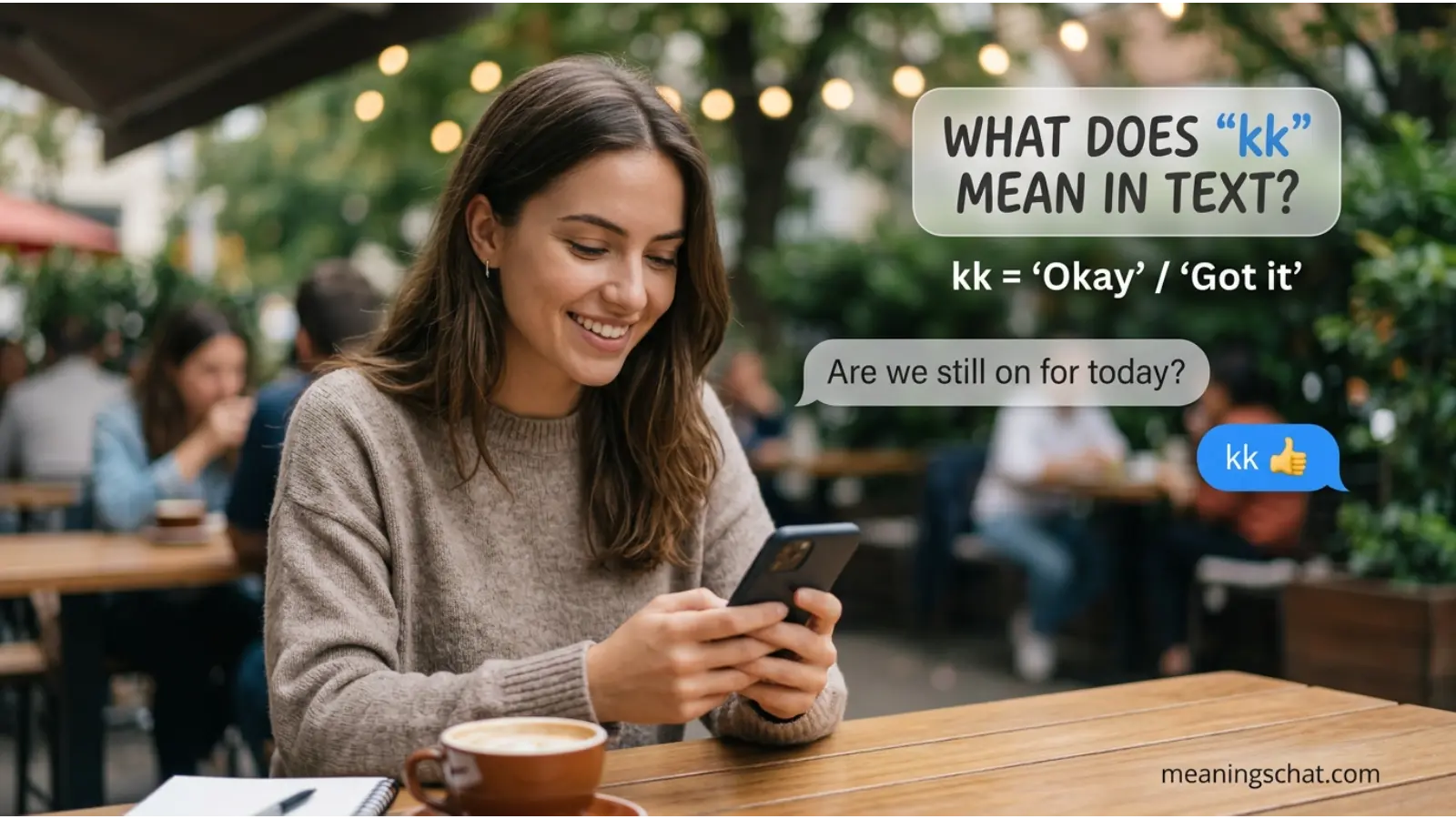
The kk meaning in text is usually “okay” or “okay, okay.” People use it to acknowledge a message, agree with a plan, or show they understand something. It is generally friendly, casual, and informal, although the exact tone depends on the conversation.
What Does KK Mean in Text?
In texting, KK stands for “okay, okay.” It is a short, relaxed way to acknowledge what someone says. Many people use it instead of typing “okay” or “OK” because it feels quick and natural.
For example, if your friend says, “Meet me at 6 PM,” you can simply reply, “kk.” This tells your friend that you understand the plan.
The extra “k” does not usually change the meaning. Instead, it has become a familiar texting habit.
Here are some common meanings of kk:
- Okay: You understand the message.
- Got it: You have received the information.
- Agreement: You accept a suggestion or plan.
- Acknowledgment: You have read the message and are responding briefly.
Sometimes, kk can feel a little dry or distant, especially if someone usually sends longer replies. However, it does not automatically mean that the person is angry, annoyed, or uninterested.
Where Is KK Used?
The abbreviation kk appears across many messaging platforms and online communities. Since it is short and easy to type, people use it in everyday conversations with friends, family members, classmates, and gaming teammates.
Here are some common places where you might see it:
- Snapchat: Friends may send kk after discussing plans or replying to a snap.
- Instagram: People use it in direct messages to acknowledge a comment or suggestion.
- TikTok: Users may write kk in private messages or casual conversations.
- WhatsApp: Friends and family members often use it as a quick response.
- Text messages: It is a convenient way to confirm information without typing a full sentence.
- Online gaming: Players may use kk to confirm instructions or show that they understand a teammate.
KK is not limited to teenagers. Adults and other internet users also use it. Its popularity comes from convenience rather than a specific age group.
Examples of KK in Conversation
The best way to understand kk is to see how people use it in real-life situations. These examples show how the abbreviation fits naturally into different conversations.
1. Making plans
Alex: Let’s meet at the mall at 5.
Sam: kk, see you there!
Meaning: Sam agrees with the plan.
2. Talking to a friend
Mia: Send me the pictures when you get home.
Emma: kk!
Meaning: Emma understands the request.
3. Casual family chat
Mom: Don’t forget to buy some milk.
Son: kk, I won’t forget.
Meaning: He acknowledges the reminder.
4. Flirty conversation
Jake: You looked really cute today 😊
Lily: haha kk, thank you!
Meaning: Lily acknowledges the compliment, but her response alone does not confirm romantic interest.
5. Funny conversation
Ryan: You’re officially responsible for bringing snacks tomorrow.
Chris: kk, preparing for my snack manager duties 😂
Meaning: Chris agrees while adding humor.
6. School conversation
Noah: The homework is due on Monday.
Ethan: kk, thanks for telling me.
Meaning: Ethan understands the information.
7. Short and simple reply
Ava: I’ll text you later.
Sophia: kk ❤️
Meaning: Sophia acknowledges the message. The heart emoji adds a warm touch.
These examples show that kk usually communicates acknowledgment or agreement. Emojis, punctuation, and the surrounding conversation can make the message feel warmer, more playful, or more distant.
When to Use and When Not to Use KK
KK works best in relaxed conversations where short replies are normal. It helps you respond quickly without making every message sound formal.
When You Can Use KK
- With friends: Reply when someone shares information or makes plans.
- With family: Acknowledge everyday reminders and requests.
- With classmates: Confirm homework details or meeting times.
- In gaming chats: Let teammates know you understand their instructions.
- In casual social media messages: Respond quickly when a long explanation is unnecessary.
For example, if your friend says, “I’ll call you tonight,” replying “kk” is perfectly natural.
When You Should Avoid KK
- Formal emails: Write “Okay, thank you” or a complete professional response.
- Messages to your boss: Use clear, respectful wording when confirming work instructions.
- Important conversations: A short reply might make the other person feel ignored.
- Sensitive situations: Show empathy instead of responding with only two letters.
For example, if someone tells you they are having a difficult day, replying only “kk” may seem uncaring. A better response would be, “I’m sorry you’re going through that. I’m here if you need me.”
Remember, kk is not inherently rude. Its suitability depends on the person, situation, and conversation.
Similar Slang Words or Alternatives
If you understand kk, you may also come across other short expressions that people use in texting. Although they can have similar purposes, their meanings are not always identical.
- OK: A simple way to express agreement or acknowledgment.
- K: A shorter version of okay that can sometimes sound blunt or cold.
- Okayy: A playful or friendly version of okay, depending on the context.
- Gotcha: An informal way to say that you understand something.
- Bet: Slang that often means “okay,” “sure,” or “agreed.”
- Sure: A straightforward way to accept a suggestion or request.
For example, “kk” and “gotcha” can both confirm that you understand a plan. However, “bet” may sound more enthusiastic or conversational, depending on how it is used.
FAQs About KK Meaning in Text
1. What does KK mean from a girl?
When a girl texts kk, she usually means okay or that she understands your message. It does not automatically mean she is upset, uninterested, or trying to end the conversation. Consider her usual texting style and the messages around it.
2. What does KK mean from a guy?
When a guy sends kk, he generally means okay, understood, or agreed. Some people prefer short replies because they are busy or naturally brief texters. The abbreviation alone does not reveal his feelings.
3. Is KK slang rude?
No, kk is generally not rude. It is a common, casual abbreviation. However, it might sound dismissive in a serious conversation or when the other person expects a more thoughtful response.
4. Does KK have a flirty meaning?
KK does not have an established flirty meaning by itself. It can appear in a conversation between people who like each other, but romantic interest is better understood through the full conversation, affectionate language, and overall behavior.
5. Can I use KK in professional chats?
You can use kk in informal workplace chats if your team communicates casually. For formal emails, client messages, or important work discussions, “Okay, understood” or “Thank you, I understand” is usually more appropriate.
6. Is KK still used in 2026?
Yes, kk remains a recognizable abbreviation in online messaging. However, individual preferences vary, and some people prefer “OK,” “okay,” or other short replies.
7. What is the difference between K and KK?
Both usually mean okay. K is shorter and may sometimes sound abrupt, while kk can feel more relaxed or friendly. Neither meaning is guaranteed because tone depends on the conversation.
Conclusion
The kk meaning in text is usually “okay” or “okay, okay.” People use it to acknowledge messages, agree with plans, and keep conversations moving without typing long replies. You may see it on Snapchat, Instagram, TikTok, WhatsApp, gaming platforms, and ordinary text messages.
The easiest way to understand kk is to look at the surrounding conversation rather than guessing someone’s feelings from two letters. Use it freely with friends and people who enjoy casual texting, but choose fuller replies when a conversation needs warmth, clarity, or professionalism.