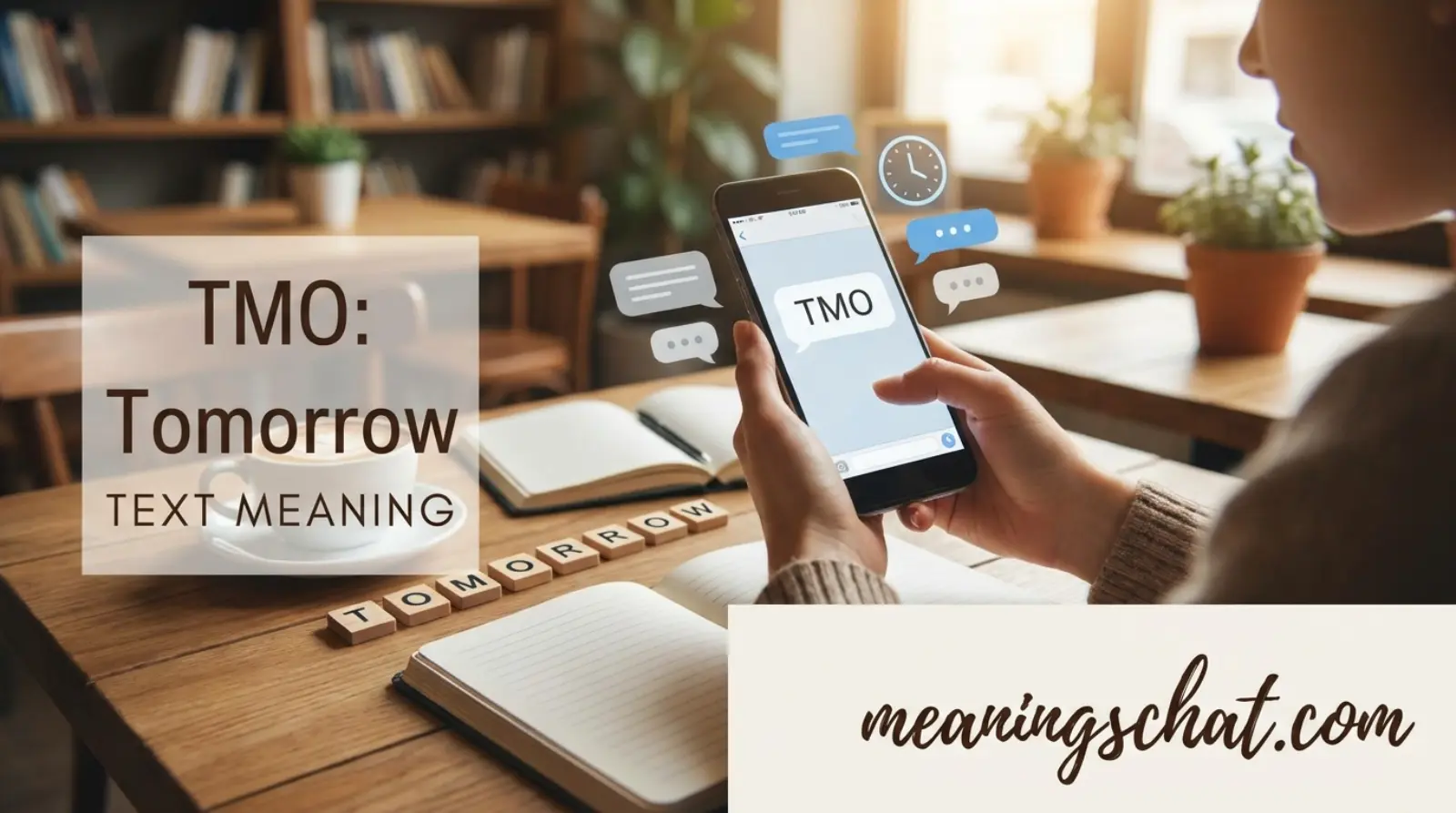
TMO meaning in text is a common question because internet slang changes quickly. If you’ve received a message with “TMO” and weren’t sure what it meant, you’re not alone. Text abbreviations often have different meanings depending on the conversation, the platform, and the people using them.
Understanding slang helps you avoid confusion and reply with confidence. From casual texting to TikTok comments and gaming chats, abbreviations like TMO save time and make conversations feel more natural. Learning their meaning also helps you understand online culture better.
Quick Answer:
TMO most commonly means “Tell Me One” or “Text Me Offline,” depending on the context. In many online conversations, people also use it as “Turn Me On” in informal or adult conversations, so always consider the situation before assuming its meaning.
What Does TMO Mean in Text?
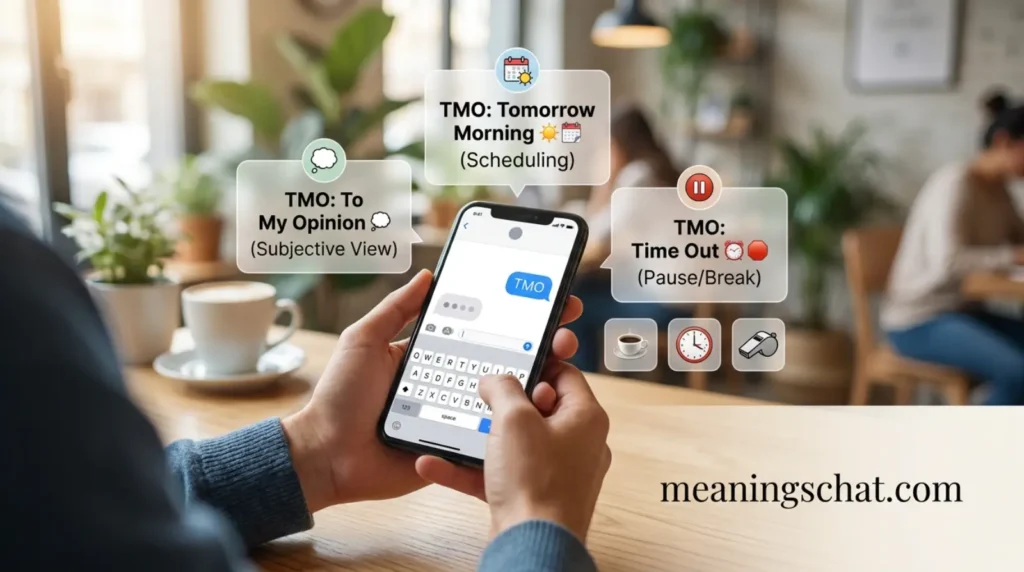
The TMO meaning in text depends on where and how it is used. Unlike some abbreviations that have only one definition, TMO can represent several different phrases.
The most common meanings include:
- Tell Me One – Asking someone to give one example or answer.
- Text Me Offline – Suggesting the conversation continue privately.
- Turn Me On – Used in romantic or adult conversations.
The surrounding conversation usually makes the intended meaning clear.
For example:
Friend: “Name your favorite movie.”
You: “TMO and I’ll watch it tonight.”
Here, TMO means Tell Me One.
TMO Full Form
People often search for the TMO full form, but there is no single official expansion.
Here are the most recognized versions:
| TMO Full Form | Meaning | Common Usage |
|---|---|---|
| Tell Me One | Ask for one example or suggestion | Casual texting |
| Text Me Offline | Continue privately | Social media and messaging |
| Turn Me On | Express attraction or excitement | Romantic conversations |
| Too Many Options | Informal internet slang | Casual discussions |
The correct meaning depends entirely on the context.
What Does TMO Stand For?
If you’re wondering what does TMO stand for, remember that internet slang is flexible. Unlike business abbreviations, text slang often develops naturally through online communities.
For example:
- “TMO your best restaurant.”
- “Let’s keep this private. TMO.”
- “That song really TMO.”
Each sentence uses TMO differently.
Is TMO Rude, Offensive, or Neutral?
Most of the time, TMO is neutral.
However, one of its meanings, Turn Me On, can become flirtatious or suggestive depending on the conversation.
Here’s a simple guide:
| Meaning | Tone |
|---|---|
| Tell Me One | Neutral |
| Text Me Offline | Neutral |
| Too Many Options | Neutral |
| Turn Me On | Romantic or suggestive |
Always consider your audience before using it.
Where Is TMO Commonly Used?
You’ll often see TMO across many digital platforms.
Common places include:
- Text messages
- Snapchat
- Instagram DMs
- TikTok comments
- Discord
- Facebook Messenger
- X (formerly Twitter)
- Gaming chats
- Reddit discussions
Because each community has its own slang habits, the meaning can vary.
Real-Life Examples of TMO in Text
Seeing examples is the easiest way to understand the abbreviation.
Friendly Conversation
Alex: TMO your favorite pizza place.
Sam: Luigi’s downtown!
Meaning: Tell Me One.
Casual Chat
Friend: We should discuss this later. TMO.
Meaning: Text Me Offline.
Romantic Conversation
Person A: That outfit really TMO.
Meaning: Turn Me On.
Social Media
Comment: TMO your best travel destination.
Meaning: Tell Me One.
Gaming Chat
Player: TMO your strongest weapon build.
Meaning: Tell Me One.
Origin and Background of TMO
Like many internet abbreviations, TMO doesn’t have one clear origin.
It became popular because online users wanted shorter ways to communicate. Messaging apps, gaming communities, and social media encouraged quick typing, leading to abbreviations with multiple meanings.
Today, TMO is understood differently depending on the platform and conversation.
Unlike older abbreviations such as LOL or BRB, TMO is still considered niche slang and isn’t universally recognized.
Comparison with Similar Slang
Many abbreviations look similar but serve different purposes.
| Slang | Meaning | Usage |
|---|---|---|
| TMO | Tell Me One, Text Me Offline, Turn Me On | Multiple contexts |
| IMO | In My Opinion | Sharing opinions |
| TBH | To Be Honest | Honest statements |
| IDK | I Don’t Know | Expressing uncertainty |
| DM | Direct Message | Private messaging |
| PM | Private Message | Private conversation |
| BRB | Be Right Back | Temporary absence |
Knowing the difference helps avoid misunderstandings.
When Should You Avoid Using TMO?
Avoid using TMO when:
- Talking in formal emails
- Writing academic assignments
- Communicating with clients
- Speaking to people unfamiliar with internet slang
- The meaning could be misunderstood
Professional communication usually benefits from complete words instead of abbreviations.
Polite Alternatives to TMO
If you want to avoid slang, use clearer phrases.
Instead of TMO, you can say:
- Tell me one example.
- Message me privately.
- Send me a direct message.
- Let’s continue this conversation later.
- Could you share one recommendation?
These alternatives remove any confusion.
Why Do People Use TMO?
People use TMO because it makes conversations quicker and more natural.
Reasons include:
- Saves typing time.
- Fits fast-paced chats.
- Feels casual.
- Matches online culture.
- Makes texting more convenient.
Internet slang evolves because users constantly look for faster ways to communicate.
Impact of Using Slang in Communication
Slang can improve conversations when everyone understands it.
Benefits include:
- Faster communication.
- More relaxed tone.
- Stronger social connection.
- Better engagement on social media.
Possible drawbacks:
- Can confuse new users.
- Different meanings create misunderstandings.
- May appear unprofessional in business settings.
Using slang wisely helps maintain clear communication.
Is TMO Safe for Social Media?
Yes, TMO is generally safe for social media.
However, because one interpretation means Turn Me On, be careful before using it publicly.
Consider these tips:
- Know your audience.
- Read the conversation first.
- Avoid suggestive meanings in professional spaces.
- Use full words if clarity matters.
Context makes all the difference.
Real-Life Examples in Different Situations
Friendly
Emma: TMO your favorite Netflix show.
Jake: Stranger Things.
Casual
Friend: TMO your weekend plans.
You: Going hiking.
Argumentative
Person A: TMO one reason I’m wrong.
Person B: Here’s why…
Gaming
Player 1: TMO your best strategy.
Player 2: Use the sniper first.
Social Media
Comment: TMO your dream vacation destination!
Private Conversation
Friend: This isn’t for the group chat. TMO later.
Tips for Understanding TMO Correctly
Whenever you see TMO:
- Read the entire conversation.
- Identify the platform.
- Consider who sent it.
- Think about the topic.
- Ask politely if you’re unsure.
Context is always the best clue.
FAQs:
What is the TMO meaning in text?
TMO usually means Tell Me One, Text Me Offline, or Turn Me On, depending on the conversation.
Is TMO slang?
Yes. TMO is an internet slang abbreviation commonly used in texting and online chats.
What does TMO stand for?
The most common expansions are Tell Me One, Text Me Offline, and Turn Me On.
Is TMO appropriate for professional conversations?
Generally, no. Using complete phrases is better in business or formal communication.
Can TMO have different meanings?
Yes. Like many internet abbreviations, TMO has multiple meanings based on context.
Is TMO popular on social media?
Yes. You can find TMO on platforms like TikTok, Snapchat, Discord, Instagram, and messaging apps.
Conclusion
Understanding the TMO meaning in text helps you interpret online conversations more accurately. While it most commonly means Tell Me One or Text Me Offline, it can also mean Turn Me On in romantic contexts. The correct interpretation depends on the people involved and the conversation itself.
Before using TMO, think about your audience and the platform. In casual chats, it can make communication faster and more natural. In formal settings, using complete words is usually the better choice. Knowing the context ensures your message is clear and avoids unnecessary misunderstandings.