Inclusive Meaning You are scrolling through social media or reading a group chat when someone says, “We want to create a more inclusive community.” At first, you might wonder what inclusive really means. Is it slang? Is it a modern internet term? Or does it have a deeper meaning?
The truth is that inclusive is not internet slang, but it has become a popular word in online conversations, workplaces, schools, and social media. Understanding its meaning can help you communicate more respectfully and confidently in both personal and professional settings.
What Does Inclusive Meaning in Text?
The word inclusive means welcoming everyone, making sure no one is left out, and treating all people fairly regardless of their background, identity, abilities, beliefs, or differences.
In text messages and online conversations, people use inclusive to describe actions, language, groups, or environments that make everyone feel accepted and respected.
For example:
- “Our team wants to be more inclusive.”
- “Use inclusive language in your posts.”
- “This event is inclusive for everyone.”
Unlike many internet abbreviations, inclusive is a standard English word rather than slang.
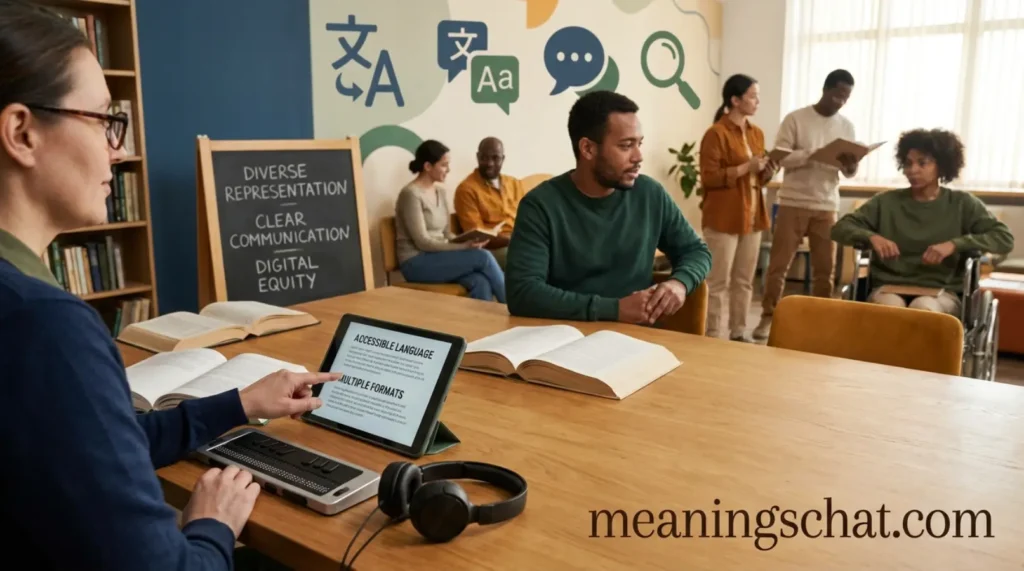
Different Meanings of Inclusive
Depending on the situation, inclusive can mean:
- Including every person.
- Respecting different cultures and identities.
- Making everyone feel welcome.
- Giving equal opportunities.
- Using language that does not exclude anyone.
The meaning stays positive in almost every context.
Where Is Inclusive Used?
Today, the word inclusive appears almost everywhere online and offline.
Text Messages
Friends may use it while discussing events or group plans.
Example:
“Let’s make the party inclusive so everyone feels welcome.”
Creators often describe their communities as inclusive.
Example:
“Our page supports an inclusive environment.”
TikTok
Many videos discuss inclusive fashion, beauty, education, and workplaces.
Snapchat
People may use the word while talking about school clubs or social groups.
Community groups often mention inclusive rules that encourage respectful conversations.
Professionals commonly use inclusive when discussing leadership, teamwork, and company culture.
Schools and Universities
Teachers encourage students to use inclusive language and create inclusive classrooms.
Workplaces
Many companies focus on building inclusive teams where everyone feels respected.
Although younger users frequently use the word online, inclusive is common among people of all ages.
Examples of Inclusive in Conversation
Here are some realistic chat examples.
Example 1
Alex: Should we invite the new student?
Emma: Yes! Let’s keep the group inclusive.
Example 2
Jake: I like this gaming community.
Ryan: Same. Everyone is really inclusive.
Example 3
Lily: Why did everyone enjoy that event?
Sarah: Because it was inclusive and welcoming.
Example 4
Chris: Our teacher asked us to use inclusive language.
Mia: That’s a great idea.
Example 5
Emma: Is everyone invited?
Noah: Of course. We want everyone to feel included.
Example 6
Olivia: This company seems amazing.
Sophia: Their workplace is very inclusive.
Example 7
Daniel: What makes a good online community?
Lucas: One that’s respectful and inclusive.
When to Use and When Not to Use Inclusive
Knowing when to use inclusive makes your communication clearer.
Use Inclusive When
- Talking about welcoming everyone.
- Discussing equality and fairness.
- Describing schools or workplaces.
- Referring to respectful online communities.
- Explaining policies or group activities.
Examples:
- “We want an inclusive classroom.”
- “The club is inclusive of everyone.”
- “Use inclusive language.”
Avoid Using Inclusive When
Although the word itself is appropriate almost everywhere, avoid using it:
- Incorrectly when you simply mean “popular.”
- Without understanding the context.
- As a replacement for unrelated words.
For example:
Incorrect:
“This phone is inclusive.”
Correct:
“This event is inclusive.”
Is It Formal or Casual?
The word is flexible.
- Casual conversations ✔
- Social media ✔
- School ✔
- Workplace ✔
- Business emails ✔
- Professional presentations ✔
Unlike many slang terms, inclusive works well in formal writing too.
Is Inclusive Friendly, Professional, or Flirty?
Friendly
Yes.
People often use it to encourage kindness and respect.
Example:
“Let’s make everyone feel included.”
Professional
Absolutely.
Businesses regularly discuss inclusive leadership, hiring, and teamwork.
Example:
“Our company values an inclusive culture.”
Flirty
No.
The word inclusive has no romantic or flirty meaning by itself.
Someone could use it while planning a date with friends, but the word itself is neutral.
Why Is Inclusive So Popular?
The word has become much more common over the past decade because people increasingly value diversity and respect.
Many organizations now encourage:
- Inclusive workplaces
- Inclusive classrooms
- Inclusive products
- Inclusive events
- Inclusive language
Social media has also helped spread awareness about making everyone feel accepted.
Inclusive Language Explained
One of the most common phrases you’ll see is inclusive language.
Inclusive language means choosing words that avoid excluding or offending people.
Examples include:
- Using respectful terms.
- Avoiding stereotypes.
- Respecting people’s identities.
- Being mindful of different cultures.
- Speaking politely.
Inclusive language helps conversations remain welcoming for everyone.
Inclusive vs Exclusive
These words are opposites.
Inclusive
- Welcomes everyone.
- Includes different people.
- Promotes equality.
Example:
“The community is inclusive.”
Exclusive
- Limits participation.
- Allows only certain people.
- Can describe members-only groups.
Example:
“The event is exclusive to VIP members.”
Both words are common, but they describe very different situations.
Is Inclusive a Slang Word?
No.
Many people search for inclusive meaning because they encounter it online frequently, but it is not slang.
Instead, it is:
- A regular English adjective.
- Common in education.
- Common in business.
- Popular on social media.
- Frequently used in everyday conversations.
Common Mistakes People Make
Here are a few misunderstandings.
Thinking It Is an Abbreviation
Inclusive is a complete English word, not an acronym.
Assuming It Means Everyone Must Agree
Being inclusive does not mean everyone shares the same opinions.
It means everyone is treated with respect.
Using It in the Wrong Context
Not everything can be described as inclusive.
Use it when discussing people, communities, environments, language, or opportunities.
Similar Words or Alternatives
Here are some words with similar meanings.
Welcoming
Friendly and open to everyone.
Accepting
Respecting people without judging them.
Diverse
Including people from many different backgrounds.
Respectful
Treating everyone politely and fairly.
Open Minded
Being willing to understand different viewpoints.
Although these words are related, inclusive specifically focuses on making sure nobody feels excluded.
Why Inclusive Matters in Everyday Life
Being inclusive can improve relationships both online and offline.
When people feel included:
- Communication improves.
- Friendships become stronger.
- Teamwork becomes easier.
- Schools become safer.
- Workplaces become more productive.
- Online communities become healthier.
Using inclusive language is often a simple way to show kindness and respect.
FAQs
What does inclusive mean from a girl?
It means exactly the same as when anyone else uses it. It usually refers to being welcoming, respectful, and making everyone feel included.
Is inclusive slang or rude?
No. Inclusive is not slang, and it is never considered rude. It is generally viewed as a positive and respectful word.
Can I use inclusive in professional chats?
Yes. It is widely used in workplaces, business meetings, emails, and professional conversations.
Does inclusive have a flirty meaning?
No. The word has no romantic or flirtatious meaning. It simply refers to including and respecting everyone.
Is inclusive still popular in 2025?
Yes. The word remains widely used across schools, businesses, social media platforms, and online communities because conversations about diversity, accessibility, and respect continue to be important.
Conclusion
The inclusive meaning is simple yet powerful. It refers to creating environments where everyone feels welcome, respected, and valued. Although many people first notice the word on social media or in text conversations, it is actually a standard English word used in both casual and professional settings.
The next time you see someone describe a community, workplace, classroom, or event as inclusive, you’ll know they are talking about making sure everyone has a place and feels accepted. Using the word correctly can help you communicate thoughtfully and confidently in everyday conversations.