Surreal meaning in text usually describes something that feels strange, dreamlike, unreal, or difficult to believe. You may see someone write “That was so surreal” after an unexpected event, an amazing experience, or a situation that feels almost like a dream.
People often search for the meaning of “surreal” because its everyday use can differ slightly from its traditional dictionary definition. Someone might use it to describe a beautiful moment, a shocking experience, an awkward situation, or something that simply feels far from normal.
The word can add emotion and depth to a message without being rude or offensive. Its meaning often depends on the situation and the speaker’s feelings.
Quick Answer:
Surreal means something that feels dreamlike, bizarre, unreal, or strangely different from ordinary life. In texts, people use it to describe moments that seem too unusual, amazing, confusing, or unexpected to feel real.
What Does Surreal Mean in Text?
In text messages, surreal means that something feels unreal, dreamlike, strange, or difficult to process.
For example, imagine someone finally meets a celebrity they have admired for years. They might text:
“I actually met her today. It felt surreal.”
The person does not necessarily mean the meeting was literally a dream. They mean the experience felt so extraordinary that their mind had trouble accepting that it was really happening.
Similarly, someone who gets unexpected good news might say:
“I got the job! This feels surreal.”
Here, surreal communicates a strong emotional reaction. The person is surprised, excited, or overwhelmed.
The word can describe both positive and negative experiences. It can refer to something beautiful, shocking, confusing, strange, or emotionally overwhelming.
Surreal Meaning Slang: Is It Actually Slang?
Surreal meaning slang can be a little confusing because “surreal” is not originally a slang abbreviation or internet acronym.
It is a standard English adjective that people commonly use in casual online conversations. Social media, texting, comments, and online communities have made this everyday use more common.
People may use “surreal” casually to describe:
- An unbelievable moment
- A strange situation
- An emotional experience
- A major life event
- An unexpected coincidence
- A beautiful scene
- A bizarre conversation
- A shocking piece of news
- Something that feels like a dream
So, “surreal” is better described as an everyday descriptive word than traditional slang.
Surreal Full Form and Definition
There is no special surreal full form because surreal is a complete English word rather than an abbreviation.
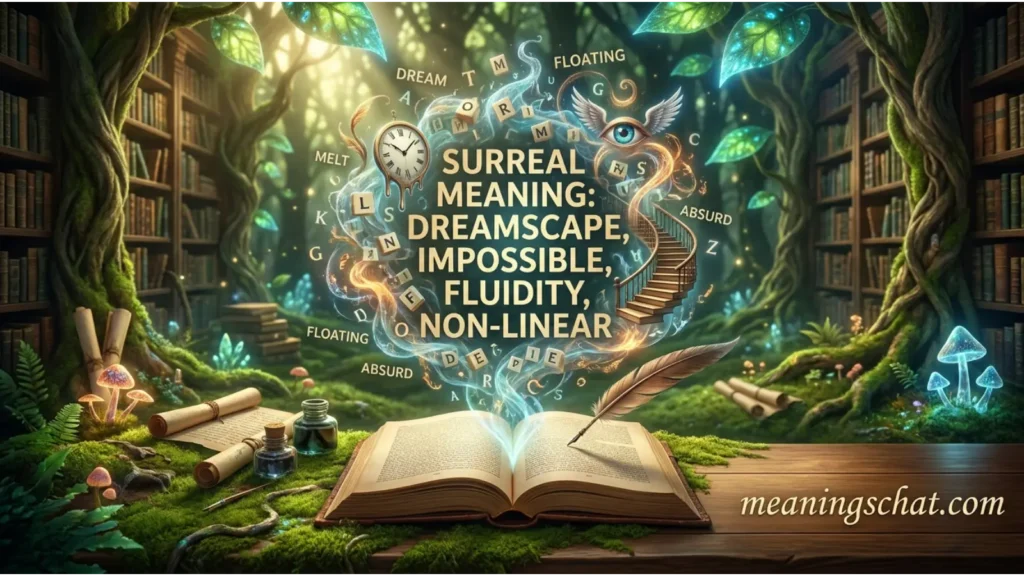
The basic definition of surreal is something that seems dreamlike, bizarre, strange, or disconnected from ordinary reality.
In everyday communication, its meaning can include:
Surreal = strangely unreal, dreamlike, unbelievable, or difficult to process.
For example:
“Standing on that stage in front of thousands of people felt surreal.”
The speaker means the experience felt extraordinary and almost impossible to believe.
What Does Surreal Stand For?
If you are wondering what does surreal stand for, it does not stand for a group of words like texting abbreviations such as LOL or BRB.
“Surreal” comes from the word Surrealism, an artistic and literary movement associated with dreamlike and unusual imagery. The term itself comes from French and can be understood as relating to something beyond ordinary reality.
In modern conversation, however, people usually do not think about its artistic history. They simply use “surreal” to express that something feels unreal or unusually strange.
Is Surreal Rude, Offensive, or Neutral?
“Surreal” is generally neutral and is not considered a rude or offensive word.
Its emotional meaning depends on the context.
For example:
“Winning the championship felt surreal.”
This sounds positive and excited.
Another example:
“The whole conversation was surreal.”
This could mean the conversation was strange, confusing, or difficult to understand.
Someone could also say:
“It was surreal seeing the city so empty.”
That statement expresses surprise or an unusual feeling rather than an insult.
Still, tone matters. If you describe someone’s behavior as “surreal,” they might interpret it as criticism if the surrounding conversation sounds negative.
Where Is Surreal Commonly Used?
People use “surreal” across many forms of communication.
Text Messages
Friends often use it when talking about unexpected personal experiences.
“I can’t believe we actually did it. So surreal.”
Social Media
People frequently use the word in captions about travel, achievements, concerts, weddings, graduations, and major life events.
“Watching the sunset from this place was surreal.”
Online Comments
Someone may comment “This is surreal” beneath a strange photo, unexpected video, or unbelievable event.
Everyday Conversation
People also use the word when speaking face to face.
“That whole experience felt surreal.”
News and Major Events
People may use surreal to describe an unusual or emotionally overwhelming situation.
The word works in both casual and more formal settings, making it more versatile than many internet slang terms.
Real Life Examples of Surreal in Text
Here are examples showing how people might naturally use the word.
Friendly Tone
Friend: “Guess what? I met my favorite actor today!”
You: “No way! That’s so surreal!”
The response shows excitement and amazement.
Casual Tone
Friend: “We used to talk about visiting Paris all the time.”
You: “And now we’re actually here. Feels surreal.”
The speaker describes an ordinary dream becoming reality.
Emotional Tone
“Seeing everyone together after so many years was surreal.”
Here, the word expresses a powerful emotional experience.
Surprising Situation
“I randomly ran into my old teacher at the airport. So surreal.”
The unexpected coincidence makes the situation feel unusual.
Social Media Context
“Still can’t believe this happened. What a surreal night!”
The person uses surreal to describe an unforgettable experience.
Gaming Context
“We were losing the entire match and somehow won in the final seconds. Surreal!”
The word emphasizes how unexpected the victory was.
Surreal Examples for Different Situations
Positive Examples
- “Getting my dream job feels surreal.”
- “Watching the concert from the front row was surreal.”
- “It was surreal seeing my favorite team win.”
- “Walking through that beautiful city felt surreal.”
- “I still can’t believe I graduated. It feels surreal.”
Strange Examples
- “That conversation became really surreal.”
- “The dream was completely surreal.”
- “Everything about that situation felt surreal.”
- “That was probably the most surreal meeting I’ve ever attended.”
Unexpected Examples
- “I bumped into my childhood friend in another country. So surreal.”
- “I opened the old box and found the exact photo I thought I’d lost. Surreal.”
- “My name was called first, and I just stood there in shock. It felt surreal.”
Surreal vs Unreal
“Surreal” and “unreal” can look similar, but they often communicate slightly different ideas.
Unreal can mean something is not real or is extremely impressive.
Surreal usually focuses more on the feeling that something seems dreamlike, bizarre, or difficult to process.
For example:
“That movie character isn’t real.”
Here, unreal means fictional.
But:
“Watching the movie in a packed theater felt surreal.”
Here, surreal describes the person’s experience.
In casual texting, people sometimes use both words almost interchangeably when describing something unbelievable.
Surreal vs Bizarre
“Bizarre” usually emphasizes something that is very strange or unusual.
“Surreal” can also describe something strange, but it often carries a dreamlike or emotionally unusual quality.
Compare:
“That was a bizarre thing to say.”
This suggests the statement was strange.
“That whole conversation felt surreal.”
This suggests the conversation felt strangely unreal or dreamlike.
The emotional atmosphere makes “surreal” different from simply saying “weird.”
Surreal vs Weird
“Weird” is a broad and casual word for something unusual.
“Surreal” is more specific and often sounds more expressive.
For example:
“That was weird.”
This simply says something was unusual.
“That was surreal.”
This suggests the situation felt strange in a way that almost seemed unreal.
People often choose “surreal” when “weird” does not fully capture the emotional experience.
Comparison Table
| Word | Basic Meaning | Common Tone | Example |
|---|---|---|---|
| Surreal | Dreamlike or strangely unreal | Emotional, expressive | “Being here feels surreal.” |
| Unreal | Not real or unbelievably impressive | Casual | “That goal was unreal!” |
| Bizarre | Extremely strange | Descriptive | “That was a bizarre situation.” |
| Weird | Unusual or strange | Very casual | “That sounds weird.” |
| Amazing | Extremely good or impressive | Positive | “The show was amazing.” |
Why Do People Use Surreal in Texting?
People use “surreal” because it communicates more emotion than simple words such as “good,” “strange,” or “amazing.”
A single word can suggest:
- Surprise
- Excitement
- Disbelief
- Wonder
- Confusion
- Nostalgia
- Emotional overwhelm
- A dreamlike feeling
For instance, saying:
“I got accepted!”
communicates news.
But:
“I got accepted! This feels surreal!”
communicates both the news and the speaker’s emotional reaction.
That extra emotional layer makes the word popular in personal messages and social media captions.
Is Surreal Safe for Social Media?
Yes. “Surreal” is generally safe for social media.
It is a normal English word without offensive or inappropriate meaning. People commonly use it in posts, captions, comments, and messages.
You can use it when discussing:
- Travel
- Sports
- Music
- School
- Graduation
- Work
- Relationships
- Family events
- Photography
- Dreams
- Unexpected experiences
For example:
“A surreal evening I’ll never forget.”
This works naturally as a social media caption.
When Should You Avoid Using Surreal?
Although “surreal” is not offensive, you should consider your audience and context.
Avoid using it if you need extremely precise language and another term communicates your meaning better.
For example, in a technical report, saying “the results were surreal” may sound vague. A more precise description would explain exactly what was unusual about the results.
In professional communication, consider explaining the specific situation instead of relying only on “surreal.”
For casual communication, the word works very well.
Polite Alternatives to Surreal
Because “surreal” is already neutral, you do not need a polite replacement for offensive reasons. However, you can choose another word depending on the exact feeling you want to communicate.
A.If You Mean Unbelievable
- Incredible
- Unbelievable
- Hard to believe
- Astonishing
B.If You Mean Strange
- Unusual
- Strange
- Bizarre
- Odd
C.If You Mean Dreamlike
- Dreamlike
- Magical
- Otherworldly
- Extraordinary
D.If You Mean Emotional
- Overwhelming
- Powerful
- Emotional
- Meaningful
Choosing the right alternative helps you communicate the exact feeling more clearly.
Surreal in Different Communication Tones
Friendly
“You actually won the tickets? That’s surreal!”
This sounds excited and supportive.
Casual
“Today was so surreal.”
This is short and natural.
Emotional
“Standing there with my whole family felt surreal.”
This expresses a deeper emotional reaction.
Humorous
“I woke up before my alarm. Absolutely surreal.”
Here, the speaker jokingly treats something unusual as a dreamlike event.
Argumentative
“You’re acting like that never happened, which is honestly surreal.”
In this context, surreal expresses disbelief or frustration.
Gaming
“We were down by 20 points and still won. That comeback was surreal.”
It emphasizes how unexpected the outcome was.
Is Surreal Positive or Negative?
“Surreal” can be positive, negative, or neutral.
The word itself does not automatically communicate a good or bad experience.
Positive
“Meeting my favorite musician was surreal.”
Negative
“It was surreal watching everything fall apart so quickly.”
Neutral
“The empty streets made the city feel surreal.”
The surrounding words and situation tell readers how the speaker feels.
The Origin and Background of Surreal
The modern word “surreal” connects to Surrealism, an artistic and literary movement that developed in the early twentieth century.
Surrealist artists and writers explored dreams, imagination, unexpected combinations, and ideas that went beyond ordinary logic.
Over time, “surreal” became part of everyday English. People began using it outside art and literature to describe experiences that feel dreamlike, strange, or disconnected from normal expectations.
Today, you do not need to be discussing art to use the word. It has become a common part of everyday speech and online communication.
How to Use Surreal Naturally
Use “surreal” when you want to emphasize that an experience feels unusually real and unreal at the same time.
A simple sentence pattern is:
“It feels surreal.”
You can also say:
- “That was surreal.”
- “The whole experience was surreal.”
- “It felt completely surreal.”
- “This moment is surreal.”
- “What a surreal experience.”
- “That was such a surreal moment.”
These structures work well in texts, captions, comments, and conversations.
Common Mistakes When Using Surreal
One common mistake is treating “surreal” as an abbreviation.
It is not an acronym, so there is no special collection of words that make up a surreal full form.
Another mistake is assuming surreal always means something negative. The word can describe wonderful, shocking, strange, emotional, or confusing experiences.
A third mistake is using “surreal” when you simply mean “good.” The word works best when the experience feels unusual, extraordinary, dreamlike, or difficult to process.
FAQs:
What does surreal mean in text?
Surreal in text means something feels dreamlike, unreal, bizarre, or difficult to believe. People often use it for unusual or emotionally powerful experiences.
What does surreal stand for?
Surreal does not stand for a phrase because it is a complete English word, not an abbreviation or acronym.
Is surreal a slang word?
Surreal is not traditional slang. It is a standard English adjective that people frequently use in casual texting, social media, and online conversations.
Is surreal a positive word?
It can be positive, negative, or neutral. The meaning depends on the situation and the speaker’s tone.
Is surreal rude?
No. Surreal is generally neutral and is not considered rude or offensive.
Can I use surreal on social media?
Yes. Surreal is commonly used in social media captions, comments, and posts about unusual, emotional, beautiful, or unforgettable experiences.
Conclusion
Understanding the surreal meaning in text is simple once you focus on the feeling behind the word. Surreal usually describes something that seems dreamlike, strangely unreal, unbelievable, or difficult to process.
It can describe an exciting achievement, an unexpected coincidence, a strange conversation, an emotional moment, or an unforgettable experience. Unlike many internet slang terms, surreal is a standard English word rather than an abbreviation.
The best way to understand its meaning is to look at the context and tone around it. If someone texts, “That was surreal,” they are usually saying that the experience felt far beyond ordinary expectations.
Use “surreal” when you want to express that something feels unusually strange, extraordinary, dreamlike, or almost too real to believe.