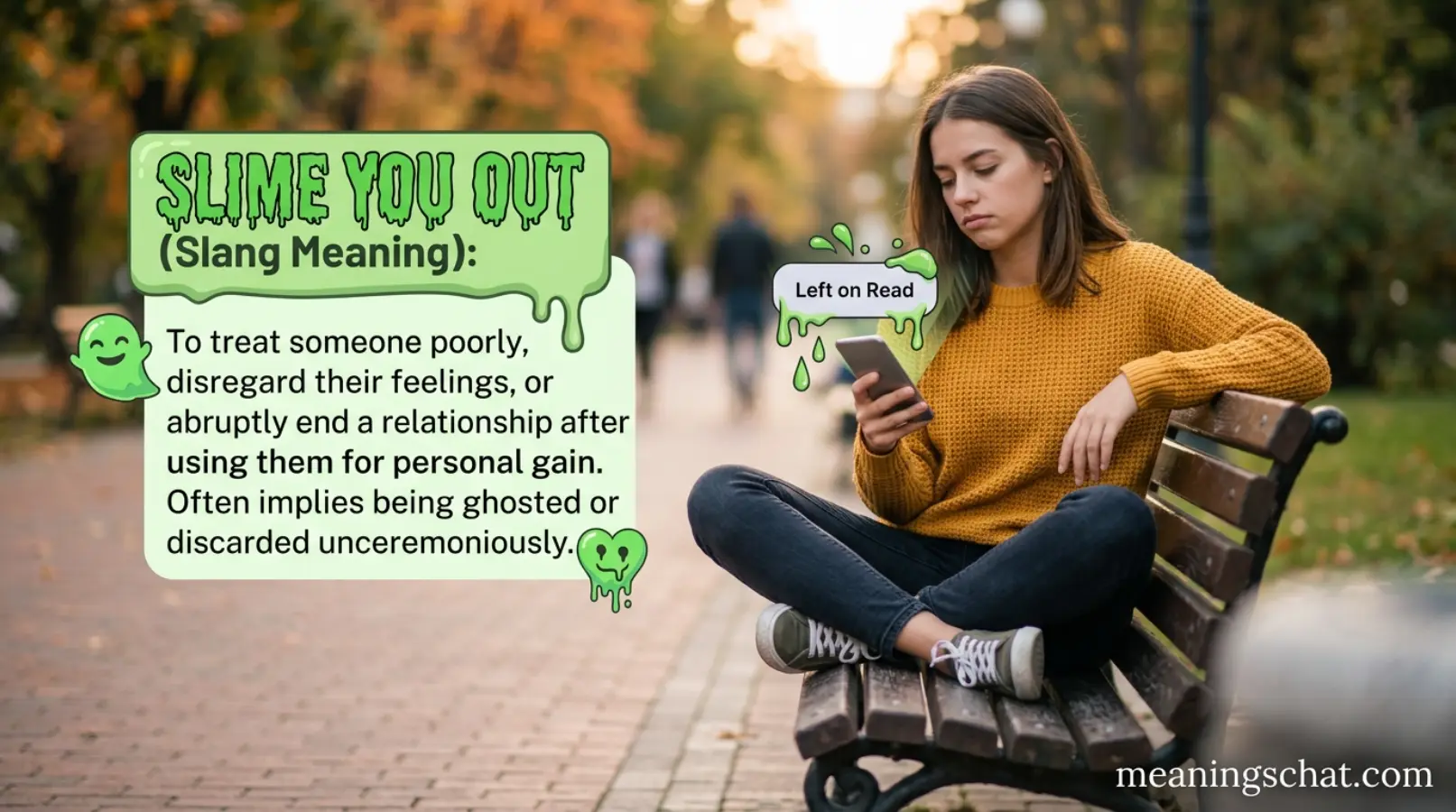
If you’ve been scrolling through TikTok, Instagram comments, or even rap lyrics lately, you might have come across the phrase “slime you out” and paused for a second wondering what it actually means. At first glance, it sounds strange—like something messy or playful—but in online slang, it carries a much deeper and often negative meaning. Many people first heard it after Drake’s song “Slime You Out” featuring SZA went viral, which made the phrase explode across social media.
In this article, you’ll learn exactly what it means, how people use it in real conversations, and when you should (or shouldn’t) use it yourself.
What Does Slime You Out Mean in Text?
The slang phrase “slime you out” is used to describe a situation where someone betrays, disrespects, uses, or takes advantage of another person, often in a romantic or emotional context.
In simple terms, it means:
- To treat someone badly after getting close to them
- To use someone for personal gain (especially emotionally or physically)
- To cheat, betray, or “do someone dirty” in a relationship or situationship
The word “slime” in modern slang originally had a positive meaning in some communities, referring to a close friend or someone you trust. However, when used in the phrase “slime you out,” it flips into something negative—showing disloyalty or disrespect.
Key takeaway:
“Slime you out” = to hurt or betray someone who trusted you
It does not have a single harmless meaning and is usually tied to emotional drama, relationships, or toxic behavior.
Where Is Slime You Out Used?
The phrase “slime you out” is mostly used in informal digital spaces, especially where slang and music culture overlap.
You’ll commonly see it on:
- TikTok – in relationship storytimes, memes, and commentary videos
- Instagram – captions, reels, and comment sections
- Snapchat – private chats and emotional conversations
- Twitter (X) – discussions about relationships and music lyrics
- Rap and R&B culture – especially in lyrics and fan discussions
It became especially popular after the release of Drake’s track “Slime You Out”, which brought the phrase into mainstream internet culture.
Who uses it most?
- Teenagers and young adults
- Social media users in relationship discussions
- Hip-hop and R&B fans
- Meme creators and TikTok storytellers
It’s not formal language—it belongs fully to internet slang and pop culture vocabulary.
Examples of Slime You Out in Conversation
Here are some realistic chat-style examples showing how people use the phrase naturally:
- Friend 1: “I thought he liked her fr.”
Friend 2: “Nah bro, he just slime you out and moved on.” - “She really trusted him and he just slime her out like that… .”
- “I can’t believe he slime you out after everything you did for him.”
- Text message:
“Don’t get too attached, he might slime you out again.” - “That’s why I don’t trust people easily, they’ll just slime you out.”
- “He acted loyal but ended up slime her out with her best friend.”
- “She said she’s done dating because every guy just slime her out.”
These examples show that the phrase is usually tied to betrayal, heartbreak, and emotional disappointment.
When to Use and When Not To Use Slime You Out
Understanding tone is very important with slang like this. Even though it sounds trendy, “slime you out” is not always appropriate in every situation.
When you CAN use it:
- Talking casually with friends
- Social media posts or memes
- Discussing songs, lyrics, or pop culture
- Storytelling about relationships or drama
When you should AVOID using it:
- Formal conversations (school, office, emails)
- Talking to someone you don’t know well
- Professional or respectful environments
- Sensitive situations where emotional language might hurt someone
Tone check:
The phrase often carries:
- Negative emotional weight
- Relationship drama vibes
- Informal and sometimes harsh expression
So while it’s popular online, it’s best used only in casual, familiar conversations.
Similar Slang Words or Alternatives
If you’re trying to understand or replace “slime you out,” here are some similar slang expressions:
1. Done dirty
Means someone was treated unfairly or betrayed.
2. Played
Used when someone is tricked or used in a relationship.
3. Ghosted
When someone suddenly stops all communication without explanation.
4. Snaked
Refers to betrayal, especially by someone you trusted.
5. Used
When someone takes advantage of another person emotionally or physically.
All of these phrases share a similar theme: disrespect, betrayal, or emotional hurt.
FAQs
What does Slime You Out mean from a girl?
When a girl uses “slime you out,” she usually means someone betrayed or disrespected her emotionally, often in a relationship or dating situation.
Is Slime You Out slang rude?
It can be considered slightly rude or harsh because it implies betrayal and negative behavior, but it depends on context.
Can I use Slime You Out in professional chats?
No, it is not appropriate for professional or formal communication. It is strictly casual slang.
Does Slime You Out have any flirty meaning?
No, it is not flirty. It usually describes cheating, betrayal, or emotional misuse in relationships.
Is Slime You Out still popular in 2025?
Yes, it is still recognized, especially because of its association with music and social media trends, but its usage is more niche compared to peak viral moments.
Conclusion
The phrase “slime you out” is modern internet slang that describes betrayal, emotional misuse, or disrespect in relationships, often used in casual online conversations. It gained massive popularity through music and social media, making it a recognizable phrase among younger audiences. However, it carries a negative tone, so it’s important to use it carefully and only in informal settings.
If you come across it again in chats or lyrics, you’ll now know exactly what it means—and how to respond without confusion.

William Jones is a dedicated writer at Meaningschat who specializes in explaining text slang, abbreviations, and online language trends. He enjoys creating simple, engaging, and reader-friendly content that helps people understand modern digital communication with ease. His writing style is clear, conversational, and informative, making complex internet terms easy for everyone to follow. In his free time, William loves exploring social media trends, reading about digital culture, and discovering how online language continues to evolve.