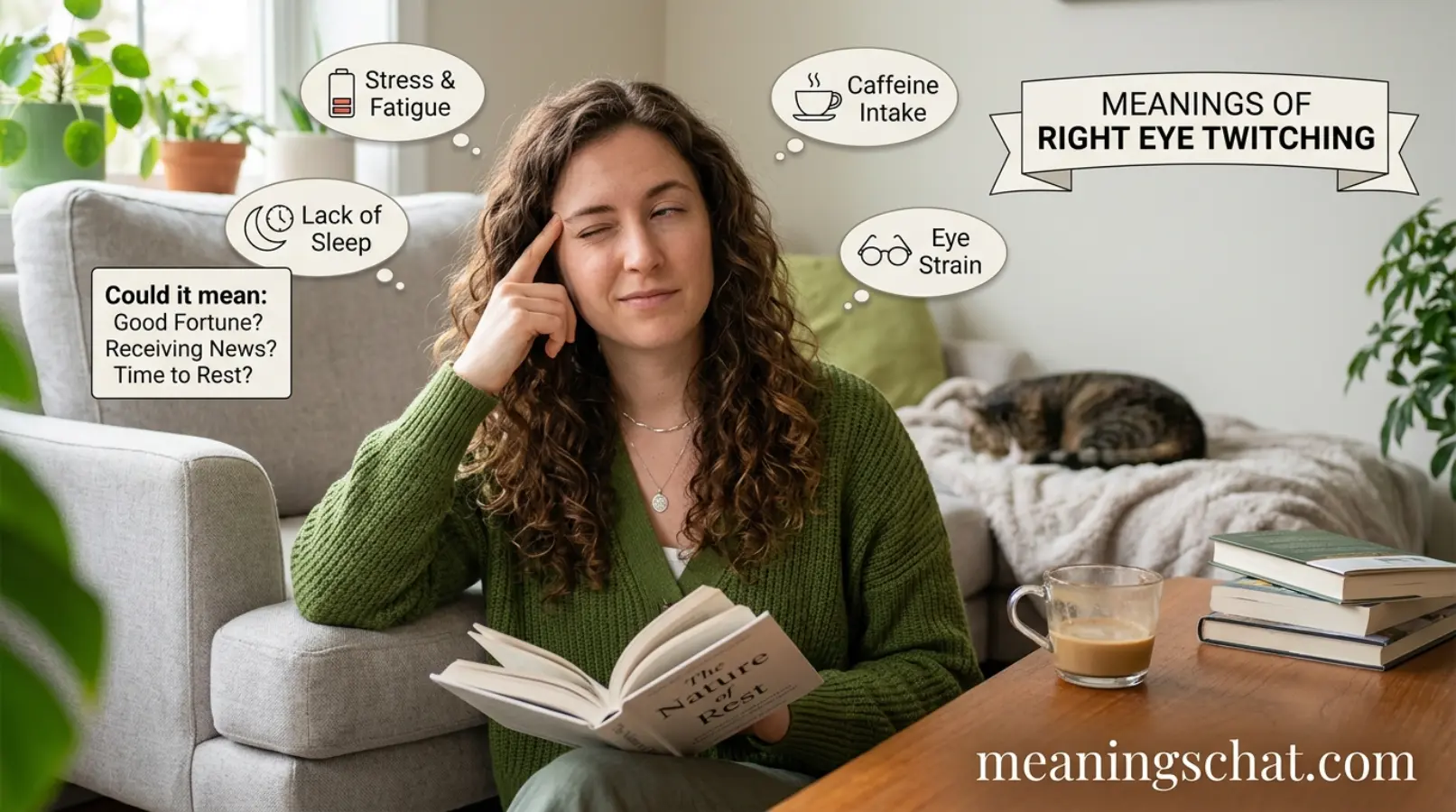
Have you ever been chatting with friends, scrolling through social media, or sitting quietly when your right eye suddenly started twitching? It can feel strange, distracting, and even a little worrying. Many people immediately wonder if it means good luck, bad luck, stress, or something more serious. You may also find countless videos online claiming that right eye twitching predicts future events, making it even more confusing to know what to believe.
The truth is that the meaning of right eye twitching depends on the context. Some cultures associate it with superstitions and spiritual beliefs, while doctors usually explain it as a harmless muscle spasm caused by everyday factors like stress, fatigue, or too much caffeine. In this guide, you’ll learn what right eye twitching really means, the most common causes, cultural interpretations, and when it’s time to seek medical advice.
What Does Right Eye Twitching Mean?
Right eye twitching refers to an involuntary, repetitive movement of the eyelid muscles. The medical term for this common condition is eyelid myokymia.
For most people, a twitch lasts only a few seconds or minutes. Sometimes it may come and go throughout the day or continue for several days before disappearing on its own.
The meaning of right eye twitching generally falls into two categories:
Medical Meaning
From a medical perspective, right eye twitching is usually harmless. It often happens because the tiny muscles around the eyelid become temporarily irritated or overworked.
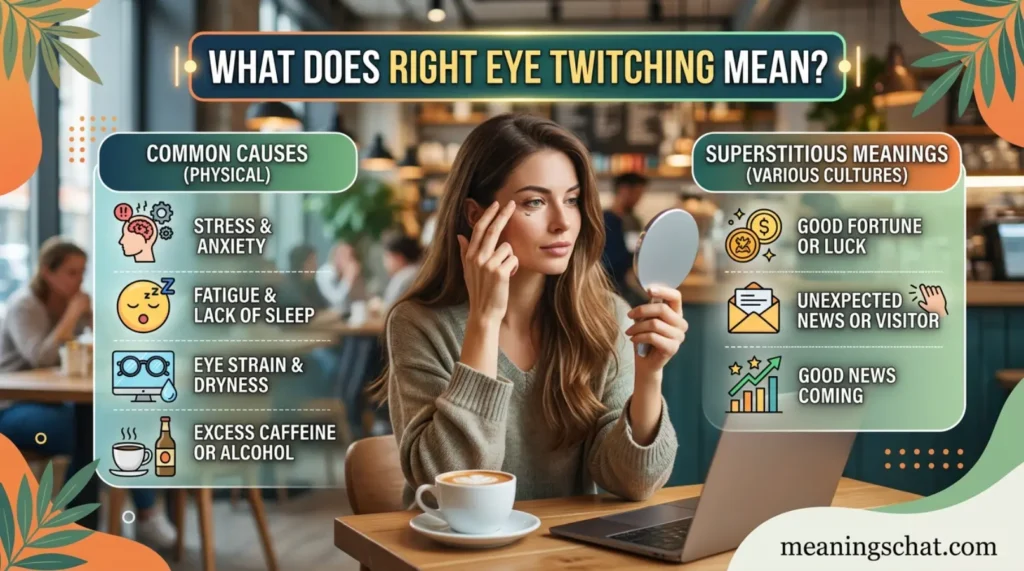
Common medical triggers include:
- Stress
- Lack of sleep
- Eye strain
- Too much caffeine
- Dry eyes
- Fatigue
- Anxiety
In most cases, no treatment is needed because the twitch stops naturally once the underlying trigger improves.
Cultural and Spiritual Meaning
Many cultures believe eye twitching carries symbolic messages.
Some traditions suggest that right eye twitching may represent:
- Good luck
- Positive news
- Financial gain
- Success in upcoming plans
- Meeting someone important
However, these interpretations vary greatly around the world. What is considered lucky in one culture may be viewed as unlucky in another.
There is no scientific evidence proving that eye twitching predicts future events.
What Causes Right Eye Twitching?
Although many people search for symbolic meanings, everyday lifestyle habits are usually responsible.
Stress
Stress is one of the leading causes of eyelid twitching. When your body is under pressure, muscles throughout the body—including those around your eyes—may contract involuntarily.
Lack of Sleep
Poor sleep prevents your muscles and nerves from fully recovering. After several nights of inadequate rest, eye twitching becomes more common.
Too Much Screen Time
Staring at computers, smartphones, or tablets for long periods strains the eye muscles. Digital eye strain is increasingly common among students and office workers.
Caffeine
Coffee, tea, energy drinks, and certain sodas stimulate the nervous system. Consuming large amounts may trigger temporary muscle spasms.
Dry Eyes
Dry eyes can irritate the eyelids and increase twitching, especially in people who wear contact lenses or spend many hours using digital devices.
Fatigue
Physical exhaustion affects nerve signals and muscle control, making eyelid twitching more likely.
Anxiety
Anxiety increases muscle tension and nervous system activity, both of which can contribute to repeated eye twitches.
Eye Irritation
Dust, allergies, smoke, or minor eye irritation may also cause the eyelid muscles to twitch.
Where Is the Term “Right Eye Twitching Meaning” Commonly Used?
Unlike internet slang, “right eye twitching meaning” is a popular search phrase rather than a texting abbreviation.
People commonly search for it on:
- YouTube
- TikTok
- Instagram Reels
- Facebook groups
- Health forums
- Spiritual and astrology websites
- Reddit discussions
You’ll often see videos with titles like:
- “Right eye twitching means good luck?”
- “Spiritual meaning of right eye twitching.”
- “Is right eye twitching a sign of stress?”
- “Why is my right eye twitching all day?”
People of all age groups search for this topic, although it’s especially popular among users interested in spirituality, health, and wellness.
Cultural Beliefs About Right Eye Twitching
Different cultures have developed unique interpretations over centuries.
Indian Beliefs
In some Indian traditions:
- Right eye twitching is considered lucky for men.
- Right eye twitching may be viewed differently for women.
Other regional traditions interpret it in completely opposite ways.
Chinese Beliefs
Some Chinese folk beliefs connect eye twitching with future events depending on:
- Which eye twitches
- The exact time of day
- The duration of the twitch
These interpretations differ across regions.
African Traditions
Certain African communities believe eye twitching may signal:
- Unexpected visitors
- Upcoming news
- Emotional events
Again, these are cultural beliefs rather than medical facts.
Western Perspective
In many Western countries, doctors usually associate eye twitching with:
- Stress
- Fatness
- Lack of sleep
- Eye strain
Medical professionals generally do not link eye twitching to luck or predictions.
Examples of People Talking About Right Eye Twitching
Here are some realistic conversations.
Example 1
Sarah: My right eye has been twitching since morning.
Emma: You probably need more sleep!
Example 2
Ali: My grandmother says right eye twitching means good news is coming.
Ahmed: Hopefully she’s right!
Example 3
Mia: I’ve had too much coffee today.
Jake: That could explain your eye twitching.
Example 4
Noah: My right eyelid won’t stop jumping.
Sophia: Maybe take a break from your laptop.
Example 5
Ryan: Do you believe right eye twitching is lucky?
Lily: I think it’s just stress.
Example 6
David: My eye keeps twitching before exams.
Emma: Mine does too whenever I’m anxious.
When Should You Be Concerned?
Most eyelid twitches are harmless.
However, you should consider seeing a healthcare professional if:
- The twitch lasts for several weeks.
- Your eyelid completely closes during twitching.
- Both eyes are affected continuously.
- The twitch spreads to other parts of your face.
- Your eye becomes red, swollen, or painful.
- You notice changes in your vision.
- The twitch interferes with daily activities.
Persistent twitching may require an eye examination to rule out underlying conditions.
How to Stop Right Eye Twitching
Fortunately, simple lifestyle changes often help.
Get Enough Sleep
Aim for seven to nine hours of quality sleep each night.
Reduce Stress
Practice relaxation techniques such as:
- Deep breathing
- Meditation
- Walking
- Light exercise
- Yoga
Limit Caffeine
If you consume several cups of coffee or energy drinks daily, reducing your intake may help.
Rest Your Eyes
Follow the 20-20-20 rule:
Every 20 minutes, look at something about 20 feet away for at least 20 seconds.
Stay Hydrated
Proper hydration supports healthy muscle and nerve function.
Use Artificial Tears
If dry eyes are causing irritation, lubricating eye drops may provide relief.
When to Use Cultural Meanings and When Not To
Understanding the difference between cultural beliefs and medical explanations is important.
It’s Fine to Discuss Cultural Meanings
Many people enjoy talking about:
- Family traditions
- Spiritual beliefs
- Good luck stories
- Cultural customs
These conversations can be fun and meaningful.
Don’t Ignore Medical Symptoms
If eye twitching becomes severe or persistent, avoid relying solely on superstitions.
Instead:
- Monitor your symptoms.
- Improve your sleep and stress levels.
- Seek medical advice if the twitch continues.
Balancing cultural beliefs with medical knowledge is the healthiest approach.
Common Myths About Right Eye Twitching
Myth 1: It Always Means Good Luck
Not every culture agrees. Interpretations vary widely.
Myth 2: Eye Twitching Predicts the Future
There is no scientific evidence supporting this claim.
Myth 3: Only Stressed People Experience It
Stress is common, but caffeine, fatigue, dry eyes, allergies, and eye strain can also trigger twitching.
Myth 4: It Always Means Something Serious
Most eyelid twitches are harmless and temporary.
Myth 5: Medicine Is Always Needed
Most cases improve naturally after lifestyle changes.
Similar Terms and Related Eye Conditions
Here are a few related terms people often confuse with right eye twitching.
Left Eye Twitching
Similar muscle spasms affecting the left eyelid. Cultural meanings often differ.
Eye Strain
Discomfort caused by prolonged screen use or focusing on tasks for extended periods.
Dry Eye Syndrome
A condition where the eyes don’t produce enough quality tears, leading to irritation.
Eyelid Myokymia
The medical name for the common eyelid twitch experienced by most people.
Blepharospasm
A rare neurological condition involving stronger, more persistent eyelid spasms that may require medical treatment.
FAQs
What does right eye twitching usually mean?
Most of the time, it means your eyelid muscles are reacting to stress, fatigue, caffeine, or eye strain. It is usually harmless.
Is right eye twitching a sign of good luck?
Some cultures believe it is, while others have different interpretations. There is no scientific proof that eye twitching predicts luck.
Can stress cause right eye twitching?
Yes. Stress is one of the most common reasons people experience temporary eyelid twitching.
Should I worry if my right eye keeps twitching?
Occasional twitching is usually not serious. However, if it continues for weeks or is accompanied by pain, vision changes, or facial spasms, consult a healthcare professional.
Can too much screen time cause eye twitching?
Yes. Long hours spent looking at digital screens can strain your eyes and contribute to eyelid twitching.
Does caffeine make eye twitching worse?
It can. Excessive caffeine stimulates the nervous system and may increase muscle spasms in some people.
Is right eye twitching still a popular topic in 2025?
Yes. Millions of people continue searching for the meaning of right eye twitching, especially to understand both cultural beliefs and medical explanations.
Conclusion
Right eye twitching is a common experience that usually has a simple medical explanation rather than a mysterious meaning. Stress, lack of sleep, eye strain, caffeine, and fatigue are among the most frequent causes, and the twitch often disappears on its own after a little rest and self-care. While many cultures associate right eye twitching with luck, future events, or spiritual messages, these beliefs vary widely and are not supported by scientific evidence.
If your twitch is occasional, there’s usually no reason to worry. Focus on getting enough sleep, managing stress, limiting screen time, and staying hydrated. However, if the twitch becomes persistent, painful, or is accompanied by other symptoms, it’s best to seek medical advice. Understanding both the cultural traditions and the medical facts can help you interpret right eye twitching with confidence and avoid unnecessary concern.

William Jones is a dedicated writer at Meaningschat who specializes in explaining text slang, abbreviations, and online language trends. He enjoys creating simple, engaging, and reader-friendly content that helps people understand modern digital communication with ease. His writing style is clear, conversational, and informative, making complex internet terms easy for everyone to follow. In his free time, William loves exploring social media trends, reading about digital culture, and discovering how online language continues to evolve.