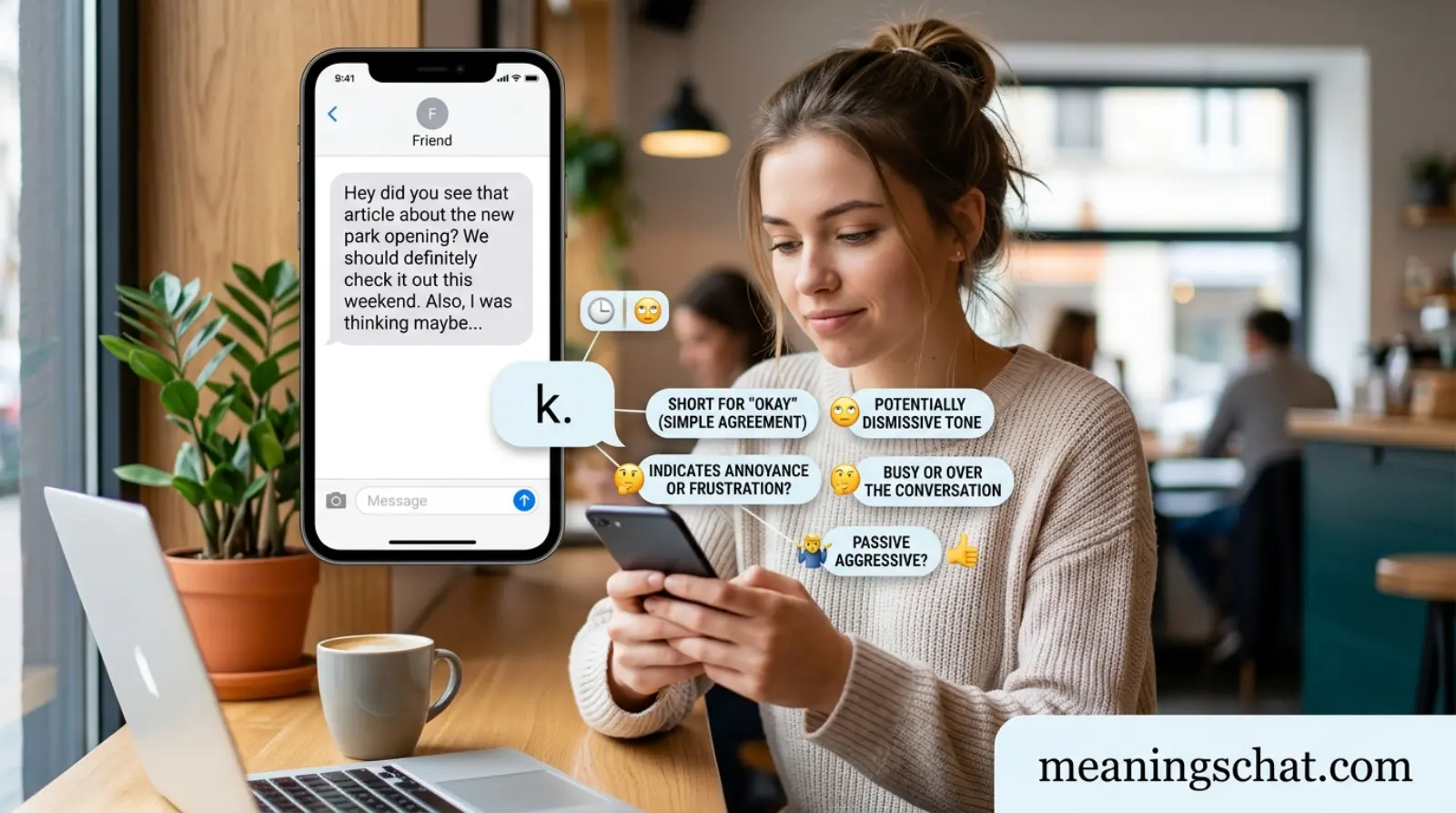
You’re texting a girl, and everything seems to be going fine. Then suddenly, she replies with just one letter: “k.” That’s it no emoji, no extra words, nothing to help you understand the tone.
Instantly, your mind starts racing: Is she mad? Did I say something wrong? Or is she just being casual?
If you’ve ever felt confused by this tiny response, you’re definitely not alone.
In today’s world of fast texting and short replies, even a single letter like “k” can carry multiple meanings depending on the situation.
Understanding what it means especially when it comes from a girl can help you avoid misunderstandings and respond appropriately.
Let’s break it down so you can read between the lines with confidence.
What Does “K” Mean in Text?
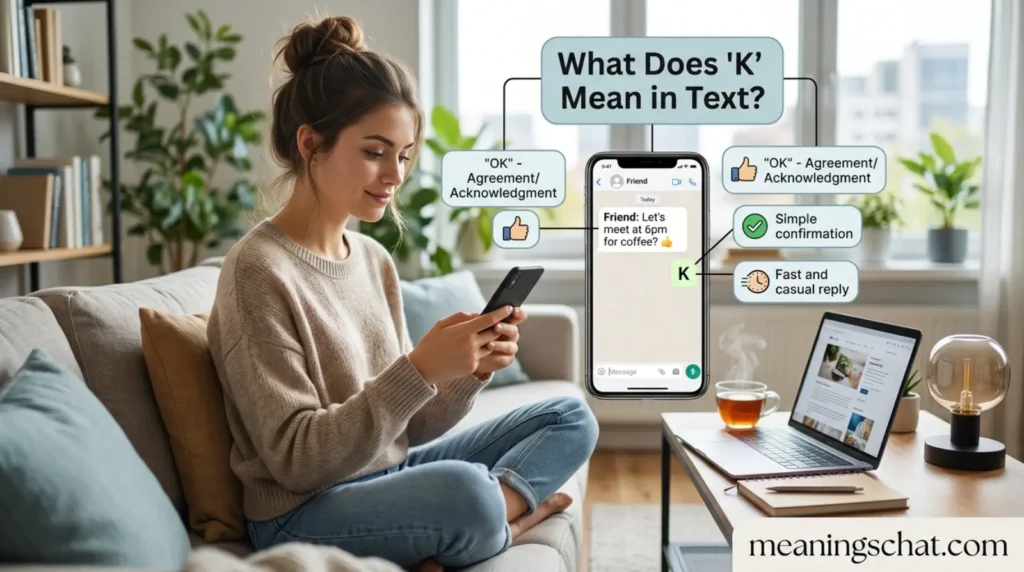
At its most basic level, “k” is simply a short form of “okay.” It’s commonly used to acknowledge a message, confirm something, or show agreement.
However, when a girl uses “k” in a text, the meaning can go beyond just “okay.” Tone, context, and timing all play a big role in how it’s interpreted. Here are the most common meanings:
- Neutral acknowledgment: She saw your message and responded quickly without adding much detail.
- Casual agreement: She agrees with what you said but doesn’t feel the need to type a full response.
- Low effort or short reply: She might not be very engaged in the conversation at that moment.
- Possible annoyance or irritation: In certain situations, “k” can feel cold or dismissive.
For example, if you ask, “Want to grab coffee later?” and she replies “k,” it may simply mean yes. But if the conversation was emotional or serious, the same “k” might feel distant or uninterested.
So, the key takeaway is this: “k” always means “okay,” but the tone behind it depends on context.
Where Is “K” Used?
The slang “k” is widely used across digital communication because it’s fast, simple, and convenient. You’ll often find it in:
- Text messages (SMS, WhatsApp): Quick everyday responses
- Snapchat: Fast replies to snaps or chats
- Instagram DMs: Acknowledging messages without extending the conversation
- TikTok messages or comments: Minimal, short replies
- Online gaming chats: Quick confirmations during gameplay
It’s especially popular among teenagers and young adults, but people of all ages use it when they want to reply quickly.
The main reason for its popularity is efficiency. Typing “k” takes less effort than typing “okay,” making it perfect for fast-paced conversations.
Examples of “K” in Conversation
To understand how “k” works in real life, here are several examples showing different tones and situations:
1. Simple acknowledgment
- You: “I sent you the file.”
- Her: “k”
2. Casual agreement
- You: “Let’s meet at 6 PM.”
- Her: “k sounds good”
3. Friendly tone with emoji
- You: “Movie tonight?”
- Her: “k 😊”
4. Busy or distracted reply
- You: “Can you call me?”
- Her: “k later”
5. Low interest or minimal effort
- You: “Tell me about your day.”
- Her: “k”
6. Possible annoyance
- You: “Why didn’t you reply earlier?”
- Her: “k”
7. Confirmation with clarity
- You: “Don’t forget the meeting tomorrow.”
- Her: “k got it”
As you can see, the meaning changes based on what’s happening in the conversation. Adding words or emojis usually makes the tone clearer.

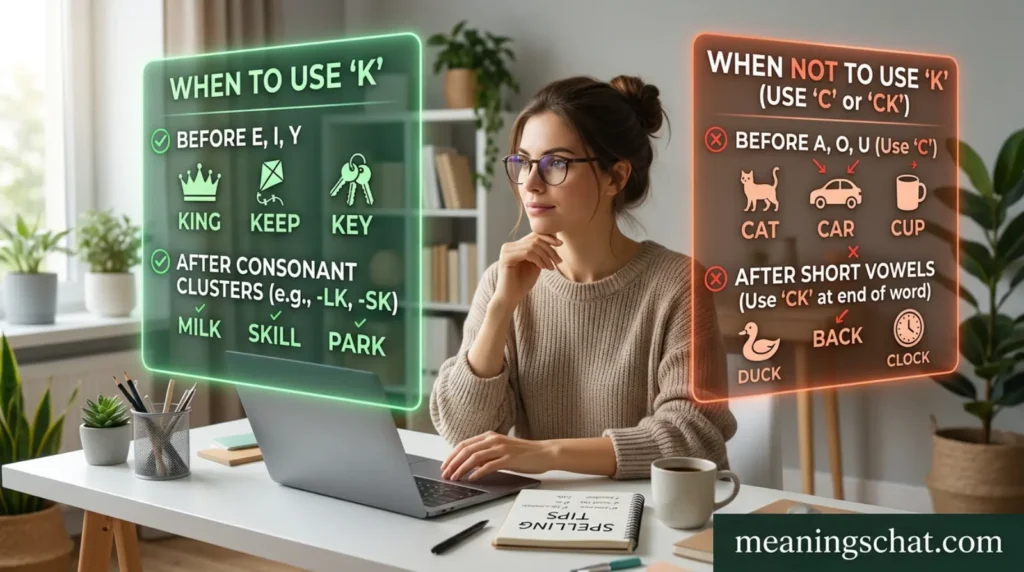
When to Use and When Not To Use “K”
Understanding when to use “k” can help you avoid sending the wrong message.
✅ When to Use “K”
- When you want to quickly acknowledge a message
- In casual conversations with friends or people you’re close to
- When you’re busy and need to respond fast
- For simple confirmations like plans or reminders
❌ When Not to Use “K”
- During serious or emotional conversations
- In professional or formal communication
- When someone expects a thoughtful or detailed response
- When you want to show interest, excitement, or care
For example, replying “k” to someone sharing their feelings can seem dismissive, even if you didn’t mean it that way. In such cases, a fuller response is always better.
Similar Slang Words or Alternatives
If you feel that “k” might sound too short or unclear, here are some alternatives you can use:
- Okay / OK: The full version, more neutral and polite
- kk: A slightly warmer version of “k”
- alr: Short for “alright,” casual and friendly
- got it: Clear and respectful acknowledgment
- sure: Shows agreement with a more positive tone
Choosing the right alternative can help you match the tone of the conversation and avoid misunderstandings.
FAQs
What does “k” mean from a girl?
It usually means “okay,” but the tone depends on context. It can be neutral, casual, or sometimes indicate low interest or annoyance.
Is “k” rude in texting?
Not inherently, but it can come across as rude or dismissive if used in serious conversations or without explanation.
Can I use “k” in professional chats?
No, it’s too informal. It’s better to use “okay,” “noted,” or “understood” in professional settings.
Does “k” have a flirty meaning?
On its own, no. However, when combined with emojis or playful conversation, it can still fit into a flirty context.
Is “k” still popular in 2025?
Yes, it’s still widely used because it’s quick, easy, and convenient for fast communication.
Conclusion
The meaning of “k” in text from a girl may seem confusing at first, but it becomes much clearer when you consider the context. While it simply means “okay,” the tone can vary from friendly and casual to distant or uninterested depending on how it’s used.
The best approach is to look at the bigger picture the conversation, her usual texting style, and any added words or emojis. Instead of overthinking a single letter, focus on the overall interaction.
Once you understand how “k” works, you’ll be able to respond more confidently and keep your conversations smooth and natural.

William Jones is a dedicated writer at Meaningschat who specializes in explaining text slang, abbreviations, and online language trends. He enjoys creating simple, engaging, and reader-friendly content that helps people understand modern digital communication with ease. His writing style is clear, conversational, and informative, making complex internet terms easy for everyone to follow. In his free time, William loves exploring social media trends, reading about digital culture, and discovering how online language continues to evolve.