You open your phone and see a message that simply says: “hey”. No emoji, no explanation, nothing else.
You pause for a second and start thinkingIs this friendly? Are they upset? Or are they just starting a conversation?
This is one of the most common situations in texting today.
A tiny word like “hey” can feel confusing because it doesn’t give much information on its own. Unlike full sentences, it depends heavily on tone, context, and relationship.
In modern digital communication, especially on apps like WhatsApp, Instagram, Snapchat, and TikTok, “hey” has become one of the most flexible and widely used greetings.
In this guide, we’ll break down what it really means, how people use it, and how you can understand its hidden tone in everyday chats.
What Does “Hey” Mean in Text?
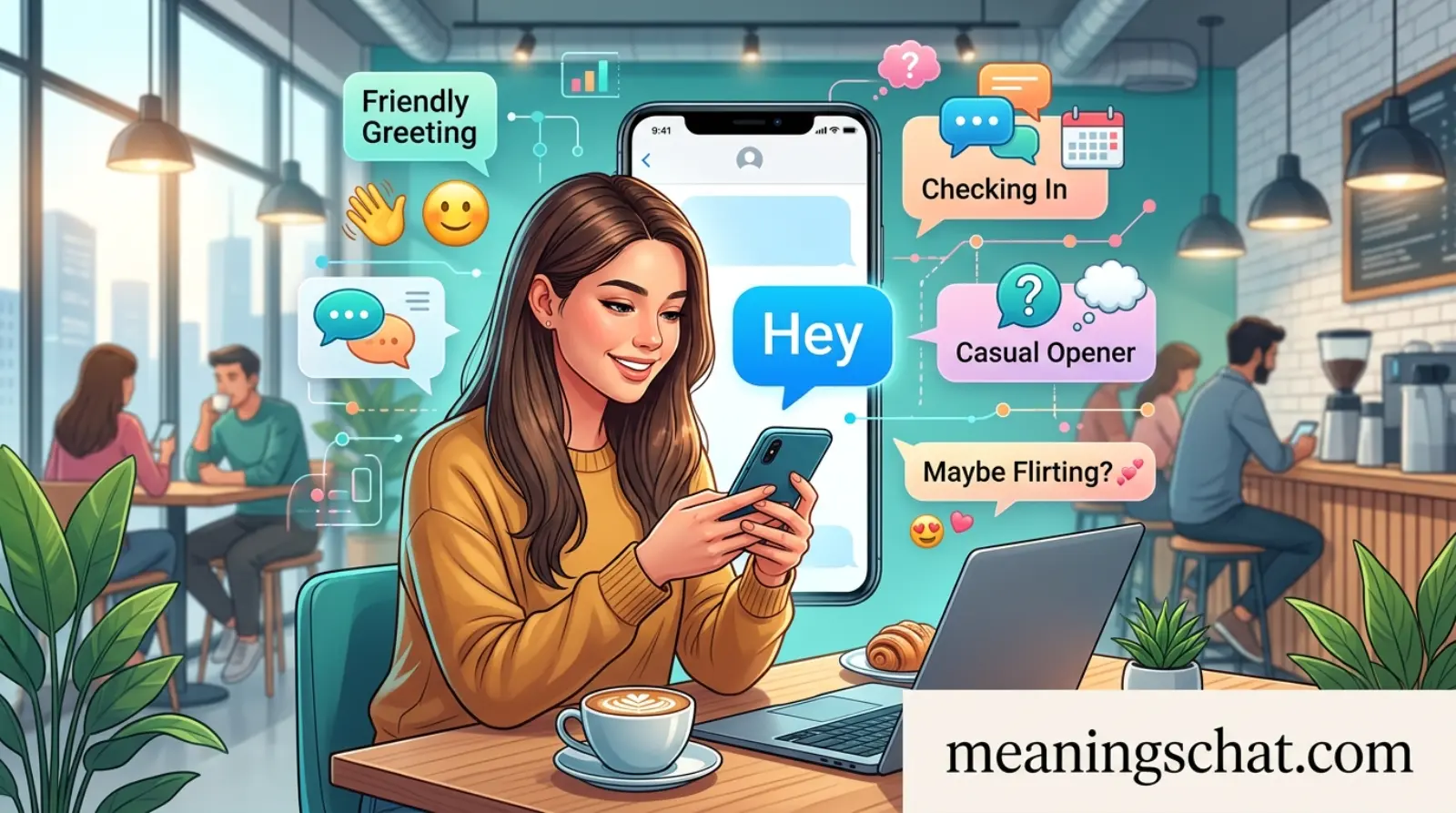
In text messaging, “hey” is a casual greeting used to start a conversation. It is similar to “hi” or “hello,” but it feels more relaxed, informal, and sometimes even more personal.
Basic meaning:
👉 “Hey” = A simple way to say hello or get someone’s attention
But in real-life texting, the meaning can shift depending on how it’s used:
Different meanings of “hey” in text:
- Friendly greeting – most common use
- Conversation starter – when someone wants to talk
- Checking in – “hey” can mean “how are you?” indirectly
- Attention grabber – used when someone needs a reply
- Flirty signal – depending on tone and repetition
- Neutral message opener – sometimes just a placeholder before typing more
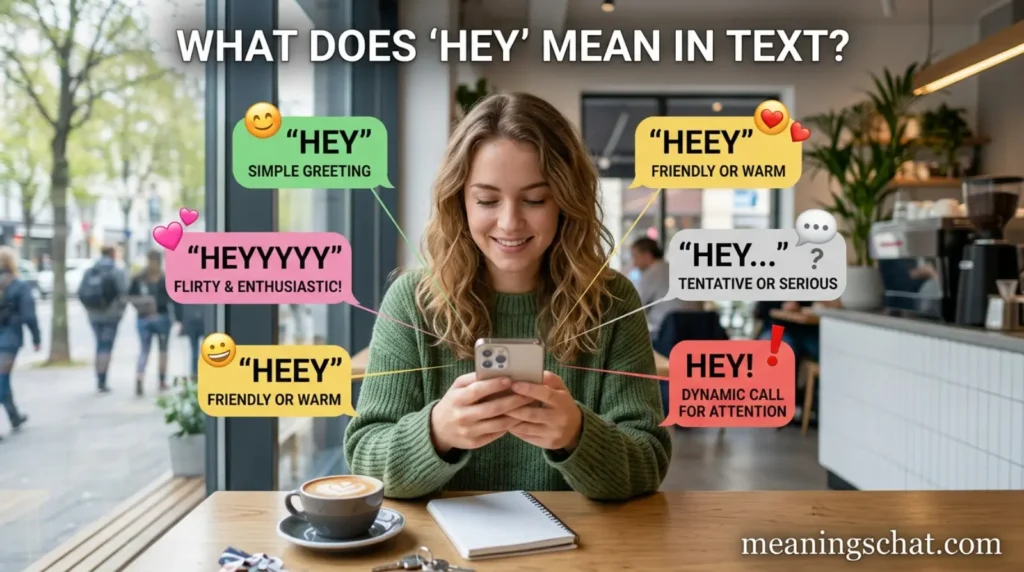
Tone variations matter a lot:
- Hey → neutral
- Heyy → friendly or slightly excited
- Heyyy 😉 → playful or flirty
- HEY → can feel urgent or emotional
So, “hey” is not just a word—it’s a tone-based message.
Where Is “Hey” Used?
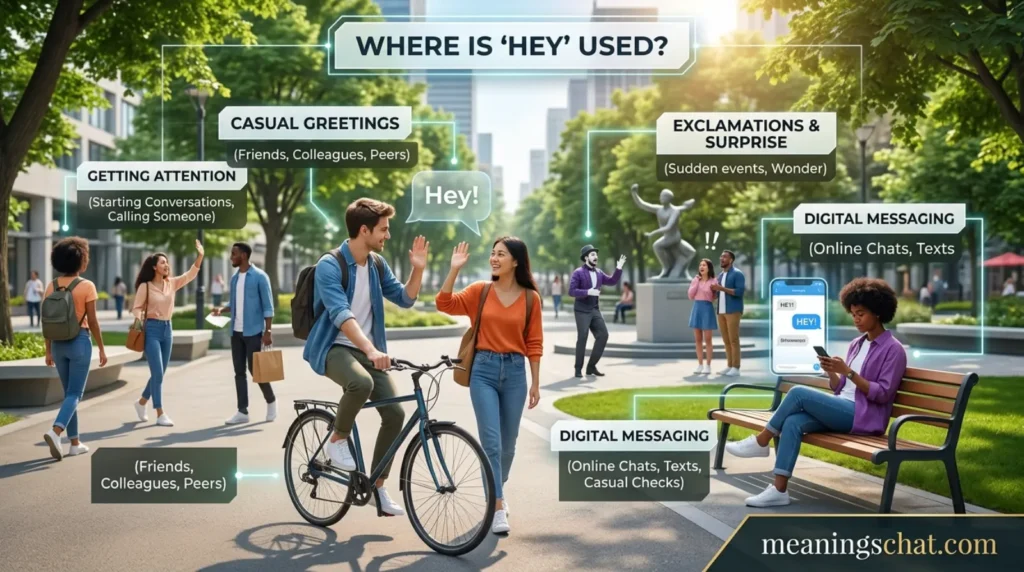
“Hey” is one of the most universal greetings in digital communication. You’ll find it almost everywhere people chat casually.
Common platforms:
- Instagram DMs
- Snapchat
- Facebook Messenger
- TikTok comments and inbox
- SMS texting
Who uses it most?
- Teenagers and young adults
- Friends and classmates
- Couples or people dating
- Online gaming communities
- Even professionals in informal chats
Why it is so popular:
- Fast to type
- Friendly and non-aggressive
- Works in almost any situation
- Easy conversation starter
In short, “hey” is the “default opener” of modern texting culture.
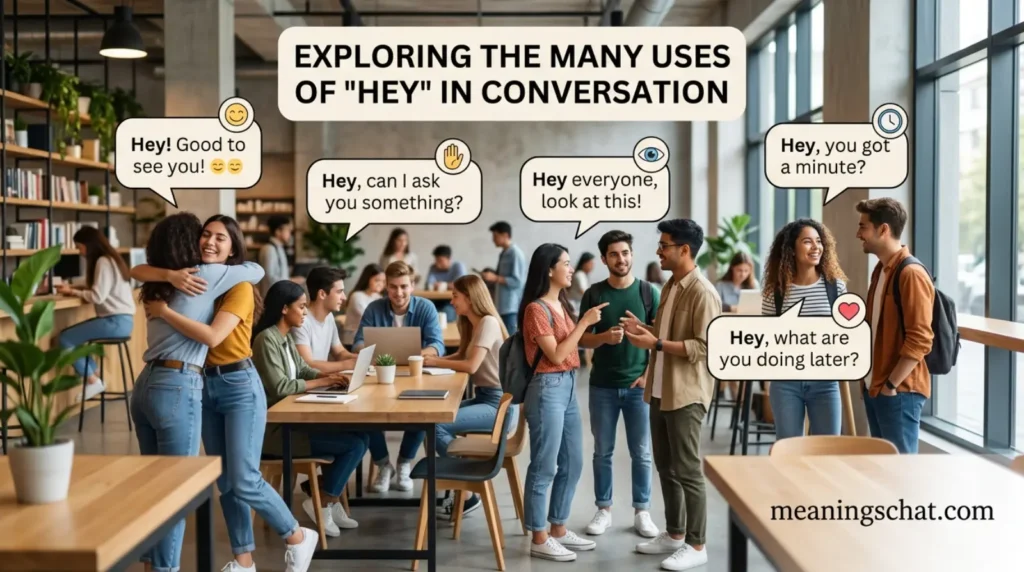
Examples of “Hey” in Conversation
To understand it better, let’s look at real chat-style examples:
1. Simple greeting
A: Hey
B: Hey, how are you?
2. Starting a conversation
A: Hey, are you free?
B: Yeah, what’s up?
3. Friendly tone
A: Hey! Long time no see
B: I know right! How have you been?
4. Flirty version
A: Heyyy 😉
B: Ohh, someone’s in a good mood!
5. Checking in
A: Hey, just wanted to check on you
B: Thanks, I’m okay 😊
6. Getting attention
A: Hey!! Answer me 😂
B: Sorry, I was busy!
7. Awkward or unsure tone
A: Hey…
B: Everything okay?
These examples show how the same word can change meaning based on context.
When to Use and When Not to Use “Hey”
✅ When it’s appropriate:
- Talking to friends or close contacts
- Casual conversations on social media
- Starting a chat without sounding formal
- Flirty or playful texting (with the right tone)
- Informal group chats
❌ When to avoid it:
- Job emails or professional communication
- Talking to teachers, managers, or clients
- Formal introductions
- Academic writing or official messages

Why context matters:
“Hey” is casual, so in formal environments it can seem too relaxed or unprofessional. In those cases, “Hello” or “Good morning” is safer.
The Hidden Meaning Behind “Hey”
Even though “hey” looks simple, it often carries hidden emotional signals in texting.
1. Interest or attention
If someone messages “hey” first, they likely want to talk or reconnect.
2. Emotional tone
- Short “hey” = neutral or calm
- “heyyy” = excited or playful
- “HEY!” = urgent or emotional
3. Relationship hint
In some cases, especially in flirting, “hey” can show:
- Interest
- Curiosity
- Soft attraction
4. Personality expression
People also use “hey” to reflect personality:
- Chill people → “hey”
- Energetic people → “heyyyy!”
- Serious people → “hi” instead
So, even a single word can reveal mood and attitude.
Similar Slang Words or Alternatives
Here are some common alternatives used in texting:
- Hi → simple and slightly more neutral than “hey”
- Hello → polite and formal greeting
- Yo → very casual, often used among close friends
- Sup / What’s up → informal way to ask how someone is
- Heyy / Heyyy → extended version, often more emotional or flirty
Comparison:
- “Hi” = neutral
- “Hey” = casual
- “Yo” = super casual
- “Hello” = formal
Each one fits a different social situation.
Texting Psychology: Why People Just Say “Hey”
Many people wonder why someone would just type “hey” without anything else.
Common reasons:
- They want you to start the conversation
- They are unsure how to begin
- They are testing your response
- They are being casual and relaxed
- They just want attention without pressure
In modern texting culture, “hey” is often used as a soft opening message instead of a full sentence.
FAQs
1. What does “hey” mean from a girl?
It usually means a casual greeting. However, if it’s “heyy” or paired with emojis, it may show friendliness or interest.
2. Is “hey” rude in text?
No, it is not rude. It is one of the most common and friendly greetings used in texting.
3. Can I use “hey” in professional chats?
It is better to avoid it. Use “Hello” or “Hi [Name]” in professional or formal communication.
4. Does “hey” have a flirty meaning?
Sometimes yes. The meaning depends on tone, repetition of letters, and emojis.
5. Is “hey” still popular in 2025?
Yes, it is still one of the most widely used greetings in digital communication worldwide.
Conclusion
“Hey” may look like the simplest word in texting, but it plays a big role in how conversations start. It is a flexible, casual greeting that can feel friendly, neutral, or even flirty depending on tone and context. If someone is checking in, starting a chat, or just grabbing attention, “hey” is often the first step in modern digital conversations.
👉 The key takeaway is simple: don’t overthink it. Instead, look at context, tone, and relationship to understand what “hey” really means in any message.

Jimmy Johan is a passionate writer at Meaningschat who specializes in explaining text slang, internet terms, and digital communication trends. He is known for his simple, engaging, and reader-friendly writing style that makes modern language easy to understand. Jimmy enjoys researching online culture, social media trends, and the evolving world of texting abbreviations. Through his content, he aims to help readers stay informed, connected, and confident in today’s digital conversations.