IDRM meaning in text You’re scrolling through a chat, maybe on Snapchat or Instagram, and someone replies with “idrm.” At first, it looks confusing. You pause for a second and wonder if it’s a typo or some secret code you’re not aware of. Later, you might even feel a bit out of the loop because everyone seems to understand it except you.
The truth is, “idrm” is one of those modern internet abbreviations that people use to type faster and sound casual. It’s commonly used in everyday texting, especially in relaxed conversations. Once you understand it, you’ll start noticing it everywhere in chats, comments, and even gaming messages. In this article, you’ll learn exactly what it means, how to use it correctly, and when it might not be the best choice.
What Does idrm Meaning in Text?
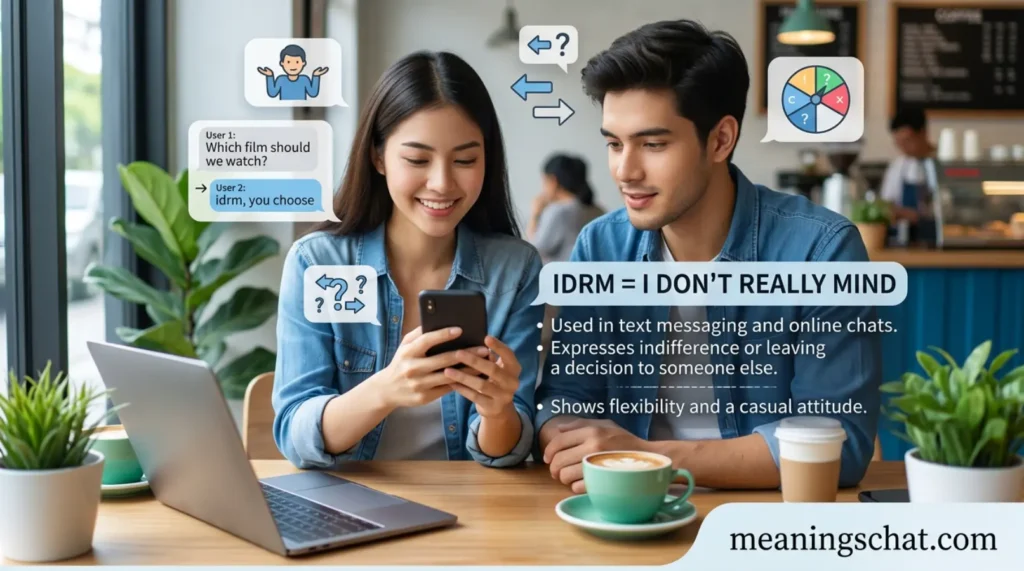
The slang “idrm” stands for “I don’t really mind.”
It is used when someone wants to show that they are neutral, flexible, or not strongly opinionated about something. Instead of saying a full sentence like “I don’t really mind,” people shorten it to “idrm” to save time while texting.
Simple Meaning:
- You are okay with something
- You have no strong preference
- You are flexible with decisions
Example in simple words:
If someone asks, “Pizza or burgers?” and you say “idrm,” it means you are okay with either option.
Variations or related expressions:
While “idrm” mainly means “I don’t really mind,” sometimes people may interpret it slightly differently depending on tone:
- I don’t mind
- I’m okay with it
- It doesn’t matter to me
However, the core meaning stays the same: neutral and flexible attitude.
Where Is idrm Used?
The abbreviation idrm is mostly used in informal digital communication. It is not something you would typically see in formal writing or professional emails.
Common platforms where it appears:
- WhatsApp chats
- Instagram DMs and comments
- Snapchat conversations
- TikTok comments
- Online gaming chats
- Discord servers
Who uses it most?
- Teenagers and young adults
- Social media users
- Gamers who type quickly during gameplay
- People who prefer short texting style
Because online communication is fast-paced, abbreviations like “idrm” help users respond quickly without typing full sentences.
Why it is popular:
- Saves time while typing
- Feels casual and friendly
- Fits modern texting culture
- Easy to understand once learned
Examples of idrm in Conversation
To understand how “idrm” works in real life chats, here are some natural examples:
1. Casual plan-making
Friend 1: “Movie or dinner tonight?”
Friend 2: “idrm, you choose.”
2. Friendly flexibility
A: “Do you want tea or coffee?”
B: “idrm, anything is fine.”
3. Group decision
A: “We are going to the mall at 5, okay?”
B: “idrm, I’m free anyway.”
4. Flirty tone
A: “Do you want to sit here or with your friends?”
B: “idrm, as long as I’m with you 😄”
5. Gaming chat
Player 1: “Which role do you want?”
Player 2: “idrm, I can play anything.”
6. Slightly uninterested tone
A: “Should we watch horror or comedy?”
B: “idrm, I’m not picky.”
7. Group discussion
A: “Pizza or biryani for party?”
B: “idrm, both are good.”
These examples show how flexible and neutral the slang is in everyday communication.
When to Use and When Not To Use idrm
Understanding tone is important when using internet slang. While “idrm” is simple and useful, it doesn’t fit every situation.
When to use idrm:
- Casual chats with friends
- Group decisions where you have no preference
- Gaming conversations
- Informal social media replies
- Light and friendly discussions
When NOT to use idrm:
- School assignments or essays
- Work emails or professional communication
- Formal conversations with teachers or managers
- Serious discussions where clarity is important
Tone explanation:
“idrm” is:
- Casual
- Neutral
- Informal
- Friendly
It does not sound rude, but it can feel too relaxed in serious contexts. In professional situations, it’s better to write the full sentence: “I don’t really mind.”
Important tip:
If you want to sound polite or professional, avoid abbreviations. But if you are chatting with friends, “idrm” is perfectly fine and natural.
Similar Slang Words or Alternatives
If you are learning “idrm,” it helps to know similar slang words that carry close meanings. These are often used in the same type of conversations.
1. IDC (I don’t care)
Means you are not interested or don’t have a preference, but it can sound stronger or slightly rude depending on tone.
2. I don’t mind
The full and more polite version of “idrm.”
3. IG (I guess)
Used when someone is uncertain but slightly agrees.
4. Whatever
Shows full neutrality or sometimes indifference.
5. Up to you
Means you are letting the other person decide.
Each of these expressions can replace “idrm” depending on the situation and tone you want to express.
FAQs
What does idrm mean from a girl?
It simply means “I don’t really mind.” If a girl uses it, she is showing she is flexible or neutral about the topic, not giving a strong preference.
Is idrm slang rude?
No, “idrm” is not rude. It is neutral and casual. However, tone matters, so in some situations it might feel slightly uninterested.
Can I use idrm in professional chats?
No, it is not recommended. In professional communication, it is better to use full sentences like “I don’t really mind” for clarity and politeness.
Does idrm have any flirty meaning?
Not directly. However, in flirty conversations, it can sound cute or relaxed depending on how it is used.
Is idrm still popular in 2025?
Yes, slang like “idrm” is still used in casual texting and online chats, especially among young users and gamers.
Conclusion
The slang idrm (I don’t really mind) is a simple and useful abbreviation used in casual online conversations. It helps people respond quickly when they have no strong preference about a topic. You’ll mostly see it on social media platforms, messaging apps, and gaming chats.
While it’s great for informal communication, it should be avoided in professional or formal settings. Once you understand its meaning and tone, you can easily use it in the right situations and make your chats sound more natural and modern.

William Jones is a dedicated writer at Meaningschat who specializes in explaining text slang, abbreviations, and online language trends. He enjoys creating simple, engaging, and reader-friendly content that helps people understand modern digital communication with ease. His writing style is clear, conversational, and informative, making complex internet terms easy for everyone to follow. In his free time, William loves exploring social media trends, reading about digital culture, and discovering how online language continues to evolve.